

Last Updated: November 12, 2026
Quick Summary
Design commercial courtyards with artificial turf by zoning first: seating along the perimeter, play in the open center, and circulation paths at least 1.2 meters wide connecting entrances. Then frame artificial turf panels with pavers, stone, or decking, keeping edges straight and patterns simple to reduce seams and callbacks.
- Seating zones should run 1.5 to 2 meters deep along courtyard walls and edges.
- Circulation paths need a minimum width of 1.2 meters for two people passing.
- For high-traffic shared spaces, specify face weight generally above 60 ounces per square yard.
- Keep pile height moderate at roughly 1.25 to 1.75 inches for commercial courtyards.
- Southern Artificial Turf backs its turf with an 8-year warranty.
Table of Contents
- Courtyard Zones That Work With Artificial Turf
- Artificial Turf Design With Pavers, Stone, and Decking
- Planning an Artificial Turf Walkway Through the Courtyard
- Small Commercial Courtyard Design Ideas That Feel Larger
- Geometric Patterns and Clean-Lined Turf Layouts
- Material Selection for Commercial Traffic and Drainage
- Artificial Turf Maintenance for Commercial Spaces
- Get a Quote for Your Courtyard Turf Project
- Frequently Asked Questions
Courtyard Zones That Work With Artificial Turf
A commercial courtyard succeeds or fails on one question: can people move through it without stepping on each other? Artificial turf design ideas for commercial courtyards start with zoning, not with grass samples. A well-planned courtyard starts with three functions before any turf is specified.
Artificial turf is a synthetic surface made from polyethylene fibers tufted into a backing, designed to look like natural grass while draining water and holding up to foot traffic. For a commercial courtyard, that durability is the whole point.
Seating, Play, and Circulation Areas
Split the courtyard into three zones. Seating areas go along walls and edges, where people feel settled. Play or recreation areas take the open center, visible from every entrance. Circulation paths connect doors, elevators, and stairs in straight or gently curved lines.
Get this wrong and the courtyard turns into a hallway. A common mistake is running the walkway through the middle of the seating zone. People cut through, conversations stop, and nobody lingers.
- Seating: perimeter, 1.5 to 2 meters deep
- Play: center, clear of doors and stairs
- Circulation: 1.2 meters minimum width for two people passing
Keep the turf layout simple at this stage. Zones first, materials second.
Artificial Turf Design With Pavers, Stone, and Decking
Mixing turf with hardscape is where a courtyard starts to look designed rather than installed. A turf field framed by a paver border can make the grass read as an intentional panel instead of leftover space.
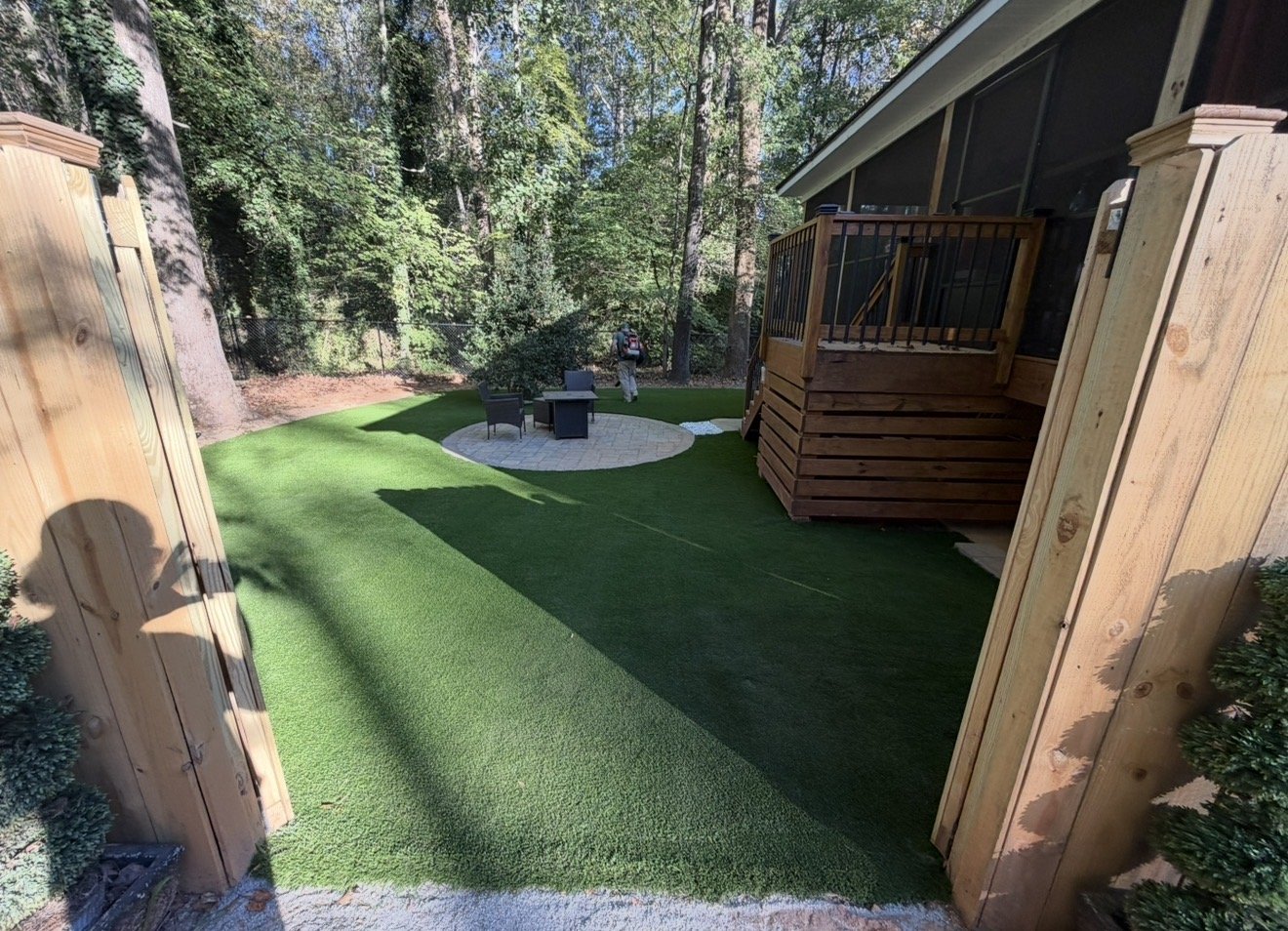
Three combinations work well:
- Turf and pavers: a turf square framed by concrete or stone pavers. Crisp, modern, easy to edge.
- Turf and stone: irregular flagstone set into turf for a softer, garden feel.
- Turf and composite deck: decking for the dining or gathering area, turf for the open ground beside it. Multi-level surfaces work here too, with a low step between deck and lawn.
Edge detail matters in these layouts. A metal or concrete edge can help hold the turf in place and keep the paver line straight.
Planning an Artificial Turf Walkway Through the Courtyard
An artificial turf walkway is a path of turf, or turf beside a hard path, that guides people across the courtyard without a wall of concrete. Use it to connect the building entrance to the seating zone and the far exit.
For a lighter look, set rectangular stepping stones into the turf instead of a solid path. It reads as a garden detail, drains well, and costs less hardscape. You can see how stepping-stone routes sit in real yards in our project gallery.
Small Commercial Courtyard Design Ideas That Feel Larger
Small courtyards often work best with fewer, bigger design moves. Repeating one strong layout can keep a tight space from feeling cluttered.
What works in a compact courtyard:
- One turf panel, edge to edge, with no fussy borders
- Built-in seating along one wall instead of loose chairs
- A single specimen plant or planter, not a row of pots
- A mirror or light-colored wall to bounce daylight around
- Vertical planting on the tallest wall to draw the eye up
Clean lines beat decoration here. A rectangular turf field with a paver band and one bench reads calm and spacious. For product options sized to tight spaces, see our guide to the best artificial grass options for small yards.
Geometric Patterns and Clean-Lined Turf Layouts
Geometric patterns can turn a plain courtyard into a designed space. Strips of turf between paver bands, a checkerboard of grass and stone, or a simple grid can all create structure.
The rule: one pattern, repeated. A diagonal stripe running one way across the courtyard looks deliberate. Stripes running two ways look like a mistake.
Clean-lined layouts suit contemporary commercial buildings. Keep the turf edges straight, the paver joints tight, and the pattern aligned with the building’s main wall. When the grid lines up with the architecture, the whole courtyard feels built rather than added.
Watch out: complex patterns mean more cutting and more seams. Every seam is a place where edges can lift. On a commercial job, fewer seams means fewer callbacks. If you want pattern inspiration from finished work, browse our completed courtyard projects.
Material Selection for Commercial Traffic and Drainage
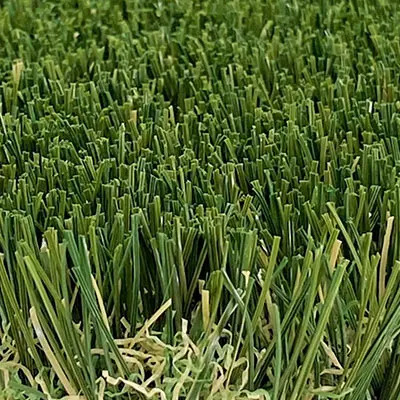
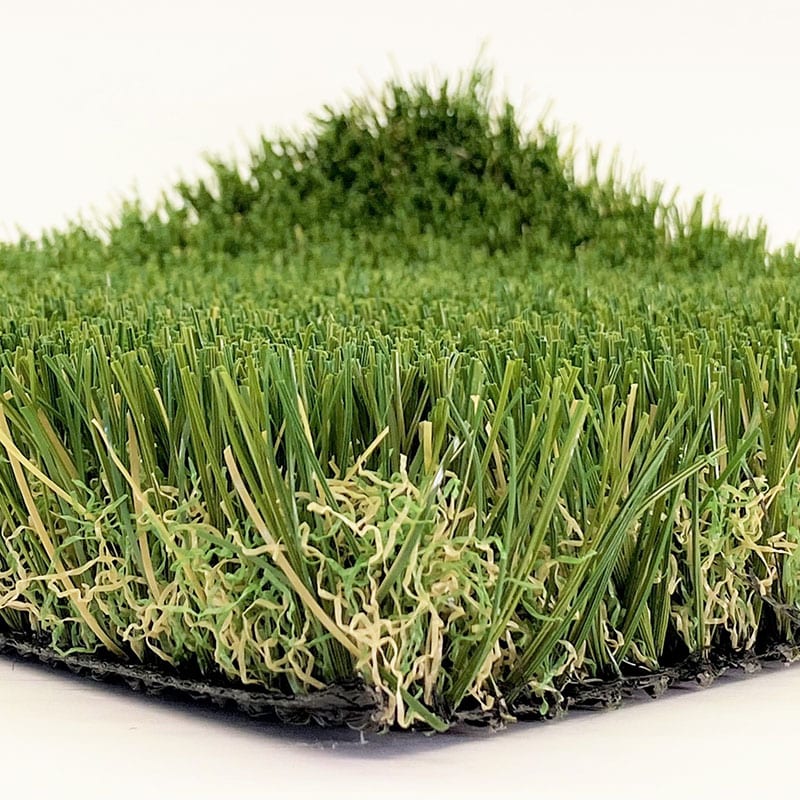
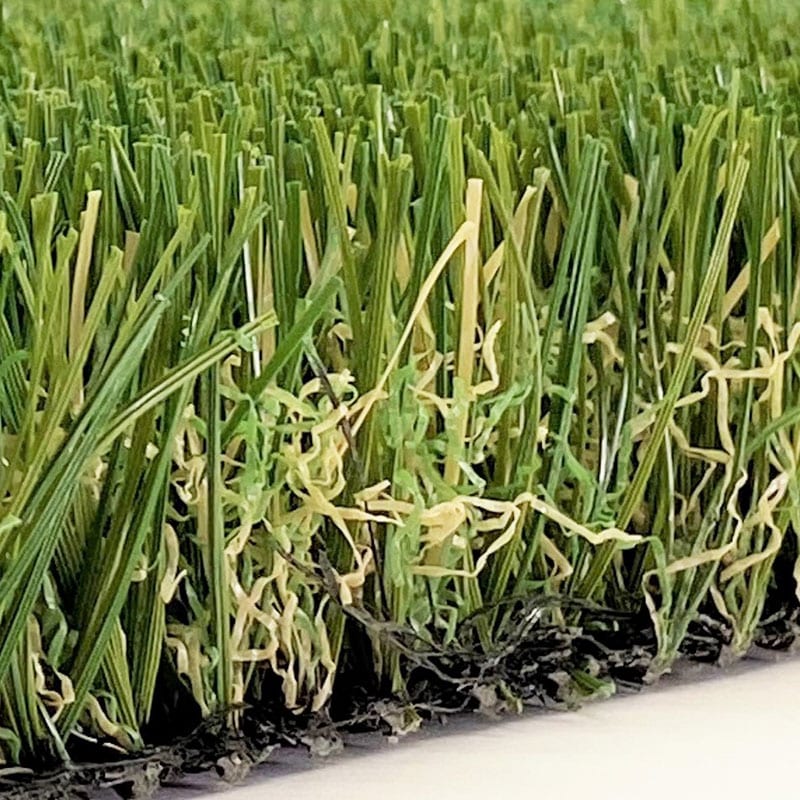
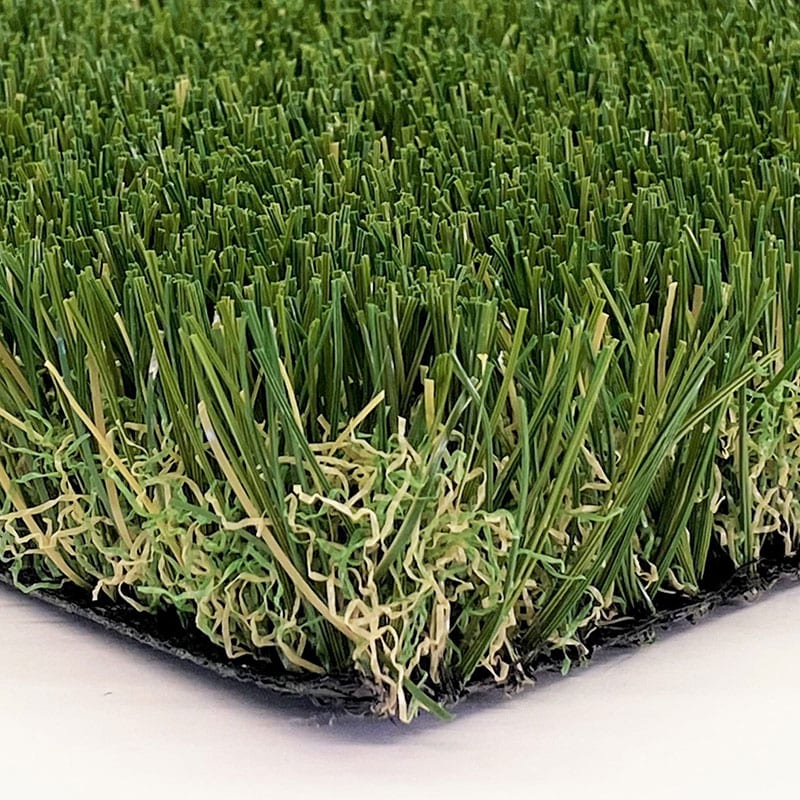
Commercial turf has to survive more foot traffic than a backyard. When comparing products, consider face weight, fiber type, pile height, backing system, and drainage rate, and check the manufacturer’s current specifications.
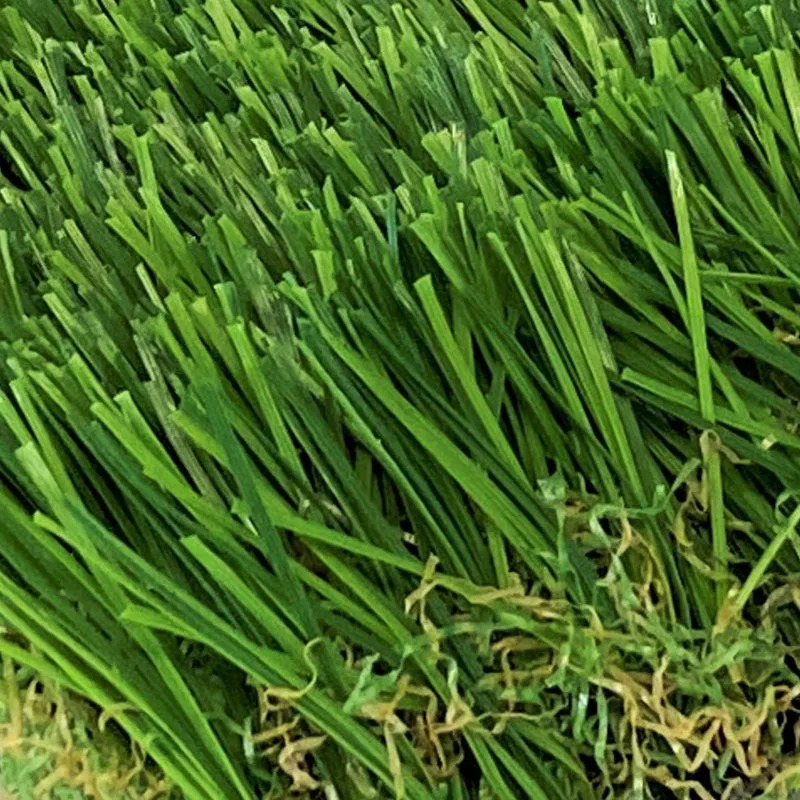
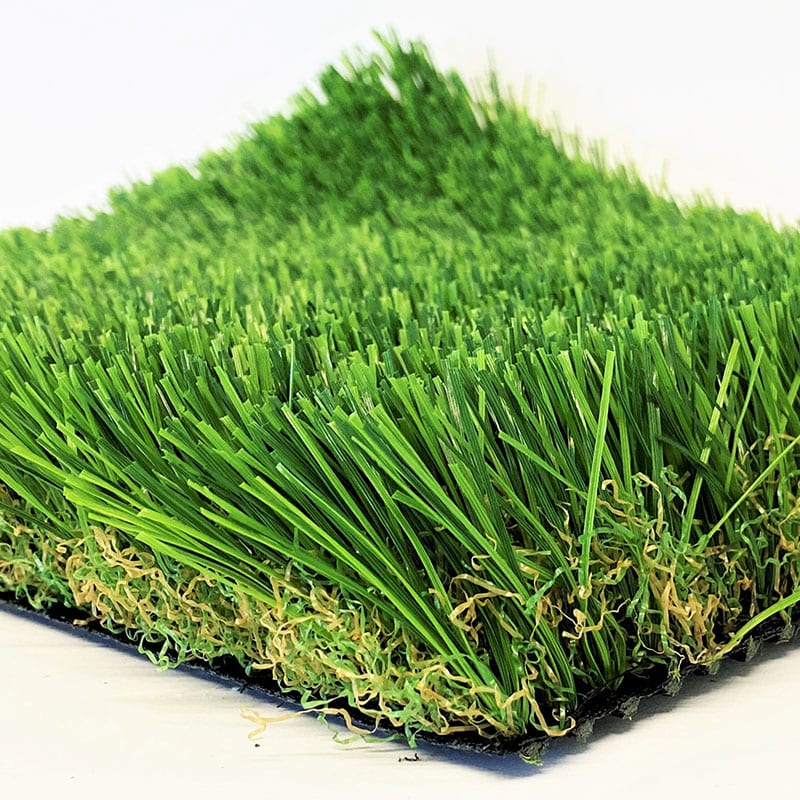
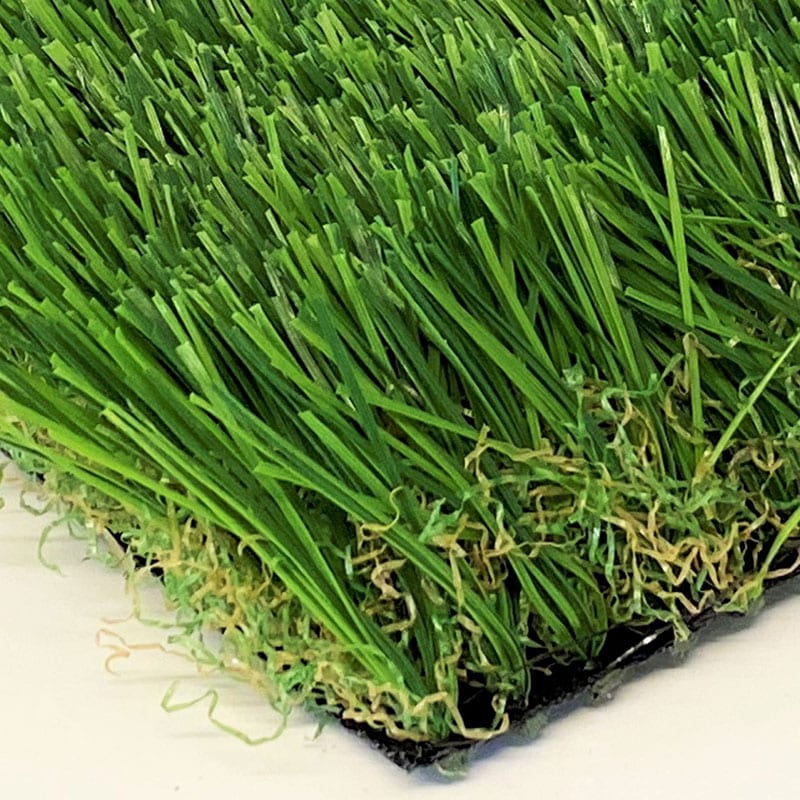
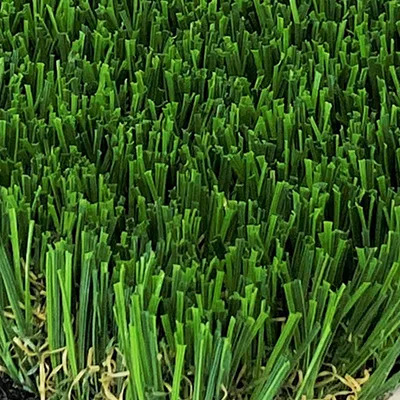
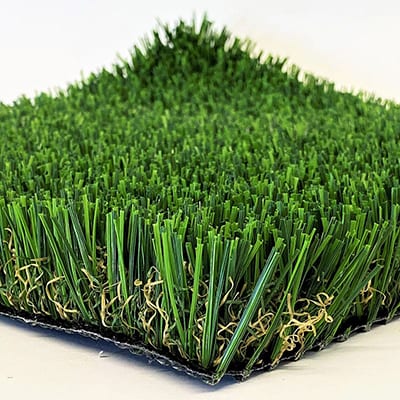
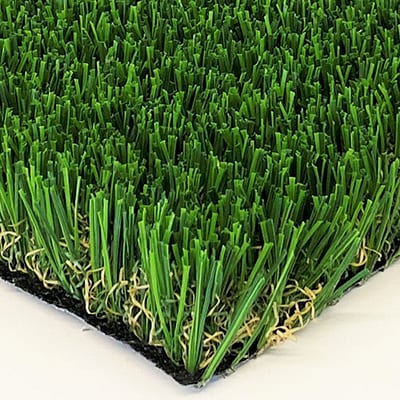
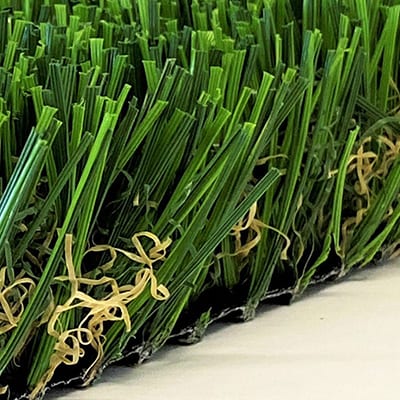
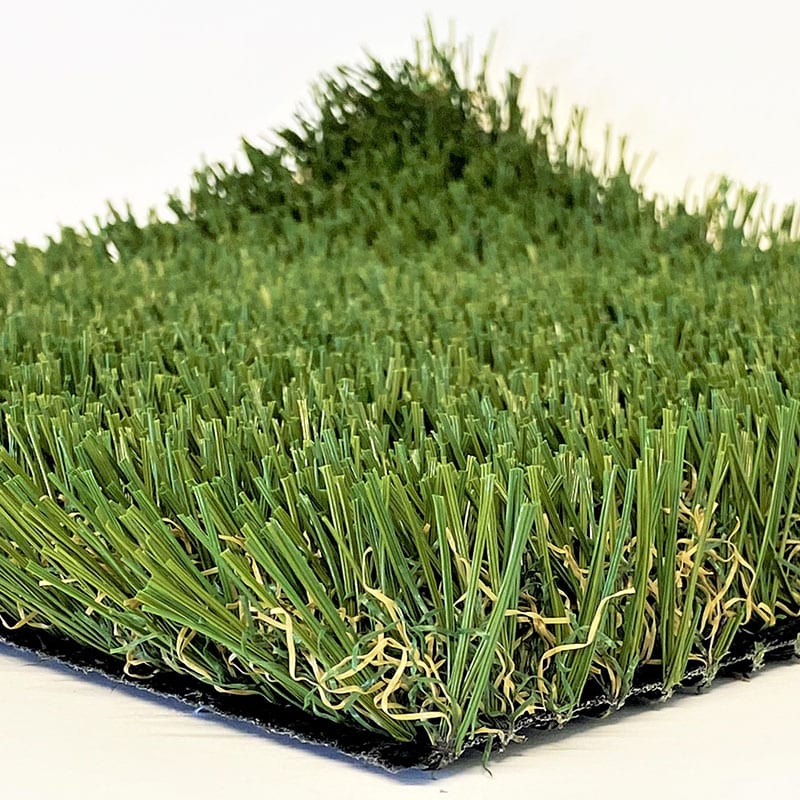
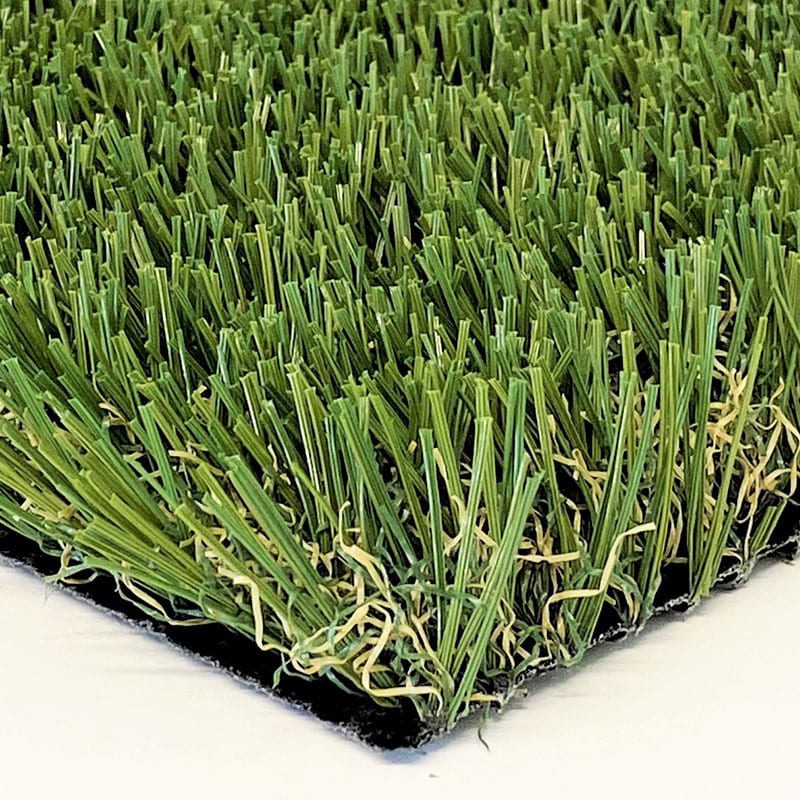
Face weight and fiber. Face weight is the amount of fiber per square yard. Higher face weight means a denser, more durable surface. For a busy courtyard, most practitioners specify toward the heavier end of the range the supplier offers, generally above 60 ounces per square yard for high-traffic shared spaces, though the right number depends on expected foot traffic and the manufacturer’s warranty terms. Pile height should stay moderate (roughly 1.25 to 1.75 inches for commercial courtyards); tall blades mat down faster under foot traffic and trap debris. Fiber type matters too: 100% non-abrasive polyethylene is the common choice for shared spaces because it stays comfortable underfoot and resists crushing. Some products blend polyethylene with nylon for extra resilience in the highest-traffic zones.
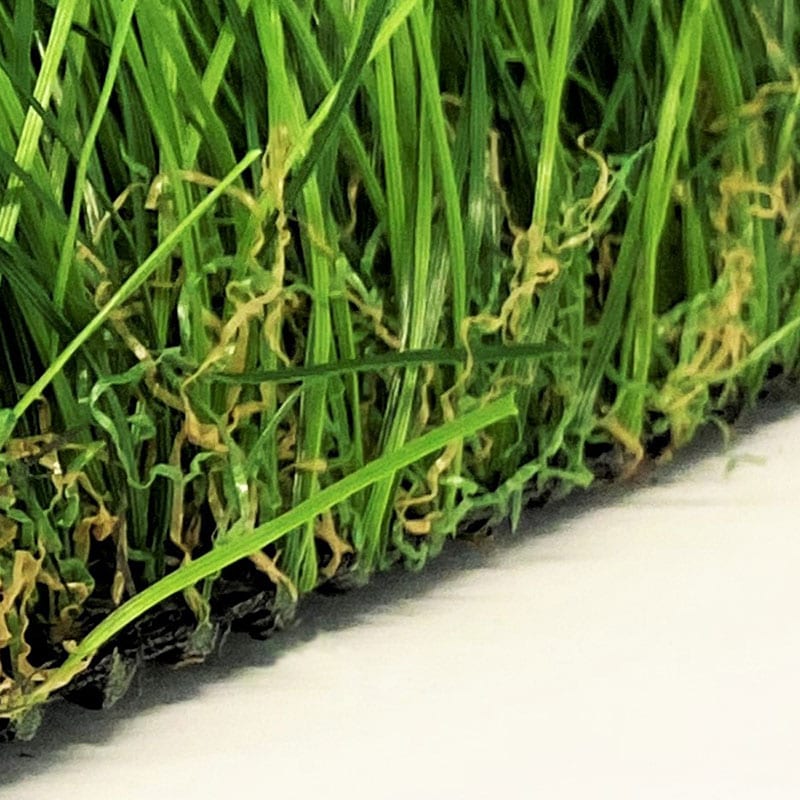
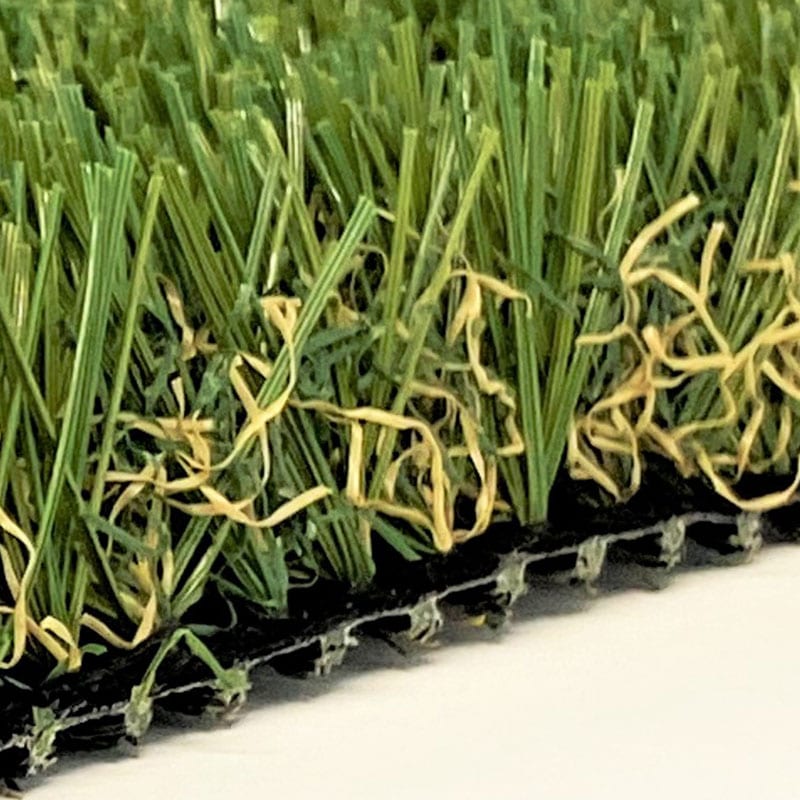
Backing and drainage. Drainage decides whether the courtyard floods. A commercial turf system needs a permeable backing and a properly graded base, typically a compacted aggregate layer over a drainage plane, so water moves through the surface and away from the building. Southern Artificial Turf’s turf has a drainage capacity of 30 inches per hour, which can help in areas with heavy summer storms. Watch out: a high-flow turf installed over a flat or poorly drained base will still flood, and the fix is excavation, not a new roll of turf.
Heat and site performance.
Safety specifications. Slip resistance, infill type, and fire-pit clearances belong in the specification, not the afterthought. Ask the supplier for test data on slip resistance, confirm the infill is suitable for children and pets, and keep combustible materials at the clearance distance the fire-pit manufacturer specifies. Verify product specifications against the manufacturer’s current data sheet before you commit, because formulations and warranties change.
| Criterion | What to Check | Why It Matters |
|---|---|---|
| Face weight | Higher density for heavy foot traffic | Resists matting and wear |
| Fiber type | Non-abrasive polyethylene (or polyethylene-nylon blend) | Comfortable and durable underfoot |
| Pile height | Moderate, roughly 1.25-1.75 inches | Holds shape under use |
| Backing and drainage | Permeable backing plus graded aggregate base | Prevents pooling and flooding |
| Heat performance | Lighter infill or reflective fiber in full sun | Keeps surface usable |
| Safety | Slip-resistance data, suitable infill, fire-pit clearances | Protects users and the property |
For a side-by-side look at products suited to office and business landscapes, read our comparison of the best synthetic grass for office building landscapes.
Artificial Turf Maintenance for Commercial Spaces
Artificial turf maintenance for commercial spaces is light, but it is not zero, and the difference between a courtyard that holds its appearance for a decade and one that looks tired in three years is a planned routine, not luck. Property teams should budget for maintenance as a line item and schedule it around tenant or customer traffic.
Routine care. The basics are simple: rinse and pick up debris weekly in high-traffic spots, brush the pile occasionally to lift matted fibers, remove leaves before they stain or block drainage, check edges and seams each season for lifting, and rinse pet areas if dogs use the courtyard. A common mistake is skipping the brush. Foot traffic flattens the blades over time, and a quick brush restores the look. The other mistake is ignoring the base. If water starts pooling, the problem is usually below the surface, not in the turf.
Commercial lifecycle and repair planning. Shared courtyards see concentrated traffic, lunch crowds, delivery routes, pet relief, and wear shows first at seams, edges, and high-traffic paths. Plan for periodic seam repair and edge re-securing rather than full replacement; most practitioners find that localized repairs extend the surface’s useful life well beyond the warranty period. Keep a small stock of matching turf for patching, because dye lots can vary between production runs. Replacement timing depends on traffic, sun exposure, and maintenance quality, so inspect annually and document condition rather than relying on a fixed calendar.
Phasing and disruption. Maintenance and repairs should be scheduled to minimize disruption to tenants and customers. Block off one zone at a time, coordinate with landscaping and utility crews so turf work does not conflict with irrigation or lighting repairs, and avoid scheduling heavy cleaning during peak courtyard hours. For larger properties, a phased approach, refreshing high-traffic zones first, keeps the courtyard usable throughout.
Cost considerations. Budget for maintenance supplies (brushes, debris removal, occasional infill top-off), periodic seam and edge repair, and eventual replacement. Because prices vary by supplier and region, get current quotes rather than relying on rule-of-thumb figures. A well-kept commercial courtyard holds its appearance for years, and Southern Artificial Turf backs its turf with an 8-year warranty.
For a full care routine, our artificial turf maintenance guide walks through seasonal tasks step by step.
Get a Quote for Your Courtyard Turf Project
Every courtyard project starts with the same questions: how much turf, what base, and how long will it take. If you are weighing a courtyard renovation, our guide to how long artificial turf installation takes explains the schedule before you commit.
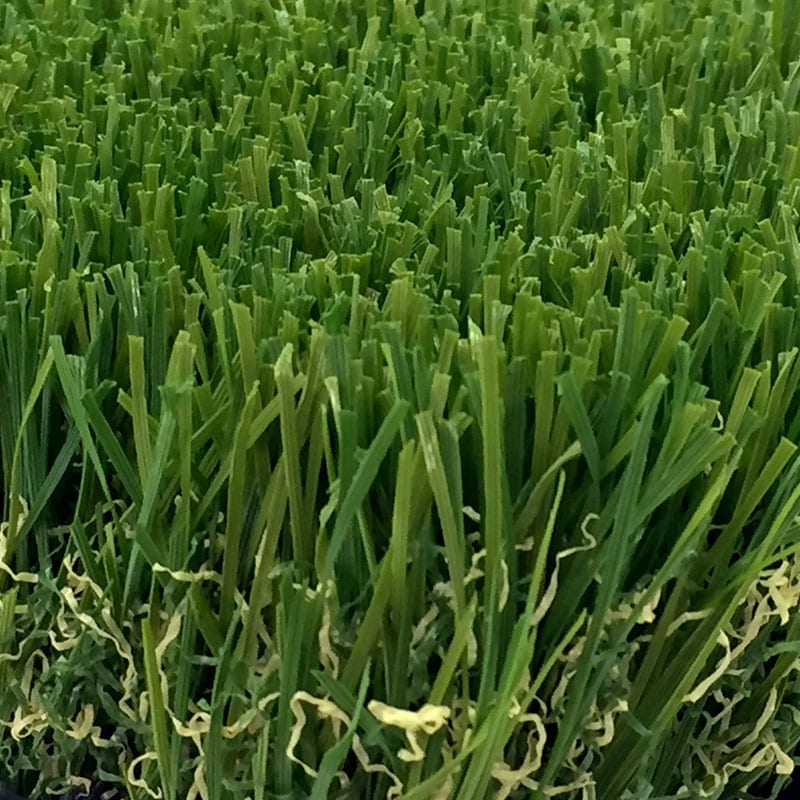
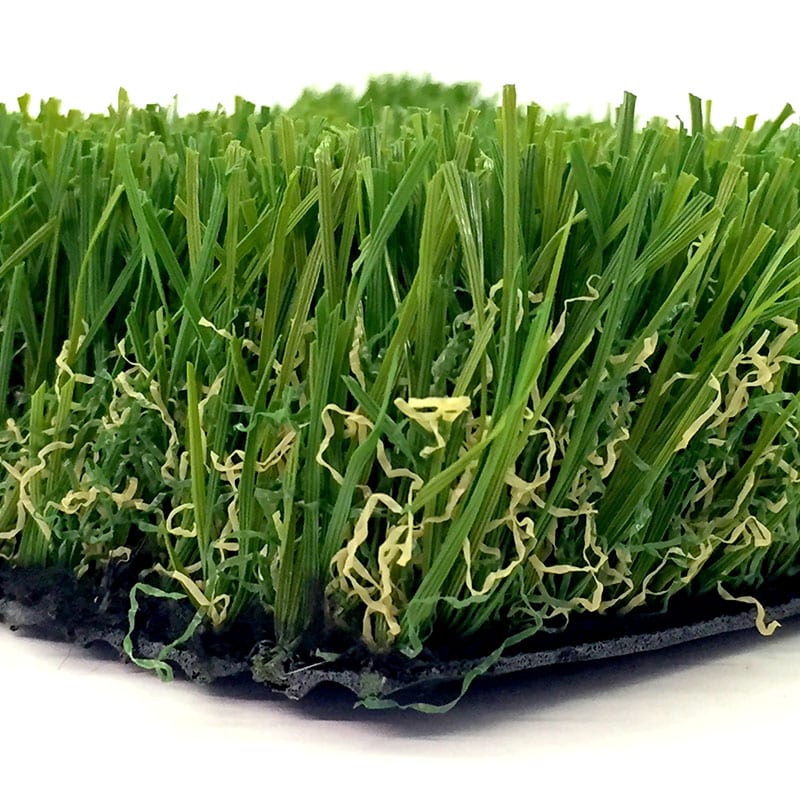
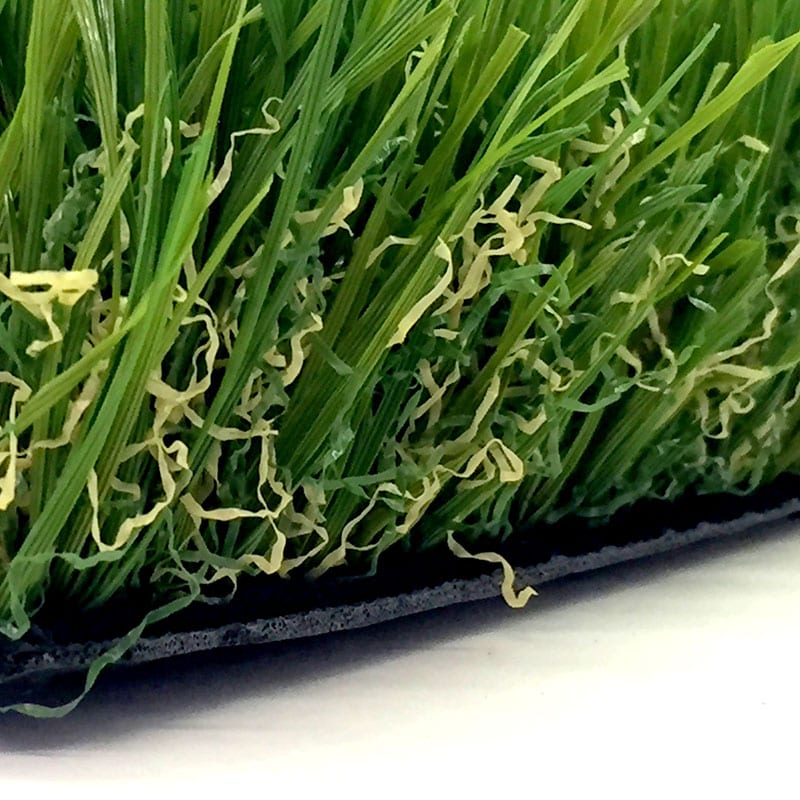
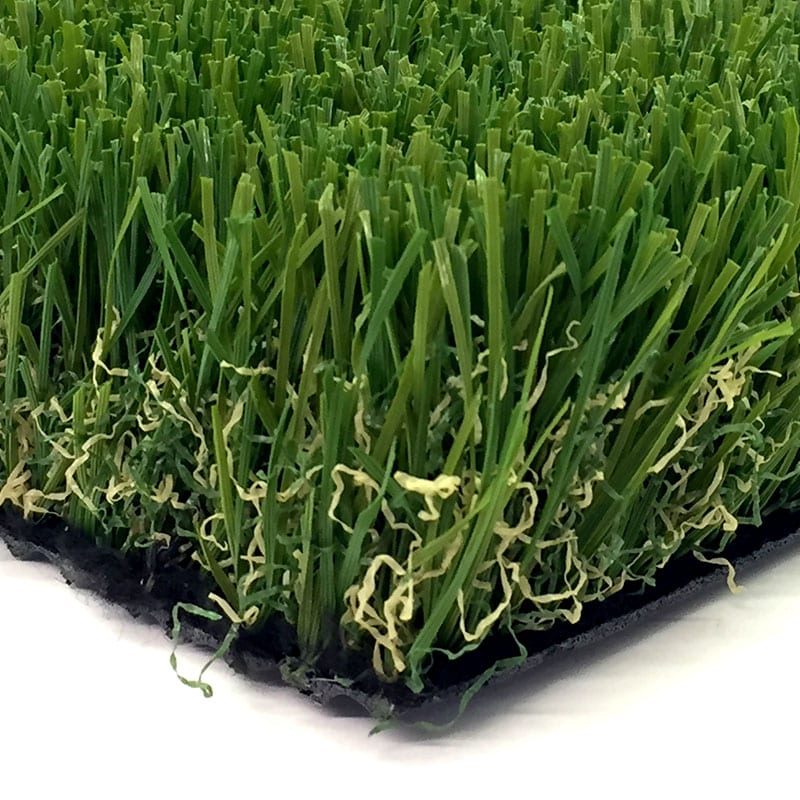
Southern Artificial Turf provides synthetic turf for a range of spaces, including playgrounds and putting greens. Our turf is UV resilient, virtually maintenance-free, and needs no watering, mowing, or fertilizing. Quad-color technology is designed to replicate the look of natural grass.
Ready to plan your courtyard? Get a quote from Southern Artificial Turf and turn that bare or muddy space into a courtyard people actually use.
A courtyard that looks good on day one but floods by August is a wasted investment. Get the zones, drainage, and material right from the start. Southern Artificial Turf can help you plan the layout, choose turf built for commercial traffic, and install a surface that holds up. Get started with Southern Artificial Turf and get a courtyard that stays green and usable all year.
Frequently Asked Questions
How much does artificial turf cost for a commercial courtyard?
Pricing depends on quantity, site conditions, and delivery, so request a quote from Southern Artificial Turf for current figures. Factor in long-term savings from eliminated mowing, watering, and fertilizing when comparing against natural grass.
What hardscape materials pair well with artificial turf in a courtyard?
Concrete pavers, natural stone, and composite decking are common hardscape companions to turf. Pavers can help define zones, stone can add texture for seating areas, and composite deck can raise a section for visual interest.
How do you maintain artificial turf in a busy commercial courtyard?
Artificial turf is virtually maintenance-free and needs no watering, mowing, or fertilizing. Southern Artificial Turf’s turf has a drainage capacity of 30 inches per hour and is made from 100% non-abrasive polyethylene fiber.
Will artificial turf hold up in hot, humid Southern climates?
Southern Artificial Turf’s turf is UV resilient and uses quad-color technology. It meets or exceeds EPA standards for RCRA hazardous waste heavy metals, including lead.