
Last Updated: November 11, 2026
Quick Summary
The best base materials for synthetic grass installation are compacted aggregates such as Class II road base, graded crushed stone and angular crushed gravel. Class II road base is the common all-around choice because its fines lock together into a firm, stable surface. Drainage-focused sites may need open-graded gravel or drainage rock instead.
- Class II road base is recommended as a general-purpose option for most installations.
- Skipping compaction is the most common installation mistake and can cause uneven settling.
- Use angular, graded material for structural jobs; rounded gravel does not interlock.
- Avoid limestone chat on freeze-prone sites because its fines can heave.
- Convert area and depth to cubic yards, then tons, and add a 5 to 10 percent waste allowance.
Table of Contents
- Class II Road Base: The Most Common All-Around Choice
- Crushed Stone, Gravel and Limestone Chat: Granular Options Compared
- Decomposed Granite and Drainage Rock: When Water Flow Is the Priority
- What to Put Under Artificial Grass for Dogs and Heavy Use
- The Cheapest Sub-Base for Artificial Grass and How to Keep Costs Down
- Booking Your Base Preparation and Turf Installation
- Frequently Asked Questions
Choosing the best base materials for synthetic grass installation is the decision that determines whether your turf stays level, drains properly and lasts. The base is where most synthetic grass failures start. Turf looks fine on day one.
The base is the layer of compacted aggregate between the native soil and the turf. It carries weight, moves water away and keeps the surface flat.
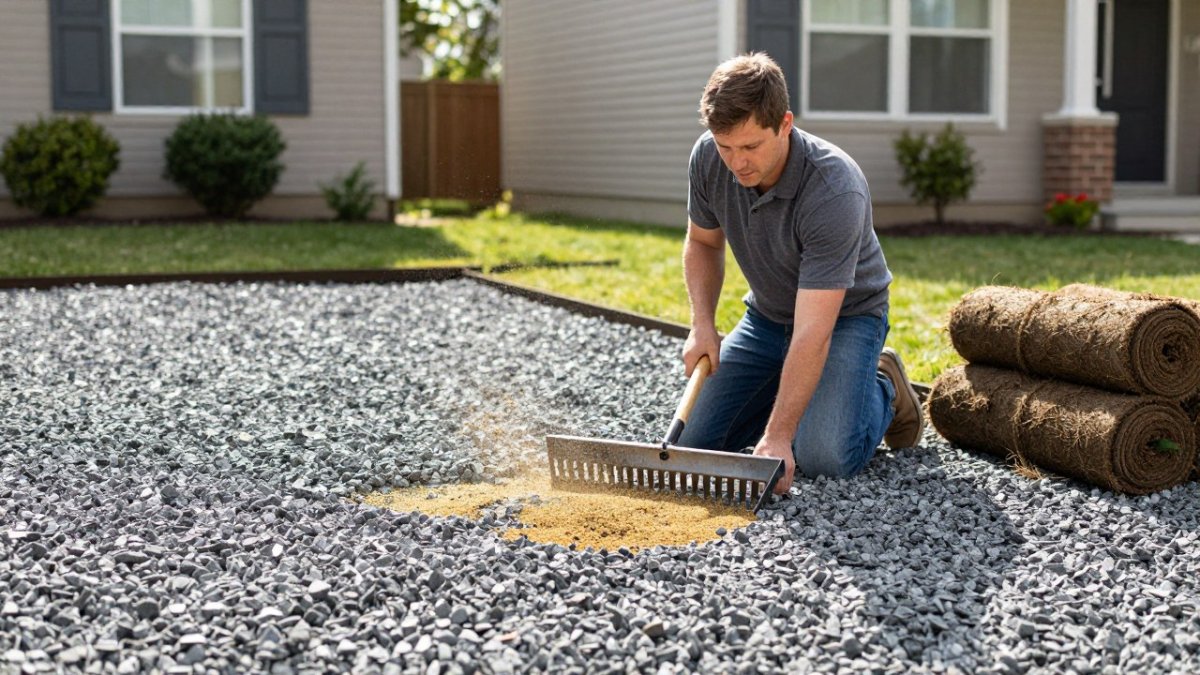
Watch out: skipping compaction is the most common installation mistake. A loose base will settle unevenly under foot traffic, and no turf product can correct that after the fact.
Class II Road Base: The Most Common All-Around Choice
Class II road base is a crushed-rock aggregate that contains fine particles. Those fines lock together when compacted, which creates a firm, stable surface. For most residential backyards, it is the general-purpose choice.
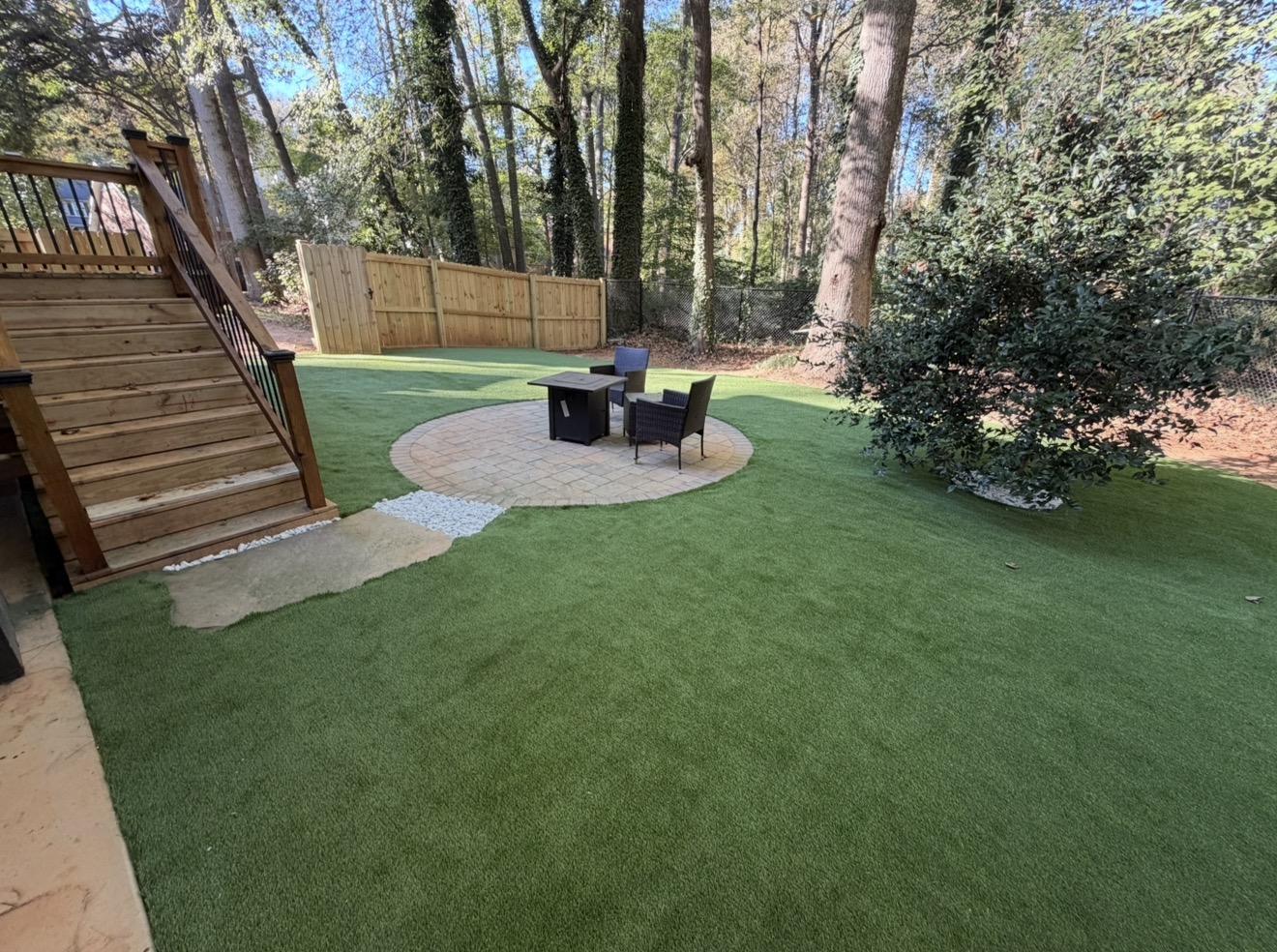
The material works because the mix of large stone and fines compacts into a solid layer. That gives you a surface that resists sinking and holds its shape under foot and equipment traffic.
Pros:
- Compacts into a stable, level base
- Recommended as a general-purpose option for most installations
- Widely available from aggregate suppliers
Cons:
- Drainage is slower than open-graded granular materials
- Supplier grading varies, so confirm the mix before ordering
Class II road base is a common default for typical yards, but drainage-focused options are worth comparing if water pooling is a concern.
Crushed Stone, Gravel and Limestone Chat: Granular Options Compared
These granular materials are commonly listed as suitable artificial turf bases because their structure allows water to pass through.
| Material | Typical Size Range | Fines Content | Water Passage | Compaction Behavior | Best Fit | Poor Fit |
|---|---|---|---|---|---|---|
| Crushed stone (angular, graded) | 3/4 in. down to dust | Moderate to high | Good | Locks tightly; strong when graded | Mixed-use yards, drive-on edges | Sites needing fast drainage under saturated soil |
| Crushed gravel (angular) | 3/4 in. to 1 in. | Low | Very good | Weaker without fines; needs mechanical compaction | Drainage-focused areas, low spots | Slopes steeper than about 3:1 without edging |
| Limestone chat | 1/4 in. and smaller | High | Moderate | Packs firmly; can bind like concrete | Flat, level sites, patio surrounds | Freeze-prone sites where fines heave |
| Pea gravel (rounded) | 3/8 in. rounded | None | Excellent | Does not interlock; surface rocks underfoot | Decorative borders only | Any structural base under turf |
Crushed stone locks together well when it contains a range of sizes from 3/4 in. down to dust.
Crushed gravel drains well but can shift if it lacks fines, so it needs careful compaction in thin lifts. Use angular gravel, not rounded river rock.
Limestone chat packs firmly and suits level ground.
Pea gravel is sometimes suggested because it drains freely, but it is a poor structural base under turf. The rounded particles roll instead of locking, and the surface will not stay flat under foot traffic.
Matching the Granular Choice to Your Site
The right granular material depends on what is under it and how water behaves on the site. A single general-purpose answer leaves performance on the table.
- Clay soil: water percolates slowly, so a drainage-focused layer matters more than maximum stiffness. Use angular crushed gravel over a compacted crushed-stone sub-layer, and confirm the finished base slopes away from structures.
- Sandy soil: water moves quickly, so stability becomes the limiting factor. A densely graded crushed stone or Class II road base compacts better than open-graded gravel on sandy subgrade.
- Wet or low-lying sites: open-graded crushed gravel with a geotextile separation layer beneath keeps fines from migrating up and clogging the voids.
- Freeze-prone sites: avoid materials with heavy fines, such as limestone chat, because water held in the fines expands and heaves. Angular crushed stone with a controlled fines content performs better through freeze-thaw.
- Sloped sites: angular, graded material holds grade better than rounded gravel, and edging becomes mandatory to keep the base from creeping downhill.
Watch out: using rounded gravel alone as the base. Rounded stone does not interlock, and the surface will rock underfoot. Choose angular, graded material for structural jobs.
Check the supplier’s grading sheet before you buy. Mixes labeled only by name can vary between yards, and two loads of “crushed stone” can behave very differently under the compactor.
Decomposed Granite and Drainage Rock: When Water Flow Is the Priority
Decomposed granite and drainage rock are the choices to consider when water movement matters more than maximum stiffness. Decomposed granite is cited as permeable, and it is also used as a top layer in pool-area base discussions.
These materials are a good fit for low spots, pool surrounds and sites that stay wet after rain. The trade-off is that they need a well-compacted sub-layer beneath them to stay put.
Pros:
- Strong water passage
- Useful around pools and wet areas
Cons:
- Less rigid than densely graded road base
- Grading and installation depth vary by source, so verify before specifying
Before choosing a base, it helps to observe how water currently moves across a site. If it pools, drainage rock or decomposed granite may merit a closer look, paired with a compacted base beneath.
What to Put Under Artificial Grass for Dogs and Heavy Use
Dogs and heavy foot traffic put more stress on a base than a decorative lawn does. Pets dig, run in the same lines and leave urine that can reach the infill.
Denser, well-compacted base materials resist the wear that comes from repeated digging and running. If heat is a concern on a dense base, see whether sand infill makes artificial grass hotter, with facts and fixes.
Common mistake: ignoring what happens to urine that soaks through the turf. Learn how to remove dog urine smell from turf infill if odor has already set in.
The Cheapest Sub-Base for Artificial Grass and How to Keep Costs Down
The lowest-cost base is usually a locally sourced crushed aggregate, but the cheapest material is not always the cheapest installation. A poorly compacted base costs more to repair than a properly built one costs to install. The way to keep costs down without cutting corners is to calculate the quantity and depth correctly before you order, then compare installed cost rather than sticker price per ton.
Estimating Base Volume by Area and Depth
Aggregate is sold by the ton or by the cubic yard, so convert your lawn area and base depth into volume first. The method below works for any rectangular or irregular area once you break it into simple shapes.
- Measure the area in square feet (length x width for rectangles; split irregular yards into rectangles and triangles and add them).
- Choose the compacted depth. Most residential installations use a base in the range of 2 to 4 inches, with heavier-use and dog areas toward the deeper end. Confirm the depth with your installer, because it varies with soil and use.
- Convert depth to feet by dividing inches by 12 (for example, 3 in. = 0.25 ft).
- Multiply area by depth to get cubic feet.
- Convert to cubic yards by dividing cubic feet by 27.
- Convert to tons using the supplier’s density figure. Crushed stone and road base commonly run in the range of about 1.3 to 1.5 tons per cubic yard; ask your yard for the figure for the specific mix.
- Add a waste allowance of roughly 5 to 10 percent for compaction loss, spillage and grade correction.
As a worked example: a 500 sq ft lawn at 3 in. deep is 500 x 0.25 = 125 cubic feet, or about 4.6 cubic yards. At 1.4 tons per cubic yard that is roughly 6.5 tons before waste, or about 7 tons with a 10 percent allowance. Run the same steps for your own area and depth rather than guessing from bag counts.
Comparing Installed Cost, Not Just Material Price
Material price per ton is only one line in the budget. The installed cost of a base includes the aggregate, delivery, equipment rental or subcontractor time for excavation and compaction, geotextile fabric if the site needs it, and edging.
- Order by the ton from a local aggregate yard rather than by the bag; bagged material carries a large packaging premium.
- Confirm the grading so you do not pay for the wrong mix and then pay again to replace it.
- Budget for compaction equipment or hire it out; a plate compactor or vibratory roller is not optional for a structural base.
- Get the base depth right, because excess depth adds material and haul-away cost without adding stability.
- Ask about delivery minimums and haul-away for excavated soil, which is often a separate charge.
Silica sand is sometimes listed alongside base materials, but it is an infill rather than a base layer. Infill is priced separately from base aggregate, so confirm which product you are pricing before comparing numbers.
Pricing depends on quantity, delivery distance and site access. For current pricing, contact Southern Artificial Turf for a quote. If you are still deciding on the turf itself, see how to choose artificial grass for your backyard.
Booking Your Base Preparation and Turf Installation
Base preparation is the stage that largely determines the result, so plan it before you book the turf itself. Learn how long artificial turf installation takes so you can schedule the work around it. Confirm the depth, material and compaction method with your installer before the turf goes down.
Watch out: do not let the turf go down before the base is compacted and checked for level. Turf will not correct a low spot.
Contact Southern Artificial Turf for a quote, and discuss base options for your specific yard, drainage conditions and use before installation. Review this turf maintenance care guide to understand the upkeep the base and turf will need afterward.
Frequently Asked Questions
What is the best base material for artificial grass?
For most residential lawns, Class II road base is the most common choice because its crushed rock and fine particles compact into a firm, stable layer. Crushed stone and decomposed granite are strong alternatives when water passage matters more than firmness. The right pick depends on soil type, drainage and how the space will be used. Current pricing depends on quantity, delivery and site conditions, so request a quote from Southern Artificial Turf for an exact figure.
Is Class 2 road base good for artificial turf?
Yes. Class 2 road base is widely used under artificial turf because it contains crushed rock and fines that compact tightly, producing a level, load-bearing surface. It is generally considered a good all-around sub-base. Installers typically compact it in layers and check for a firm, even surface before laying the turf. Proper compaction and grading matter more than the material name alone, so a poorly compacted layer of any material will cause settling and puddling.
What should I put under artificial grass for drainage?
Granular materials with open structure, such as crushed stone, gravel, limestone chat and decomposed granite, allow water to pass through more readily than dense, fine-graded materials. Drainage also depends on the depth and compaction of the base and on grading that channels runoff away from the house. Clay soils drain poorly, so they often need a thicker granular layer and a drainage path. Ask your installer to confirm the grading plan for your yard.
What is the cheapest sub-base for artificial grass?
Lower-cost options usually include locally sourced crushed stone or road base, but the cheapest material is not always the best value. A thin or poorly compacted base can lead to settling, dips and drainage problems that cost more to fix later. Compare total installed cost, including delivery, compaction and grading, rather than material price per ton alone. Pricing varies by quantity and location, so request a quote from Southern Artificial Turf.