
Table of Contents
- Why Dog Urine Odor Persists in Artificial Turf Infill
- Best Enzymatic Cleaner for Artificial Turf
- Is Vinegar Safe for Artificial Grass
- How to Prevent Dog Urine Smell in Artificial Grass
- Immediate Cleaning Steps for Fresh Pet Accidents
- When to Replace or Refresh Infill Material
- Conclusion
- Frequently Asked Questions
Last Updated: September 20, 2026
Why Dog Urine Odor Persists in Artificial Turf Infill
The issue of dog urine smell turf infill is one of the most common complaints from pet owners. The problem isn’t just surface-level. It’s deep in the infill material itself.
When a dog urinates on synthetic grass, the liquid soaks through the fibers and settles into the infill layer beneath. This is where ammonia and bacteria thrive. Unlike natural soil, which breaks down organic compounds over time, artificial turf infill traps these odorous compounds. The infill holds moisture, creating an ideal environment for bacterial growth.
How Ammonia and Bacteria Break Down in Infill
Ammonia is the primary culprit behind that pungent urine smell. When bacteria in the infill break down urine at the molecular level, they release ammonia gas. This gas gets trapped in the infill granules and rises through the synthetic fibers, creating persistent odor.
The bacteria don’t stop working after a few hours. They continue breaking down organic matter for days or weeks if conditions remain moist. Warm, humid climates accelerate this process. In the South, where heat and humidity are constant, bacterial activity speeds up even more.
The infill material itself plays a crucial role. Different infill types, silica sand, zeolite, rubber granules, absorb and retain moisture differently. Some infill materials naturally trap odors more than others.
The Role of Infill Material in Odor Retention
Not all infill is created equal when it comes to odor control. Silica sand, a common choice, absorbs urine readily and holds moisture. Zeolite, a mineral with antimicrobial properties, offers better odor suppression. Rubber infill, often made from recycled tires, can retain odors longer than mineral-based options.
The infill’s porosity determines how much liquid it holds. Fine-grain infill compacts easily and traps more moisture. Coarser infill allows better drainage but may still retain some urine deep within the layer.
At Southern Artificial Turf, we understand that infill choice directly impacts odor management. Our installations are designed with drainage capacity of 30 inches per hour, which helps flush away liquids before they saturate the infill completely.
Best Enzymatic Cleaner for Artificial Turf
Enzymatic cleaners are the most effective solution for removing dog urine smell turf infill. They work differently than vinegar or baking soda. Enzymes actually break down the odorous compounds at the molecular level.
How Enzyme Cleaners Break Down Odorous Compounds
Enzymes are biological catalysts. They attack the specific compounds in urine that cause odor. Protease enzymes break down proteins. Amylase enzymes break down organic matter. Together, they neutralize the smell source rather than just masking it.
When you apply an enzyme cleaner to artificial turf infill, the enzymes penetrate the infill granules. They work on the urine compounds trapped there. This process takes time, typically 24 to 48 hours for full effectiveness. The enzymes need dwell time to work.
Look for enzyme cleaners labeled as pet-safe and designed specifically for artificial grass. General-purpose enzyme cleaners may not be formulated for synthetic fibers. Pet-specific enzyme cleaners contain the right balance of protease and amylase for urine breakdown.
Application Steps for Maximum Effectiveness
Proper application makes the difference between a cleaner that works and one that doesn’t.
Step 1: Identify the affected area. Find where the dog urinated. If you’re not sure, use a blacklight or UV flashlight, urine fluoresces under UV light.
Step 2: Rinse the area thoroughly. Use a hose to rinse the synthetic grass and infill. This removes surface urine before applying the enzyme cleaner.
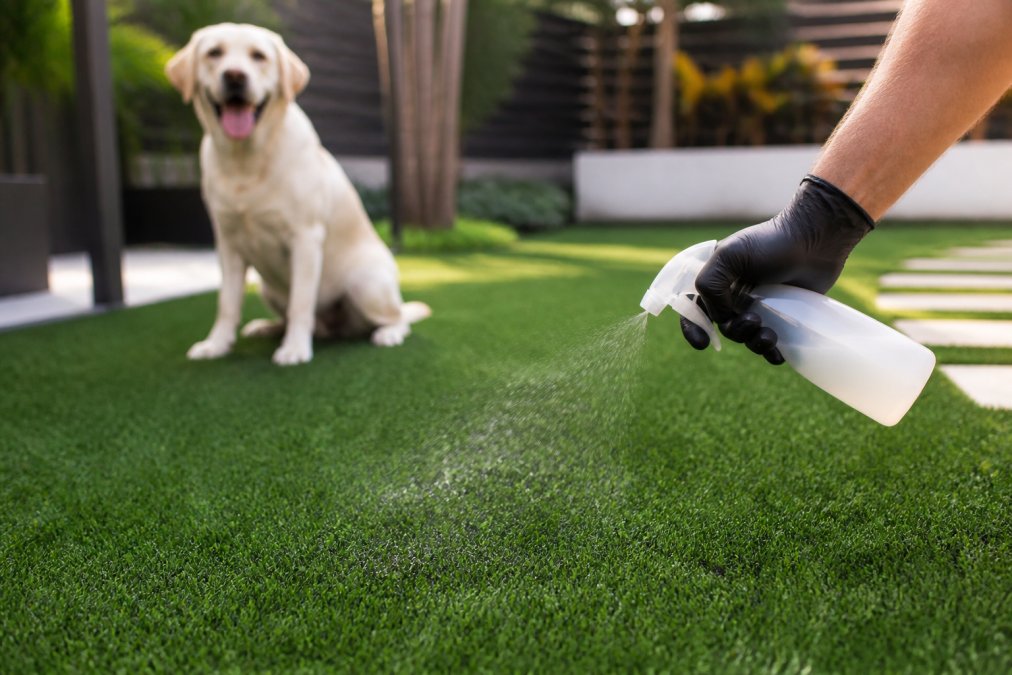
Step 3: Apply the enzyme cleaner. Follow the product instructions for dilution. Spray the cleaner directly onto the affected infill. Saturate the area so the enzymes penetrate deep into the granules.
Step 4: Allow dwell time. Let the cleaner sit for 24 to 48 hours. This is when the enzymes do their work. Don’t rinse or disturb the area during this time.
Step 5: Rinse again. After dwell time, rinse the area thoroughly with water. This removes the enzyme solution and the broken-down compounds.
Step 6: Allow to dry. Let the infill dry completely before allowing pets back on the turf.
Is Vinegar Safe for Artificial Grass
Vinegar is a popular home remedy for odor removal. It’s safe for artificial grass, but it has limitations compared to enzyme cleaners.
Vinegar works by neutralizing ammonia through chemical reaction. The acetic acid in vinegar reacts with ammonia compounds, reducing odor temporarily. However, vinegar doesn’t break down the urine compounds themselves. It only masks the smell.
Vinegar and Water Solution Ratios
A standard vinegar solution uses equal parts white vinegar and water. Mix one part vinegar with one part water in a spray bottle. Some people use stronger ratios, one part vinegar to half part water, for stubborn odors. Never use pure vinegar, as it can damage the synthetic fibers over time.
Spray the solution directly onto the affected area. Let it sit for 30 minutes to an hour. Then rinse thoroughly with water. The vinegar smell will fade as it dries.
When to Use Vinegar vs. Enzyme Cleaners
Vinegar works best for fresh accidents, urine that’s been in the infill for less than 24 hours. It’s quick and inexpensive. For older, more stubborn odors, enzyme cleaners are superior. They actually break down the compounds causing the smell.
Many pet owners use both. Apply vinegar immediately after an accident for quick odor reduction. Use enzyme cleaners weekly or monthly for deeper, longer-lasting results.
How to Prevent Dog Urine Smell in Artificial Grass
Prevention is easier than removal. Smart maintenance stops odors before they develop.
Maintenance Routines for Pet Owners
Establish a cleaning schedule based on your dog’s bathroom habits. If your dog urinates on the turf multiple times daily, rinse the area after each use. A simple water rinse prevents urine from settling into the infill.
Weekly deep cleaning prevents odor buildup. Mix a mild enzyme cleaner or vinegar solution and spray the entire pet area. Let it sit briefly, then rinse. This removes any urine compounds before they accumulate.
Remove solid waste immediately. Don’t leave feces on the turf. Bacteria in feces accelerate odor development. Scoop daily.
Deodorize regularly. Once a month, apply an antimicrobial deodorizer designed for artificial turf. These products inhibit bacterial growth, reducing odor at the source.
Drainage System Upgrades to Stop Saturation
Poor drainage is the root cause of persistent odor. If urine pools on the surface or saturates the infill, odor problems multiply.
Check your turf’s sub-base. A permeable backing allows water to drain through the synthetic fibers. If water pools on top after rinsing, your sub-base may be inadequate.
Ensure the ground beneath the turf slopes slightly for drainage. Water should flow away from the turf, not pool underneath. Even a 1-2% slope improves drainage significantly.
Consider a French drain or perforated drainage pipe installed beneath the turf. This channels water away from the infill layer. It’s especially important in areas where the turf sits on compacted soil.
Southern Artificial Turf installations are engineered with superior drainage capacity. Our systems handle 30 inches per hour, preventing saturation even in heavy-use pet areas.
Immediate Cleaning Steps for Fresh Pet Accidents
Speed matters. The faster you clean a fresh accident, the easier odor removal becomes.
Rinsing and Dwell Time Best Practices
As soon as you notice an accident, rinse the area with water. Use a hose set to medium pressure. Don’t use high pressure, it can damage the synthetic fibers. Rinse for at least 30 seconds to flush urine through the infill.
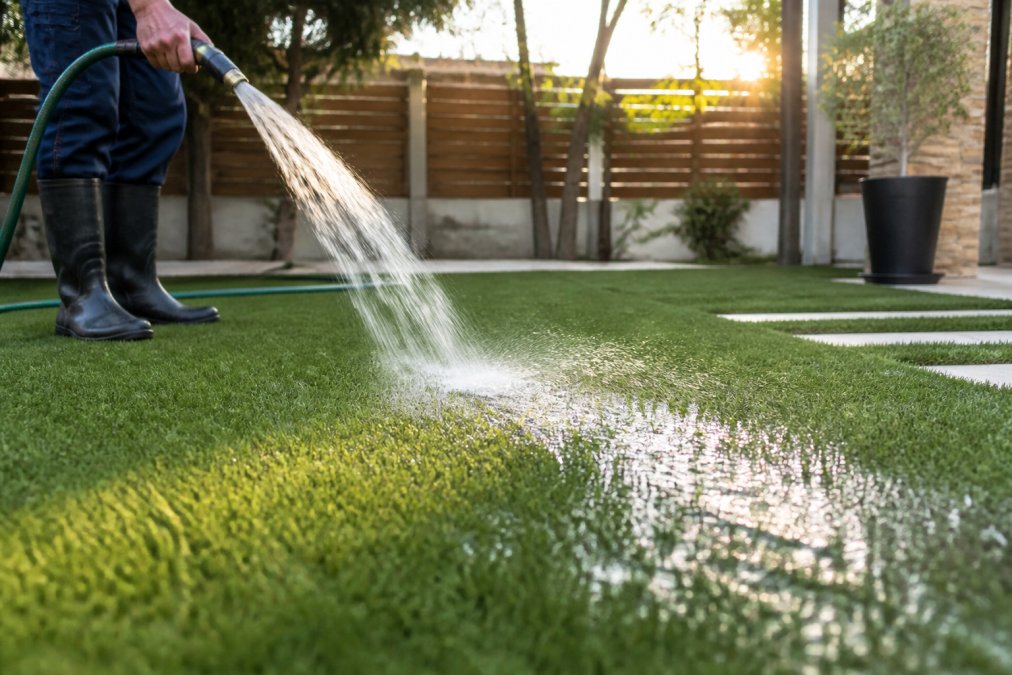
After rinsing, the infill is wet but the urine has been partially flushed.
When to Replace or Refresh Infill Material
Infill doesn’t last forever. Over time, especially in heavy-use pet areas, infill degrades and loses effectiveness.
Signs of Long-Term Turf Degradation
Persistent odor despite regular cleaning is the first sign. If odor keeps returning after enzyme treatment, the infill itself may be saturated beyond recovery.
Infill Material Comparison for Pet-Heavy Homes
For homes with multiple dogs or heavy use, infill choice matters. Silica sand is affordable but absorbs and retains urine readily. It requires frequent replacement in high-use areas.
Conclusion
Dog urine smell in artificial turf infill is manageable with the right approach. Fresh accidents respond well to immediate rinsing and vinegar treatment. Stubborn odors require enzyme cleaners and proper dwell time. Long-term success depends on drainage, infill choice, and regular maintenance.
Frequently Asked Questions
What can I use to remove dog urine smell from artificial turf infill?
Enzyme-based cleaners are the most effective solution for breaking down odorous compounds at the molecular level. Apply the cleaner directly to affected areas and allow proper dwell time before rinsing thoroughly. For lighter odors, a vinegar and water solution (1:1 ratio) works well and is safe for synthetic fibers. For stubborn ammonia buildup, enzyme cleaners outperform household solutions because they target the bacteria responsible for the smell rather than just masking it.
Will vinegar damage artificial turf?
No, vinegar is safe for artificial grass when used properly. Mix equal parts white vinegar and water, apply to the affected area, let it sit for 10-15 minutes, then rinse thoroughly with a hose. The acidity helps neutralize ammonia without harming the synthetic fibers or permeable backing. However, vinegar works best for fresh accidents; enzyme cleaners are more effective for older, set-in odors that have saturated the infill.
How often should you deep clean turf infill for pets?
For homes with multiple dogs or heavy use, deep cleaning should occur monthly during peak seasons and quarterly otherwise. Spot-clean fresh accidents immediately by rinsing with water, then follow up with enzyme cleaner or vinegar solution within 24 hours. Regular maintenance prevents ammonia buildup and extends the life of your infill. Proper drainage is equally important, ensure water flows through the substrate efficiently to prevent urine saturation.
Does dog urine ruin artificial turf permanently?
Dog urine does not permanently damage quality artificial turf if treated promptly and maintained properly. The synthetic fibers themselves are resistant to urine, but prolonged saturation in the infill layer can cause odor buildup and bacterial growth. Regular cleaning, good drainage, and occasional infill refreshing keep your turf odor-free for years. Most pet-safe artificial grass systems are designed to handle animal waste when owners follow basic maintenance routines.