
Table of Contents
- Start With a Backyard Site Assessment Before You Shop
- Understanding the Types of Artificial Grass
- Artificial Grass Pile Height and Blade Construction
- How to Get Realistic Artificial Grass That Looks Natural
- Choosing Artificial Grass for Pets and Play Areas
- Installation, Base Layers, and Total Installed Cost
- Heat, Maintenance, and Long-Term Value
- Frequently Asked Questions
Last Updated: October 21, 2026
Start With a Backyard Site Assessment Before You Shop
Most homeowners start shopping for artificial grass by browsing photos. That’s backwards. The right turf for your backyard depends on how you use the space, not how it looks online. The site always tells you more than the catalog does.
The U.S. Environmental Protection Agency notes that a typical household uses a large share of its water outdoors, much of it on lawns, through its WaterSense program. That’s one reason homeowners look at artificial grass.
Measure Square Footage and Map Traffic Patterns
Grab a tape measure and sketch your yard on graph paper. Break it into simple rectangles and add them up. Then mark where feet actually land:
- The path from the back door to the grill
- Where dogs run and dig
- Where kids play ball or wrestle
- Shaded spots where furniture sits
High-traffic zones need denser turf. A quiet corner can take a lighter product. This map becomes your shopping list.
Check Drainage, Slope, and Shade
Water has to go somewhere. Walk your yard after rain and note where puddles sit. Check the slope with a level or a long board. Turf with strong permeability and a properly built base keeps water moving, and our own products are rated to drain 30 inches of rain per hour.
Shade matters too. Deep shade keeps any surface cooler, but it also hides wear and affects how turf fibers age. Note sun exposure across the day before you pick a product.
Photograph your yard at three times of day: morning, midday, and late afternoon. The shadows in those photos tell you more about heat and wear patterns than any spec sheet.
Understanding the Types of Artificial Grass
There’s no single “best” turf, only turf matched to a job. Most suppliers group products by use: landscape and residential turf, pet turf, playground turf, and putting green turf. Each type differs in blade height, density, backing, and infill.
Landscape turf favors a natural look for backyard lawns. Pet turf adds drainage and odor control. Playground turf prioritizes softness and shock absorption. Putting greens use short, dense blades for true ball roll. Knowing which category fits your yard narrows the field fast.
Artificial Grass Pile Height and Blade Construction
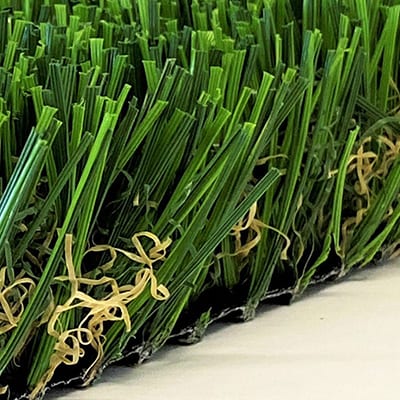
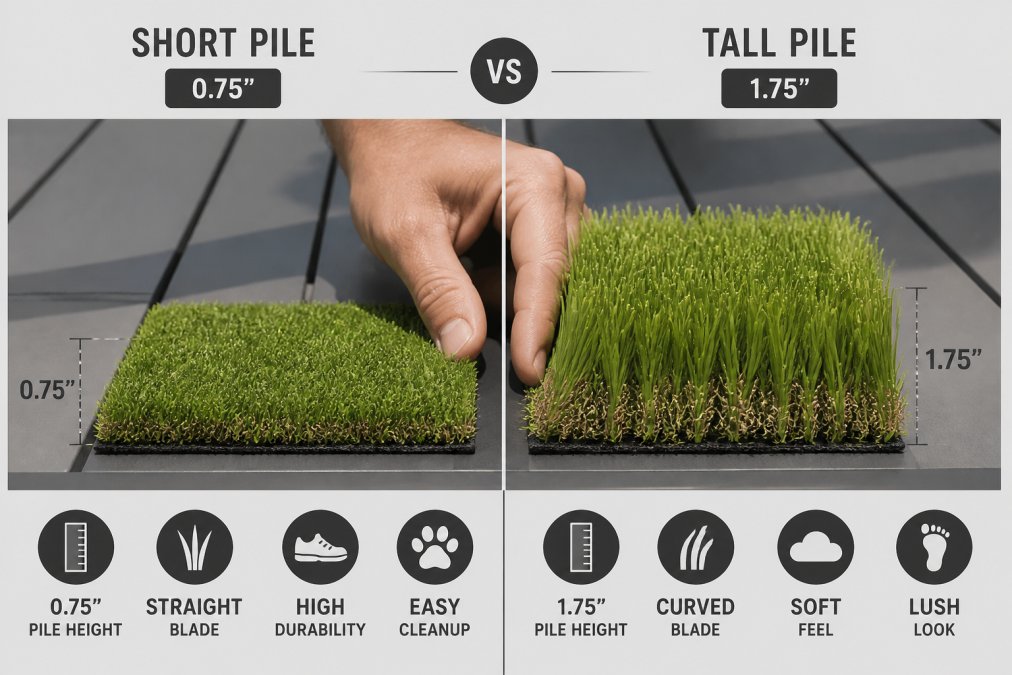
Pile height is the length of the grass blade measured from the backing. It’s the first spec most buyers check, and it drives both look and feel. Longer blades look lusher but can mat under heavy traffic. Shorter blades stay tidy but feel firmer.
Blade Shape, Texture, and Density
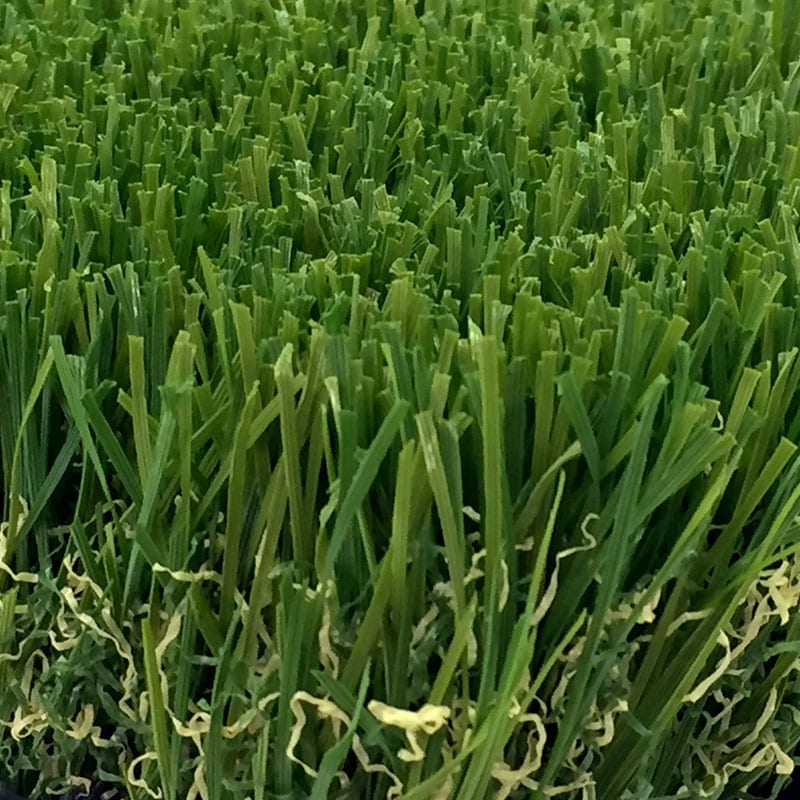
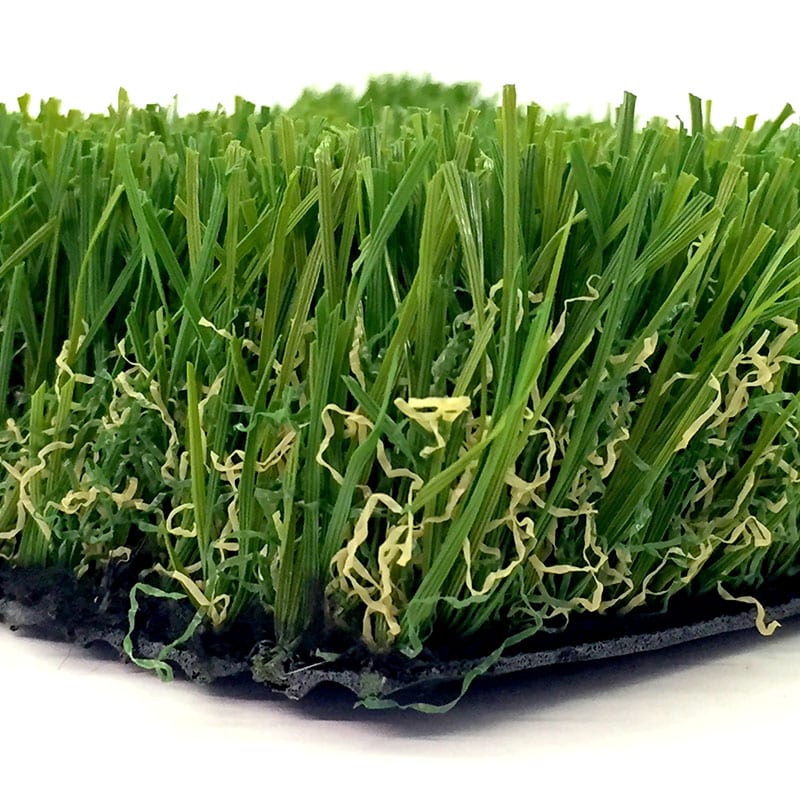
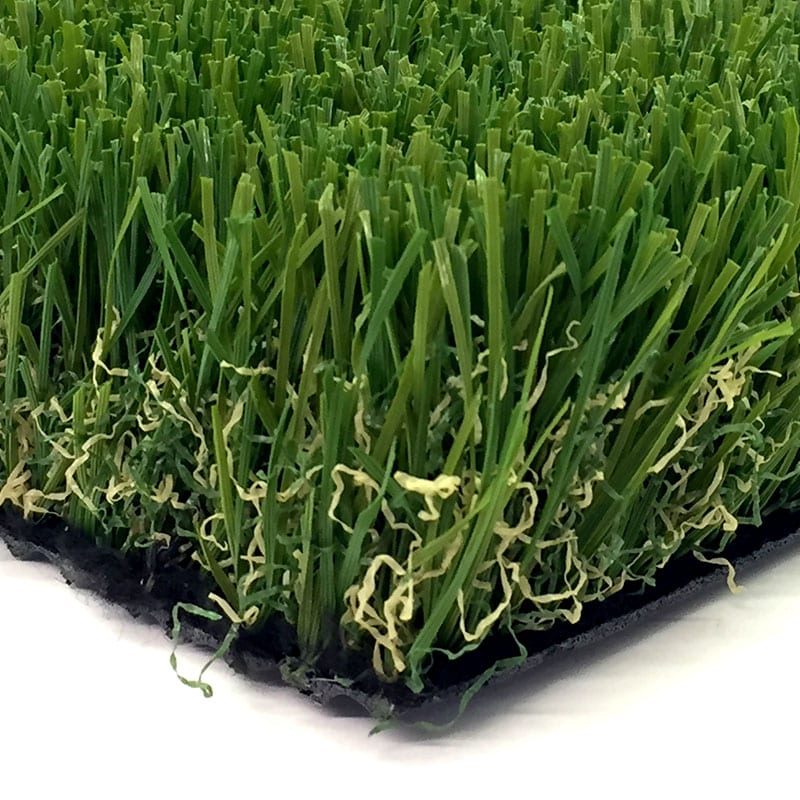
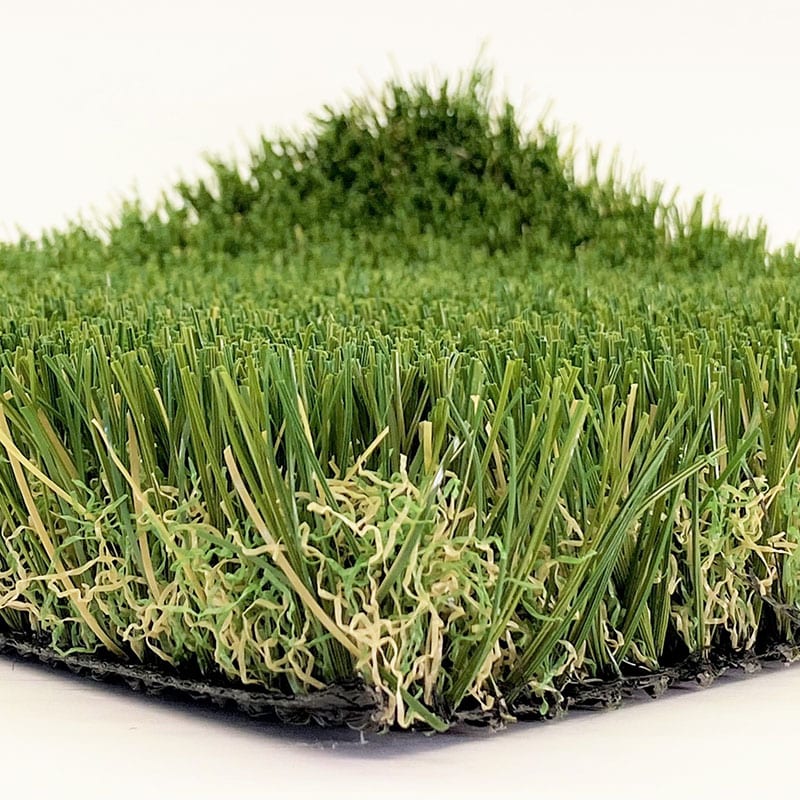
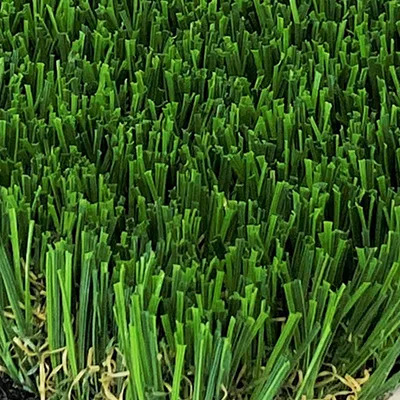
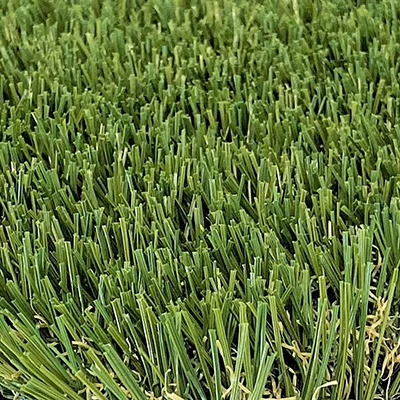
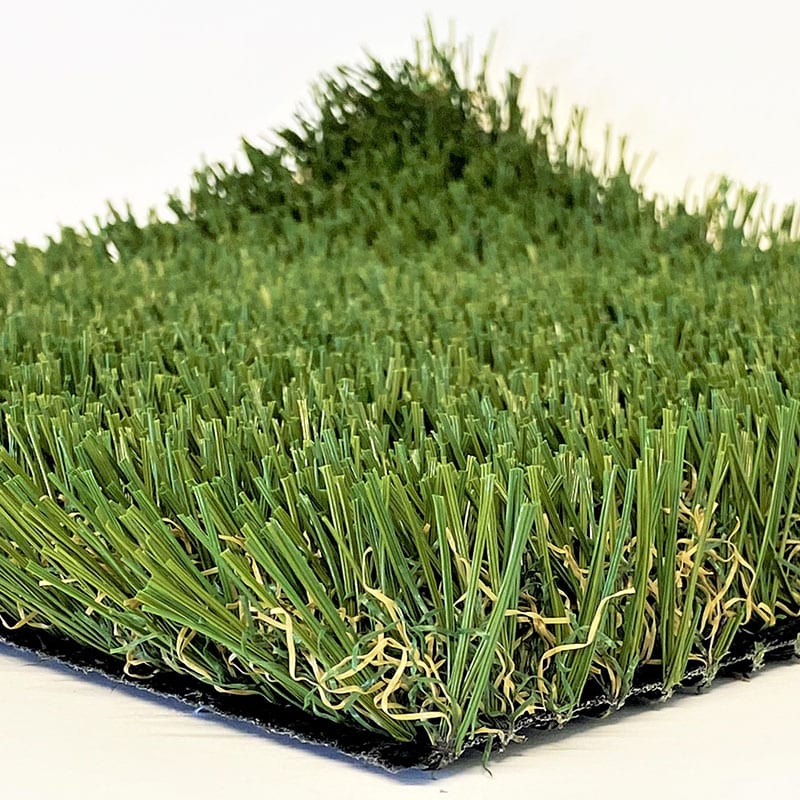
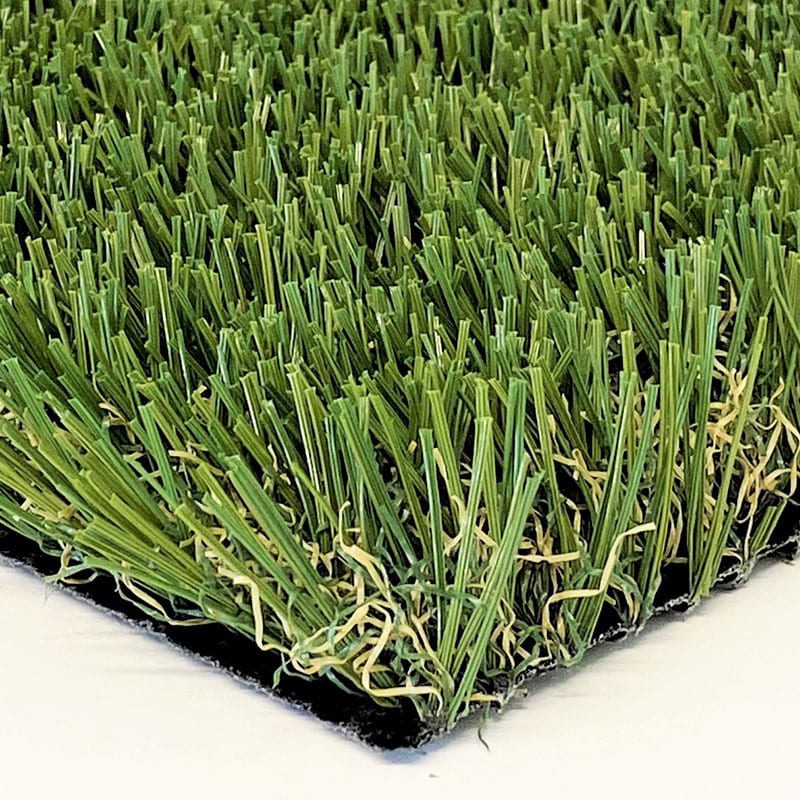
Blade shape affects how turf catches light. Curled or textured blades reflect light at different angles, which reads as more natural. Flat blades can look shiny and fake.
Density, often listed as face weight, tells you how much fiber sits per square foot. Denser turf handles foot traffic better and hides the thatch layer. For busy backyards, density matters more than raw pile height.
Our quad-color technology blends four tones into each blade set, and our 100% non-abrasive polyethylene fiber stays soft underfoot.
How to Get Realistic Artificial Grass That Looks Natural
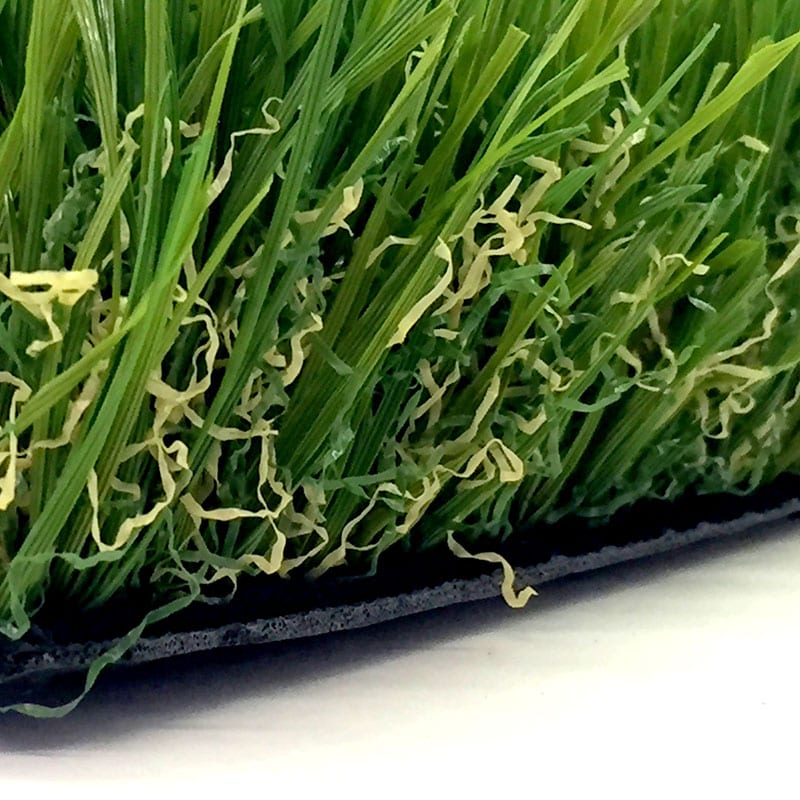
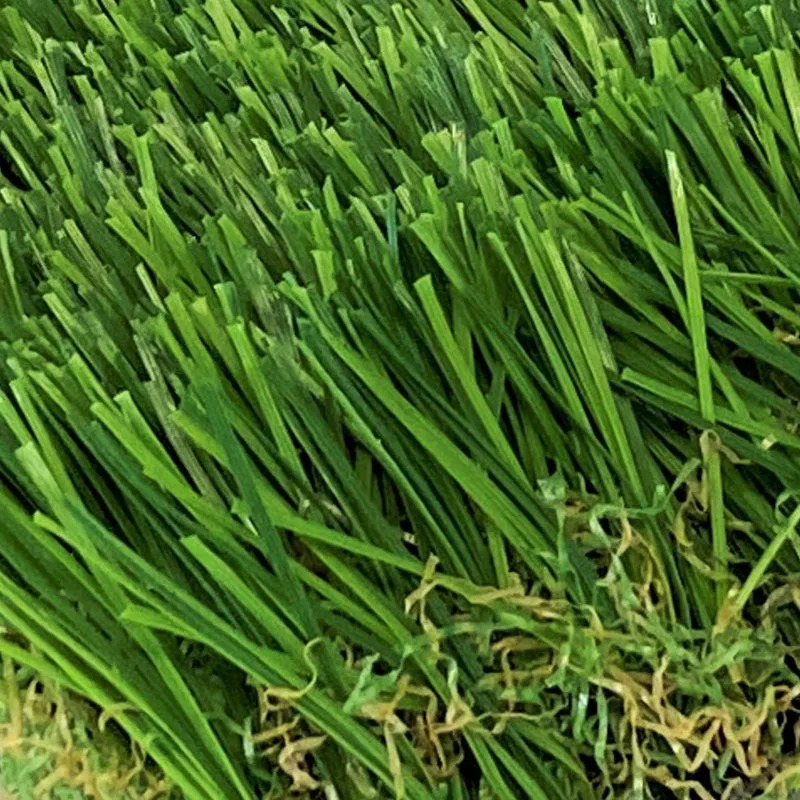
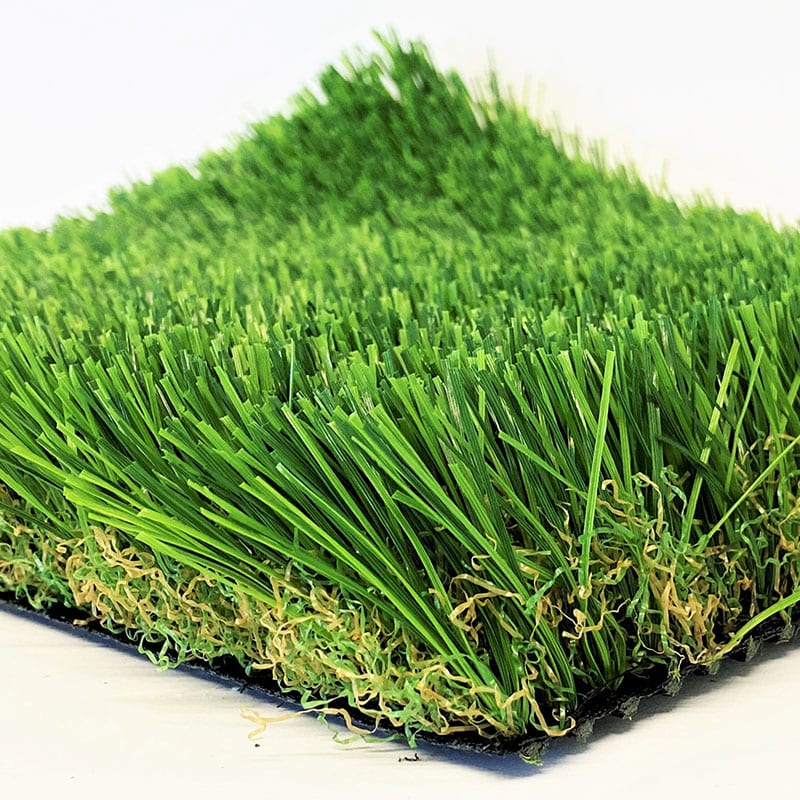
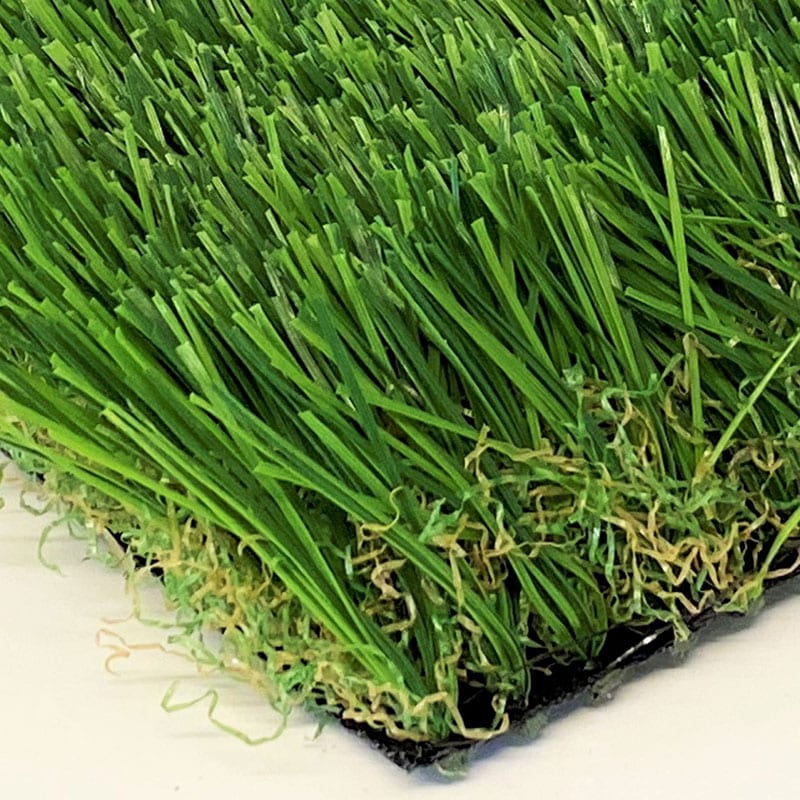
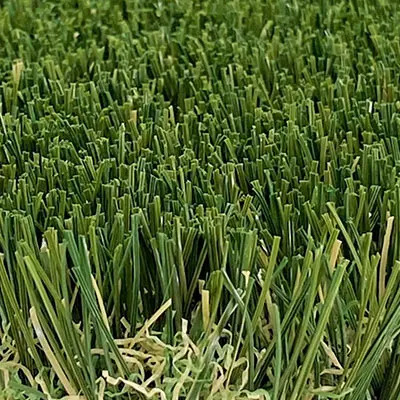
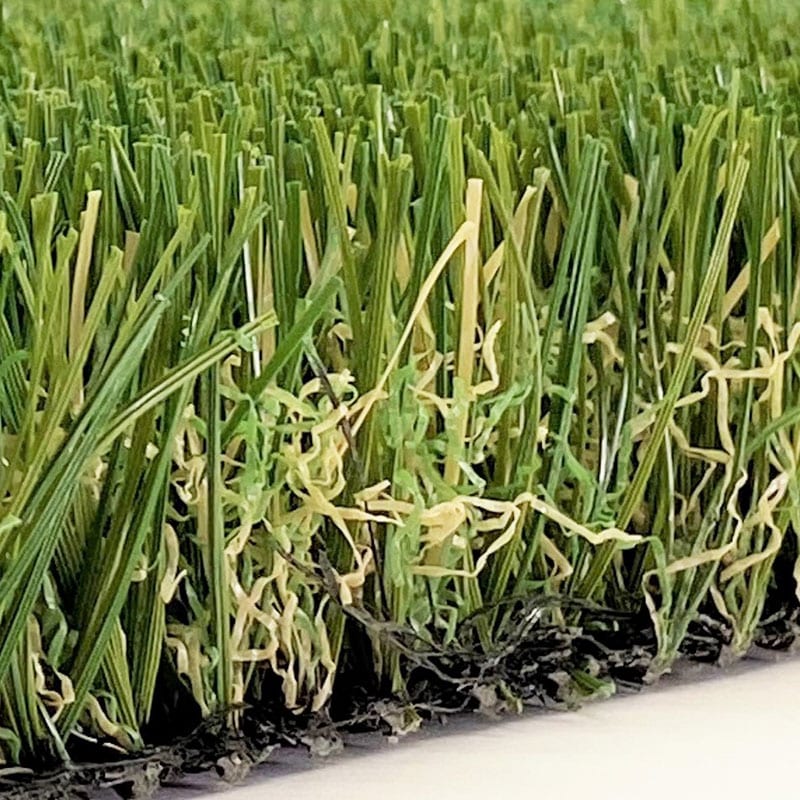
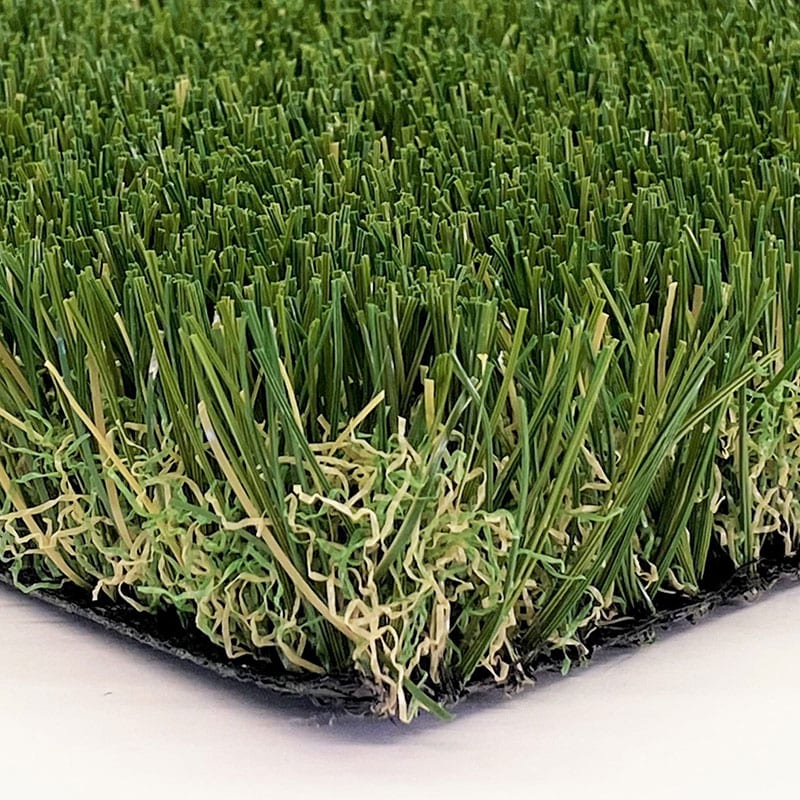
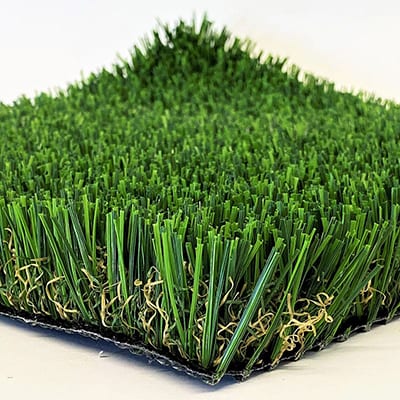
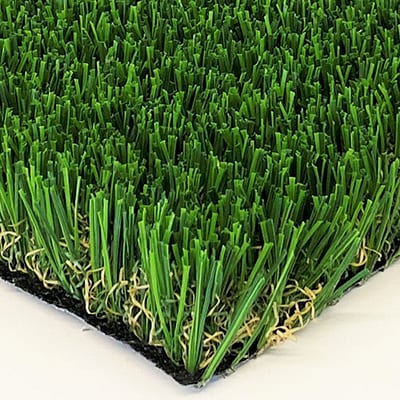
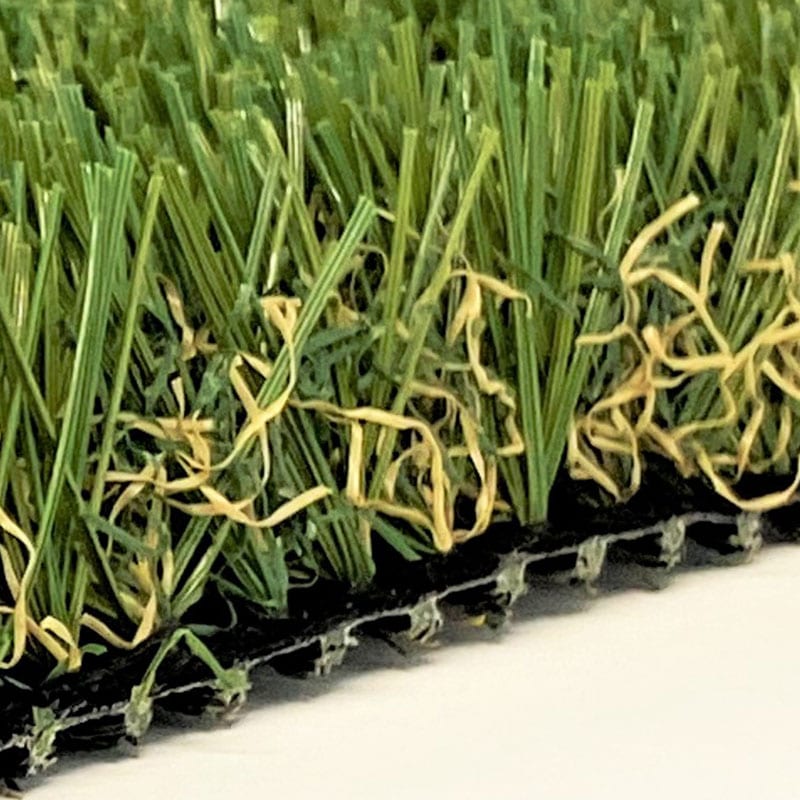
Realistic artificial grass comes down to three things: color variation, blade texture, and a thatch layer that mimics soil and dead grass. Multi-toned blades avoid the flat, single-green look that screams “fake.”
Ask for samples and view them outdoors, not under store lights. Sunlight exposes shine and color mismatch. Lay the sample on your patio and look at it from standing height, the way neighbors will see it.
- Check for multi-toned blades, not one solid green
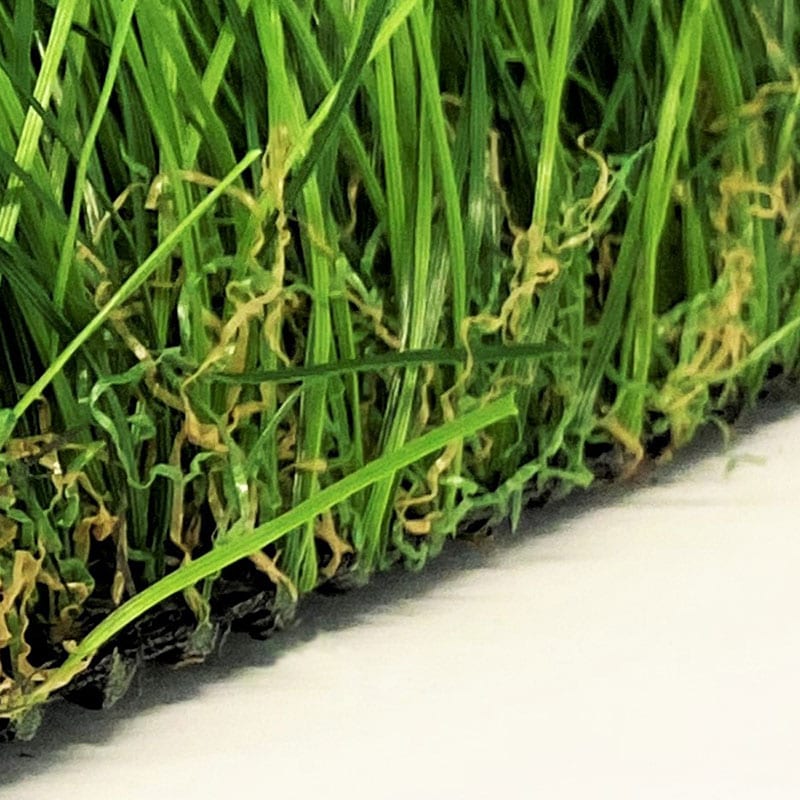
- Look for a brown thatch layer between blades
- Bend a blade and see if it springs back
- Compare the sample to real grass nearby
A good product should pass the ten-foot test: from ten feet away, it should read as lawn.
Choosing Artificial Grass for Pets and Play Areas
Pet owners need turf that drains fast, resists abrasion, and cleans up easily.
Play areas have different demands. Kids fall, so softness and shock absorption matter more than a perfect lawn look. Look for non-abrasive fibers and a base built to cushion impact.
Southern Artificial Turf‘s non-abrasive polyethylene fiber suits both jobs, and our turf meets or exceeds EPA standards for RCRA hazardous waste heavy metals, including lead.
Skipping a proper base layer to save time is the most common installation mistake. Poor drainage leads to standing water, odors, and premature wear, and fixing it later costs far more than doing it right.
Installation, Base Layers, and Total Installed Cost
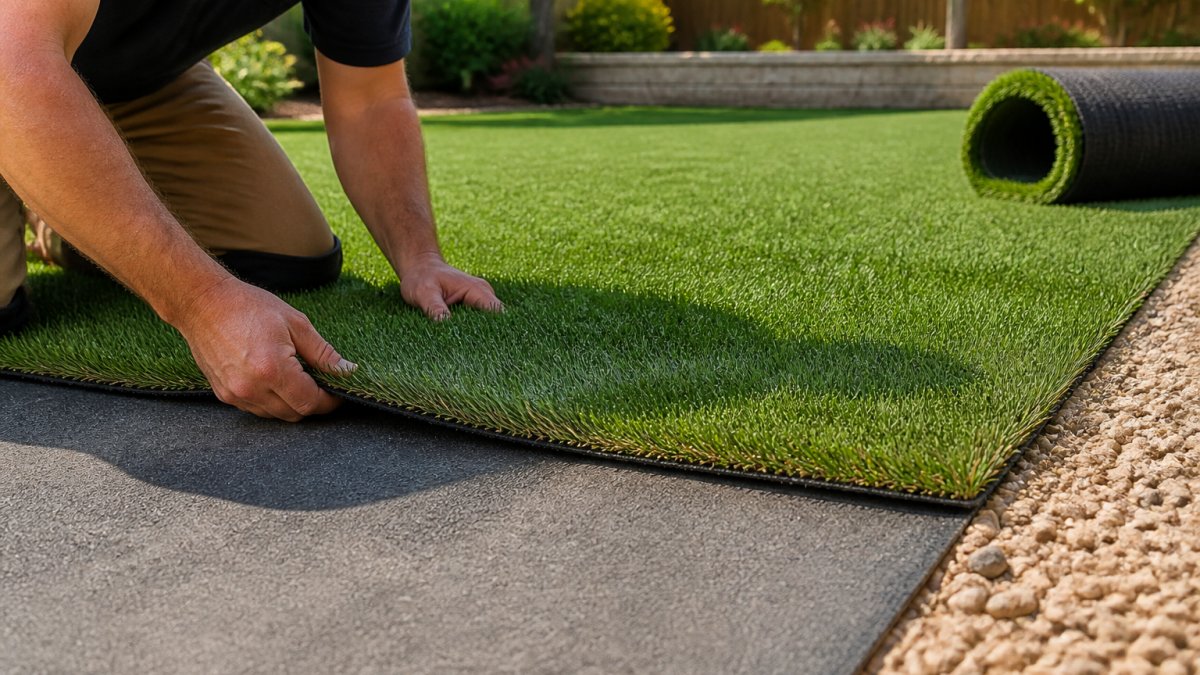
Installation quality decides how your turf performs, and the base layer does most of the heavy lifting. It drains water, supports the turf, and keeps the surface even. A typical backyard build includes excavation of the existing lawn, a compacted crushed-stone base, a weed barrier, the turf roll, seaming, infill, and edge securing. Skipping or shortchanging any of those steps shows up within a season or two.
Match the Turf to the Base You Can Build
Not every turf product works on every base. Before you fall in love with a sample, confirm three things with the supplier:
- Backing permeability. A perforated or woven backing lets water pass through; a solid backing needs a slope and drainage path. Ask for the drainage rate in inches per hour and compare it to your local rainfall intensity.
- Pile height vs. base depth. Taller, softer piles need a deeper, more tightly compacted base to stay flat under foot traffic. A common residential build uses roughly 3 to 4 inches of compacted crushed stone, but the right number depends on your soil and slope.
- Seam and edge compatibility. Seams belong on flat, well-compacted ground, not on a slope transition. Edging (bender board, aluminum, or paver border) has to be pinned into stable sub-base, not loose soil.
If a supplier can’t tell you the backing type, drainage rate, and recommended base spec for a product, that’s a signal to keep shopping.
What Drives the Installed Price
Material price per square foot is only one line on the quote. The installed number is driven by:
- Square footage and shape. Simple rectangles install faster than curved beds, tree rings, and multiple seams.
- Site prep. Removing existing lawn, hauling away debris, and correcting grade add labor.
- Base and drainage work. Excavation, stone delivery, compaction, and any French drain or slope correction.
- Turf product. Face weight, backing, and blade construction move the material cost.
- Infill. Silica sand, crumb rubber, coated sand, and antimicrobial infills carry different prices and different maintenance profiles.
- Access. A backyard reachable only through a side gate or over a fence costs more in labor than one a truck can back up to.
Because those variables swing widely by region and site, most installers quote per project rather than publishing a flat rate. Ask for a line-item quote that separates material, base, labor, infill, and cleanup so you can compare bids apples to apples.
Lifecycle Value, Not Just Sticker Price
A useful comparison puts the installed cost next to what you would spend on a natural lawn over the same period: water, mowing, fertilizing, reseeding, aeration, and occasional replacement. Artificial turf front-loads the cost and then runs on low maintenance; natural grass spreads the cost across years but never stops.
| Phase | What Happens | Why It Matters |
|---|---|---|
| Site prep | Remove old lawn, level ground, correct grade | Prevents uneven surface and ponding |
| Base layer | Compacted crushed stone, weed barrier | Drives drainage and stability |
| Turf install | Roll out, cut, seam, secure edges | Controls look and lifespan |
| Infill | Add and brush in infill | Supports blades, adds weight, affects feel |
| Cleanup | Rinse, brush, inspect | Final finish and check |
takeaway
The base layer is where most of your installation budget should go. Turf is replaceable; a bad base means pulling everything up.
Heat, Maintenance, and Long-Term Value
Artificial grass gets warm in direct sun, and that surprises some buyers, especially in sunny yards with kids and pets. Surface temperature depends on turf color, infill, shade, and airflow. Lighter-colored turf and lighter infill reflect more sunlight; darker turf and rubber infill absorb more. Shade from trees, a pergola, or a shade sail lowers surface temperature noticeably, and a quick rinse with a hose cools the surface on hot afternoons.
A Realistic Maintenance Schedule
Maintenance is light but not zero. A workable routine looks like this:
- Weekly: Remove leaves and debris, rinse pet spots, and brush high-traffic areas with a stiff-bristled brush to keep blades upright.
- Monthly: Check seams and edges, top up infill in worn spots, and inspect drainage paths after heavy rain.
- Seasonally: Deep-brush the whole surface, refresh infill where it has migrated, and check for compacted areas under furniture.
- Annually: Have the surface inspected for backing wear, seam lift, and drainage performance.
Odor control comes down to drainage and infill choice. Pet urine needs to pass through the turf and out of the base; if water pools, odor follows. Antimicrobial infills and zeolite-based products help, but they work only on top of a base that actually drains. Rinse pet spots promptly, and avoid letting waste sit on the surface.
Warranty, Safety, and Environmental Considerations
Warranty coverage varies widely.
On material safety, ask for documentation on heavy metals and product composition. Reputable suppliers can provide test results showing the product meets applicable federal standards for lead and other heavy metals.
On the environmental side, artificial turf saves water but is not zero-impact: it is a petroleum-based product, and end-of-life recycling options vary by region. Ask your supplier about recyclability and take-back programs before you commit.
Keep a stiff-bristled brush near the door. A two-minute brush of the dog’s favorite spot each week keeps blades upright and hides wear longer.
Long-Term Value
Long-term value depends on how the turf holds up under your actual conditions. UV-resilient fibers and a stable base are what carry a product past the warranty period. Compare the installed cost against the ongoing cost of water, mowing, fertilizing, and reseeding natural grass over the same years, and weigh that against replacement timing. A product that lasts a decade with light maintenance usually beats a cheaper one that mats or fades in three years.
Frequently Asked Questions
How do you prep your yard for artificial grass?
Remove the existing lawn, roots, and debris, then grade the soil so water runs away from your house. Install a compacted base layer of crushed stone, usually 3 to 4 inches deep, and roll out a weed barrier before the turf goes down. Good prep is what makes the drainage and the flat, stable surface work. If your yard slopes or holds water, fix that before turf arrives, because correcting it afterward means pulling the whole installation apart.
What pile height is best for backyard artificial grass?
Most backyards land between 1.25 and 1.75 inches of pile height. Shorter pile holds up better under heavy foot traffic and pets, while longer pile feels softer underfoot and looks fuller. For a family lawn with dogs and kids, a mid-range pile with a dense backing is the safer pick than a tall, plush product. Ask for samples in the actual pile height you are considering and walk on them before you commit.
Is there artificial grass that looks real?
Yes. Realistic artificial grass uses multi-toned blades with color variation, a mix of blade shapes, and a thatch layer that mimics the brown base of a natural lawn. Quad-color technology and varying blade heights add depth so the surface does not read as one flat green sheet. Look at samples in outdoor light, not under store lighting, and check how the color shifts from different angles before deciding.
What type of artificial grass is best for pets and children?
Look for non-abrasive polyethylene fibers, a permeable backing, and an antimicrobial infill option. Artificial grass for pets needs drainage that moves liquid away fast, so check the product’s drainage rate and confirm the base layer supports it. For play areas, softer, shorter pile reduces abrasion on knees and paws. Ask whether the product meets EPA standards for RCRA hazardous waste heavy metals, which matters when kids and dogs are on the surface daily.
Choosing artificial grass for your backyard is really a matching exercise: your site, your traffic, your pets, your climate. Get the assessment and the specs right, and the product almost picks itself. Southern Artificial Turf builds turf with quad-color technology, non-abrasive polyethylene fiber, 30 inches per hour drainage, and an 8-year warranty, all backed by real installation experience. Get a quote and turn your muddy, high-maintenance yard into a clean, year-round space.