
Last Updated: November 14, 2026
Quick Summary
Permeable backing lets water and liquids drain through the turf into the base and soil instead of trapping them, so the surface dries faster, standing water and mosquitoes are reduced, pet urine passes through rather than sitting in the fibers, and runoff is lower on slopes and near foundations. It only performs as well as the base beneath it, so a flow-through backing over compacted clay will still hold water.
- Perforated backing relies on punched holes that debris and infill can plug, while flow-through backing drains across the whole panel.
- Manufacturers report drainage rate in inches per hour from a lab test, but the base and soil must accept water at a comparable rate.
- Standing water usually traces to a base that is too thin, fines sealing the voids, a low spot, or a blocked outlet.
- Rinse high-traffic pet spots weekly with a hose to flush waste through the profile and keep odor down.
- Confirm the backing type, drainage rate, and base spec in writing before the turf goes down.
Table of Contents
- What Permeable Backing Does for a Synthetic Lawn
- Permeable vs Non-Permeable Backing: A Side-by-Side Comparison
- Perforated Drainage Holes vs Fully Permeable Flow-Through Backing
- Permeable Artificial Turf Drainage: Rates, Testing, and Standing Water
- Pet Urine, Odor Control, and Contaminants Under the Surface
- Artificial Turf Base Preparation: What Goes Under the Backing
- The Best Backing for Artificial Turf: A Buying Framework
- Get a Quote on a Drainage-Ready Turf System
- Frequently Asked Questions
What Permeable Backing Does for a Synthetic Lawn
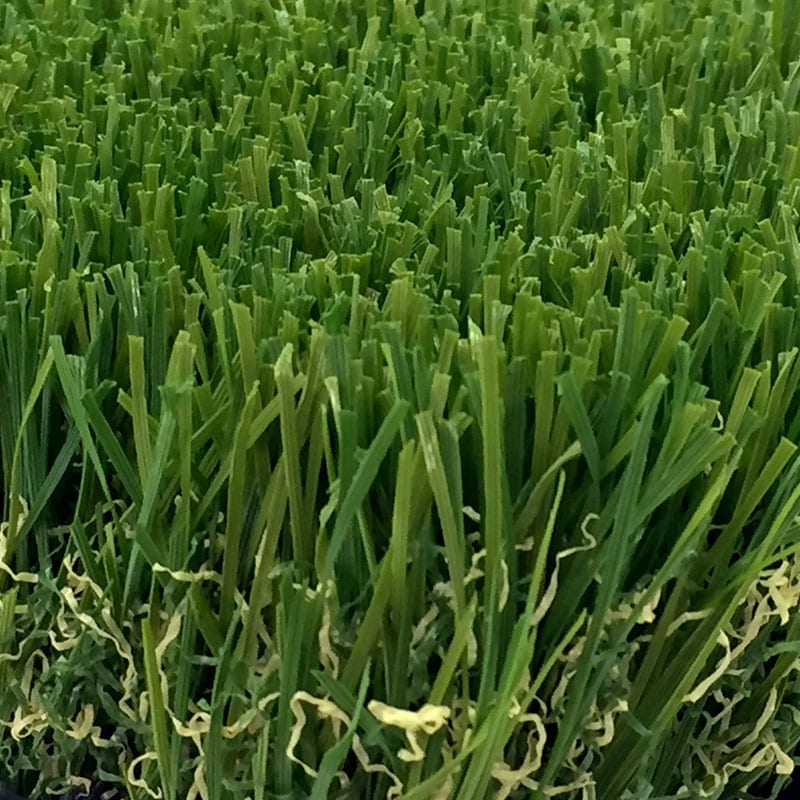
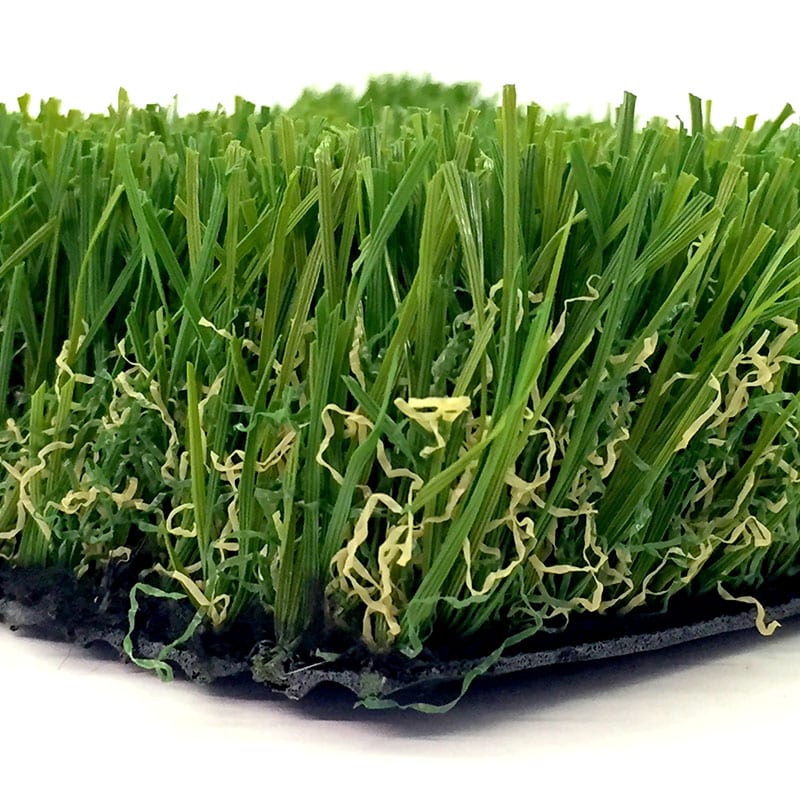
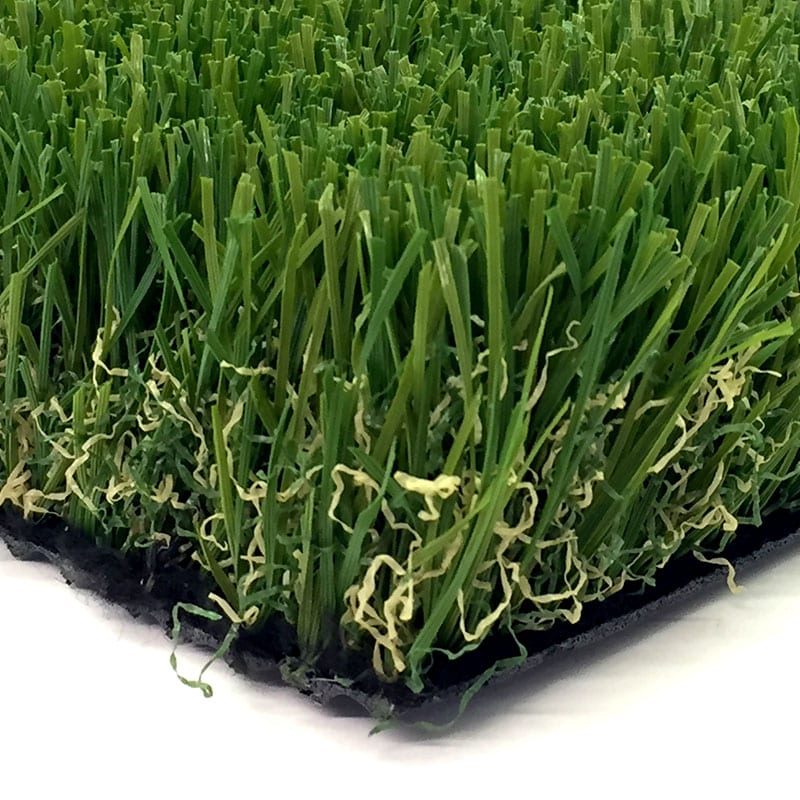
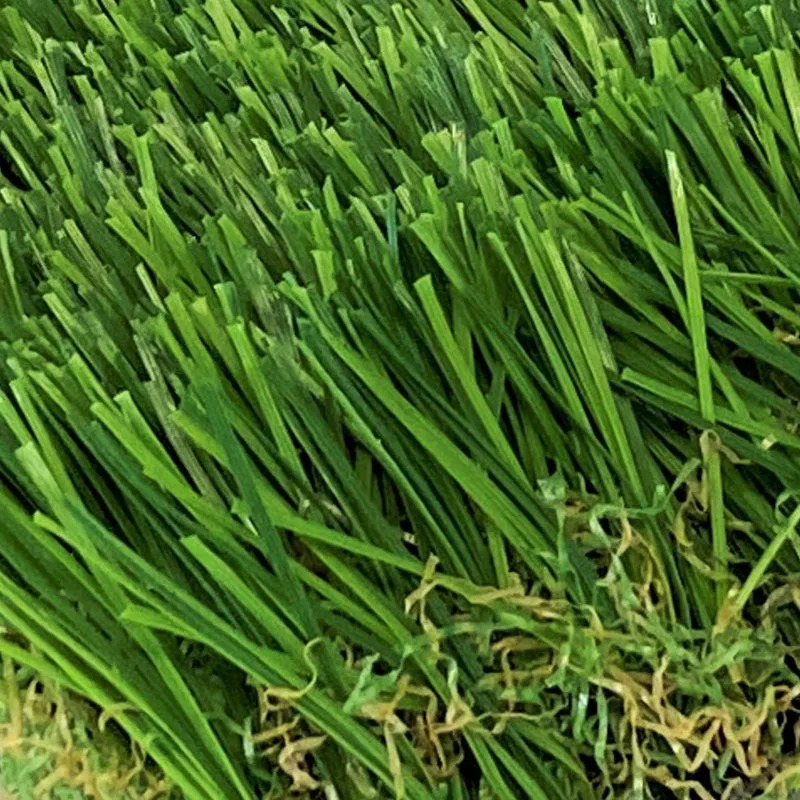
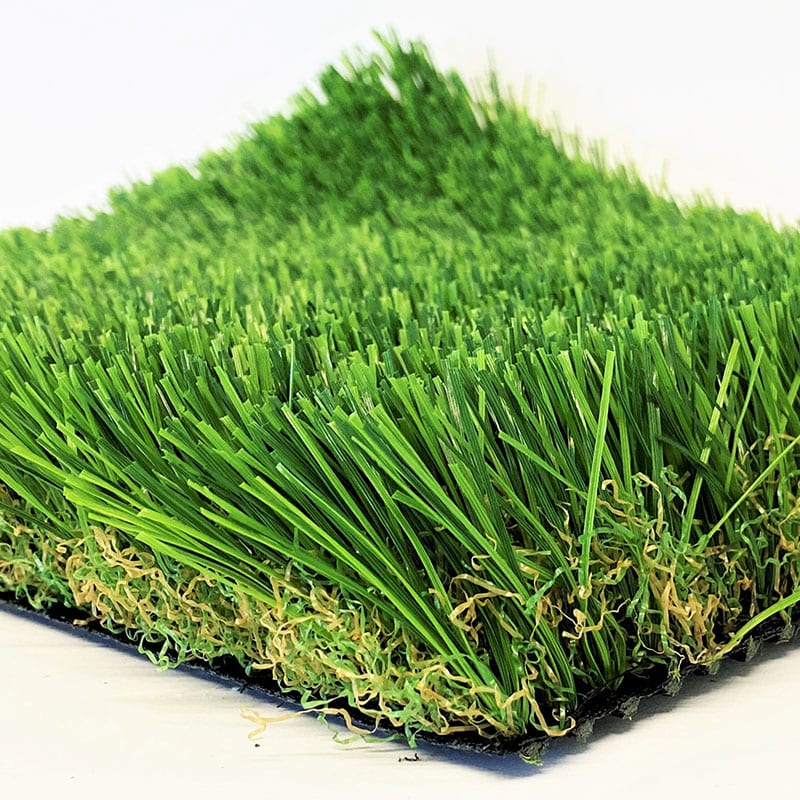
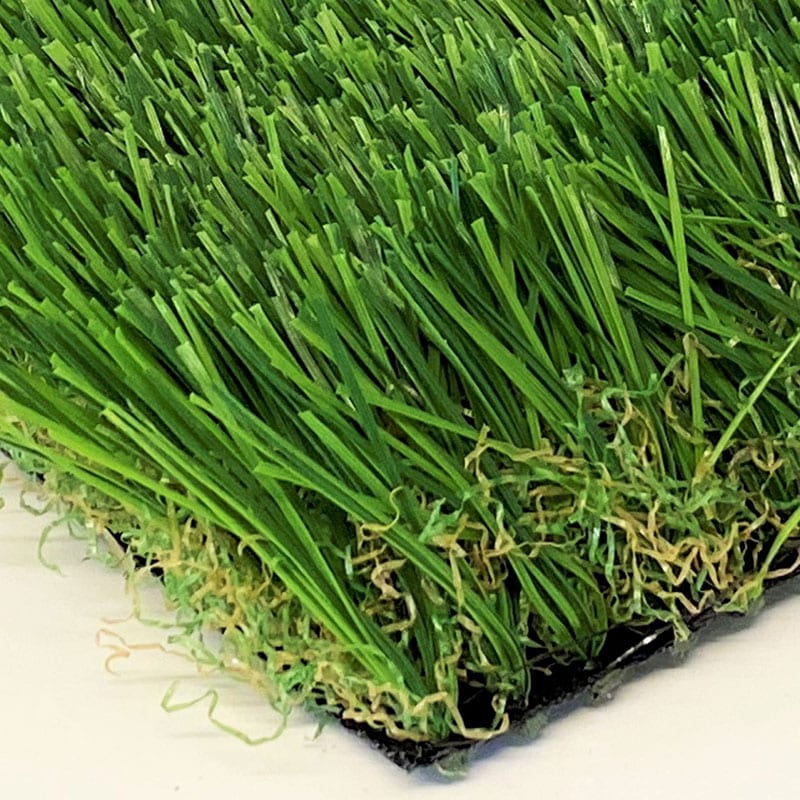
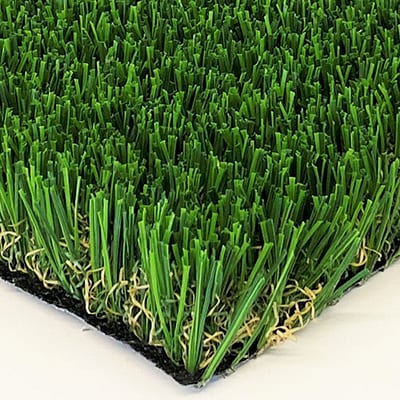
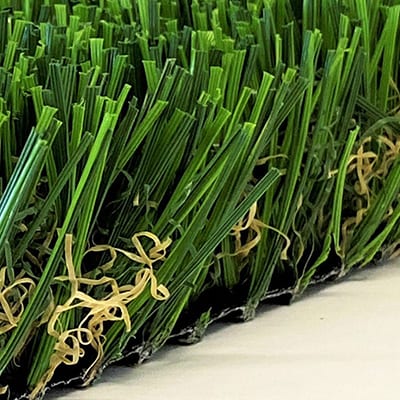
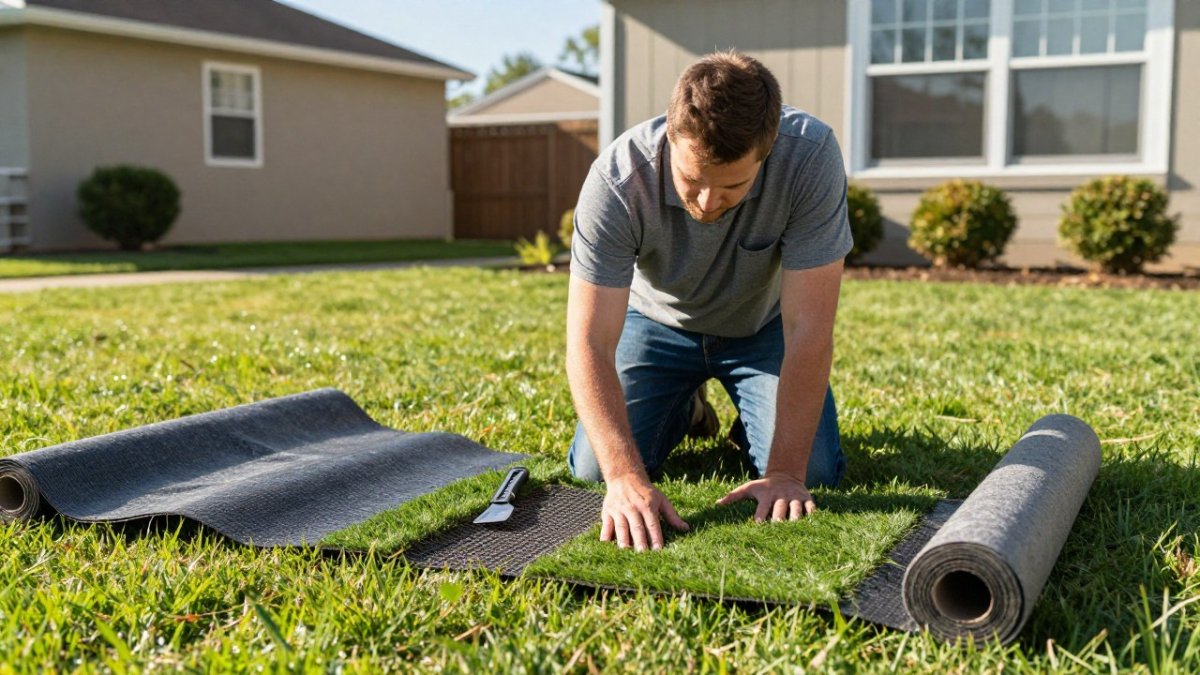
Permeable backing is the perforated or flow-through layer on the underside of synthetic turf that lets water and liquids drain through the surface instead of trapping them.
When rain hits a lawn backed by a solid sheet, it pools on top or runs off toward your house, patio, or fence line.
The practical benefits stack up quickly:
- Faster drying after rain, so the surface is usable sooner
- Less standing water, which means fewer mosquitoes and less algae
- Pet urine passes through rather than sitting in the fibers
- Better stability underfoot, because water isn’t saturating the infill
The EPA’s guidance on stormwater management explains why infiltration matters on residential properties: water that soaks in on site reduces the volume and pollution reaching storm drains.
Permeable vs Non-Permeable Backing: A Side-by-Side Comparison
Non-permeable backing is a solid sheet, and it has its place, but it is not the right choice anywhere water needs to escape.
| Factor | Permeable Backing | Non-Permeable Backing |
|---|---|---|
| Water flow | Passes through to base | Blocks and sheds water |
| Standing water risk | Low with proper base | High in flat or low spots |
| Pet urine handling | Drains and disperses | Pools beneath the surface |
| Odor risk | Lower with flushing | Higher, traps waste |
| Best use | Yards, pet areas, slopes | Indoor, covered, decorative |
| Base requirements | Open-graded aggregate | Less critical |
| Maintenance | Occasional brushing and flushing | Surface cleaning only |
The comparison is not close for outdoor residential lawns.
One caveat: permeable backing only performs as well as the base beneath it. A flow-through backing over compacted clay will still hold water, the backing and base are a pair.
Perforated Drainage Holes vs Fully Permeable Flow-Through Backing
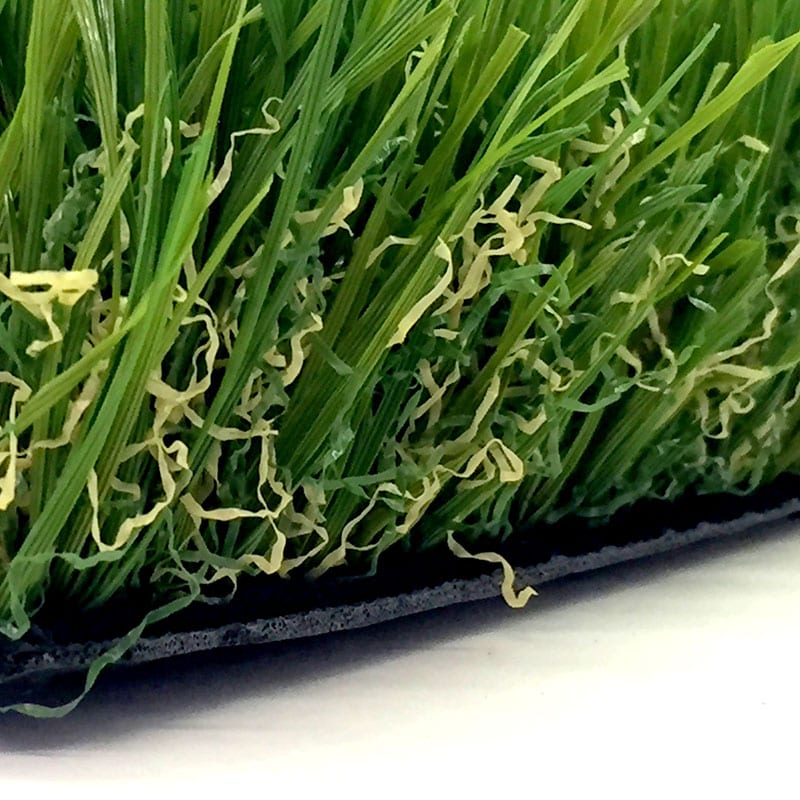
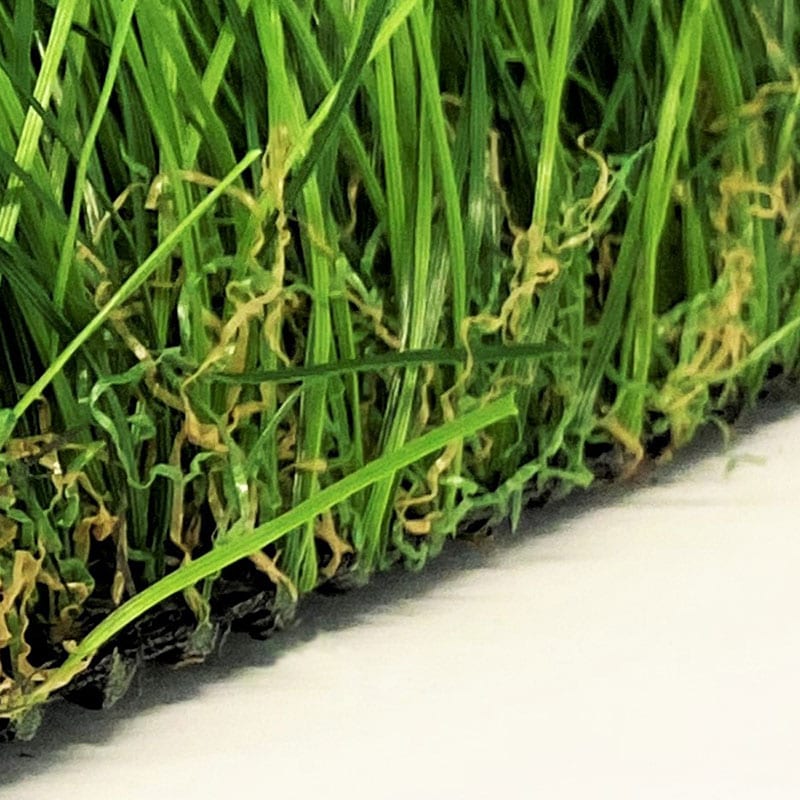
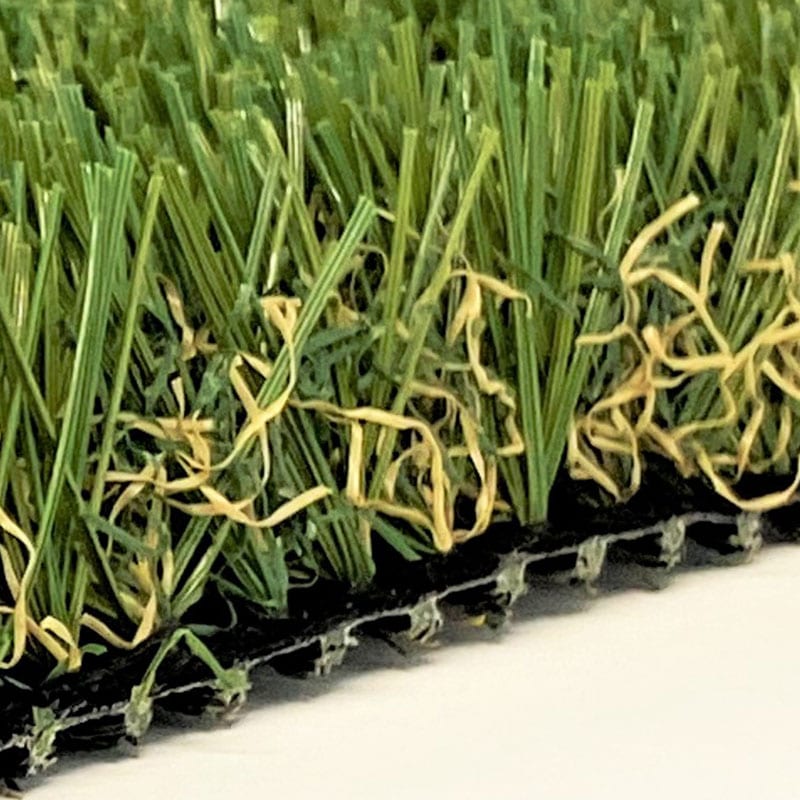
Perforated backing uses punched holes in an otherwise solid sheet. Fully permeable, flow-through backing makes the entire layer water-passable rather than relying on discrete holes.
Perforated backing works, but the holes are a bottleneck. Water has to find a hole, and debris, infill migration, and pet waste can plug them.
Flow-through backing spreads drainage across the whole panel.
The question is simple: do you want drainage through a few openings or across the entire surface? Readers planning a fully permeable system on an elevated deck can go deeper in our guide to permeable artificial grass for rooftop decks.
Watch out: some installers quote “perforated” and “permeable” as if they’re the same product.
Permeable Artificial Turf Drainage: Rates, Testing, and Standing Water
Drainage rate is the volume of water a turf system can pass per unit of time, and it separates a lawn that handles a downpour from one that floods. Permeable artificial turf drainage depends on the backing, the infill, and the base working together, not on any single component.
How flow rate is measured
Manufacturers typically report a drainage rate in inches per hour, derived from a lab test in which water is poured through a mounted turf specimen and the time to pass a known volume is recorded. A rating of 30 inches per hour means the turf and backing can pass a column of water 30 inches deep over one hour under test conditions, not that your yard will shed a 30-inch storm, because the base and soil below must accept water at a comparable rate.
Reading a drainage claim like an installer
Ask four questions of any drainage rating:
- What was tested, the turf and backing alone, or the full system including infill and base?
- What test method was used, and was the specimen clean or field-conditioned?
- What infill was in place, at what depth and compaction?
- What base spec the manufacturer requires to support that rate.
A rate quoted for the turf alone tells you the ceiling, not the installed performance. The base is the floor, and the system drains at the lower of the two.
On-site verification
Installers verify the base on site with a simple percolation check: dig a small test hole into the aggregate and subgrade, fill it with water, and time how fast the level drops. If the ground will not accept water, no backing will fix it.
Why standing water appears anyway
Standing water after installation usually traces to one of four causes:
- Base installed too thin or not compacted correctly, so it settles into low spots
- Fine particles washed into the base and sealed the voids
- A low spot with no slope to move water toward a drain or outlet
- An outlet or daylight point that is undersized or blocked, backing water up under the turf
If your lawn develops soggy patches, the fix starts below the surface. Our article on preventing soil compaction under synthetic turf covers why the ground beneath matters as much as the turf itself.
Watch out: a high drainage rating on the turf is not a guarantee of a dry lawn. If the base and outlet cannot move the water away, the system stalls no matter what the backing is rated to pass.
Pet Urine, Odor Control, and Contaminants Under the Surface
Pet urine is a common source of odor complaints, and backing drainage plays a role in how odor develops. Urine that drains through a permeable backing disperses into the base and breaks down naturally.
A few habits keep a pet area fresh:
- Rinse high-traffic spots with a hose weekly to flush waste through the profile
- Pick up solid waste promptly, since it breaks down into the same trapped layer
- Use a pet-safe infill that resists odor absorption
- Keep the base open so liquids keep moving rather than accumulating
Contaminants like mud, dust, and pollen also wash through a permeable system instead of caking into the fibers, keeping the surface cleaner. For a deeper look at managing pet waste and drainage together, our guide to artificial grass drainage and pet odor walks through the full picture.
Artificial Turf Base Preparation: What Goes Under the Backing
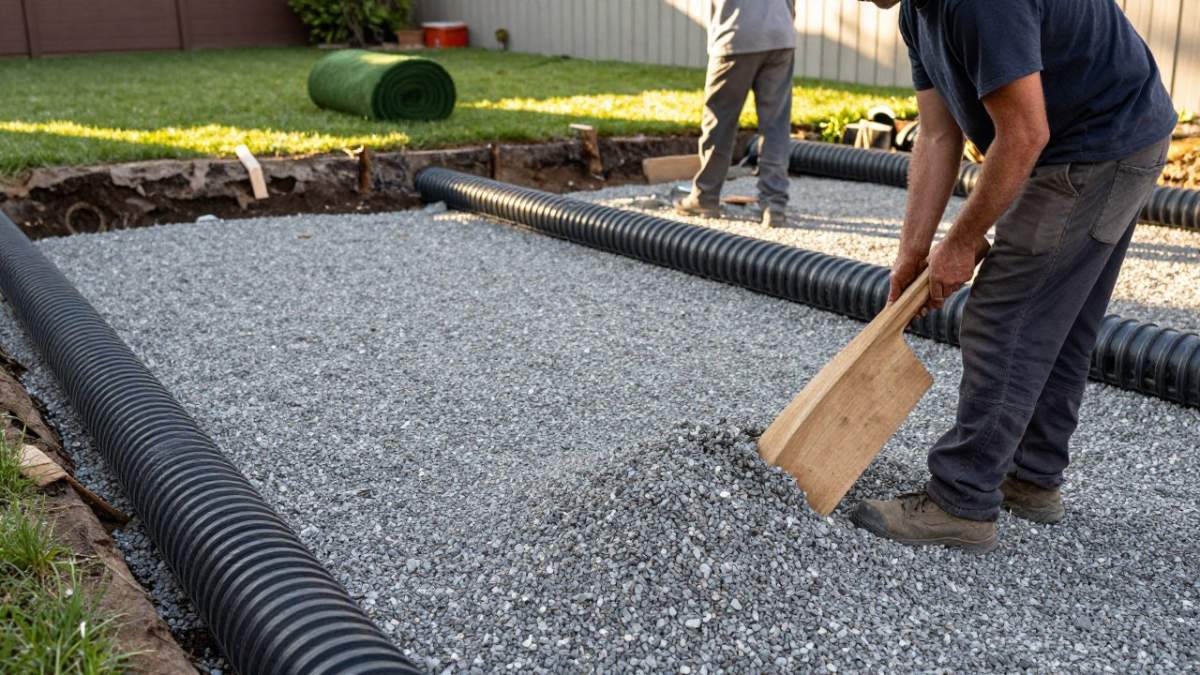
Artificial turf base preparation is the excavation, grading, and aggregate work that creates a stable, draining platform under the turf. Get it right and the backing performs as designed; get it wrong and even the best flow-through backing will hold water.
The drainage system as a stack
Water moves through the installed system in a sequence, and each layer has a job:
- Turf face and infill, pass water through without trapping it; infill type and depth affect flow
- Backing, spread water evenly into the base rather than concentrating it at discrete points
- Open-graded aggregate base, store and transmit water through the voids between particles
- Separation geotextile (where specified), keep fines from migrating up into the aggregate and sealing it
- Subgrade soil, accept water at a rate the rest of the stack can match
The system drains at the rate of its slowest layer. A flow-through backing over compacted clay still holds water; a perfect aggregate base with no outlet still backs up.
The installation sequence we follow
- Excavate to the right depth for turf plus base
- Grade for slope, typically a slight fall away from structures so surface water moves off
- Assess the subgrade, check infiltration with a percolation test before committing to the design
- Lay a separation geotextile where specified to stop fines migrating into the aggregate
- Install open-graded aggregate in lifts, compacting each one
- Check the grade again before the turf goes down
- Confirm the outlet, drain, daylight point, or stormwater connection, can carry what the system sends it
The aggregate choice matters. Open-graded stone with voids between particles drains far better than a dense, sandy mix that packs solid. For a full breakdown of stone types and depths, see our guide to base materials for synthetic grass installation.
Site conditions that change the design
A base spec that works on sandy loam can fail on heavy clay, in a high water table, or on a site with nowhere for water to go. A common pattern is to treat these as exceptions when they should drive the design:
- Clay soils, slow infiltration; plan for a thicker open-graded base and a positive outlet rather than relying on soil absorption
- High water table, the subgrade may already be saturated; drainage has to go sideways to an outlet, not down
- Freeze-thaw conditions, water held in the base can heave; grading and outlet capacity matter more than raw flow rate
- Heavy rainfall, size the base and outlet for peak storm volume, not average conditions
- Constrained sites, where there is no room for a drain field, a flow-through backing alone will not solve a drainage problem
Watch out: a permeable backing over a base with no outlet is a bathtub with a drain plug still in it. Confirm where the water goes before the turf goes down.
The Best Backing for Artificial Turf: A Buying Framework
Start with water. Does the site hold water now?
Then match use. Dog areas and playgrounds need even dispersion across the whole panel.
Confirm materials. Ask what fibers are used and what the warranty covers, including the backing.
Ask about climate. Heat and humidity stress turf differently than dry heat.
A quick scoring rubric helps compare quotes:
- Drainage rate stated in writing
- Base spec included in the quote
- Backing type named: perforated or flow-through
- Fiber material and warranty terms listed
- Site drainage plan described
Southern Artificial Turf’s turf carries an 8-year warranty and a 30-inch-per-hour drainage capacity.
Get a Quote on a Drainage-Ready Turf System
The hardest part of this decision isn’t picking a backing.
If your yard puddles after storms or sits on heavy clay, a permeable system designed around your site is worth discussing.
Reach out through our contact page to request a quote.
Your yard is telling you something every time it floods. The right backing, base, and installation turn that problem into a surface you can use year-round.
Frequently Asked Questions
Is artificial turf with permeable backing actually permeable?
It depends on the backing type. Fully permeable flow-through backing lets water pass across the entire underside of the turf, while perforated backing relies on punched holes that can clog with soil fines and pet hair over time. Southern Artificial Turf states a drainage capacity of 30 inches per hour; installed performance depends on the base and site.
What is the best backing for artificial turf in a yard with dogs?
For pet-heavy yards, a fully permeable flow-through backing paired with a well-compacted aggregate sub-base is the safer choice. It lets urine and rinse water disperse instead of sitting in low spots, which reduces odor buildup. Regular rinsing and prompt pickup of solid waste help keep pet areas fresh.
How does permeable artificial turf drainage prevent puddles?
Water moves through the turf surface, past the backing, into the aggregate base, and then into the soil or a drain. Puddles form when any layer in that chain fails: clogged backing, an under-compacted base, or a flat slope. Design the sub-base with a slight fall toward a drain or daylight point, and keep the infill topped up so it filters debris before it reaches the backing.
Does artificial turf base preparation matter as much as the backing?
Yes. Backing is only one part of the drainage system. Artificial turf base preparation typically involves excavating 3 to 4 inches, laying a geotextile fabric, and compacting crushed aggregate to a firm, graded surface. Skip that step and even the best backing will hold water. Ask your installer how they compact, how they slope, and where the water exits before you sign.