
Last Updated: November 18, 2026
Quick Summary
Artificial grass does not soak up water, so heavy rain passes through the backing and crushed stone base and the lawn is usually usable again within hours. Standing water that stays an hour after the storm points to a drainage problem, not the weather.
- Perforated or permeable backings let water through, while solid backings block it.
- Most lawns are dry enough to walk on within a few hours of the rain stopping.
- Clear wet leaves and debris first, then rinse mud, spot-clean pet waste, and brush.
- Keep kids and dogs off the lawn while puddles remain, since wet turf is slippery.
- Do not add sand or topdressing to a persistent puddle before finding the cause.
Table of Contents
- What Heavy Rain Actually Does to Artificial Grass
- Artificial Grass Drainage After Heavy Rain: What to Check
- How Long Artificial Grass Takes to Dry After Rain
- Cleaning Artificial Turf After Rain: Mud, Debris, and Pet Waste
- Is Wet Turf Dangerous? Slip Risk and Safe Timing for Use
- Post-Storm Inspection Checklist and Troubleshooting Persistent Puddles
- Get a Quote for Turf Built to Handle Southern Rain
- Frequently Asked Questions
What Heavy Rain Actually Does to Artificial Grass
Artificial grass care after heavy rain starts with understanding one fact: the turf itself does not soak up water. The backing and the base below it control where that water goes. When everything is built right, rain passes straight through and the lawn is usable again within hours.
Heavy afternoon storms can drop a lot of water fast, so drainage matters from the first step of any installation.
How Water Moves Through the Turf System
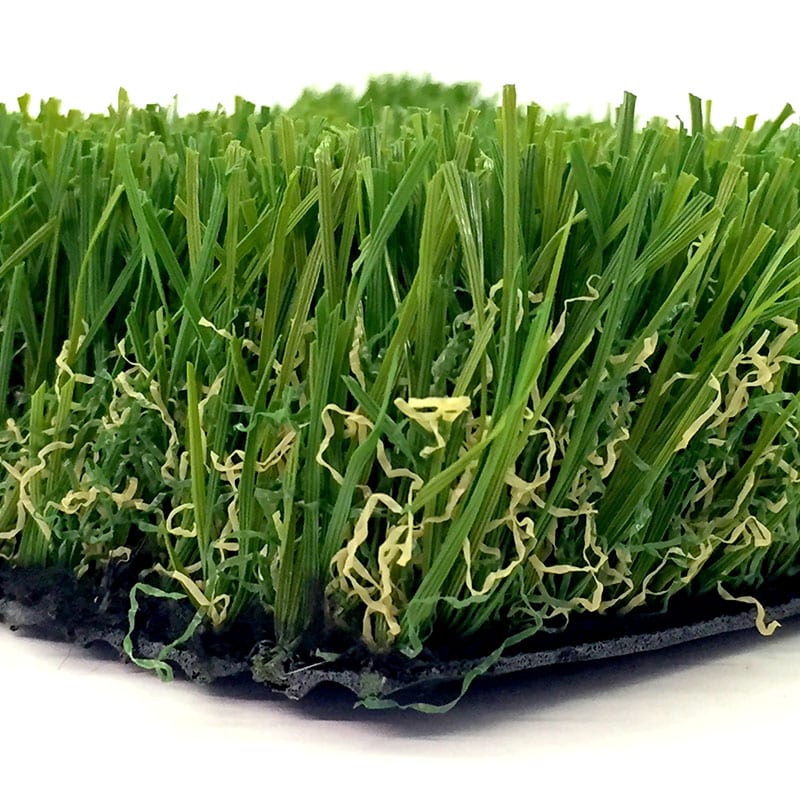
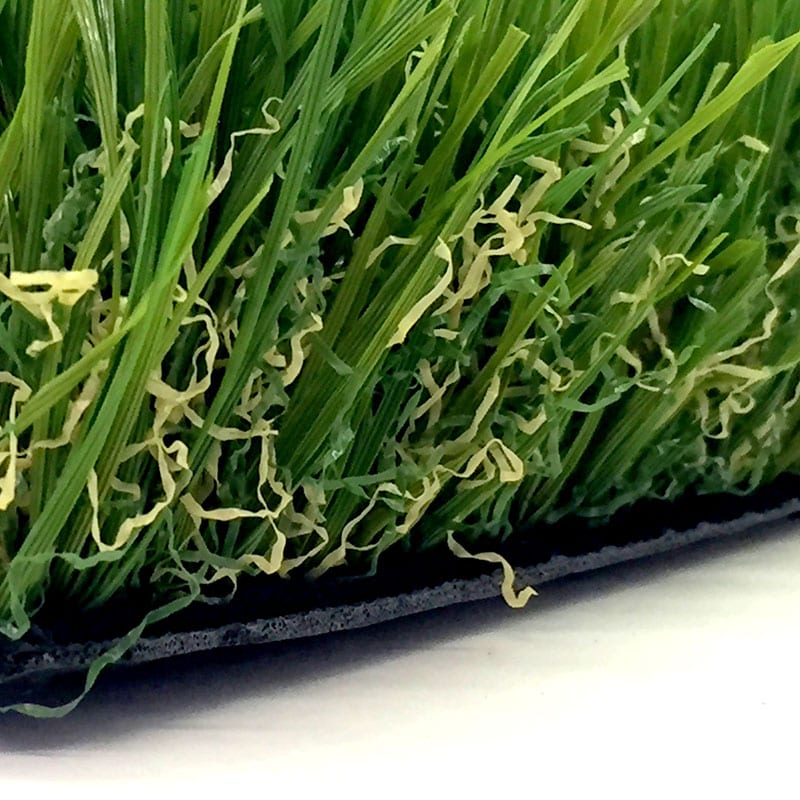
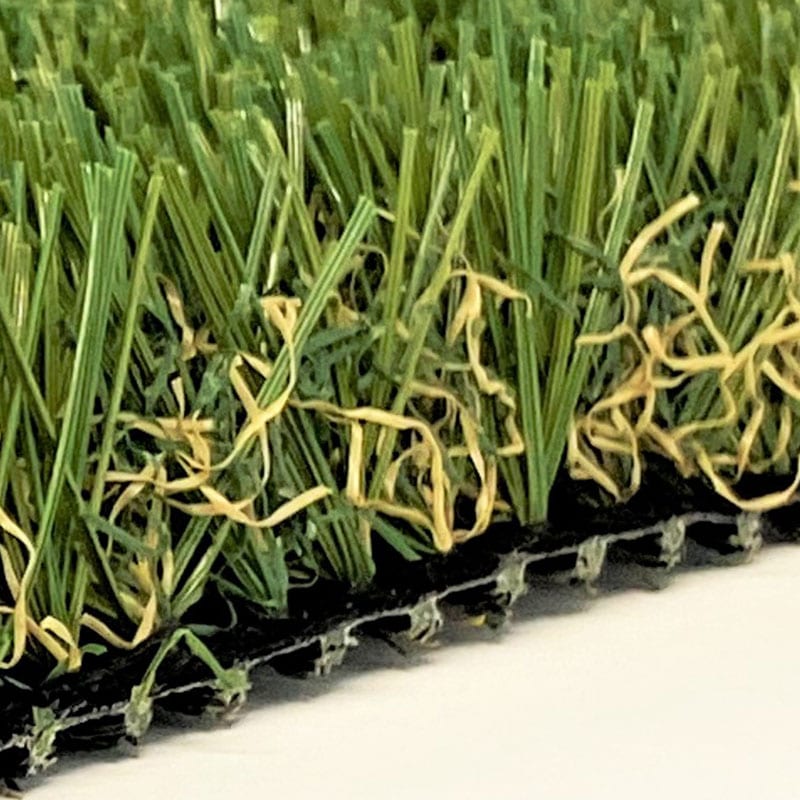
Permeability is the rate at which water passes through the turf and base layers. Water hits the blades, runs down to the backing, and drains through perforations into a crushed stone base. From there it soaks into the soil or exits through a drain.
Three things decide how fast this happens:
- The backing: perforated or permeable backings pass water; solid ones block it.
- The base: compacted crushed stone holds the water briefly and releases it.
- The slope: a slight grade pushes surface water toward drains instead of letting it sit.
If you are choosing a product, our guide to permeable backing for synthetic lawns explains which backing types actually let water through.
What Torrential Rain Looks Like on a Synthetic Lawn
In light rain, a good lawn barely changes. Blades look darker and glossier, and water drains as fast as it falls.
Torrential rain is different. For a short window, water can pool faster than the base can release it.
What is not normal: standing water that stays put an hour after the storm passes. That points to a drainage problem, not the weather.
Artificial Grass Drainage After Heavy Rain: What to Check
Artificial grass drainage after heavy rain comes down to one question: is water leaving the lawn, or sitting on it? Check the surface first, then the edges, then the base.
Start with a simple test. After the rain stops, walk the lawn and note where water lingers. Puddles in the same low spots every storm tell you the base is not graded correctly.
Confirming Water Flow and Permeability
A hose test tells you a lot. Run water on one spot for a few minutes and watch how fast it disappears. If it drains steadily, permeability is fine. If it ponds and creeps away, the backing or base is clogged or too tight.
Also check these:
- Drains and edges: clear any debris blocking outlets or the lawn’s perimeter.
- Infill: heavy rain can wash infill into low spots, packing it tight and slowing flow.
- Base compaction: soft, spongy spots underfoot mean water is trapped in the base.
Checking all three points is a good habit, because drainage failures often show up at the base long before they show on the surface.
How Long Artificial Grass Takes to Dry After Rain
Most artificial lawns are dry enough to walk on within a few hours of the rain stopping. Full drying depends on sun, airflow, and how much water the base is holding.
Here is a rough guide:
| Condition After Rain | Typical Drying Time |
|---|---|
| Light rain, sun returns | 30-60 minutes |
| Steady rain, overcast | 2-4 hours |
| Heavy rain, humid air | 4-8 hours |
| Standing water present | 12+ hours, check drainage |
Humidity is the wild card in the South. On a still, muggy day, moisture clings to the blades and infill long after the surface water is gone. A light breeze does more for drying than strong sun.
Cleaning Artificial Turf After Rain: Mud, Debris, and Pet Waste
Cleaning artificial turf after rain is mostly about what the storm left behind: leaves, twigs, mud splatter, and pet waste. Clear debris first, then rinse, then brush. But after a heavy storm or any runoff event, the job goes beyond appearance.
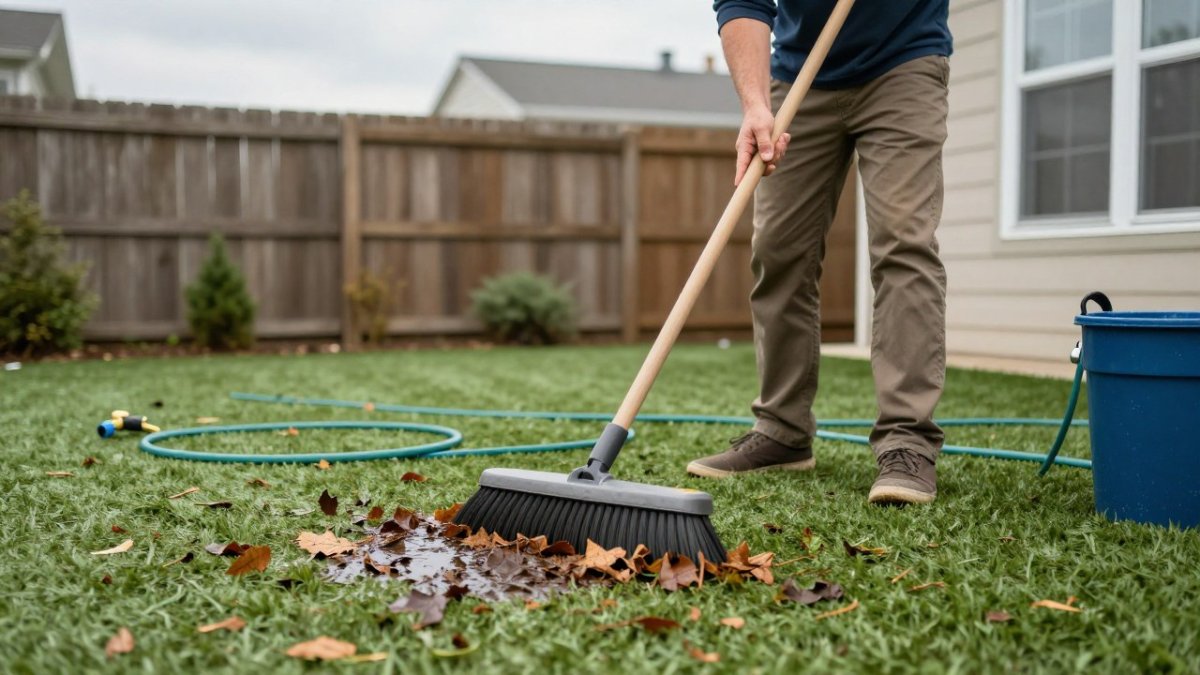
Work in this order:
- Remove leaves and twigs with a rake or leaf blower before they break down. Wet leaves mat quickly and block the gaps between fibers, slowing drainage exactly when you need it most.
- Rinse mud off with a garden hose, working from the high side down. Mud splatter from adjacent beds or bare soil is common after heavy rain; a gentle rinse pushes it off the blades and toward the perimeter rather than into the base.
- Spot-clean pet waste right away. Rinse the area and let it drain. If runoff has spread waste residue, rinse the affected zone twice and follow with a pet-safe turf cleaner rather than a harsh disinfectant that can degrade the backing.
- Brush the whole lawn to lift matted fibers and spread infill back evenly.
Pet owners should pay extra attention after a storm. Our guide on artificial grass drainage and pet odor covers the full routine, and our step-by-step turf cleaning guide walks through deeper cleans.
Sanitation After Runoff or Flooding
When water has pooled or flowed across the lawn, treat the surface as contaminated until it is rinsed. Runoff can carry bacteria from pet waste, garden soil, and nearby surfaces.
Watch out: do not use a pressure washer on the turf or backing after a flood, because high pressure can drive contaminated water and fine sediment into the base.
Odor control after a storm is mostly about drying speed.
Brushing Flattened Fibers and Matted Areas
Heavy rain and foot traffic press blades flat. Brushing lifts them back up. Use a stiff push broom or a power broom and work against the grain of the fibers.
Go over the whole lawn, not just the wet spots. Matting is worst where water pooled and where people walked while it was wet. A good brushing restores the lawn’s appearance and helps airflow reach the base.
Is Wet Turf Dangerous? Slip Risk and Safe Timing for Use
Wet turf is slippery, and that is the main safety concern. The surface itself is not hazardous, but water on top of it reduces grip, especially on slopes and around play equipment.
Use these rules:
- Wait until surface water clears before walking or playing on the lawn.
- Keep kids and dogs off while puddles remain.
- Check for hidden debris like broken branches before resuming use.
- Watch slopes and steps near the lawn, which stay slick longer.
For most lawns, that means a wait of a few hours after the rain stops. If water is still standing after that, treat it as a drainage issue, not a timing issue.
Post-Storm Inspection Checklist and Troubleshooting Persistent Puddles
Run this checklist after every major storm. It takes about ten minutes and catches small problems before they become expensive ones.
- Remove leaves, branches, and debris from the surface
- Check drains and lawn edges for blockages
- Look for standing water and note the location
- Test drainage with a hose in the wettest spot
- Check for washed-out infill and spread it back evenly
- Brush flattened fibers across the full lawn
Troubleshooting Persistent Puddles
A puddle that clears within an hour of the rain stopping is usually a surface issue: a slight low spot, debris blocking the gaps, or water arriving faster than the base can release it.
Use these signals to narrow the cause:
- Puddle in the same low spot every time, drains slowly after rain stops: likely a grading problem. The base was not sloped toward a drain or outlet, so water has to soak away vertically instead of running off.
- Puddle spreads from the edges or along a seam: likely a backing or edge issue. Water is getting under the turf rather than through it, which points to a lifted edge, an open seam, or a solid-backed section.
- Puddle forms in the middle of the lawn with no obvious low spot: likely compacted or clogged infill. Fine sediment and organic debris fill the gaps between fibers and slow permeability.
- Soft, spongy spots underfoot after the surface looks dry: likely a saturated or compacted base. The water is trapped below the turf and not reaching the drain.
A hose test confirms which pattern you are dealing with. Run water on the wettest spot for a few minutes.
Watch out: do not add sand or topdressing to a persistent puddle without finding the cause first.
If puddles keep returning in the same spot after you have cleared debris, spread infill, and confirmed the hose test, the cause is almost always one of three things: a low spot in the base, compacted or clogged infill, or a blocked drain. Persistent dampness also raises mold concerns, and our guide on removing mold from artificial turf covers the cleanup steps.
Storm Damage and Repair Decisions
Most storms leave nothing worse than debris. But high wind and heavy runoff can lift edges, open seams, or tear the backing.
Repair small issues quickly. A lifted edge lets water under the turf, and that turns into a bigger base problem. For tears and seam splits, our guide on repairing small tears in artificial grass walks through the tools and adhesives that hold up.
Call a professional if you see:
- Widespread lifting along edges or walls
- Standing water that returns after every storm
- Soft, sunken spots in the base
- Seam failures longer than a few inches
Get a Quote for Turf Built to Handle Southern Rain
A lawn that drains well depends on the right backing and a properly graded base.
Our turf offers a drainage capacity of 30 inches per hour, and it features quad-color technology and an 8-year warranty.
If your current lawn cannot keep up with the rain, contact Southern Artificial Turf for a quote.
Heavy rain will test any lawn, and a poorly drained one will show it every storm.
Frequently Asked Questions
How long does artificial grass stay wet after heavy rain?
Most artificial grass surfaces shed light rain quickly and are usable within an hour or two, but heavy rain can leave the turf wet for several hours. Drying time depends on sunlight, airflow, temperature, and how well the base drains. A turf system with strong permeability, like one rated for 30 inches of water per hour, moves rainwater through fast, but the fibers and infill still hold surface moisture. Humid, overcast conditions slow drying, so plan on a full day before the lawn feels dry underfoot.
How can you tell if artificial turf is draining properly after a storm?
Walk the lawn a few hours after the rain stops and look for standing water or soft, spongy spots. Puddles that linger more than a day usually point to a clogged base, compacted infill, or a low spot in the subgrade. Check that downspouts and edges are not dumping water onto the turf, and rake away debris that blocks water flow. If puddles keep returning in the same place, the drainage system needs a closer look before the next rainy season.
Is wet artificial turf dangerous for kids and pets?
Wet turf is not inherently hazardous, but it can be slippery, especially on slopes or where infill has matted down. Let the surface dry before heavy foot traffic, and brush flattened fibers so water can drain. Rinse away mud and pet waste after flooding to keep the area sanitary, since standing water can carry bacteria. Check the turf after a storm for lifted seams or loose edges that could trip someone, and repair them before the lawn goes back into full use.
What should you do to artificial grass after a heavy rain?
Start with a visual inspection: look for puddles, debris, and flattened fibers. Remove leaves and branches with a rake or push broom, then rinse off mud before it dries. Brush the turf to lift matted fibers and restore airflow. Check the drainage path and clear any blockage at the edges or base. If you have pets, pick up waste and rinse the area. Once the surface is dry, walk the lawn to confirm there are no soft spots or lifted seams.