
Table of Contents
- What You’ll Need to Clean Artificial Turf
- Step 1: Remove Leaves and Loose Debris
- Step 2: How to Brush Artificial Turf to Restore Fiber Upright Position
- Step 3: Rinse and Clean Dirt, Dust, and Spills
- How Often to Clean Artificial Turf for Best Results
- Choosing the Right Artificial Turf Cleaner for Pet Waste and Odors
- How to Remove Pet Urine Odor from Artificial Turf
- Common Cleaning Mistakes to Avoid
- Frequently Asked Questions
Last Updated: October 10, 2026
What You’ll Need to Clean Artificial Turf
Cleaning artificial turf requires only basic tools and mild solutions. Keep a leaf blower, flexible rake, stiff-bristled brush, mild soap, spray bottle, and sponge mop on hand.
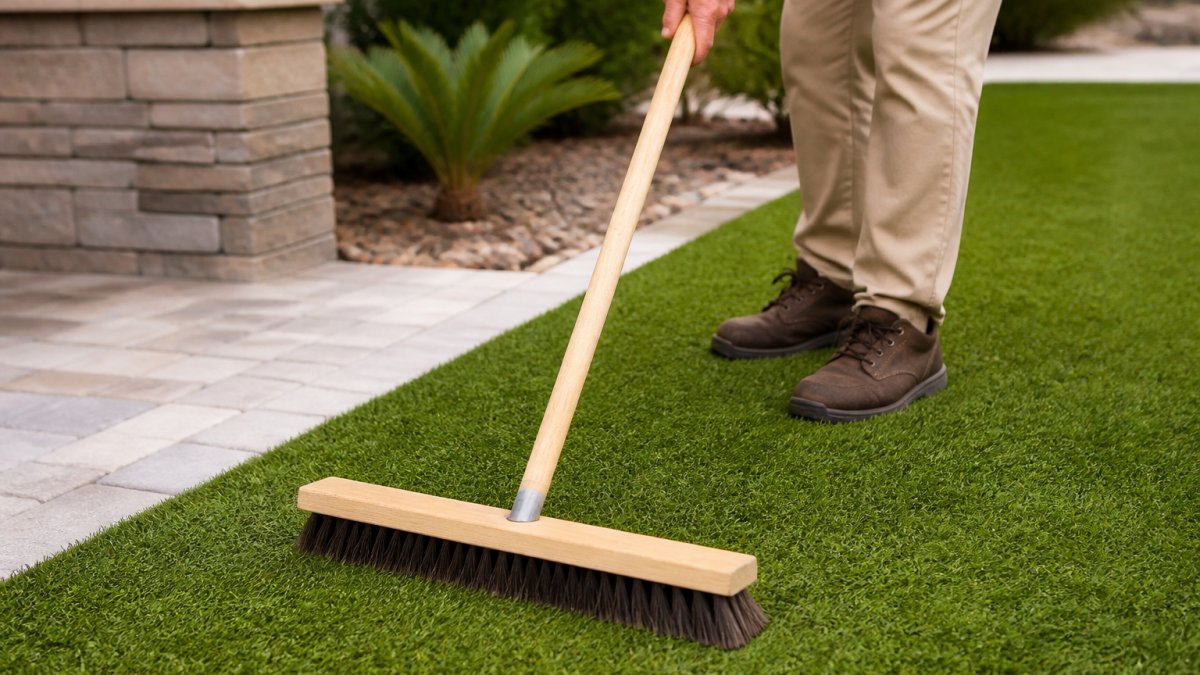
A leaf blower handles quick cleanups. A flexible lawn rake or broom removes leaves without damaging fibers. For brushing, use a stiff-bristled brush or power broom designed for artificial grass to restore fiber upright position.
Mild soap and warm water handle most jobs. Vinegar solutions work for odor control. Avoid harsh chemicals or bleach that damage polyethylene fibers.
For pet owners, enzyme-based cleaners help neutralize urine odors. Have paper towels or a small shovel for immediate pet waste removal.
Step 1: Remove Leaves and Loose Debris
Remove surface debris first to prevent dirt from settling into the infill and blocking drainage.
Use a leaf blower on low setting to push leaves and twigs toward a collection area. A flexible lawn rake also works; rake gently to avoid displacing infill.
For smaller areas, sweep with a broom to gather debris. This prevents moisture and odor buildup.
Blow off debris weekly during fall and spring, every two weeks in other seasons.
Step 2: How to Brush Artificial Turf to Restore Fiber Upright Position
Brushing restores appearance and prevents matting caused by foot traffic and weather.
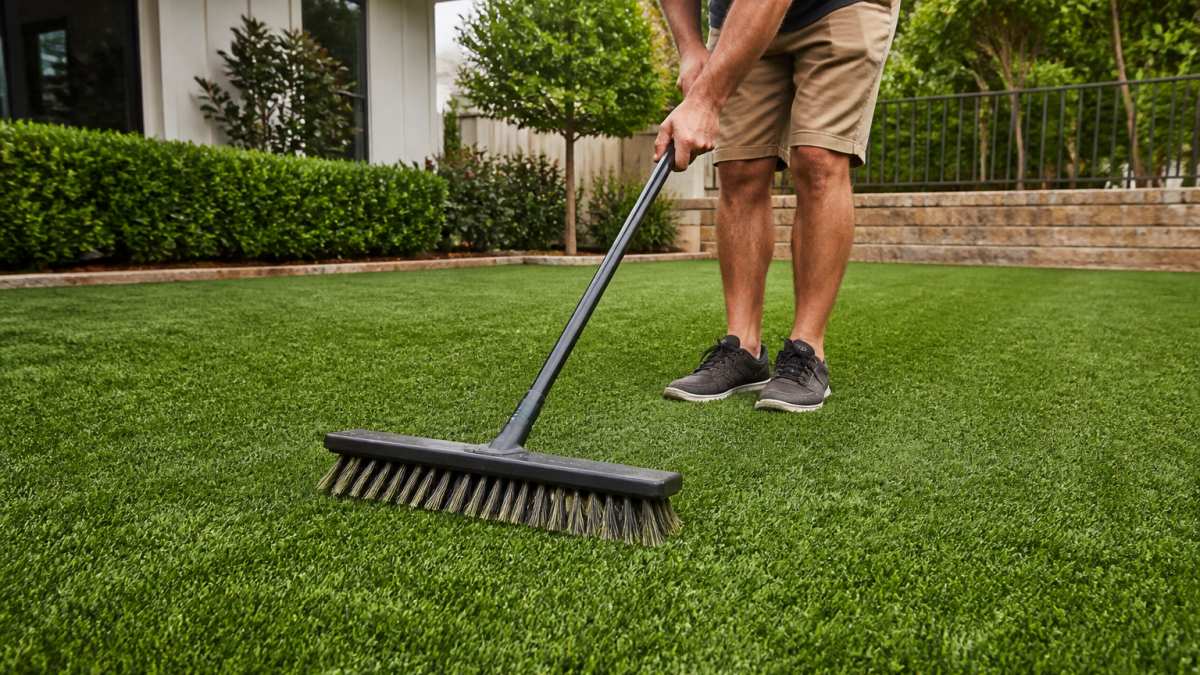
Use a stiff-bristled brush or power broom, brushing in multiple directions with light, sweeping motions rather than aggressive scrubbing.
Brush at least monthly, or weekly in high-traffic zones like seating areas and pathways.
Step 3: Rinse and Clean Dirt, Dust, and Spills
After debris removal and brushing, rinse with a garden hose to remove dirt, dust, and pollen.
Use medium pressure (40-60 PSI); high pressure damages fibers and displaces infill. Rinse until water runs clear, paying attention to corners and edges.
Stain-Specific Treatment Guide
Identify stain type to choose the right treatment and avoid setting permanent marks.
Organic stains (food, grass, mud): Remove solids, rinse with plain water. If residue remains, apply mild soap solution (1:10 detergent to water), let sit 5-10 minutes, scrub gently, then rinse thoroughly.
Grease and oil stains: Blot immediately. For fresh spills, rinse with a hose. For set-in grease, apply dish soap, let sit 10 minutes, scrub gently, and rinse. Avoid excess soap residue.
Biological stains (blood, urine, feces): Address immediately. Rinse thoroughly with a hose. For urine, flush multiple times to dilute before it soaks into infill. For blood or feces, remove solids then rinse. Use enzyme-based cleaner if odor persists.
Gum and sticky residue: Apply ice to harden, then gently pick away. For remaining residue, use rubbing alcohol on a cloth (test on hidden area first). Rinse thoroughly.
Paint or dye stains: Act quickly before drying. Blot and rinse wet paint immediately with a hose. Once dry, paint is nearly impossible to remove. For latex paint, water works best.
Rust or mineral stains: Rinse with plain water first. If discoloration remains, use weak vinegar solution (1:3 vinegar to water), let sit 5 minutes, then rinse. Avoid leaving metal objects on turf.
General Spill Response Protocol
Speed matters, fresh spills are far easier to remove than dried stains.
- Blot liquids immediately with paper towels or a clean cloth. Do not rub, as this spreads the stain.
- Remove solid material with a small shovel or by hand (wear gloves for biological waste).
- Rinse the area with a garden hose on medium pressure.
- Apply targeted treatment only if plain water doesn’t remove the stain (see stain-specific guide above).
- Rinse again to remove all soap, vinegar, or cleaner residue.
- Allow the area to dry completely before allowing foot traffic or pets to return.
How Often to Clean Artificial Turf for Best Results
A consistent maintenance schedule keeps artificial turf in top condition. Frequency depends on weather, foot traffic, and pets.
For routine maintenance, perform these tasks regularly:
- Weekly: Blow off loose leaves and debris
- Monthly: Brush fibers to restore upright position
- Monthly: Rinse with a garden hose
- As needed: Spot-clean spills and stains
- Quarterly: Deep clean with mild soap solution
High-traffic areas need more frequent attention. Pet owners should address waste immediately and rinse pet areas weekly.
Spring and fall require more debris removal. Summer heat increases odor in pet areas.
Regular cleaning prevents odor, maintains drainage, and keeps turf fresh with minimal time investment.
Choosing the Right Artificial Turf Cleaner for Pet Waste and Odors
Pet waste and odors require targeted solutions beyond mild soap and water.
For general pet odors, mix one part white vinegar with three parts water in a spray bottle. Spray affected areas and let dry.
Enzyme-based cleaners specifically designed for pet odors break down urine compounds at the source. These are more effective than vinegar for stubborn smells. Look for cleaners labeled “pet-safe” and “turf-safe” to avoid damaging fibers.
Avoid bleach, ammonia, and harsh chemicals. These can damage polyethylene fibers and create toxic fumes around children and pets. They also disrupt the beneficial drainage that keeps artificial turf fresh.
Test any new cleaner on a small, hidden area first. This prevents unexpected reactions with your specific turf type. Southern Artificial Turf’s quad-color technology and non-abrasive fiber design work with most gentle cleaners, but testing is always smart.
For commercial-grade cleaners, check product labels to confirm they’re safe for residential artificial grass. Some products designed for sports fields are too strong for backyard turf.
How to Remove Pet Urine Odor from Artificial Turf
Pet urine creates stubborn odors if not addressed promptly. The key is neutralizing the urine compounds before they settle into the infill.
Immediate response is critical. When you see fresh urine, rinse the area immediately with a garden hose. Flush the spot thoroughly to dilute and remove as much urine as possible. This prevents it from soaking into the infill layer.
For fresh accidents, rinsing alone often eliminates the problem. Let the area dry completely before pets return.
For established odors, use an enzyme-based cleaner designed for pet urine. These products contain bacteria that consume the compounds causing the smell. Follow product instructions carefully, most require the area to stay damp for several hours.
After enzyme treatment, rinse thoroughly with clean water. Make sure all cleaner residue is removed, as leftover product can attract more urine.
For severe cases, increase rinsing frequency to weekly. Some homeowners add a vinegar rinse after enzyme treatment for extra odor control. Rinse with the vinegar solution, let dry, then rinse again with plain water.
Pet waste removal is just as important as odor treatment. Remove solid waste immediately, then rinse the area. This prevents odor buildup and keeps your artificial turf hygienic for children and pets.
Common Cleaning Mistakes to Avoid
Understanding what not to do prevents damage and saves time. Many homeowners make simple mistakes that reduce turf lifespan or create new problems. Beyond surface-level errors, knowing why certain methods fail helps you troubleshoot persistent issues.
Equipment and Chemical Mistakes
Don’t use high-pressure washers. Pressure washers (typically 1500+ PSI) damage turf fibers by forcing water between them and can displace infill material, creating bare spots and uneven surfaces. Even “gentle” pressure settings can shift sand or rubber infill if held too close. Stick to standard garden hose pressure (40-60 PSI), which is sufficient for all residential cleaning tasks.
Don’t use bleach or ammonia. These chemicals degrade polyethylene fibers, causing brittleness and discoloration over time. They also create toxic fumes, especially in enclosed spaces or on hot days when chemical vapors concentrate. Bleach is particularly damaging because it oxidizes the polymer structure. Mild soap and water clean just as effectively without risk.
Don’t use steam cleaners or hot water above 140°F. Heat softens polyethylene fibers, causing them to mat, flatten, or lose their shape permanently. Steam cleaners can also drive moisture deep into the infill layer, creating drainage problems and odor issues that are difficult to reverse.
Don’t apply solvents or degreasers not labeled turf-safe. Products containing petroleum distillates, acetone, or strong surfactants can dissolve the fiber coating or backing material. Always test any new product on a small, hidden area first and wait 24 hours before using it on the entire lawn.
Maintenance Mistakes That Cause Long-Term Problems
Don’t ignore pet waste. Leaving solid waste on the surface allows bacteria to multiply and odor compounds to develop. Even after removal, urine soaks into the infill layer within minutes.
Don’t oversaturate the turf. While rinsing is important, excessive water can overwhelm drainage and create standing water. This encourages bacterial growth and odor development, especially in areas with poor base preparation. If water pools on your turf after rinsing, you may have a drainage problem (see troubleshooting section below).
Don’t brush against the grain consistently. Brushing in one direction only can create directional wear patterns and flatten fibers in that direction. Brush in multiple directions, north-south, then east-west, then diagonally, to maintain even appearance and fiber upright position.
Don’t delay spill cleanup. Fresh spills are much easier to remove than dried stains. Liquids that sit for more than a few hours begin to set, especially in warm weather. Solid spills left on the surface can stain or attract pests.
Don’t use harsh bristles on delicate areas. Seams, edges, and perimeter areas have less support underneath and are more prone to fiber damage. Use softer brushes (natural bristles or nylon) near seams. Save stiff-bristled brushes for the main play area where fibers are most resilient.
Troubleshooting Persistent Odor and Drainage Problems
If your turf smells bad despite regular cleaning, the problem may not be surface contamination.
Clogged drainage: If water pools on the surface or drains very slowly, the infill layer may be compacted or clogged with debris. This traps moisture and creates anaerobic conditions where odor-causing bacteria thrive.
Contamination beneath the turf: If odor persists despite enzyme treatment and thorough rinsing, urine or other contaminants may have soaked through the infill and settled on the base or subgrade.
Inadequate rinsing after enzyme treatment: Enzyme-based cleaners leave residue if not fully rinsed away. This residue can actually attract more urine and create a cycle of worsening odor.
Pet urine in high-traffic zones: If one area receives repeated urine exposure, enzyme treatment alone may not be enough. Increase rinsing frequency to weekly in that zone.
Infill displacement: If infill material has shifted or compacted unevenly, drainage becomes uneven and odor pockets develop. This is visible as low spots or areas where the turf feels thinner.
Proper cleaning technique extends the life of your artificial turf and keeps it looking like new. When problems persist despite correct cleaning, the issue is usually structural (drainage, infill, or base-level contamination) rather than a surface cleaning failure.
Frequently Asked Questions
How often should you clean artificial turf?
Routine maintenance involves a weekly blow-off to remove leaves and debris, plus a monthly rinse with a garden hose to flush away dust and pollen. Pet owners or homes in high-traffic areas may need weekly rinsing. Spot cleaning for spills, pet waste, or stains should happen immediately. The frequency depends on your climate, foot traffic, and whether you have pets, Southern climates with frequent pollen may need more frequent rinses.
What’s the best cleaner for artificial turf?
Use a mild soap solution with warm water, or a turf-safe cleaner specifically formulated for synthetic grass. Avoid harsh chemicals, bleach, or abrasive cleaners that can damage the polyethylene fibers. For pet odors, a vinegar solution (1 part white vinegar to 3 parts water) works well. Always rinse thoroughly after applying any artificial turf cleaner to prevent residue buildup. Check product labels to ensure they’re safe for your turf’s backing and infill type.
Can you pressure wash residential artificial turf?
No, pressure washing can damage or flatten the turf fibers and push infill material deeper into the backing. Instead, use a standard garden hose at normal pressure for rinsing, or a soft-bristled brush for stubborn dirt. A leaf blower or flexible lawn rake is safer for removing debris. Stick to gentle cleaning methods to preserve the appearance and durability of your synthetic grass.
How do you remove pet urine odor from artificial turf?
Rinse the affected area thoroughly with a garden hose to flush away urine. For lingering odors, spray a vinegar solution (1 part vinegar to 3 parts water) on the spot and let it sit for 10-15 minutes before rinsing again. You can also use a turf-safe enzymatic cleaner designed for pet waste. For persistent odors, ensure proper drainage, standing water can trap odor. If the problem continues, the infill may need refreshing or the drainage system may require inspection.