
Table of Contents
- Why Artificial Grass Develops Pet Odors
- How to Remove Dog Urine Smell from Artificial Grass
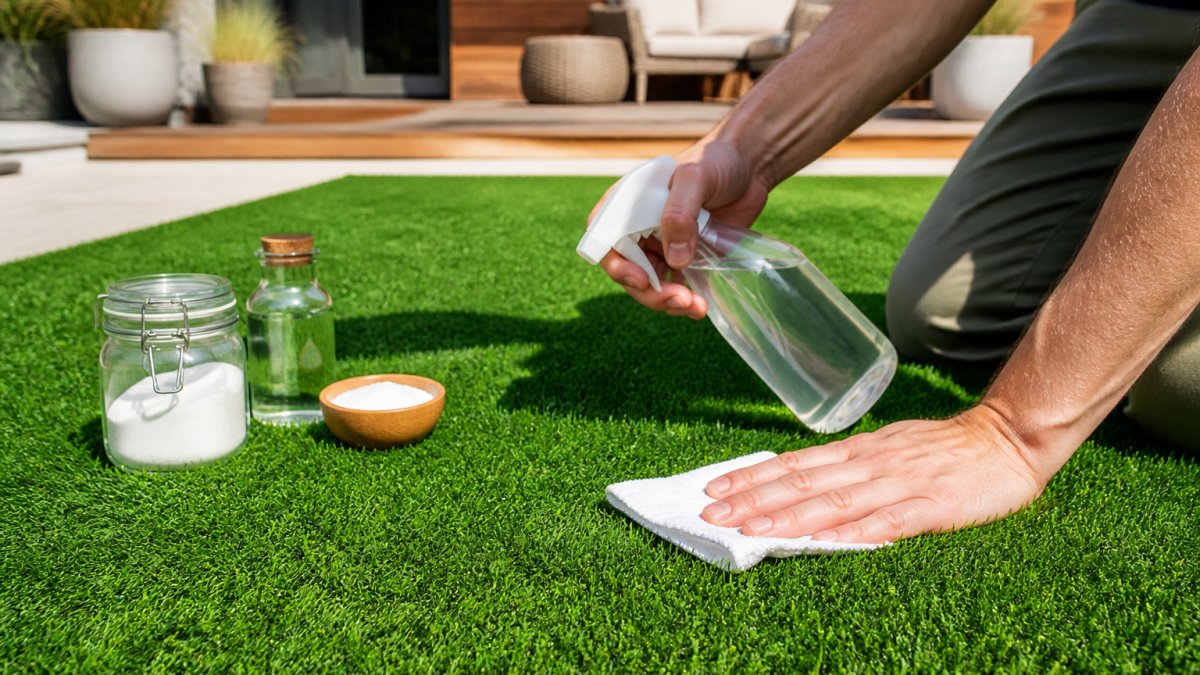
- DIY Artificial Grass Deodorizer Options
- How Often to Rinse Artificial Grass
- Artificial Grass Odor Prevention Strategies
- Identifying Odor Severity and Source
- When to Call a Professional
- Frequently Asked Questions
Last Updated: October 10, 2026
Why Artificial Grass Develops Pet Odors
Pet urine creates odors in artificial grass because urine contains uric acid and bacteria that break down and release ammonia gas, which is why many pet owners need to deodorize artificial grass regularly. When dogs urinate on synthetic turf, the liquid soaks into the infill material beneath the grass fibers. Unlike natural grass, which decomposes urine through soil microbes, artificial grass infill stays saturated longer, trapping odor-causing bacteria. This is why regular maintenance matters so much for pet owners with synthetic turf.
The smell usually comes from a specific spot where your dog regularly urinates, not the entire lawn. Identify the problem area first to treat it effectively.
How to Remove Dog Urine Smell from Artificial Grass
Removing dog urine smell requires a five-step process. Most odors disappear within 24 hours of treatment.
Step 1: Remove Solid Waste
Pick up any solid waste using a pooper scooper or bag. Solid waste accelerates bacterial growth, so removing it first makes your cleaning solution much more effective.
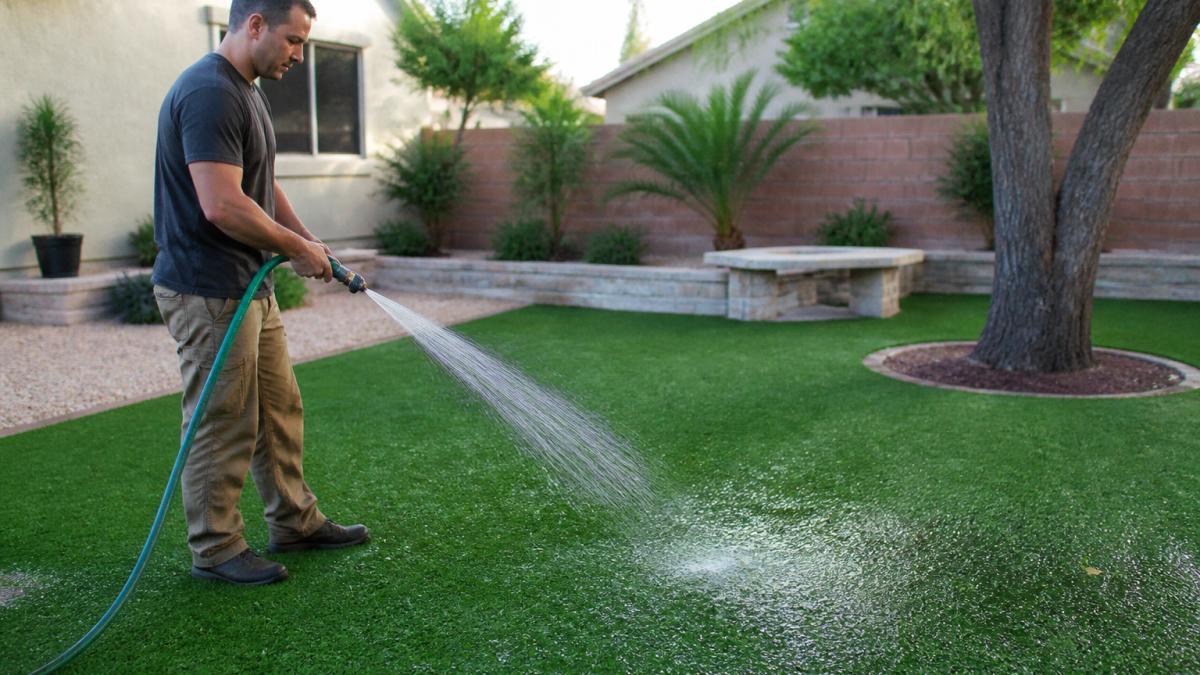
Step 2: Rinse the Affected Area with a Hose
Use a garden hose to rinse the spot thoroughly. Spray water generously across the area for 30 seconds to one minute. Water helps flush urine deeper into the infill, which you’ll then treat.
Rinsing dilutes urine compounds and removes surface bacteria. Don’t skip this step, it prepares the area for your cleaning solution. The water should drain through the turf quickly if your drainage is working properly.
Step 3: Apply Your Chosen Cleaning Solution
Choose one of the natural solutions covered in the next section and apply it generously so the turf stays wet and the liquid soaks into the infill where bacteria live. A spray bottle works, but pouring works faster for larger areas.
Step 4: Allow the Solution to Soak
Let your chosen solution sit for 10-15 minutes. The active ingredients break down uric acid and eliminate odor-causing compounds. Most people rush this step and wonder why the smell returns.
If you have pets or children, keep them away from the treated area while the solution soaks. Some natural solutions can irritate skin or eyes if contact occurs.
Step 5: Rinse Thoroughly
Rinse the entire treated area with clean water using your garden hose for at least one minute. Thorough rinsing prevents solution buildup, removes dead bacteria and dissolved uric acid, and leaves your grass clean and fresh.
DIY Artificial Grass Deodorizer Options
Three natural methods work well for removing pet odors. Choose based on odor severity, what you have at home, and your turf material.
Diluted White Vinegar Solution
Mix one part white vinegar with one part water in a spray bottle. The acetic acid breaks down uric acid compounds and kills odor-causing bacteria.
How it works: Acetic acid (typically 4-5% in household vinegar) lowers the pH around bacteria and uric acid, disrupting bacterial cell membranes and breaking down uric acid crystals.
Material safety: Vinegar is safe for polyethylene turf fibers and most infill materials, but avoid latex or polyurethane backings. Always spot-test first.
Limitations: Vinegar is less effective on old, deeply saturated urine and may need repeated applications for moderate odors. It does not address drainage problems or infill compaction.
Pros:
- Inexpensive and readily available
- Safe for pets and children after drying
- Works quickly on fresh odors (2-4 hours)
- Mild on turf fibers and most backings
Cons:
- Strong smell while wet
- May need repeated applications for heavy saturation
- Less effective on very old or stubborn odors
- Not suitable for latex or polyurethane-backed turf
- Does not address drainage issues
Baking Soda as a Deodorizing Option
Sprinkle baking soda directly on the wet area after rinsing. Let it sit for 15-20 minutes, then rinse it away completely. Baking soda absorbs odors and neutralizes ammonia smell.
How it works: Baking soda is alkaline and absorbs acidic odor compounds, particularly ammonia. It does not kill bacteria but neutralizes the volatile compounds they produce.
Material safety: Baking soda is safe for all turf fibers, backings, and infill materials. It is completely safe for pets and children.
Limitations: Baking soda is less effective on very old, dried urine and does not kill bacteria, so it is a temporary fix.
Pros:
- Highly effective odor absorption
- Very safe for pets, children, and all turf materials
- Inexpensive and easy to apply
- Works within 4-8 hours
Cons:
- Requires thorough rinsing to remove powder
- Less effective on old or deeply saturated urine
- Does not kill bacteria, only masks odors temporarily
- Powder can be messy to apply on large areas
- Does not address drainage issues
Enzyme Cleaners for Persistent Odors
Enzyme-based cleaners break down uric acid at the molecular level using bacteria and enzymes that consume odor-causing compounds.
How it works: Enzyme cleaners contain proteases and urease enzymes that break uric acid and urea into smaller, odorless compounds. Unlike vinegar or baking soda, they eliminate the source of odor.
Material safety: Most enzyme cleaners are safe for polyethylene turf fibers and standard infill materials. Check the product label for compatibility with latex or polyurethane backings. Always spot-test first.
Limitations: Enzyme cleaners are significantly more expensive ($15-$40 per application) and require longer treatment time (24-48 hours). Cold weather or dry conditions slow enzyme activity.
Pros:
- Most effective on persistent or heavy odors
- Works on deep saturation in infill
- Long-lasting odor elimination (addresses root cause, not just symptoms)
- Works even on old, dried urine
Cons:
- Higher cost than natural alternatives
- Requires longer treatment time (24-48 hours)
- Must follow specific product instructions
- Effectiveness depends on temperature and moisture
- Does not address drainage issues
- May not be compatible with all turf backings
Comparison and When to Use Each Method
| Method | Best For | Cost | Time to Work | Material Risk | Effectiveness Limit |
|---|---|---|---|---|---|
| White Vinegar | Fresh, mild to moderate odors | Low | 2-4 hours | Low (avoid latex backing) | Does not reach drainage layer |
| Baking Soda | Moderate odors, quick absorption | Low | 4-8 hours | None | Temporary; does not kill bacteria |
| Enzyme Cleaners | Persistent, heavy, or old odors | Higher | 24-48 hours | Low (check label) | Most thorough; requires warmth |
Choose vinegar or baking soda if: The odor is fresh, mild, or lightly saturated, or you’re treating within 24 hours of the accident.
Choose enzyme cleaners if: The odor persists after other treatments, is old or heavily saturated, or involves multiple problem areas.
None of these methods will permanently solve odors caused by poor drainage, compacted infill, or saturation in the sub-base. If odors return within days of treatment, or if water drains slowly through the turf, the problem is structural, not just surface, and may require professional assessment or infill replacement.
How Often to Rinse Artificial Grass
Rinse your artificial grass weekly if you have pets to remove urine and bacteria before they build up. For multiple dogs, rinse twice weekly. During hot, humid months, increase frequency since heat speeds up bacterial growth.
Weekly maintenance rinsing takes 5-10 minutes and prevents 90% of odor problems. It’s far easier than treating stubborn odors after they develop.
Artificial Grass Odor Prevention Strategies
Prevention is easier than treatment. To deodorize artificial grass effectively, rinse the entire lawn weekly with a garden hose. Train your dog to use a designated area if possible. Clean up solid waste immediately. Apply baking soda monthly on high-use areas. Ensure proper drainage so water flows freely after rinsing. In humid climates, rinse more frequently and trim back plants that block airflow.
Identifying Odor Severity and Source
The source of odors determines which treatment will work. A systematic diagnostic approach helps you avoid wasting time on ineffective solutions.
Step 1: Determine If the Odor Is Fresh or Buildup
Fresh urine odors appear within hours and smell sharp and ammonia-like in one spot. They respond quickly to rinsing or vinegar. Buildup odors persist or return after treatment and smell musty across multiple areas, indicating urine has accumulated over days or weeks. To test: Rinse thoroughly and wait 24 hours. If the smell is mostly gone, it was fresh; if it returns, urine has saturated the infill.
Step 2: Identify the Odor Location, Surface, Infill, or Drainage
Surface odors smell strongest at the grass-fiber level and are easiest to treat with vinegar or baking soda. Infill odors smell strongest when you press down on the turf and require longer soak times or enzyme cleaners. Drainage-layer odors smell foul and musty and persist after surface treatment, often requiring professional assessment. To assess: Probe the turf edge with a screwdriver. If the infill feels soggy 2+ inches down, the problem extends into the infill or below.
Step 3: Assess Drainage Function
Test drainage by pouring a bucket of water onto the affected area. Good drainage: water disappears within 5-10 seconds. Slow drainage: water pools or drains over 30+ seconds. No drainage: water sits on top. If drainage is poor, treat the odor but also address the drainage issue, as odors will return otherwise. Professional inspection may be needed.
Step 4: Estimate Odor Severity
Mild odors appear in one small spot and indicate fresh or lightly saturated urine. Moderate odors cover 10+ square feet or persist after one treatment, suggesting repeated urination or moderate infill saturation. Severe odors smell overwhelming across multiple areas or return within days, indicating heavy saturation or drainage failure requiring enzyme cleaners or professional help.
Step 5: Check for Multiple Problem Areas
Watch where your dog urinates over a few days. If your dog has one or two favorite areas, odors will respond to targeted treatment. If your dog urinates in many spots, you may have a systemic issue, either your dog is marking territory widely, or the turf is retaining odors due to infill saturation or drainage problems. Multiple scattered areas require more aggressive treatment or professional assessment.
Before choosing a treatment, answer these questions: Is the odor fresh or buildup? Is it surface, infill, or drainage? Does water drain well? How large is the affected area? Your answers will guide you to the right solution and realistic expectations for results.
When to Call a Professional
Call a professional if odors persist after three treatment attempts, your drainage system isn’t working properly, or you have very large affected areas.
Pet odor doesn’t have to be a permanent problem with artificial grass. Most odors respond to simple, natural treatments applied consistently. Weekly rinsing prevents buildup. When odors do appear, white vinegar, baking soda, or enzyme cleaners eliminate them quickly.
The key is addressing the problem early and maintaining your turf regularly. Our quad-color technology replicates natural grass appearance even after years of active pet play.
Frequently Asked Questions
How do you remove urine smell from artificial grass?
Remove solid waste first, then rinse the affected area thoroughly with a garden hose. Apply a natural cleaning solution such as diluted white vinegar (1 part vinegar to 4 parts water) or an enzyme cleaner, allow it to soak for 15-30 minutes, and rinse again. For heavily saturated turf, enzyme cleaners break down the bacteria and odor-causing buildup more effectively than vinegar alone. Repeat the process if the odor persists after one treatment.
Can you use vinegar to deodorize artificial grass?
Yes, diluted white vinegar is an effective natural odor neutralizer for artificial grass. Mix one part white vinegar with four parts water in a spray bottle and apply generously to the affected area. Vinegar works by neutralizing odor-causing bacteria rather than masking the smell. Allow the solution to soak for 15-20 minutes before rinsing thoroughly with clean water. This method is pet-safe and works well for mild to moderate odors.
How often should you rinse artificial grass to prevent odors?
Rinse your artificial grass weekly with a garden hose if you have pets, especially in warm months when bacteria multiply faster. A quick rinse removes surface debris and urine before it penetrates the infill. For pet-heavy areas, rinse more frequently after your dog uses the turf. During cooler months, weekly rinsing may suffice unless odor returns. Regular rinsing prevents odor buildup and extends the time between deep cleanings.
What is the best DIY odor eliminator for artificial grass?
Enzyme cleaners are the most powerful DIY option for persistent odors because they break down the bacteria and organic compounds causing the smell, not just mask it. For mild odors, diluted white vinegar works quickly and safely. Baking soda works as a secondary treatment after rinsing and works well for absorbing residual odors. Enzyme cleaners are best for heavily saturated turf, while vinegar suits regular maintenance. Choose based on odor severity and how quickly you need results.