
Last Updated: November 2, 2026
Quick Summary
Yes, sand infill can make artificial grass hotter. Plain sand absorbs and stores sunlight, so dark, uncoated sand tends to heat up the most. Lighter-colored or coated sand reflects more light and usually stays cooler.
- Dark, uncoated sand tends to heat up the most.
- Light-colored sand runs cooler than dark sand.
- Coated sand reflects more light and usually stays cooler.
- Silica sand holds heat and releases it slowly after sunset.
- Test surface heat by pressing the back of your hand on it for 10 seconds.
Table of Contents
- Does Artificial Grass Get Hotter Than Natural Grass?
- How Sand Infill Affects Surface Temperature
- Comparing Sand, Rubber, and Alternative Infills
- How Sunlight, Shade, Wind, and Watering Change Temperatures
- How to Stop Artificial Grass From Getting Hot
- Is Artificial Grass Too Hot for Dogs and Kids?
- How Often to Add Sand to Artificial Grass and Test Your Lawn’s Heat
- Frequently Asked Questions
Does Artificial Grass Get Hotter Than Natural Grass?
Yes, artificial grass often gets hotter than natural grass on a sunny day. Natural grass stays cooler because water evaporates from the blades and soil, and that process pulls heat away from the surface. Synthetic turf has no moisture to release, so the fibers and infill absorb sunlight and hold on to it.
The difference is often most noticeable in the early afternoon, when the sun is strongest.
The good news is that surface heat is manageable. The sections below explain how infill affects temperature and what you can do about it.
How Sand Infill Affects Surface Temperature
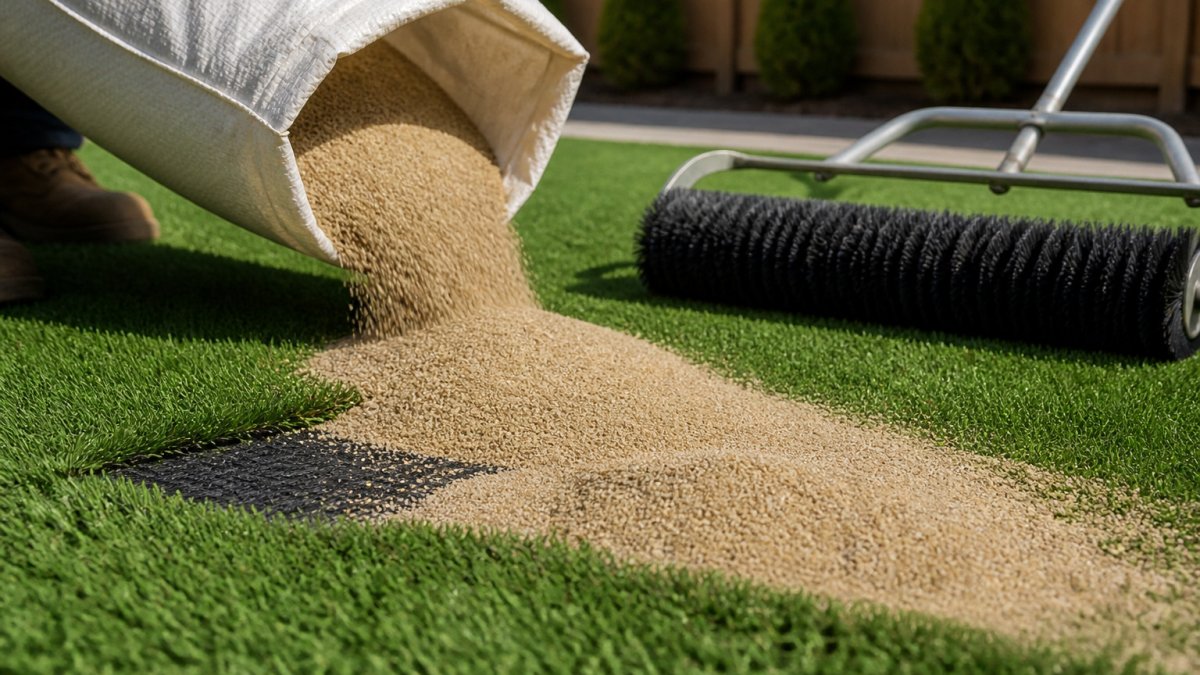
Sand infill is the material that sits between the turf fibers and helps them stand upright. It also adds weight, which keeps the turf from shifting. Because the infill sits right under the fibers, it plays a large role in how hot the surface gets.
Plain sand absorbs and stores heat, so a lighter-colored or coated infill is often considered when heat is a concern.
- Dark, uncoated sand tends to heat up the most
- Light-colored sand runs cooler than dark sand
- Coated sand reflects more light and usually stays cooler
- Infill depth and quantity also affect how much heat builds up
Why Silica Sand Retains Heat
Silica sand is a common infill material. The downside is that it holds heat too. Once silica sand warms up in direct sunlight, it releases that heat slowly, even after the sun sets.
Coated and Cooling Sand Options
Coated sand has a surface treatment, and cooling infills are a category of materials designed to run cooler than standard sand.
Pricing depends on quantity, delivery, and installation details, so contact Southern Artificial Turf for a quote tailored to your yard.
Comparing Sand, Rubber, and Alternative Infills
Sand is not the only infill choice, and the infill you pick changes how the surface behaves in sun, underfoot, and over time. The table below summarizes how the most common options compare on heat, feel, cost, and maintenance. Treat the heat column as a relative ranking under the same conditions, not as a promise of a specific temperature.
| Infill type | Heat behavior in direct sun | Feel underfoot | Relative cost | Maintenance notes |
|---|---|---|---|---|
| Silica sand (uncoated) | Absorbs and stores heat; stays warm into the evening | Firm, dense, good fiber support | Lowest | Top up in high-traffic areas; may migrate with heavy rain |
| Coated or treated sand | Reflects more sunlight; typically runs cooler than uncoated sand | Similar to silica, slightly lighter | Moderate | Coating can wear over years; refresh during top-ups |
| Zeolite or mineral cooling blends | Designed to release heat faster and hold less surface heat | Firm, similar to sand | Higher | Less common; confirm installer experience |
| Rubber (crumb or coated) | Often runs hotter than sand in direct sun; retains heat | Soft, springy, shock-absorbing | Moderate | Can degrade and scatter; heat is a common pet-owner complaint |
| No infill (fiber-only systems) | Depends on fiber color and backing; can run hot without the thermal mass of sand | Less stable; fibers may lean | Lowest upfront | Not suitable for most residential lawns; fibers flatten faster |
infill material safety and use guidance
How Sunlight, Shade, Wind, and Watering Change Temperatures
Infill type is only one part of the picture. Your yard’s conditions matter too.
- Direct sun: The biggest factor. A fully exposed lawn in the afternoon will run hottest.
- Shade: Trees, fences, or structures can keep the surface several degrees cooler.
- Wind: A steady breeze helps carry heat away from the surface.
- Watering: Rinsing the turf with a garden hose can cool it down quickly, though it does not last long in full sun.
Rinsing the turf in the late afternoon or early evening can provide a short cooling effect as the water evaporates.
How to Stop Artificial Grass From Getting Hot
Several steps can help reduce surface heat:
- Choose a lighter or coated infill during installation
- Add shade with trees, umbrellas, or a pergola over the busiest area
- Rinse the surface in the late afternoon during hot weather
- Keep fibers clean by removing debris that traps heat
- Test the surface before playtime by pressing the back of your hand on it
Each step has a trade-off, and the right combination depends on your yard and budget. Learn more about HydroChill cooling technology for synthetic lawns, including the benefits it offers.
Is Artificial Grass Too Hot for Dogs and Kids?
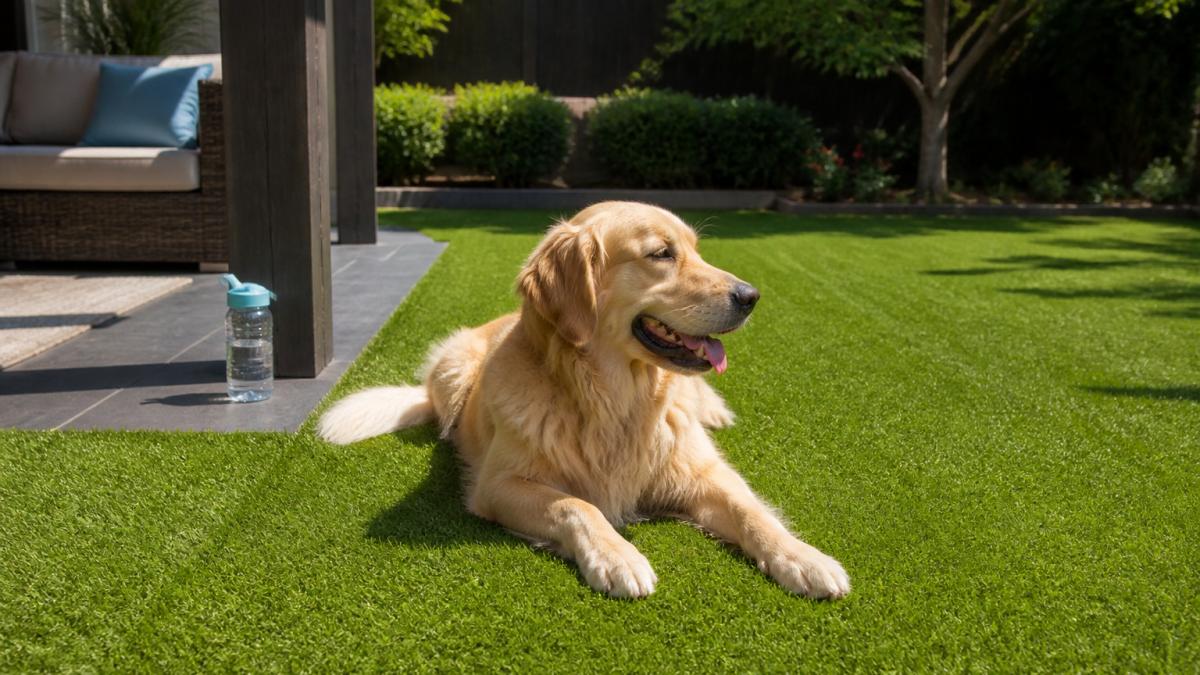
Hot turf can be uncomfortable for paws and skin, so it is worth checking before anyone plays on it.
- Test the surface with the back of your hand for 10 seconds
- Give pets a shaded area with fresh water nearby
- Schedule play for early morning or evening during summer
- Keep children’s water bottles and shoes close, and watch for overheating
If the surface feels too hot for your hand, it is too hot for bare feet or paws. Move play to a shaded spot or wait until the surface cools.
How Often to Add Sand to Artificial Grass and Test Your Lawn’s Heat
Infill may need topping up over time, as foot traffic and rain can move sand away from high-use zones. Read about how long artificial grass lasts and the upkeep to expect over the years. The right schedule depends on use, so check infill depth periodically and inspect high-traffic areas more often.
Testing heat is where most homeowners guess. A repeatable method gives you numbers you can compare across days, infill types, and cooling steps.
- Pick a clear, sunny day with light wind so conditions are comparable.
- Measure at the same time each test, ideally between 1 p.m. and 3 p.m. when solar load peaks.
- Use an infrared thermometer held a few inches above the surface, or press a probe thermometer into the infill at fiber level. Take three readings in sun and three in shade, then average each set.
- Record air temperature and surface temperature together so you can separate infill effects from weather.
- Test the same spots each time, one exposed area, one shaded area, and one high-traffic area, so changes reflect the lawn, not the location.
A hand test is still useful as a quick safety check before play: press the back of your hand to the surface for 10 seconds. If it is uncomfortable, it is too hot for bare feet or paws. The thermometer tells you how hot; the hand test tells you whether it is safe right now.
Cooling steps each have a trade-off, and knowing how long they last helps you plan. Rinsing with a garden hose lowers surface temperature quickly, but in full sun the effect is short-lived and needs repeating. Shade from trees, a pergola, or a shade sail lowers peak temperature for hours and is the most durable fix, though it limits where play equipment can go and may affect grass growth nearby. Lighter or coated infill lowers heat all day with no ongoing effort, but costs more upfront. Wind helps carry heat away, but you cannot control it, so do not rely on it as a strategy.
heat safety guidance for outdoor surfaces
Frequently Asked Questions
Can I use sand as infill for artificial turf?
Yes. Silica sand is one of the most common infill materials for artificial turf because it is inexpensive, widely available, and keeps the turf fibers upright. Sand can absorb and hold heat, so some homeowners consider a lighter or coated sand when heat is a concern. Quantity and installation depth depend on your turf’s pile height and the product specifications, so check with your installer or Southern Artificial Turf for a quote tailored to your project.
How hot does artificial turf get on a 100-degree day?
Artificial turf surface temperatures can climb well above air temperature on a sunny day, and the exact figure depends on the infill, fiber color, shade, and wind. Reliable temperature readings vary by product and conditions, so there is no single number that applies to every lawn. You can measure your own surface with an infrared thermometer at midday on a hot, sunny day and compare readings across different spots in your yard.
Is artificial grass too hot for dogs?
It can be, especially in full afternoon sun during hot weather. Dogs’ paw pads can be sensitive, and a surface that feels warm to your hand may be uncomfortable for them. Before letting your dog out, place the back of your hand on the turf for several seconds. Provide shade, fresh water, and access to cooler areas, and avoid long midday play sessions in direct sun during summer heat.