
Table of Contents
- How Long Does Artificial Grass Last? Real Answers by Use Case
- What Determines Artificial Grass Lifespan Expectations
- Artificial Grass Maintenance That Extends Service Life
- Artificial Grass for Dogs: Durability Under Pet Traffic
- Artificial Turf Warranty vs Real-World Service Life
- How to Assess Wear and Decide Between Repair and Replacement
- Climate and Real-World Longevity
- Conclusion
- Frequently Asked Questions
Last Updated: October 13, 2026
How Long Does Artificial Grass Last? Real Answers by Use Case
Artificial grass lifespan expectations start with one number: most quality synthetic turf lasts 15 to 20 years. But that range hides the real story.
At Southern Artificial Turf, we talk with homeowners and facility managers every week who assume all turf ages the same way. It doesn’t. How long your artificial grass lasts depends on where it sits, who uses it, and how you care for it.
Artificial grass lifespan expectations are not a single number. Match the estimate to your actual traffic level and climate, or you’ll either overspend or replace too soon.
Lifespan by Traffic Level: Backyard, Pet Area, Commercial, Sports
Traffic level is the biggest single factor in how long artificial grass lasts. A quiet residential lawn sees far less wear than a commercial space or a sports field.
Here’s a realistic breakdown:
| Use Case | Typical Lifespan | Main Wear Factor |
|---|---|---|
| Light backyard lawn | 18-20 years | Sun and UV exposure |
| Family yard with kids | 15-18 years | Foot traffic |
| Pet area with dogs | 10-15 years | Digging, waste, heavy use |
| Commercial common space | 10-15 years | Constant foot traffic |
| Sports field | 8-12 years | High-impact, intense use |
These ranges assume decent product and a proper install. Cheap turf with a thin backing can fail years earlier, no matter how gently you use it.
What Determines Artificial Grass Lifespan Expectations
Three things decide how long synthetic grass holds up: the quality of the turf itself, the quality of the installation, and how it’s used. Get all three right and you’ll land at the top of the range. Miss one and the clock runs faster.
Turf Fibers, Backing, and Infill: Which Component Fails First
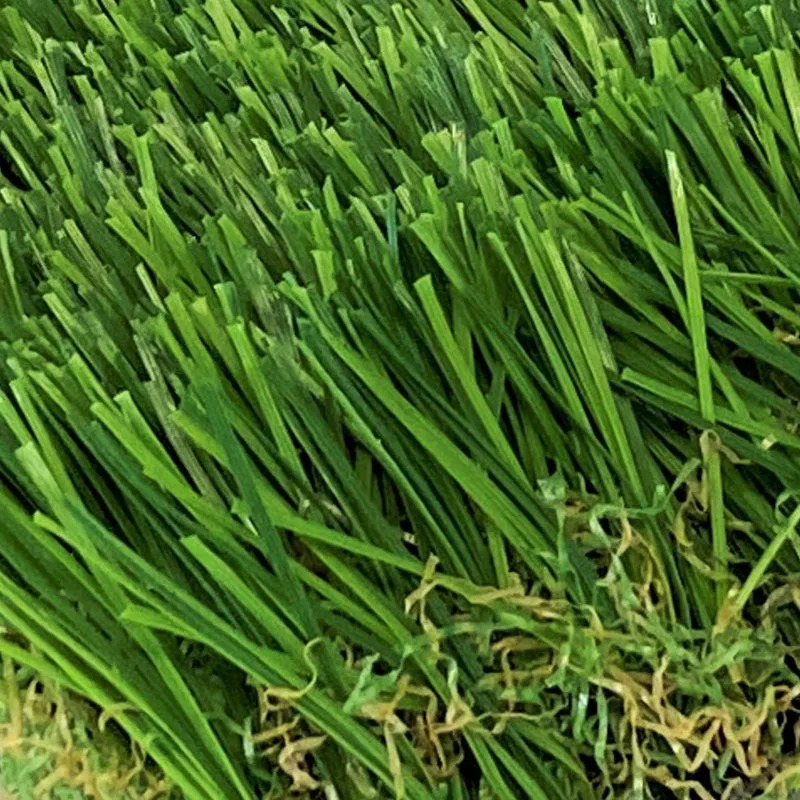
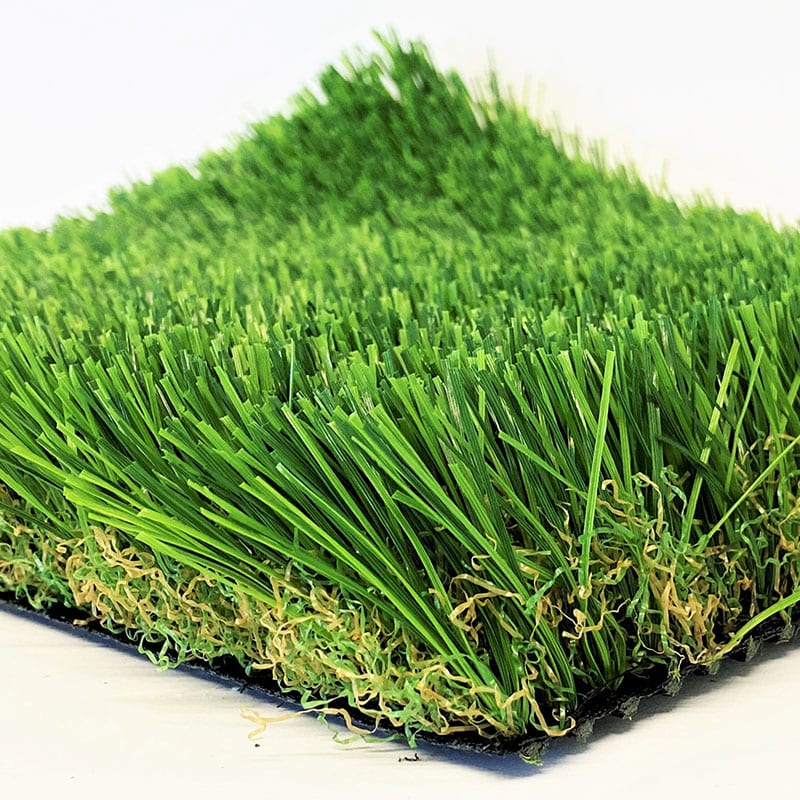
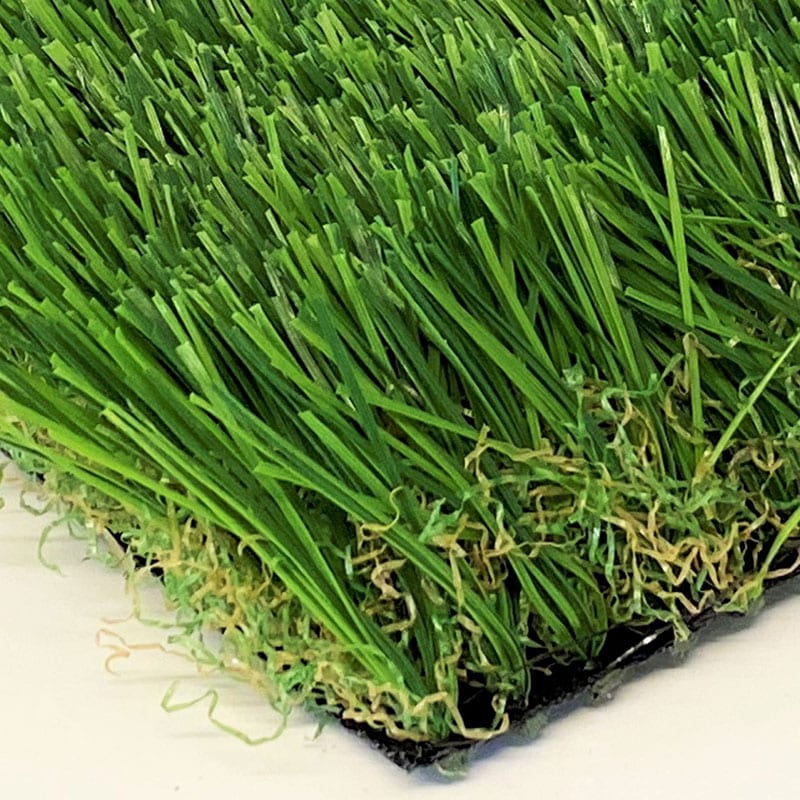
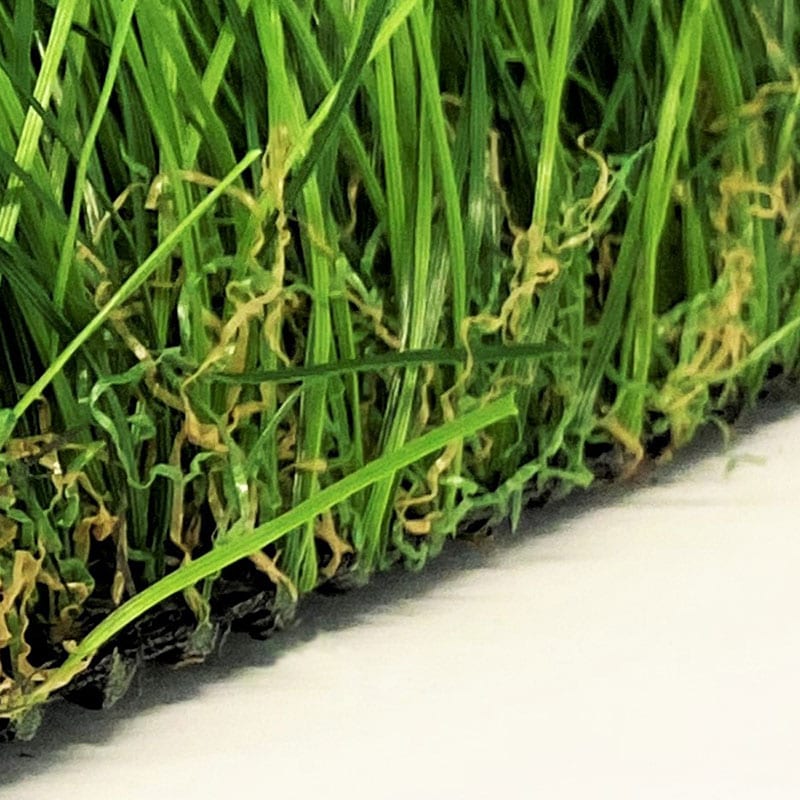
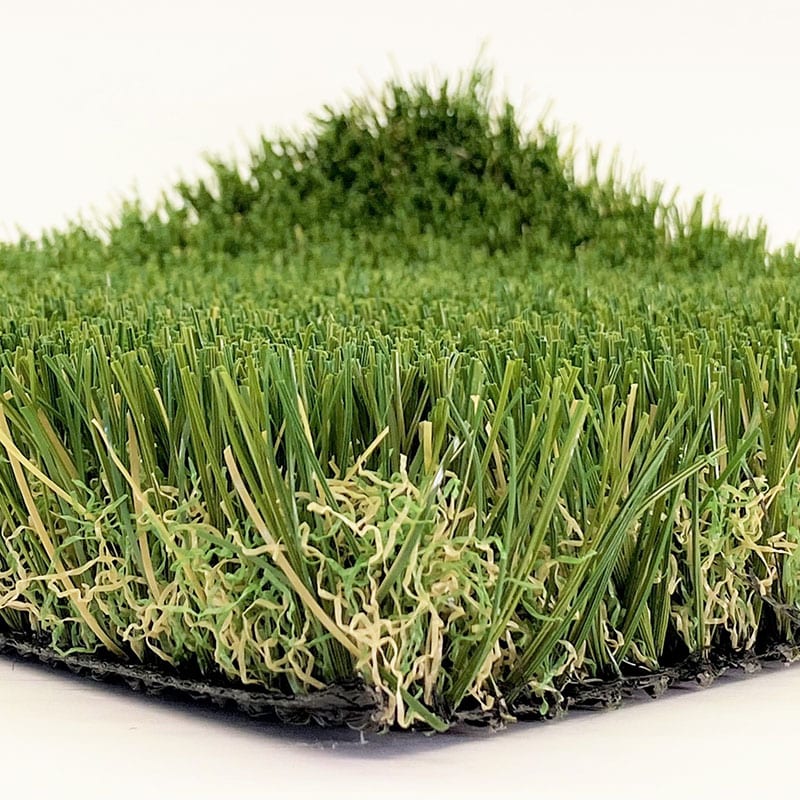
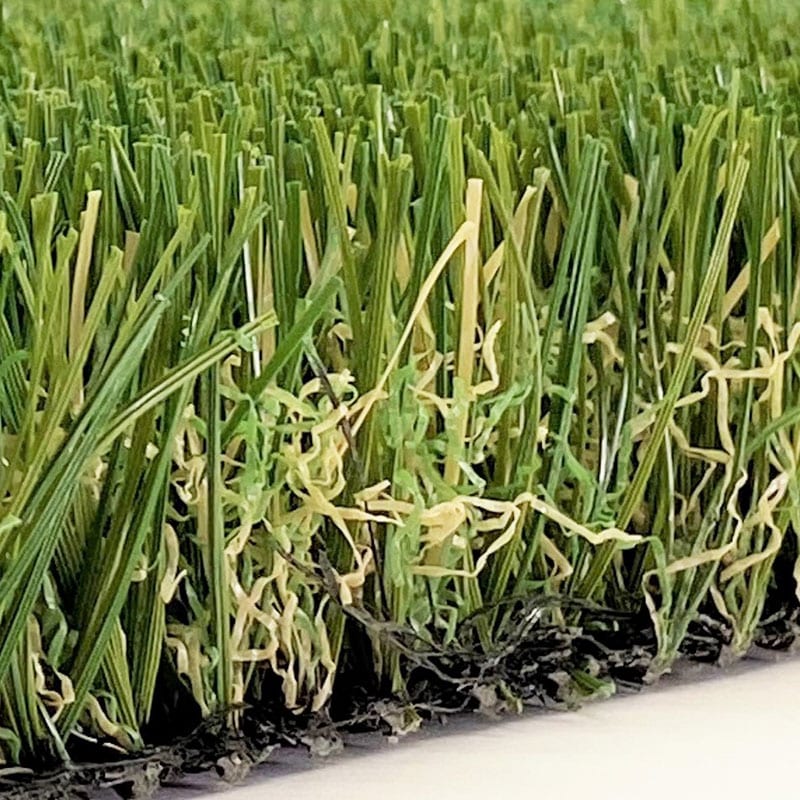
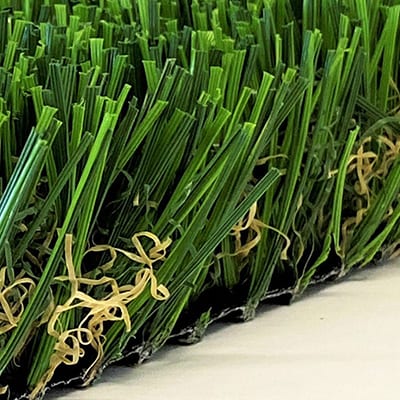
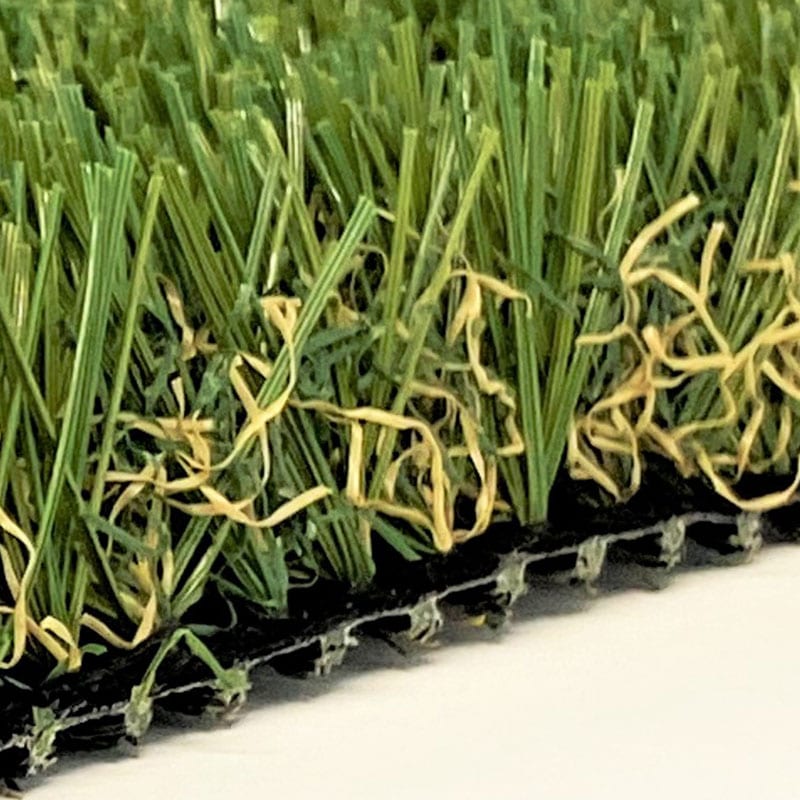
The backing usually fails before the fibers do. Turf fibers, the visible blades, are tough and UV-treated. The backing is the layer that holds them in place, and it takes the most stress from foot traffic and weather.
- Fibers: Fade and flatten slowly; rarely the first to go
- Backing: Cracks or separates first, especially with poor drainage
- Infill: Settles over time and needs topping up, not replacing
A common mistake is judging turf only by how the blades look. If the backing is failing, the blades won’t save it.
Installation Quality and Base Preparation
Base preparation is where most turf jobs are won or lost. A proper base is compacted, level, and drains well. Skip that step and you get wrinkles, pooling water, and seams that pull apart within a few years.
Poor drainage is the quiet killer. Water trapped under the turf weakens the backing and speeds up breakdown. Good installers spend as much time on the base as on the turf itself.
EPA guidance on stormwater and drainage best practices
Artificial Grass Maintenance That Extends Service Life
Basic artificial grass maintenance is simple, and it adds years to your turf. The goal is to keep the surface clean, the fibers upright, and the drainage clear.
A simple routine covers most of it:
- Rinse the surface to clear dust and pollen
- Brush against the grain to lift flattened fibers
- Remove leaves and debris so water drains freely
Most of this takes minutes, not hours. The payoff is turf that looks newer for longer.
Brush high-traffic lanes in the opposite direction of the fiber lay. It lifts matted blades and spreads infill back where feet push it away. This one habit keeps worn paths from forming.
Artificial Grass for Dogs: Durability Under Pet Traffic
Dog traffic is the hardest test for any lawn. The good news: artificial grass for dogs can hold up well when it’s built for it.
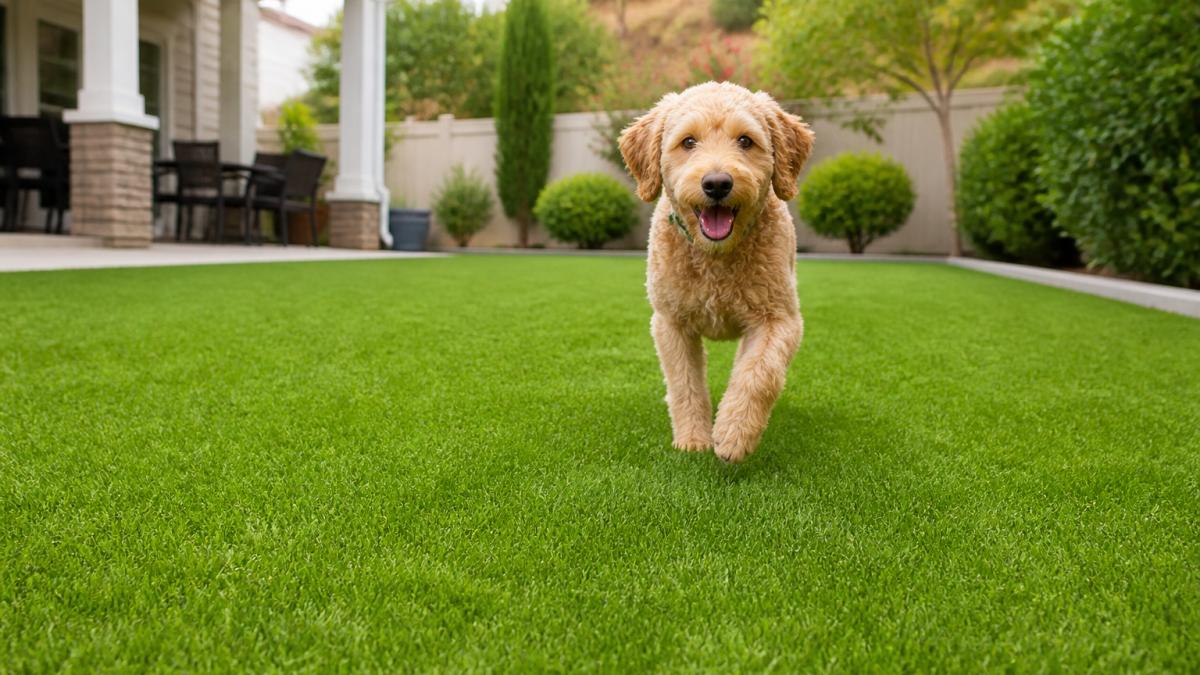
Look for three things in pet turf: strong drainage, non-abrasive fibers, and a backing that resists waste. Drainage matters most.
Non-abrasive fibers matter too. Softer blades are easier on paws and reduce the wear that rough fibers cause over years of running.
Artificial Turf Warranty vs Real-World Service Life
An artificial turf warranty covers defects, not normal wear. That single sentence explains most of the confusion buyers bring to this decision. A warranty might run 8 years, but that does not mean the turf stops working at year 8.
Real service life is usually longer than the warranty. A well-installed lawn can look good well past the covered period. The warranty protects you against defects; your maintenance protects you against wear.
What Turf Warranties Typically Cover
Most manufacturer warranties on synthetic turf are written around defects in materials and workmanship. In practice, that means things like:
- Fiber breakdown: blades that split, shred, or disintegrate from a manufacturing problem rather than from use
- Backing delamination: the backing layer separating from the tufted fibers on its own
- UV degradation: color loss or fiber embrittlement that exceeds the warranty’s stated fade threshold
What they generally do not cover is just as important. Wear from normal use, matting in high-traffic lanes, damage from pets, burns, cuts, chemical spills, improper installation, and poor base preparation are almost always excluded. If your turf fails because the base was not compacted or drainage was never addressed, that is an installation issue, not a product defect, and the manufacturer will point that out.
Prorated Versus Non-Prorated Coverage
This is the term most buyers skim past, and it changes what a warranty is actually worth.
A non-prorated warranty covers the full replacement cost of the defective material for the entire warranty term. If the turf fails in year 7 of an 8-year non-prorated warranty, you get full material coverage.
A prorated warranty reduces the payout over time. Fail in year 7 of an 8-year prorated warranty and you may only receive a fraction of the original material value, with the rest coming out of your pocket.
Read the schedule, not just the term length.
What a Warranty Does Not Tell You
A warranty period is a legal commitment from the manufacturer. Expected service life is an estimate of how long the product will actually perform. They are not the same number, and treating them as interchangeable leads to two opposite mistakes:
- Replacing turf the moment the warranty ends, when the lawn still has years of usable life
- Assuming a long warranty means the turf will look new for that entire period, when wear and matting are excluded
Do not confuse a warranty term with expected lifespan. Assuming turf is “done” when the warranty ends leads people to replace lawns that still have years left. Read what the warranty actually covers, and what it excludes, before you decide.
At Southern Artificial Turf, our turf carries an 8-year warranty covering the product. How long it actually lasts depends on install quality and upkeep, not on the warranty date.
How to Assess Wear and Decide Between Repair and Replacement
Most turf does not fail all at once. It wears in patches, and that means you usually have a choice: repair the failing area or replace the whole surface. The decision comes down to which components have failed and how widespread the failure is.
A Component-by-Component Inspection
Walk the lawn and check each layer separately. Different components fail at different rates, and knowing which one is failing tells you whether a repair will hold.
Fibers (the visible blades)
- Look for matting in traffic lanes, especially between a patio door and the yard’s main path
- Check for color fading by comparing a worn area to turf under a planter or in a shaded corner
- Run your hand against the grain, healthy fibers spring back, dead fibers stay flat
- Fibers alone rarely justify replacement; they can be brushed, and light fading is cosmetic
Backing (the layer holding the fibers)
- Press down along seams and edges for soft spots or separation
- Look for cracks, curling edges, or backing that has pulled away from the base
- Check the underside where you can lift an edge, a crumbling or brittle backing is a terminal sign
- Backing failure across a large area is the single strongest case for replacement
Infill (the sand or rubber between fibers)
- Check depth in high-traffic zones against a low-traffic zone
- Settled infill is normal and fixable, top it up rather than replacing anything
- Compacted or contaminated infill that will not drain may need removal and replacement
Seams and edges
- Walk the full length of every seam and look for lifting, gaps, or visible tape
- Check the perimeter where turf meets edging, concrete, or planting beds
- A single lifted seam is a repair; seams failing everywhere point to an installation or base problem
Base and drainage
- After heavy rain, look for standing water or soggy spots that persist for hours
- Check for depressions, ruts, or areas where the surface feels spongy underfoot
- Poor drainage is the most common reason a lawn fails early, and it is also the most expensive to fix after the fact
The Repair-or-Replace Decision
Use the inspection results to sort the problem into one of three buckets.
Repair
- Wear is limited to one or two spots
- A seam has lifted but the surrounding turf is sound
- Infill has settled in traffic lanes
- Small bare spots from a spill, burn, or pet damage
Repair now, monitor
- Fading is visible but the backing and seams are holding
- Drainage is slow in one area but not pooling
- Edges are curling in a single section
Replace
- Backing is cracked, brittle, or separating across large areas
- Water pools in multiple spots and will not drain
- Seams are failing in several places at once
- The base has settled into ruts or depressions
Photograph the worn areas before you decide. Comparing photos from year to year shows whether wear is stable or accelerating, a slow fade is cosmetic, while a spreading crack in the backing is a countdown to replacement.
If wear is limited to one or two spots, repair. If the backing is failing across the whole lawn or water pools everywhere, replacement is the smarter spend. The middle cases are where a professional inspection earns its cost, a component-level assessment can tell you whether a repair will hold or whether you are patching a surface that is already past its usable life.
Climate and Real-World Longevity
Heat, sun, and humidity all shape artificial grass lifespan expectations. In hot, humid regions, UV exposure fades color over time and constant moisture tests the backing.
This is where material quality pays off. Our quad-color technology and UV resilience help turf hold its look through long, harsh summers instead of fading to gray.
EPA information on heat and surface temperatures in built environments
Conclusion
Every lawn ages on its own schedule, and guessing wrong costs you money either way.
Southern Artificial Turf builds turf for exactly that. Our turf uses non-abrasive polyethylene fibers, quad-color technology, and 30-inches-per-hour drainage, backed by an 8-year warranty.
Get a quote from Southern Artificial Turf and find out which turf fits your space and how long it can last.
Frequently Asked Questions
What is the lifespan of synthetic grass?
Most synthetic grass lasts 10 to 25 years depending on product quality, usage, and climate. A high-quality polyethylene turf in a residential backyard with moderate foot traffic often reaches 15 to 20 years. Pet areas and commercial installations tend to land at the lower end because of heavier use. UV exposure and heat also shorten service life, so turf installed in full sun across the South may need replacement sooner than shaded lawns.
How long does artificial grass last with dogs?
Artificial grass for dogs typically holds up 10 to 15 years when the turf is built for pet traffic. Non-abrasive polyethylene fibers resist scratching better than softer blends, and a permeable backing helps waste rinse through instead of sitting on the surface. Heavier dogs and multiple pets add wear, so brushing the lawn and rinsing it regularly keeps fibers upright and extends the years of use before replacement is needed.
Does artificial grass last longer with regular maintenance?
Yes. Regular cleaning, debris removal, brushing, and rinsing keep turf fibers standing and prevent flattened patches from becoming permanent. Simple artificial grass maintenance like hosing down pet areas and clearing leaves also protects the backing and drainage. Without upkeep, matted fibers and clogged drainage cut the expected lifespan by several years, and repairs become more frequent before the turf reaches the end of its warranty period.
What are the signs that artificial grass needs to be replaced?
Watch for widespread color fading, fibers that stay flattened after brushing, visible seams pulling apart, and drainage that no longer works after rain. Localized damage from pets or heavy foot traffic can often be repaired with a patch, but once wear covers large sections of the lawn, replacement makes more sense than repeated fixes. Compare the repair cost against the remaining years of service life before deciding.