
Table of Contents
- Quick Comparison: 7 Durable Synthetic Grass Options
- How We Evaluated These Playground Turf Products
- 1. Southern Artificial Turf: Best Overall for Southern Climates
- 2. Smart Turf Playground Grass: Best for Custom Color Designs
- 3. Viva 111UF: Best Premium Aesthetic Turf
- 4. Oasis 100UF: Best Balance of Softness and Durability
- 5. Champ 81: Best for High-Traffic Play Zones
- 6. California Turf: Best for Heavy Commercial Use
- Matching Turf to Your Playground
- What Most Buyers Get Wrong About Playground Turf
- Frequently Asked Questions
Last Updated: September 24, 2026
Quick Comparison: 7 Durable Synthetic Grass Options
Choosing the right synthetic grass for a playground comes down to safety, durability, and heavy daily use. This guide from Southern Artificial Turf compares seven durable options, from budget-friendly picks to commercial-grade turf.
| Product | Best For | Standout Feature | Pricing |
|---|---|---|---|
| Southern Artificial Turf | Best Overall | 8-year warranty, 30 in/hr drainage | Quote-based |
| Smart Turf Playground Grass | Custom color designs | Multiple color options | Quote-based |
| Viva 111UF | Premium aesthetics | High-density luxury fibers | Quote-based |
| Oasis 100UF | Softness plus durability | Balanced fiber density | Quote-based |
| Champ 81 | High-traffic zones | Wear resistance under pressure | Quote-based |
| California Turf | Heavy commercial use | Strong fiber recovery | Quote-based |
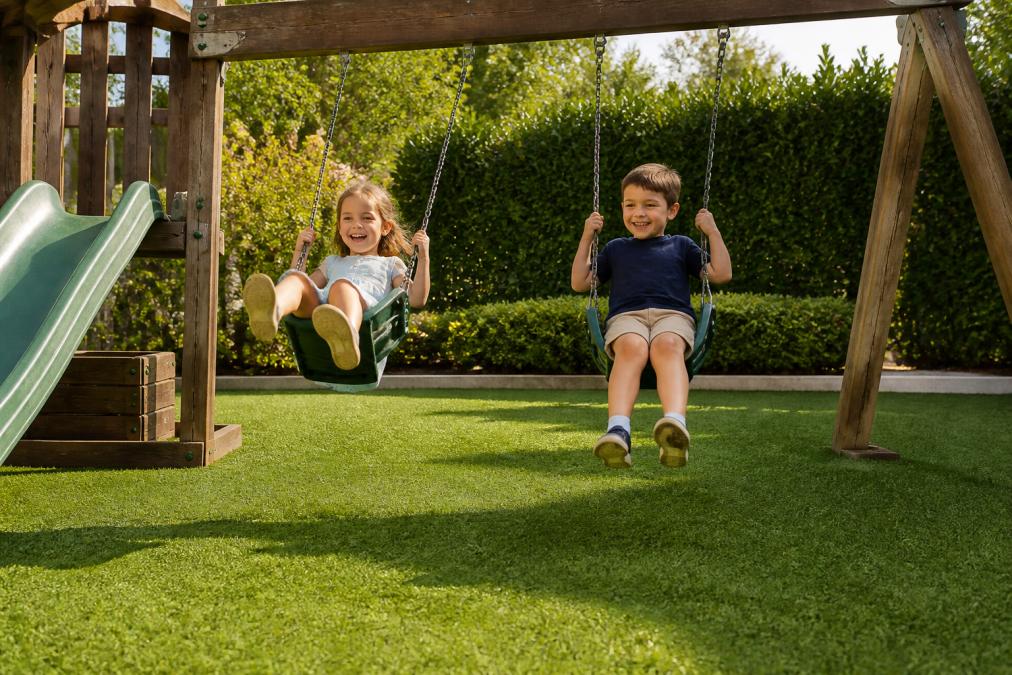
A durable playground surface has to survive scraped knees, grass stains, and years of sun exposure. The seven options below all meet that bar, though they differ in softness, drainage, and long-term wear.
How We Evaluated These Playground Turf Products
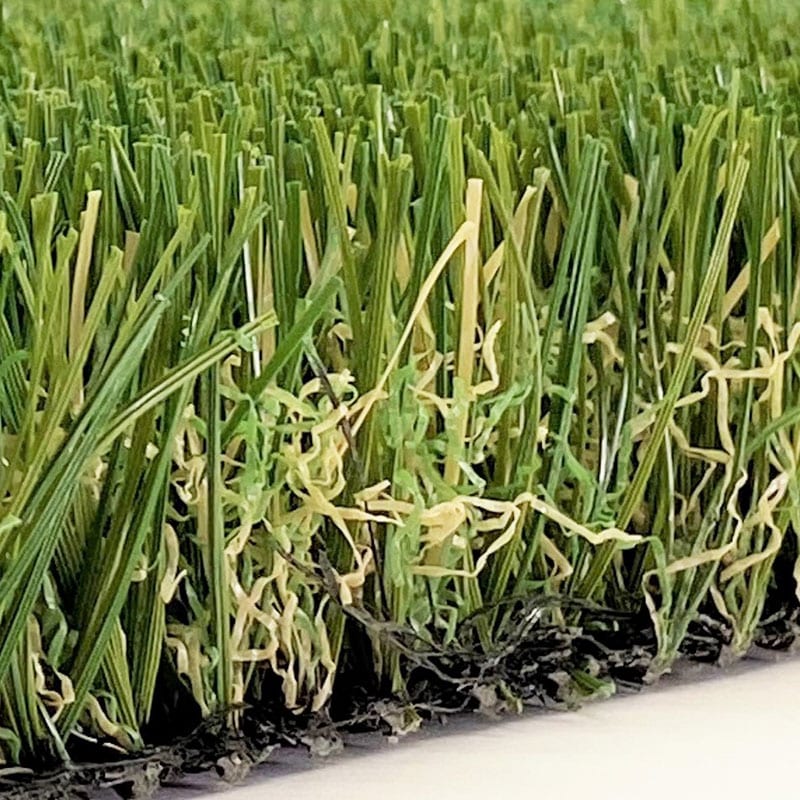
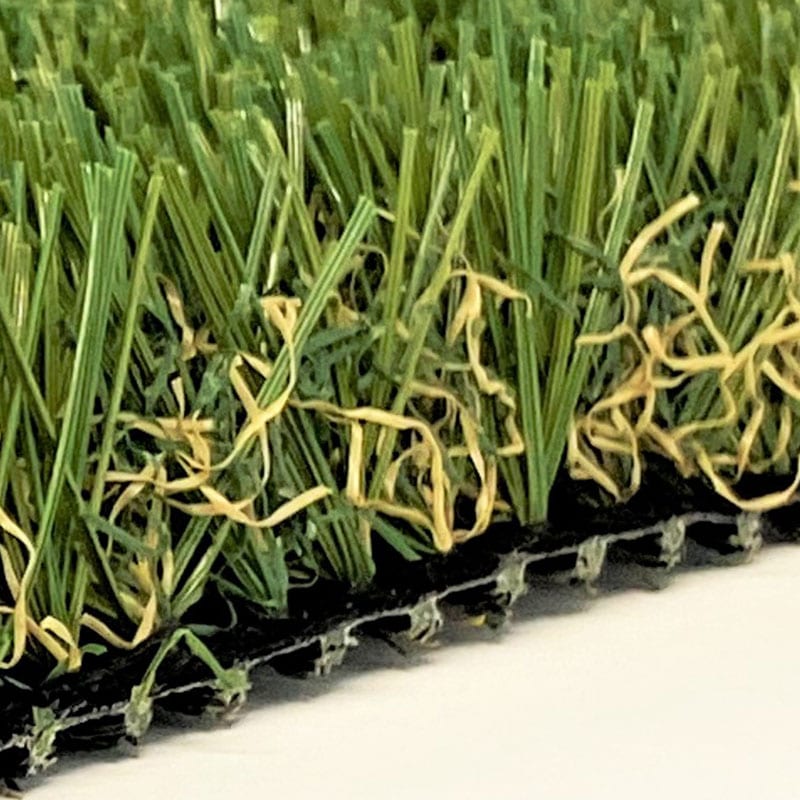
We scored each product on durability, safety, drainage, and maintenance. Fiber composition mattered most: polyethylene resists wear better than cheaper blends, and nylon thatch adds resilience at the base. UV stabilization also counted, since constant sun breaks down untreated turf fast.
Safety standards carried the heaviest weight. Playground surfacing is tested under ASTM F1292, which measures impact attenuation using g-max (peak deceleration) and HIC (Head Injury Criterion) (F1292 Standard Specification for Impact Attenuation of Surfacing Materials Within the Use…). A surface passes when g-max stays at or below 200 and HIC at or below 1,000 for the fall height being protected.
A second standard, ASTM F1951, covers accessibility, whether a surface is firm and stable enough for wheelchairs and mobility devices. IPEMA’s third-party certification verifies a product meets F1292 and F1951, so an IPEMA seal shows independent testing rather than self-reporting.
The critical fall height rating is the number to match against your equipment. A structure with a 6-foot deck height needs a surface rated to at least 6 feet, and that rating depends on the turf plus what sits under it. Turf alone rarely carries a high fall height; a shock pad or engineered wood fiber base is usually what gets the system to pass.
We favored products with strong warranty coverage and realistic maintenance expectations. No synthetic grass is truly maintenance-free, but the best need only occasional rinsing and brushing.
Ask for the turf’s face weight and tuft bind numbers before buying. Face weight tells you how much fiber sits per square yard, and tuft bind measures how hard it is to pull fibers loose. Higher numbers mean a playground surface that holds up longer under running, jumping, and sliding. Then ask for the system’s ASTM F1292 test report, not just the turf’s, so you can see the g-max and HIC values at your target fall height.
A product can pass ASTM F1292 on a test lab’s concrete floor and fail on your site if the base is wrong. The certification applies to the tested assembly, not to the turf alone. If a quote doesn’t specify the shock pad or base depth used to earn the rating, treat the fall height number as unverified.
1. Southern Artificial Turf: Best Overall for Southern Climates
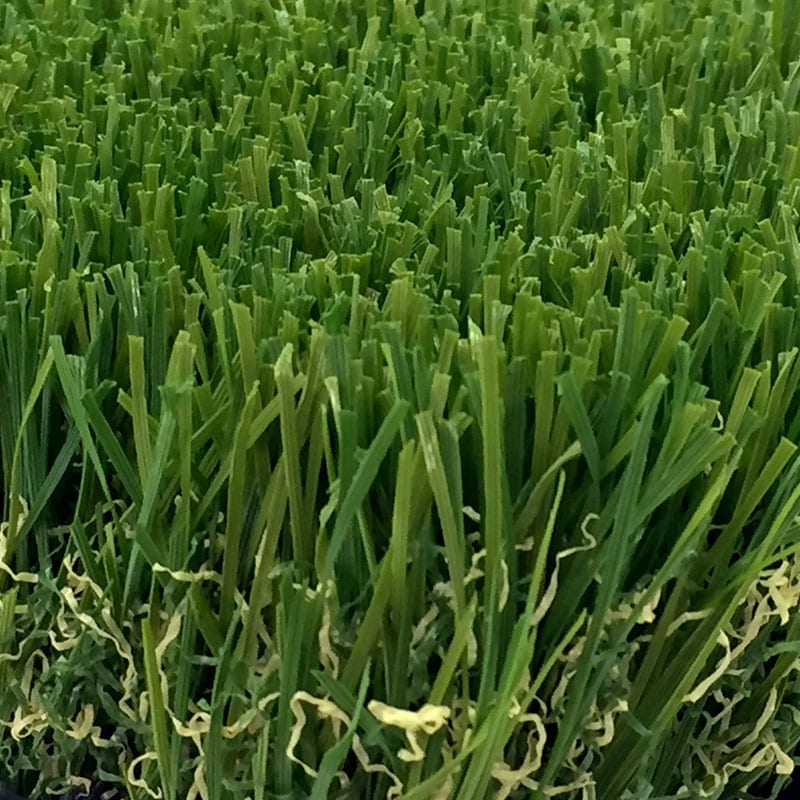
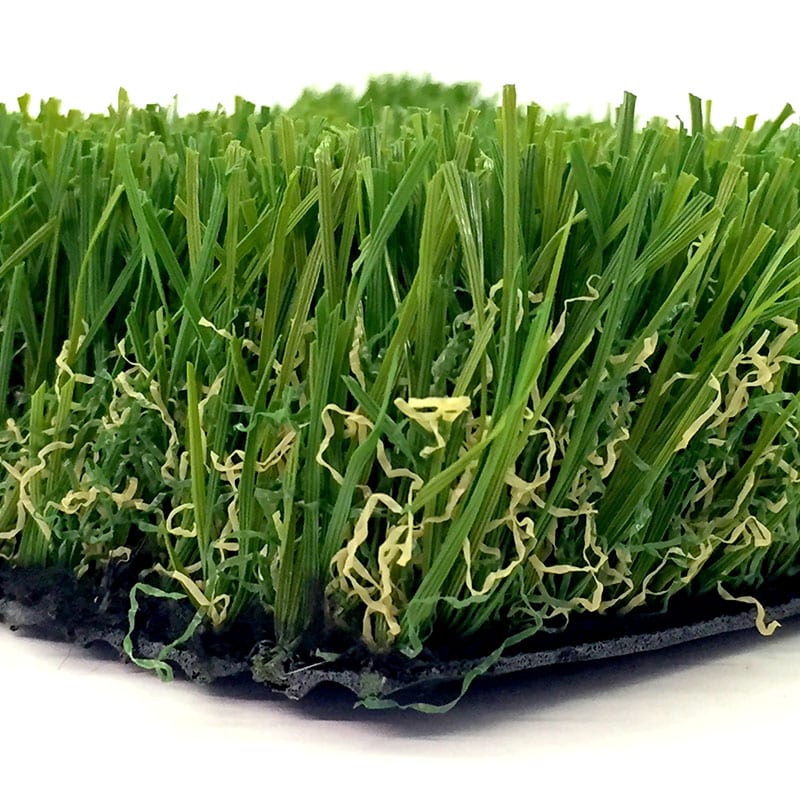
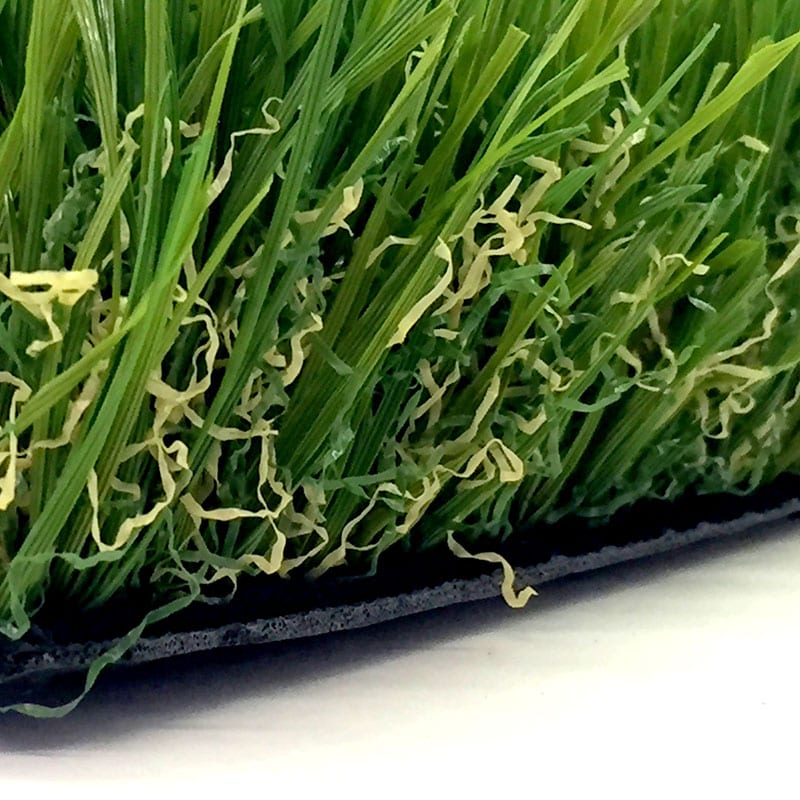
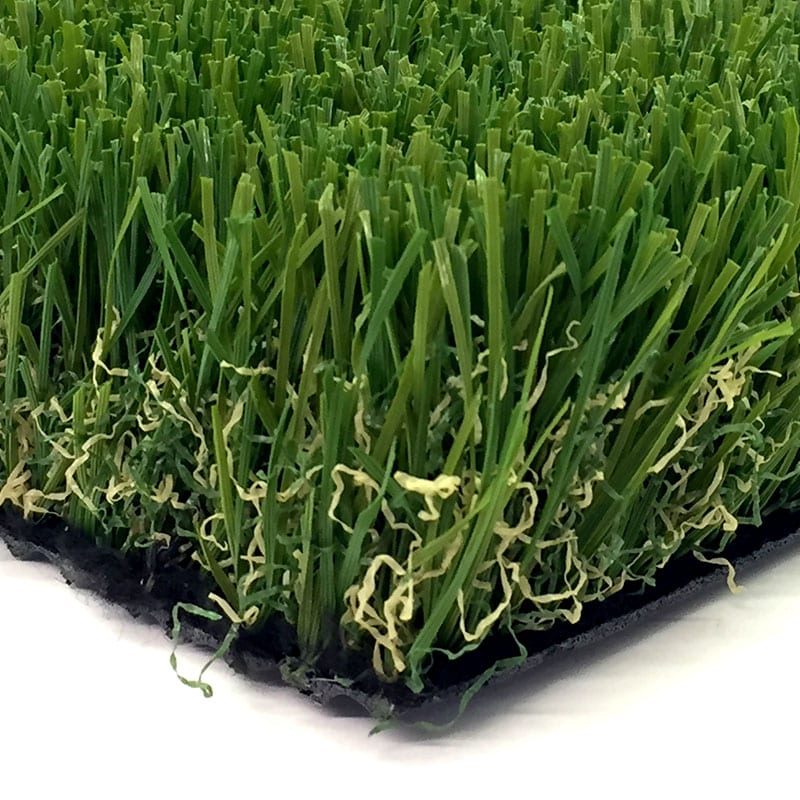
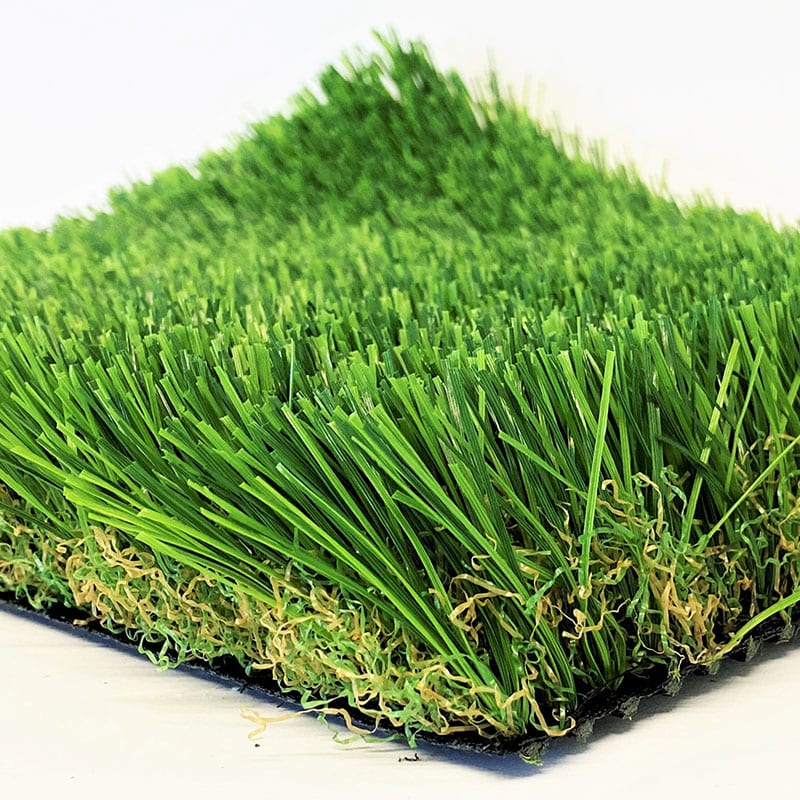
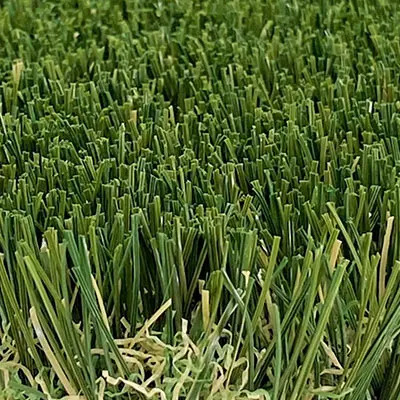
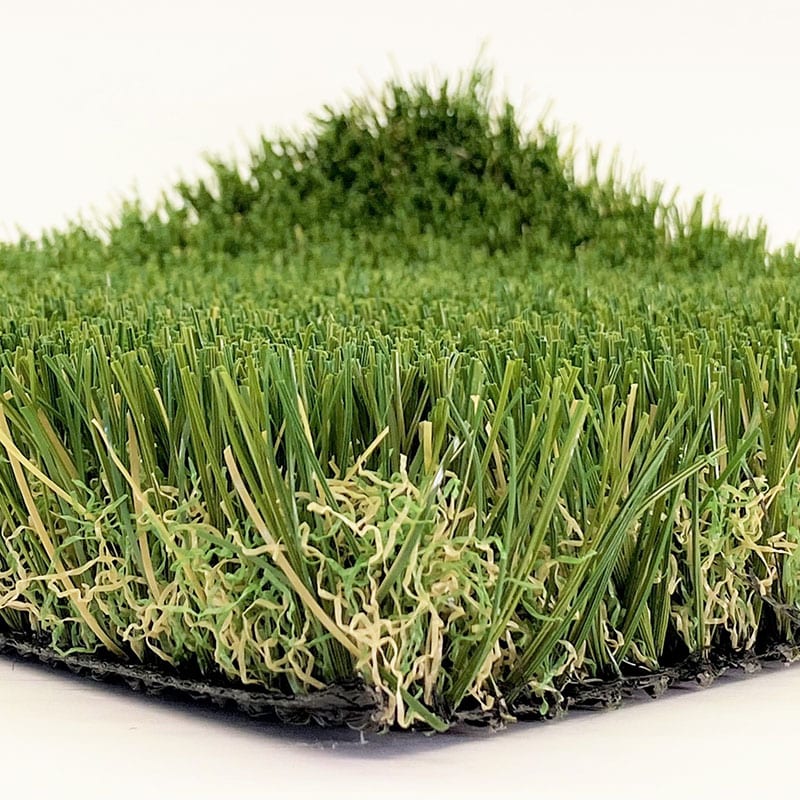
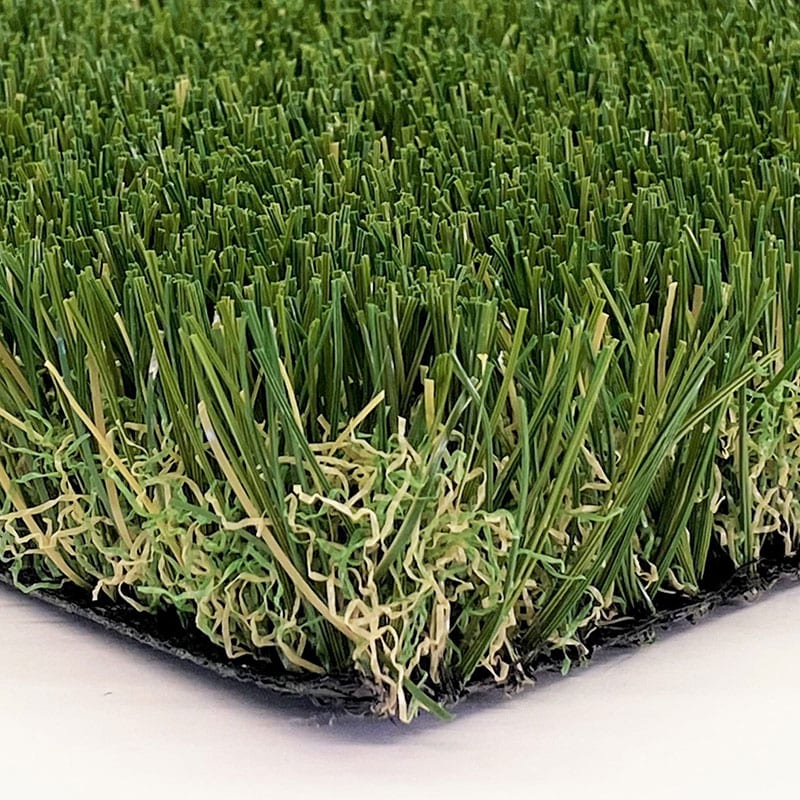
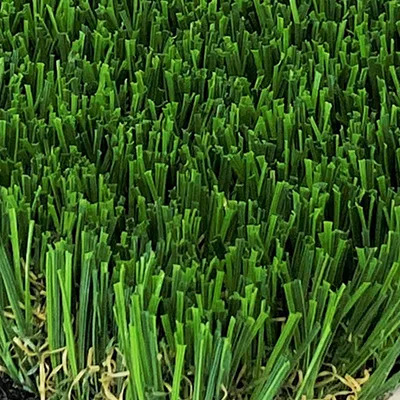
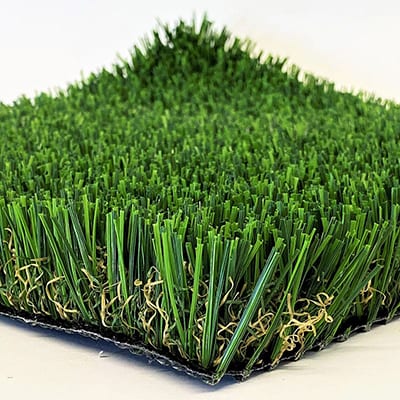
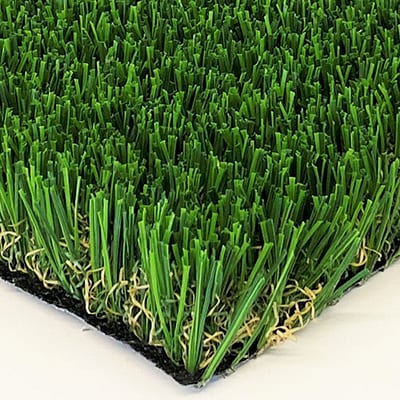
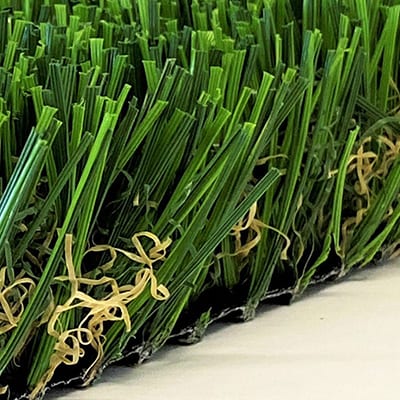
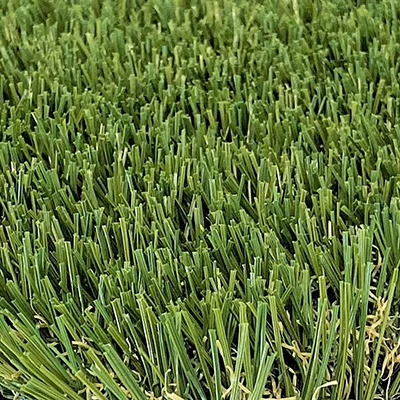
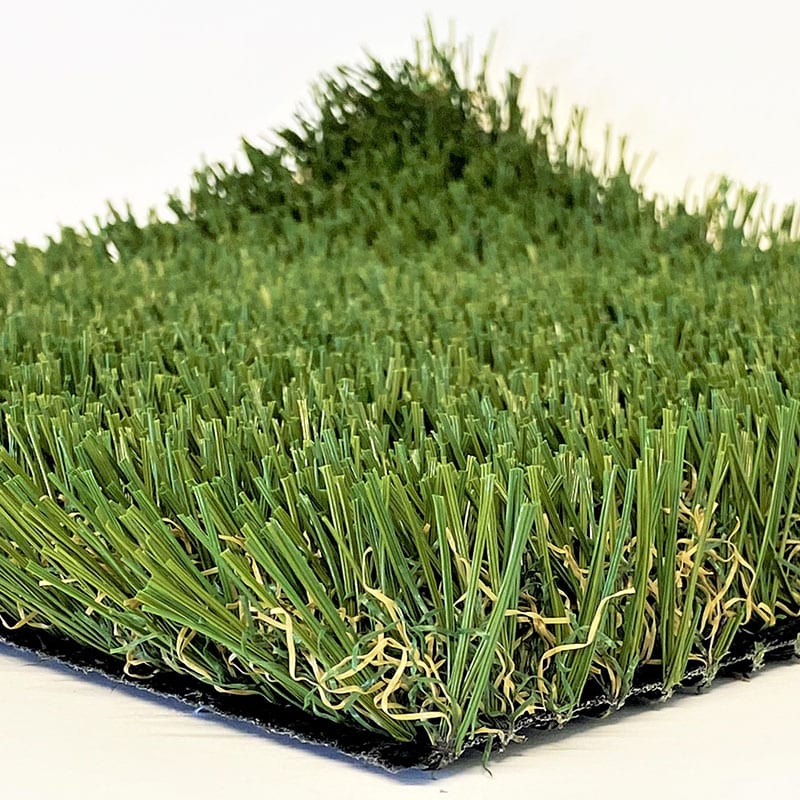
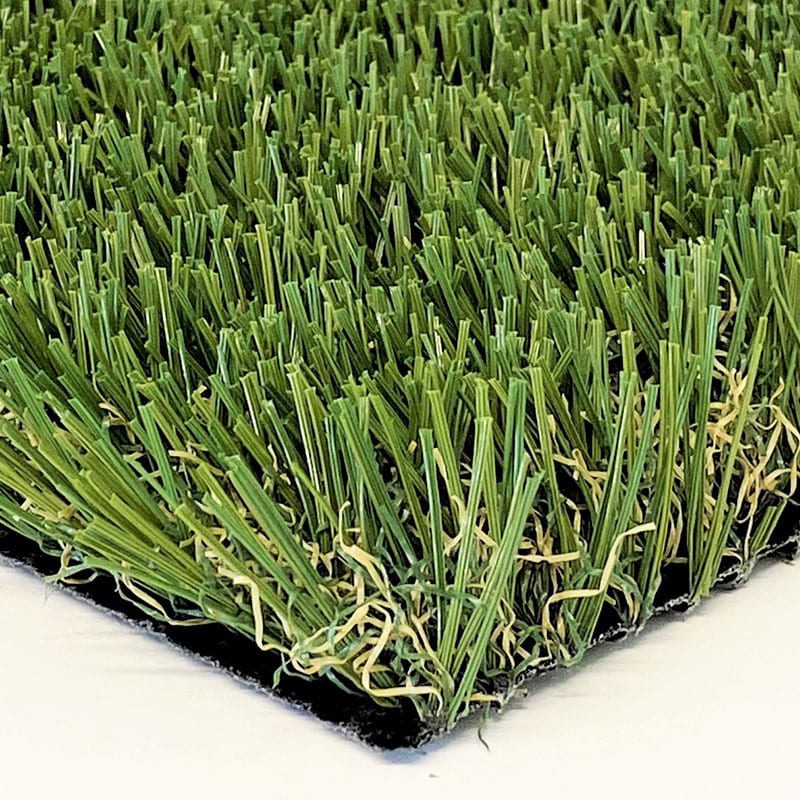
Southern Artificial Turf earns our top pick because it combines durability with genuine safety engineering. The turf uses 100% non-abrasive polyethylene fiber, which cuts down on scraped knees and skin irritation, and quad-color technology keeps the surface looking natural.
Drainage separates this product from most competitors. It moves 30 inches of water per hour, so heavy Southern rainstorms won’t leave standing water or muddy patches. The 8-year warranty backs that performance, and the material meets or exceeds EPA standards for RCRA hazardous waste heavy metals.
For long-term value, the maintenance profile is the real selling point: no watering, mowing, weeding, or fertilizing, and UV-stabilized fibers hold their color through hot, humid summers.
Pros:
- 8-year warranty coverage
- 30 inches per hour drainage capacity
- 100% non-abrasive polyethylene fiber
- Lead-free, meets EPA heavy metals standards
- Quad-Color Technology for a natural look
Cons:
- Pricing is quote-based, so you’ll need a consultation
Homeowners and facility managers in hot, humid regions who want a durable, low-maintenance playground surface that handles heavy rain and constant sun.
2. Smart Turf Playground Grass: Best for Custom Color Designs
Smart Turf Playground Grass stands out for color choice: Clover/Field Green, Black, Blue, and Red, making it a strong fit for schools, daycare centers, and themed play areas that want more than standard green.
It’s engineered for high-traffic durability and works for both contact sports and play structures. Pricing is quote-based, with installation extra.
Base preparation, crushed stone, and labor push installed cost higher, but for a custom-colored playground, few options match this flexibility.
3. Viva 111UF: Best Premium Aesthetic Turf
Viva 111UF targets buyers who want their playground to look as good as it performs. High-density construction and UV-stabilized fibers give it a lush, premium appearance that holds up under frequent use.
Durability matches the looks: the fibers resist wear for active play, and the density keeps the surface full rather than matted.
For high-end residential or commercial play spaces where appearance matters, it’s a strong choice. For a basic backyard, the extra cost may not justify the visual upgrade.
4. Oasis 100UF: Best Balance of Softness and Durability
Oasis 100UF hits a middle ground many families want: soft enough for young children, tough enough for daily play. Balanced fiber density gives it a natural look, and the soft-touch feel softens hard landings.
It’s engineered for moderate to high traffic, covering most backyard playgrounds.
If comfort matters more than maximum wear resistance, this is a sensible pick.
5. Champ 81: Best for High-Traffic Play Zones
Champ 81 is built for punishment. High-traffic resilience and durable fiber composition keep the surface intact when dozens of kids use it daily, resisting the matting cheaper turf develops over time.
That toughness comes with a trade-off: Champ 81 focuses less on soft-touch comfort than some luxury lines, so it feels firmer underfoot. For busy playgrounds, that firmness is a fair exchange for lasting wear resistance.
6. California Turf: Best for Heavy Commercial Use
California Turf handles the demands of public playgrounds and community parks. Excellent fiber recovery means the surface bounces back after heavy foot traffic instead of staying compressed.
Its drainage and durability suit heavy-use environments.
Matching Turf to Your Playground
The right choice depends on who’s playing and how often: a family backyard has different needs than a schoolyard with hundreds of students daily.
- Backyard with young children: Prioritize softness and safety. Oasis 100UF or Southern Artificial Turf fit best.
- Custom or themed play area: Color options matter most. Smart Turf Playground Grass leads here.
- High-traffic school or park: Durability wins. Champ 81 and California Turf handle constant use.
- Premium appearance: Viva 111UF delivers the best look.
Two factors cut across every category: drainage and base preparation. A crushed stone base paired with a weed barrier keeps the surface stable and permeable; skip it and even premium turf develops uneven spots.
Installing playground turf over bare soil without a proper crushed stone base is the most common DIY mistake. The surface shifts, drains poorly, and develops low spots within a season. Fixing it later means pulling up the turf and starting over, which costs far more than doing the base right the first time.
What Most Buyers Get Wrong About Playground Turf
Three myths trip up first-time buyers, each hiding a cost or safety detail.
Myth 1: Synthetic grass is maintenance-free. Even the best products need occasional brushing to lift matted fibers, rinsing to clear dust and debris, and infill checks to keep the surface level. Budget roughly an hour of light upkeep per month for a typical backyard, more for a schoolyard. Skipping it shortens the surface’s life and can void a warranty.
Myth 2: Any turf works for play. Playground surfaces need specific shock absorption and fall height attenuation to meet safety standards, which landscaping turf doesn’t provide.
Frequently Asked Questions
What is the best artificial grass for a playground?
The best artificial grass for a playground depends on your priorities. For heavy traffic, choose a product with high face weight and durable polyethylene fibers, like Champ 81 or California Turf. For residential use, Oasis 100UF offers a soft feel with good durability. Always check for IPEMA certification and ensure the turf meets ASTM safety standards for fall height attenuation. Southern Artificial Turf provides an 8-year warranty and meets EPA standards for heavy metals, making it a strong overall choice.
What safety standards should playground turf meet?
Playground turf should meet ASTM F1292 for impact attenuation, ASTM F1951 for accessibility, and ASTM F2075 for material safety. IPEMA certification verifies these standards. Additionally, turf should be lead-free and non-toxic, meeting EPA RCRA standards for heavy metals. Southern Artificial Turf exceeds these requirements, ensuring a safe play surface for children.
How does artificial turf compare to mulch for playgrounds?
Artificial turf offers several advantages over mulch: it provides consistent shock absorption, doesn’t decompose or attract pests, and requires minimal maintenance. Mulch needs regular replenishment and can hide hazards. Turf costs more upfront but lasts 8-15 years, while mulch may need replacement annually. For allergy sufferers, turf is better as it doesn’t harbor mold or insects. However, turf can get hot in direct sun, so consider heat dissipation features.
Does playground turf require a shock-absorbent pad?
Yes, for adequate fall protection, a shock-absorbent pad (shock pad) is often required beneath the turf. The pad’s thickness depends on the critical fall height of the play equipment. ASTM F1292 specifies the impact attenuation needed. Some turf products have built-in padding, but most need an additional layer. Always consult a certified installer to ensure compliance with safety standards.
What is the lifespan of high-traffic playground turf?
High-traffic playground turf typically lasts 8 to 15 years, depending on quality, usage, and maintenance. Premium products with UV stabilization and durable fibers, like those from Southern Artificial Turf, can last up to 15 years. Regular brushing and debris removal extend lifespan. Warranty coverage varies; Southern Artificial Turf offers an 8-year warranty. Proper installation with a crushed stone base and drainage system also impacts longevity.