
Table of Contents
- Artificial Turf vs. Natural Grass Injury Risk: What the Research Actually Shows
- Common Artificial Turf Injuries and How They Happen
- Traction, Surface Hardness, and Impact Forces on Synthetic Turf
- Artificial Turf Footwear and Cleats: Choosing the Right Studs
- Synthetic Turf Maintenance and Player Safety: Inspections That Matter
- Prevention by Sport, Age, and Playing Position
- Heat Exposure, Hydration, and Environmental Monitoring
- Frequently Asked Questions
Last Updated: October 19, 2026
Artificial Turf vs. Natural Grass Injury Risk: What the Research Actually Shows
Preventing common injuries on artificial sports surfaces starts with an honest look at the evidence, because the evidence on artificial sports surfaces is messier than most field-side arguments suggest. The short answer: well-maintained synthetic turf and well-maintained natural grass produce broadly similar overall injury rates.
The research community has compared the two surfaces for decades, and the findings are genuinely mixed. A systematic review of football injury studies noted that study quality varies widely, which explains much of the disagreement.
Here is what most guides get wrong: they treat “turf versus grass” as the whole question. It isn’t. Surface condition, footwear, and athlete preparation matter more than the surface label.
The surface type is a secondary variable. Field condition, cleat selection, and athlete readiness are the levers you can actually pull.
Common Artificial Turf Injuries and How They Happen
Most synthetic-surface injuries fall into two buckets: tissue injuries from traction and impact, and acute injuries from slips or awkward landings. Understanding the mechanism is what lets you prevent them.
Lower-Extremity Injuries: Knees, Ankles, and Feet
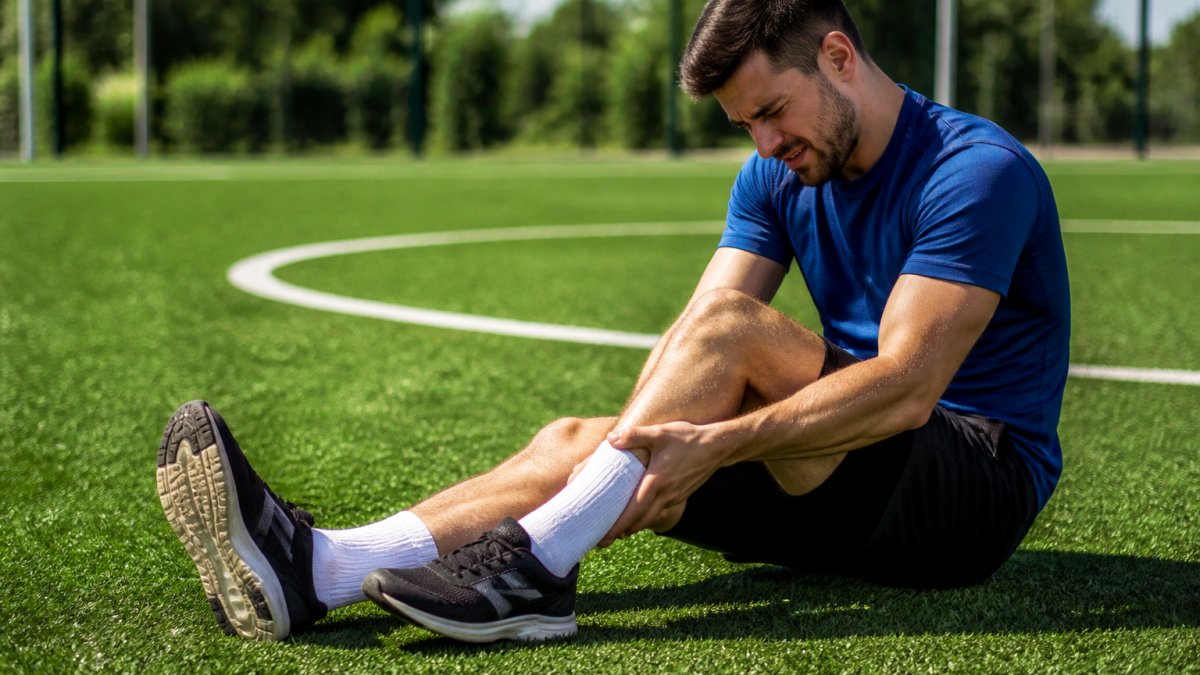
The knee, ankle, and foot absorb the majority of synthetic-turf injuries. Ankle sprains and knee ligament injuries top the list, and they cluster around two moments: planting the foot to cut, and landing from a jump.
Foot injuries deserve separate mention. Repetitive loading on a harder surface can aggravate plantar fascia and Achilles issues over a season, especially in athletes who jump and land repeatedly.
Slips, Falls, and Sudden Changes of Direction
Sudden changes of direction load the joint far more than straight-line running. On a worn or wet field, traction becomes unpredictable: one step grips, the next slides. That inconsistency is what produces slips and falls. A common mistake is blaming the surface when the real culprit is a cleat pattern mismatched to conditions.
Traction, Surface Hardness, and Impact Forces on Synthetic Turf
Traction is the friction between cleat and surface, and it is the single most important mechanical variable on any field. Rotational traction, the resistance to twisting, is where injuries concentrate.
Surface hardness governs impact forces. The FIFA quality standards for football turf address these properties directly, which is why certified fields are tested for both traction and shock absorption, not just appearance.
Artificial Turf Footwear and Cleats: Choosing the Right Studs
Cleat choice is the most underrated injury-prevention decision an athlete makes. The right stud pattern matches the surface and conditions; the wrong one turns good traction into a locking hazard.
- Firm-ground (FG) studs: best for dry, well-maintained synthetic fields
- Artificial-grass (AG) studs: shorter and more numerous, designed to spread load on synthetic surfaces
- Metal studs: avoid on synthetic turf; they concentrate load and raise injury and surface-damage risk
A practical rule: if the field feels hard underfoot or the infill is thin, move to a shorter stud. Many athletes keep two pairs and switch by condition.
Wearing long firm-ground studs on a dry, compacted synthetic field is a leading cause of non-contact knee injuries. The studs lock, the body rotates, and the knee pays for it.
Synthetic Turf Maintenance and Player Safety: Inspections That Matter
Synthetic turf maintenance and player safety are the same job. A field that is inspected and topped up plays safer than an identical field that is neglected, and this is where facility managers have the most control.
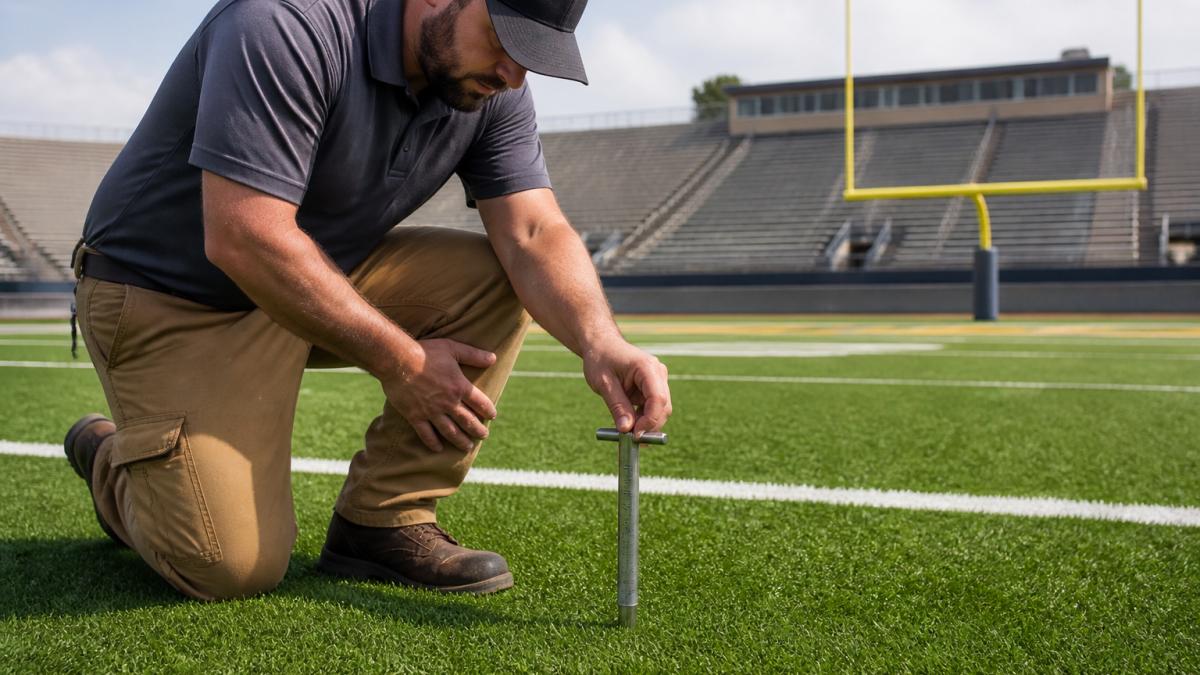
Run a simple walk-through before each season and monthly during heavy use:
- Check infill depth against the manufacturer’s specification
- Probe for compacted or hardened areas, especially goal mouths and center field
- Look for worn seams, lifted edges, and flattened fibers
Infill Depth, Surface Weight, and Worn Areas
Infill depth controls both shock absorption and traction. When it thins in high-traffic zones, those spots play harder and slicker. Surface weight, the mass of infill per area, should stay within spec. Worn areas concentrate where players pivot most: penalty spots, goal areas, and sideline cut zones. Replenishing infill there is cheap insurance.
Prevention by Sport, Age, and Playing Position
Prevention should be tailored, not generic. Different sports, ages, and positions load the body differently, and the highest-risk athletes need the most attention. Most turf-safety articles stop at “warm up well.” A usable framework goes further: it names the movements that cause injury in each context, prescribes drills that rehearse them, and sets a return-to-play path when something goes wrong.
The Common Thread: Rehearse the Injury Mechanism
Across sports, the highest-value warm-up rehearses the exact movements that cause injury: plant-and-cut, jump-and-land, and decelerate. Ten minutes of sport-specific prep beats a generic jog every time. Build the warm-up in three blocks, raise body temperature with light movement, activate the hips and core, then rehearse cutting, landing, and deceleration at increasing speed.
Soccer and Football
Prioritize ankle and knee control, warm-up routines that include cutting and landing, and condition-matched cleats. Useful drills: lateral bounds with a stick-and-hold landing, single-leg hop-and-stick, and deceleration runs that finish in a controlled plant. For football skill positions, add hip-stability work and change-of-direction drills at game speed. Linemen and heavy-contact players benefit from neck and shoulder prep alongside lower-limb work.
Rugby and Contact Sports
Emphasize neck and shoulder prep alongside lower-limb work. Add controlled contact progressions, landing mechanics from contested catches, and trunk-bracing drills. Because rugby involves frequent ground contact on a harder surface, also rehearse safe falling and rolling technique.
Youth Athletes
Focus on movement quality and gradual load progression; young joints adapt slowly. Keep sessions varied, limit repeated high-intensity cutting on consecutive days, and prioritize single-leg balance and landing mechanics over max-speed work. Youth athletes also need closer heat monitoring, since they heat up faster and may not self-report symptoms.
Goalkeepers and Pivoting Positions
Extra attention to landing mechanics and hip stability. Goalkeepers repeatedly dive, land, and push off, so add landing progressions from low to high, hip and groin strengthening, and shoulder prep for dives. Pivoting positions, point guards, centers, midfielders, need rotational control work and ankle stability on top of the standard warm-up.
Older Recreational Players
Longer warm-ups and honest load management. Older athletes often play once a week, which means less tissue tolerance for sudden high loads. Encourage a midweek session of light movement and strength work, extend the warm-up, and build in gradual return after any layoff.
The best warm-up rehearses the exact movements that cause injury: plant-and-cut, jump-and-land, and decelerate. Ten minutes of sport-specific prep beats a generic jog every time.
Injury Response and Return-to-Play
Prevention does not end when an injury happens. Teach athletes and coaches to recognize warning signs, swelling, instability, pain that worsens with cutting, or a joint that gives way, and to seek medical assessment rather than push through. A common return-to-play path moves through pain-free walking, then jogging, then controlled cutting and landing, then full-speed sport-specific work, with each stage cleared before the next.
Heat Exposure, Hydration, and Environmental Monitoring
Heat is a safety issue on synthetic fields in a way it rarely is on grass. Synthetic turf absorbs and radiates heat, so surface temperature can run well above air temperature on sunny days, a pattern that is well documented and that most field managers underestimate. That raises the risk of heat illness and contact burns, particularly for young athletes, officials, and pets.
Surface Temperature: Measure It, Don’t Guess It
Air temperature is the wrong number to plan around. On a sunny afternoon, a synthetic field can read dramatically hotter than the air a few feet above it, and the gap widens on dark infill and unshaded fields. Use an infrared surface thermometer at several points, goal mouths, center field, sideline cut zones, and record readings before each session.
Hydration and Rest-Break Protocol
Hydration starts before practice, not during it. A workable routine for coaches:
- Encourage athletes to arrive hydrated and to bring their own water; do not rely on a single shared cooler.
- Schedule water breaks by clock, not by request, every 15 to 20 minutes during intense sessions in heat.
- Provide shade or a cooled area for rest breaks; shade is the cheapest heat intervention a facility can add.
The CDC guidance on heat illness prevention recommends gradual acclimatization over one to two weeks and emphasizes that early recognition is the difference between a minor episode and an emergency. New athletes, youth players, and anyone returning from illness need a slower ramp.
Scheduling and Field-Level Controls
Schedule intense sessions for cooler parts of the day, and shift youth and high-exertion sessions away from mid-afternoon in summer. Rotate drills so athletes are not standing on hot turf between reps. For facilities, consider shade structures over benches and sideline areas, light-colored or reflective infill where feasible, and a written heat policy that specifies who monitors conditions and who has authority to stop play.
Surface temperature, not air temperature, drives burn and heat-illness risk on synthetic fields. A field that feels fine to a coach in shoes can burn bare skin and overheat young athletes. Measure the surface and write a stop rule into your policy.
Heat and the Return-to-Play Decision
An athlete who has shown heat-illness signs should not simply re-enter play after a water break. Remove them to shade, cool them actively, and have them assessed before any return. Anyone with confusion, vomiting, or collapse needs emergency medical evaluation, not a sideline rest. Document the episode and use it to adjust the next session’s schedule and hydration plan.
Frequently Asked Questions
What injuries are most common on artificial turf?
Lower-extremity injuries dominate the list: knee injuries such as ACL sprains, ankle sprains, and foot injuries from cleats catching in the surface. Concussions also occur, though research does not consistently show higher rates on synthetic turf than on natural grass. Slips and falls, especially on wet or worn surfaces, contribute to upper-body injuries too. The surface itself is rarely the sole cause; footwear choice, field condition, fatigue, and sport-specific movement patterns all play a role in whether an athlete gets hurt.
Does artificial turf increase the risk of knee injuries?
The evidence is mixed. Some comparative studies and systematic reviews find higher rates of certain knee injuries, particularly ACL injuries, on artificial turf, while others find no significant difference. Rotational traction is the key variable: cleats that grip too aggressively on synthetic turf can lock a planted foot while the body rotates, loading the knee. Choosing the right footwear, keeping infill at the correct depth, and avoiding worn or wet areas reduces that risk more reliably than avoiding turf altogether.
How can athletes reduce injury risk on artificial sports surfaces?
Start with footwear matched to the surface: shorter, rounded studs or turf-specific shoes for synthetic fields. Warm up with dynamic movements that mimic change-of-direction demands. Check the field before play for worn spots, shallow infill, or standing water. Hydrate and manage heat exposure, since synthetic turf runs hotter than grass. Build strength and neuromuscular control in the hips, knees, and ankles during the week. Coaches should rotate players off heavily worn zones and inspect surfaces regularly.
What footwear is best for playing on artificial turf?
Turf-specific shoes with shorter, rounded studs or a molded rubber outsole are the safest default for synthetic surfaces. Long metal or firm-ground studs increase rotational traction, which raises the risk of knee and ankle injuries when the foot stays planted. Avoid flat-soled running shoes for sports that demand cutting and sprinting on turf, since they offer too little grip. Replace worn cleats promptly, and test new footwear during practice before using it in competition.
How should artificial turf be maintained to support player safety?
Regular inspections matter more than most facility managers realize. Check infill depth and redistribute infill in high-traffic zones, remove debris, and address standing water or drainage issues promptly. Brush or groom the surface to keep fibers upright and reduce matting. Repair seams and worn patches before they become trip hazards. Surface hardness increases as infill compacts, so shock absorption should be tested periodically. A written inspection log helps track problem areas and schedule repairs before they affect play.
Does the type of artificial turf affect injury risk?
Yes, though the differences are often smaller than marketing suggests. Older generations of synthetic turf were harder and less forgiving; modern systems with proper infill and shock-absorbing underlayers perform better. Infill type and depth, fiber length, and the underlying base all influence traction and surface hardness. Wet conditions and worn areas change how any surface behaves. The practical takeaway: surface condition and maintenance matter as much as the original specification when it comes to injury prevention.