
Table of Contents
- Synthetic Turf Cost for Pet Areas in 2026: What Drives the Price
- Average Cost Per Square Foot for Pet Turf
- Factors That Influence Your Pet Turf Installation Estimate
- Best Artificial Turf for Dogs: What to Look For
- Artificial Grass Drainage for Pets: The Hidden Cost Factor
- Maintenance Tips for Synthetic Pet Grass That Protect Your Investment
- DIY vs. Professional Installation: Risk and Real Cost
- Conclusion
- Frequently Asked Questions
Last Updated: September 22, 2026
Synthetic Turf Cost for Pet Areas in 2026: What Drives the Price
Synthetic turf cost for pet areas 2026 comes down to four variables: square footage, base preparation, drainage engineering, and the quality of the turf itself. The pattern is consistent: the sticker price per square foot is never the whole story. A pet-specific installation costs more than a standard landscape because it has to handle urine, digging, and heavy traffic without turning into a mud pit.
That gap between “cheap turf” and “turf that survives two Labradors” is where most homeowners get surprised.
Here’s the core tension in 2026: the market is flooded with budget turf that looks fine on day one and fails by year three. Pet owners who understand what drives the price end up spending less over the life of the lawn, because they’re not replacing it in five years.
Pet turf pricing is driven by drainage capacity and fiber durability, not just square footage. A quote that ignores base prep is a quote that will cost you more later.
Average Cost Per Square Foot for Pet Turf
Pet turf pricing depends on quantity, site conditions, and the specific product selected, so any single per-square-foot figure is misleading on its own. The honest answer is that pricing varies by region, yard size, and how much site work your property needs.
| Cost Driver | What It Covers | Why It Matters for Pets |
|---|---|---|
| Turf material | Fiber type, pile height, face weight | Determines durability under claw traffic |
| Base prep | Excavation, crushed rock, grading | Prevents pooling and sinking |
| Drainage layer | Permeable backing, channeling | Handles urine volume and rainfall |
| Infill | Antimicrobial silica or coated sand | Reduces ammonia and bacteria |
| Labor | Seaming, cutting, securing edges | Poor seaming means ripples and gaps |
Factors That Influence Your Pet Turf Installation Estimate
Several variables move a pet turf estimate up or down, and understanding them helps you compare quotes fairly. Yard accessibility, existing surface, and the amount of grading required all change the labor line. A flat, cleared backyard is a straightforward job. A sloped yard with tree roots and compacted clay is not.
Base Prep, Drainage, and Pet-Specific Add-Ons
Base preparation is the single biggest swing factor in any pet turf estimate. It involves excavating the existing soil, compacting a crushed rock base, and installing a weed barrier before the turf ever arrives.
Skipping the crushed rock base to save money is the most common mistake we see. The consequence is a surface that develops low spots, holds odor, and needs full replacement within a few years, which costs more than doing it right once.
Best Artificial Turf for Dogs: What to Look For
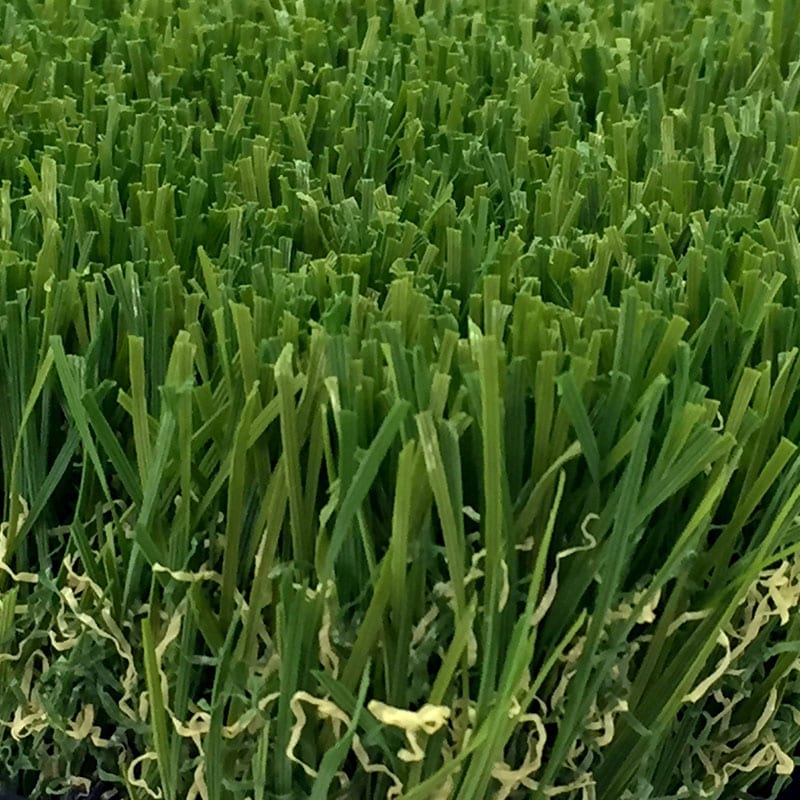
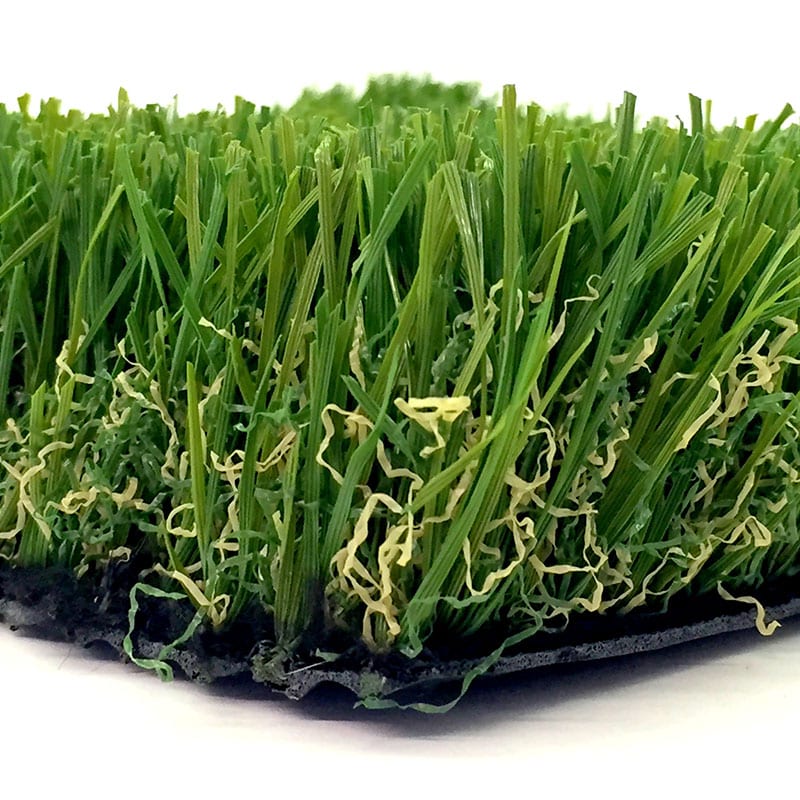
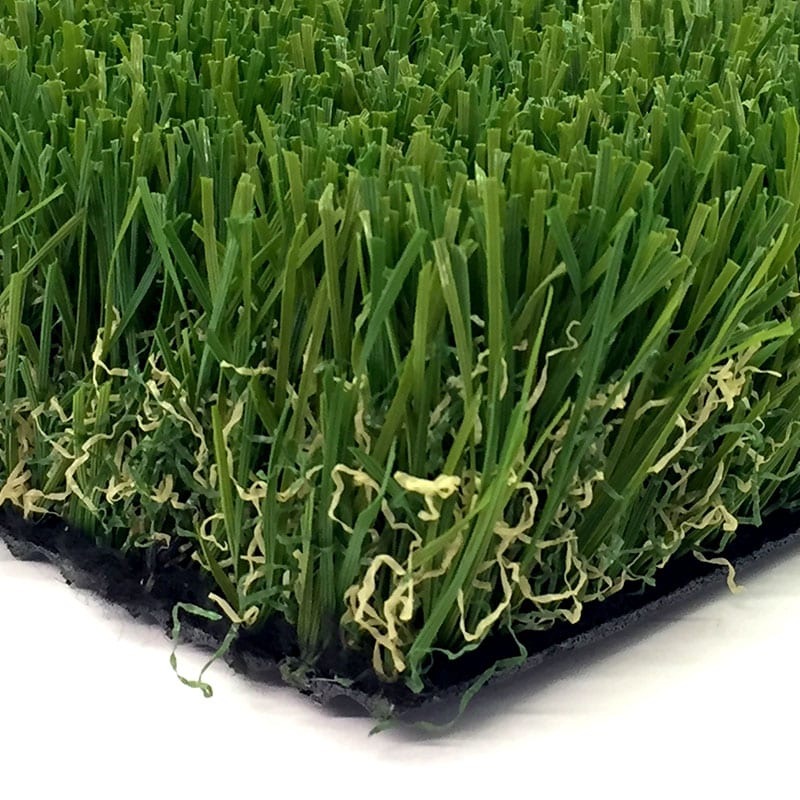
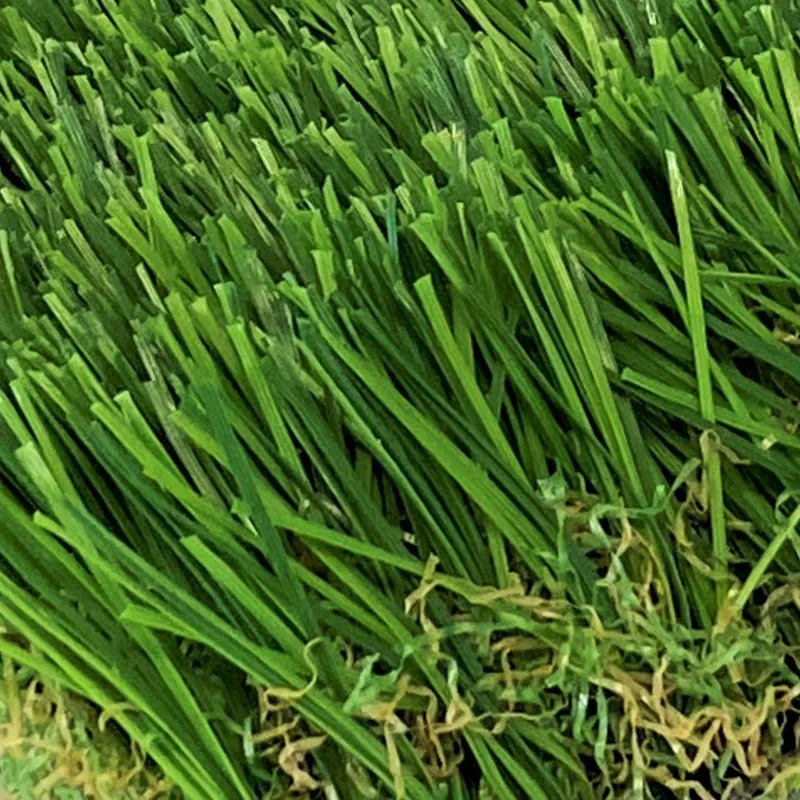
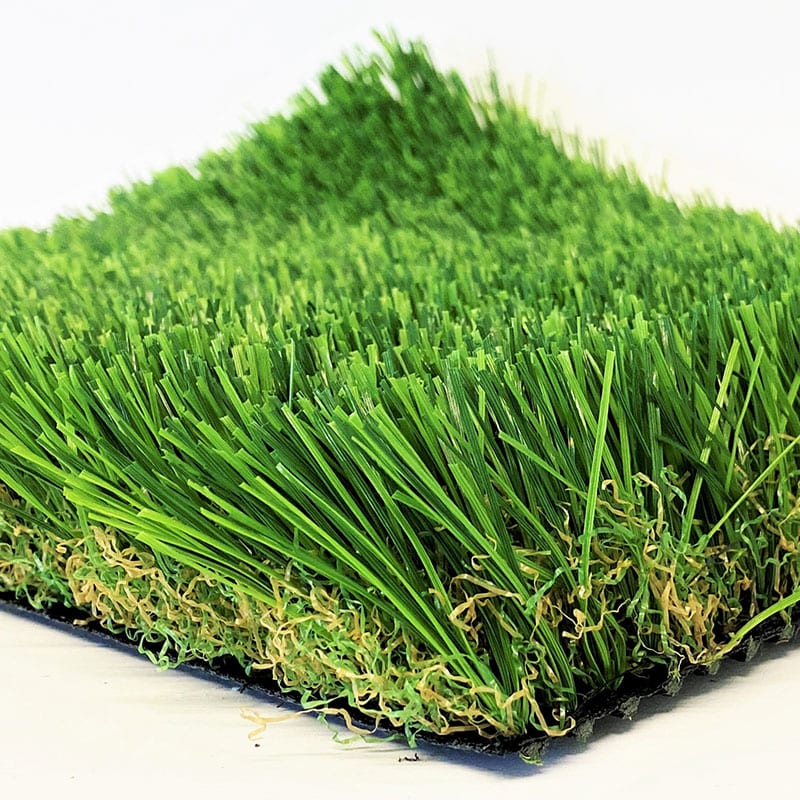
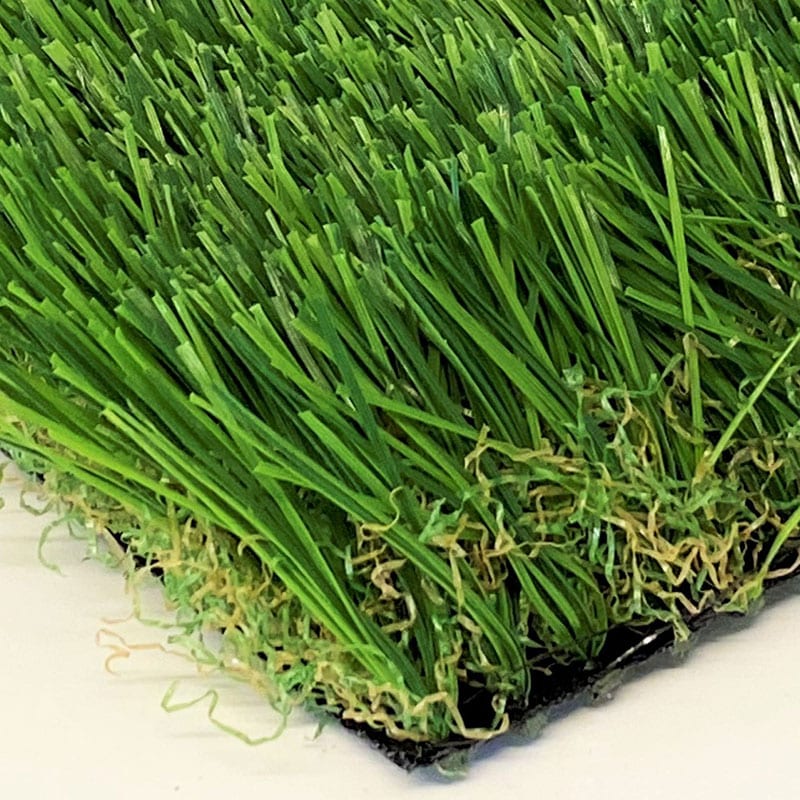
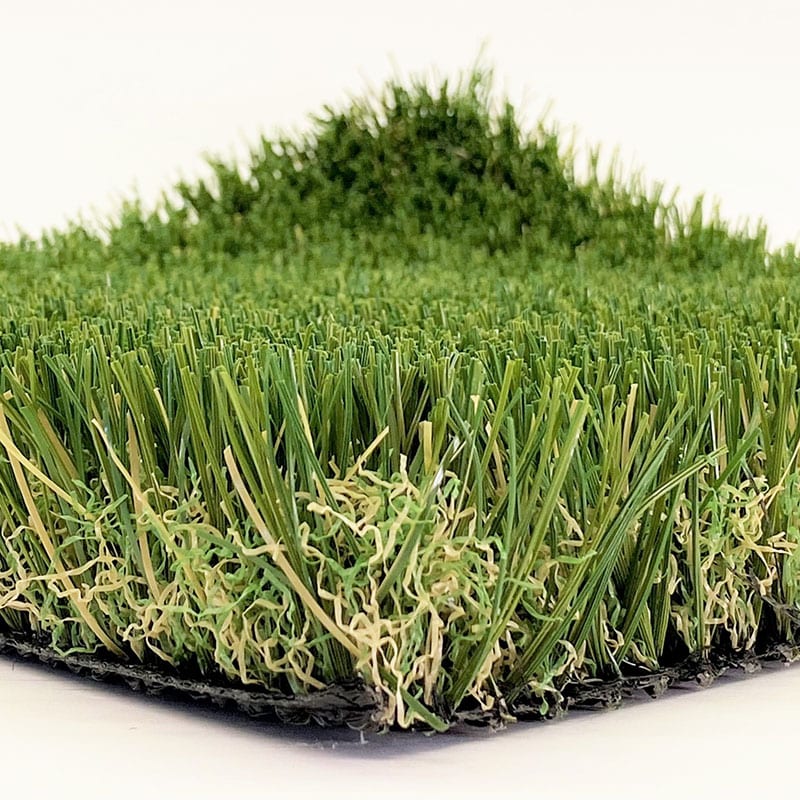
The best artificial turf for dogs balances softness, drainage, and durability, with non-abrasive fibers that won’t irritate paws. Dogs run, skid, dig, and lie down on the surface daily. Turf that’s too stiff causes friction burns on noses and paws. Turf that’s too soft mats down and loses its shape.
Look for these specifications:
- Non-abrasive polyethylene fibers that stay soft under heavy use
- High face weight for density and resilience
- UV stabilization to resist fading and breakdown
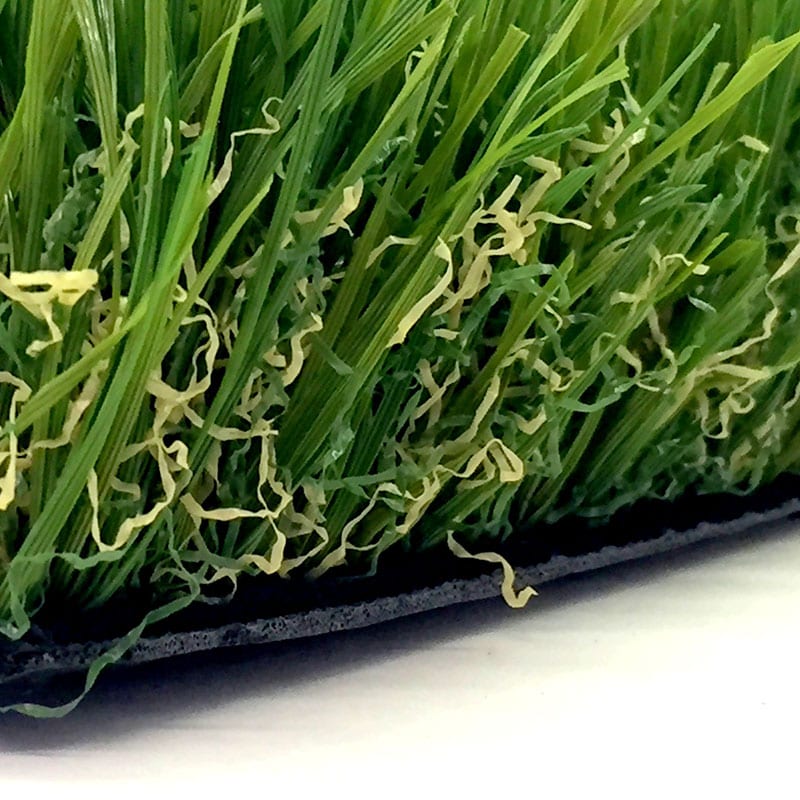
- Permeable backing so liquid drains through rather than pooling
- Quad-color blade technology for a natural, less uniform appearance
Artificial Grass Drainage for Pets: The Hidden Cost Factor
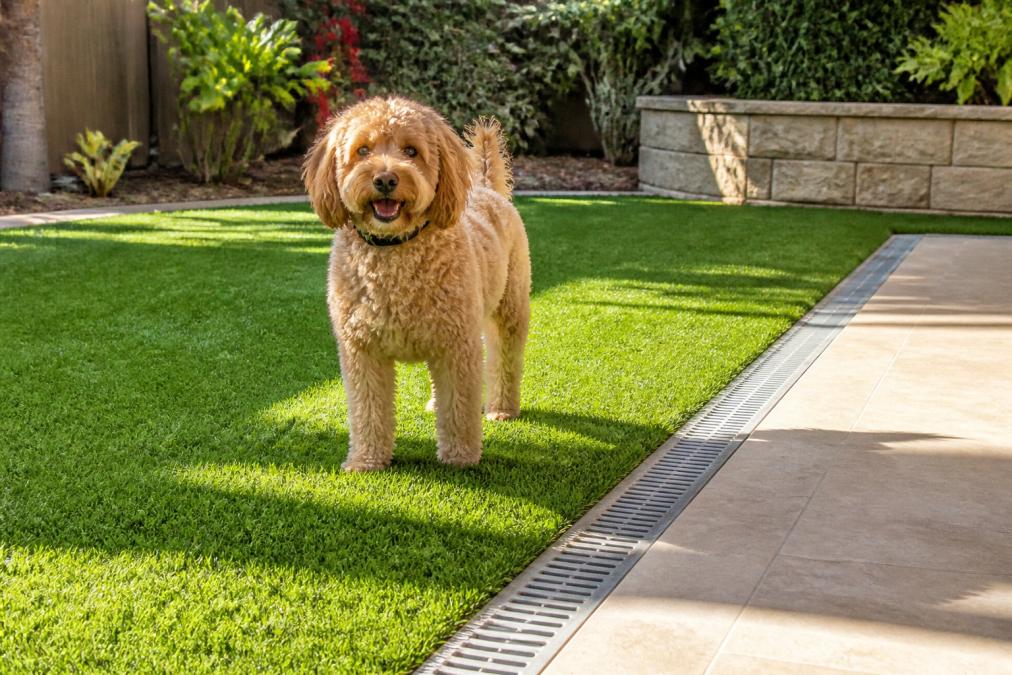
Drainage is the most underestimated line item in any pet turf project, and it’s the one that determines whether your yard smells. Pet urine carries urea, which soil bacteria convert to ammonia. If liquid can’t move through the surface and away from the base, those compounds concentrate in the infill and backing, and no amount of surface rinsing fixes a saturated sub-base.
How a Pet-Specific Base Is Actually Built
A standard landscape install and a pet install diverge below the surface. The layers, from bottom up, typically look like this:
- Excavation and grading, 3 to 4 inches of native soil removed, with a 1-2% slope away from structures so gravity does part of the work.
- Compacted crushed rock base, usually 3/4-inch minus aggregate, laid in 2-3 inch lifts and plate-compacted between each lift. Skipping the lifts is how low spots form.
- Drainage layer or channeling, some installs add a perforated drain tile or a coarse gravel blanket under the highest-traffic zone (the door run, the potty corner).
- Weed barrier, a non-woven geotextile that lets water pass but blocks roots and keeps fines from migrating up into the rock.
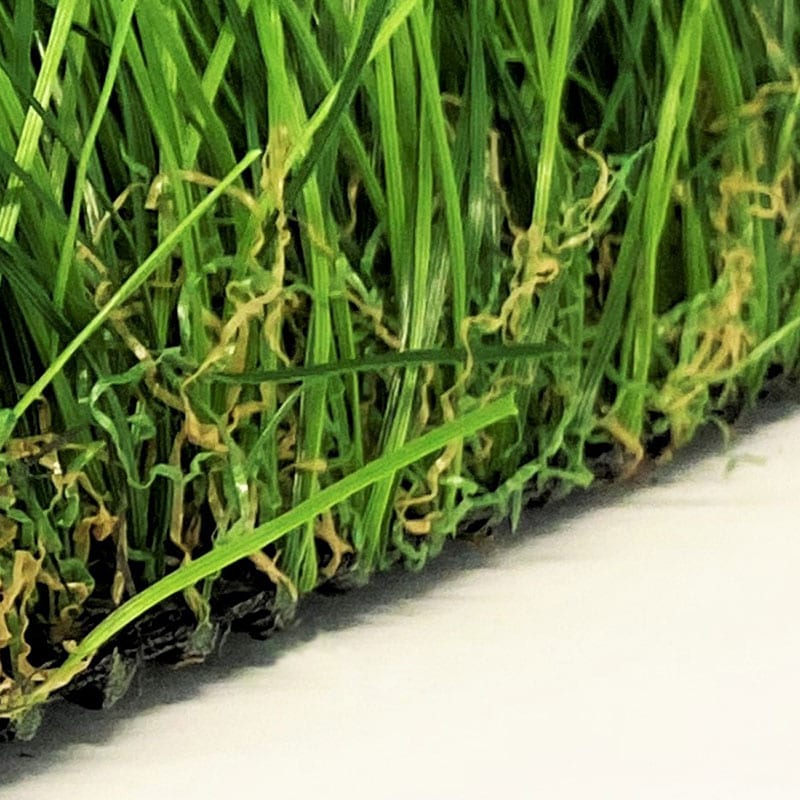
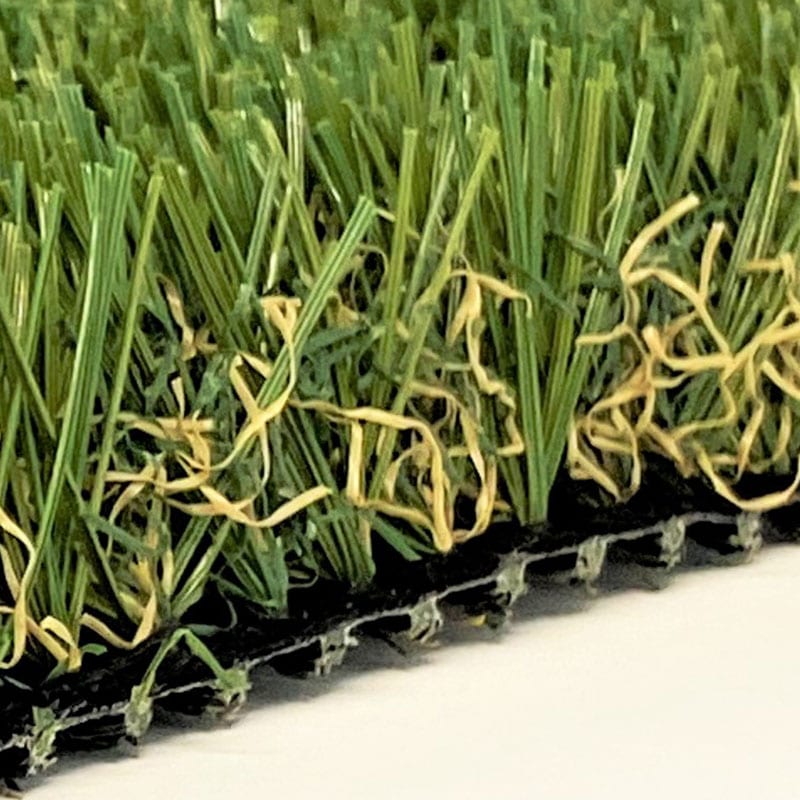
- Permeable backing turf, the backing itself must be perforated; a solid-backed product traps liquid regardless of how good the base is.
- Infill, antimicrobial silica sand, coated sand, or a zeolite-blend that adsorbs ammonia rather than just letting it sit.
What “30 Inches Per Hour” Actually Means
A drainage rate is a lab number: how much water passes through the turf and backing per hour under test conditions. Systems rated around 30 inches per hour move liquid faster than most yards will ever generate, whether from a downpour or from a household of dogs. But the turf’s rate is only half the equation, the base has to accept that water and route it away.
Ask any installer for two numbers: the turf’s drainage rate in inches per hour, and the slope they’re grading into the base. If they can’t answer both, they haven’t engineered the base for pets.
Long-Term Odor Management: A 3-Year Protocol
Most guides stop at “rinse it.” Ammonia buildup is cumulative, so the maintenance schedule matters more in year three than in month one. A common pattern among pet turf owners who stay odor-free:
- Weekly, rinse the high-traffic zone (the same 50-100 square feet every dog uses) with a hose until water runs clear at the edge. This flushes urea before bacteria convert it.
- Monthly, apply a pet-safe enzyme cleaner diluted per label, focused on the potty corner. Enzymes break down uric acid crystals that plain water leaves behind.
- Quarterly, brush the pile against the grain to lift matted blades and redistribute infill, which restores the surface’s ability to pass liquid.
- Annually, top off infill in worn zones. Infill compacts and migrates; a thin infill layer means urine sits on the backing instead of wicking through.
- Every 2-3 years, evaluate a full infill refresh or a zeolite-blend top-dress if odor returns despite the routine. Zeolite adsorbs ammonia and can be recharged or replaced.
Maintenance Tips for Synthetic Pet Grass That Protect Your Investment
Maintenance tips for synthetic pet grass are simple, but skipping them shortens the life of the surface. The good news: it’s a fraction of the work natural grass demands. No watering, mowing, weeding, or fertilizing.
What you do need to do:
- Rinse high-traffic spots weekly to flush waste through the drainage layer
- Remove solid waste promptly with a bag and scoop
- Rake or brush the pile occasionally to lift matted blades
- Top off infill in heavily used zones once a year
- Spot-clean with a mild solution if odor develops in one area
DIY vs. Professional Installation: Risk and Real Cost
- Improper grading, if the base doesn’t slope 1-2% away from the house, water pools at the foundation and against the backing. The turf looks fine for a season, then develops a swampy corner.
- Under-compacted base, crushed rock that isn’t compacted in lifts shifts under paw traffic. The turf ripples, seams open, and low spots form where urine collects.
- Bad seaming, a cold seam or a seam laid without seam tape and adhesive fails within a year. Dogs dig at the lifted edge, which turns a small gap into a torn panel.
- Wrong infill depth, too little infill and the backing is exposed to UV and urine; too much and the pile mats down and stops draining.
- Edge securing, without proper edging or nails, the perimeter lifts, and a determined dog pulls the turf back like a rug.
If a quote is dramatically lower than the others, check what’s missing: base excavation, crushed rock, weed barrier, seaming materials, and edge restraint are the usual omissions. Those aren’t optional for a dog run.
A reasonable middle path exists for small, flat, already-cleared yards: some homeowners handle the turf laying and hire out only the base prep and grading. That split captures most of the savings while keeping the failure-prone steps, grading and compaction, in professional hands.
Conclusion
The real challenge with pet turf isn’t picking a color. It’s getting the base, drainage, and fiber quality right so the surface performs for years instead of months. Most homeowners who end up disappointed chose on price per square foot alone and paid for it later.
Frequently Asked Questions
How much does artificial pet turf cost per square foot in 2026?
Pricing depends on turf quality, pile height, infill type, base preparation, and your yard’s size and access. Pet-specific turf with antimicrobial infill and higher drainage capacity sits at the upper end of the range because of the extra materials and base work involved. Request a quote from Southern Artificial Turf for current per-square-foot pricing on your specific project.
Does pet turf require specialized drainage systems?
Yes, and this is one of the biggest cost variables. Pet areas need a base that moves urine and wash water away quickly, plus a permeable turf backing. Southern Artificial Turf products drain at 30 inches per hour, which keeps the surface mud-free and reduces ammonia buildup. If your yard has poor natural drainage or clay soil, expect additional excavation and crushed rock base work in your estimate.
How does pet-specific turf differ from standard landscaping turf?
Pet turf uses non-abrasive polyethylene fibers that stand up to claws and repeated traffic, a permeable backing for urine drainage, and antimicrobial infill that targets ammonia absorption. Standard landscaping turf prioritizes appearance over drainage and wear resistance. For households with dogs, the pet-specific build usually costs more upfront but lasts longer and needs less odor remediation.
Is professional installation required for pet turf areas?
Professional installation is strongly recommended for pet areas because drainage, sub-base compaction, and seaming quality determine whether the surface stays mud-free and odor-free. DIY installs often fail at the base layer, leading to pooling, sinking, and premature replacement. Southern Artificial Turf backs its installations with an 8-year warranty, which only applies when the system is installed correctly.