
Table of Contents
- How Artificial Grass Reduces Pollen and Allergens
- Is Artificial Grass Safe for Kids with Allergies?
- How to Clean Artificial Grass for Allergy Control
- Hypoallergenic Landscaping Ideas with Synthetic Turf
- Natural Grass vs. Synthetic Turf: Health and Cost Comparison
- Infill Material Safety and Non-Toxic Options
- Conclusion: Is Artificial Grass Right for Your Allergy Needs?
- Frequently Asked Questions
Last Updated: October 3, 2026
How Artificial Grass Reduces Pollen and Allergens
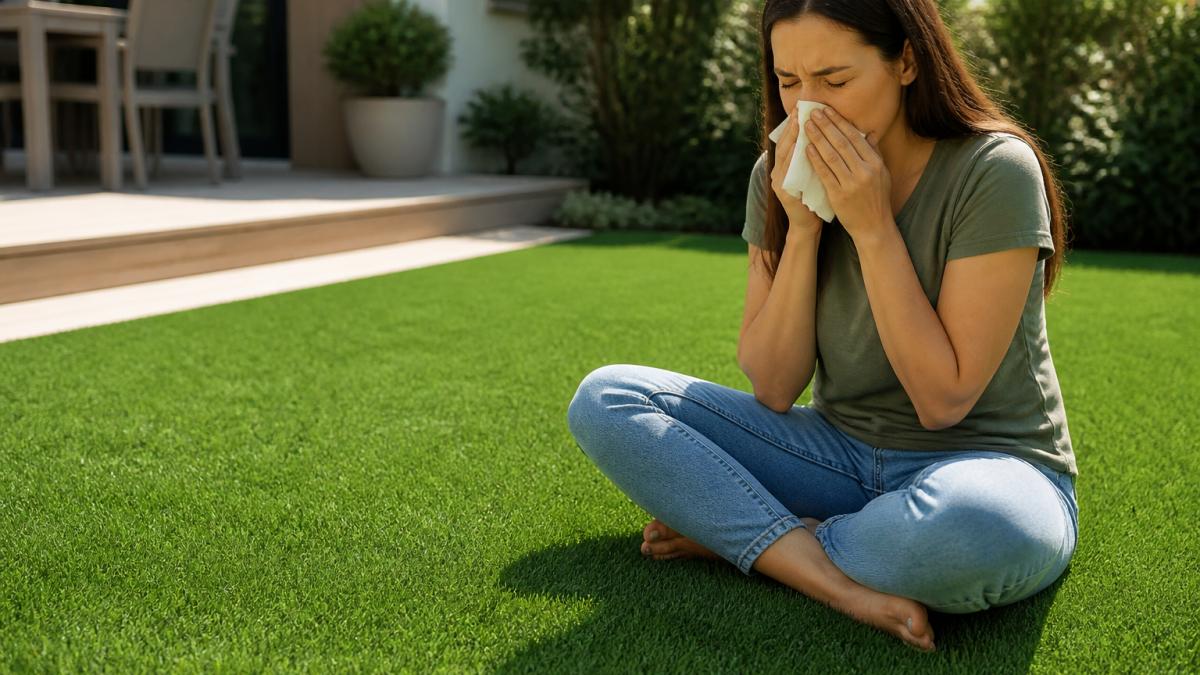
Artificial grass reduces allergen exposure by removing the two biggest triggers in a natural lawn: grass pollen and the damp organic matter that grows mold. This guide from Southern Artificial Turf breaks down what synthetic turf does for allergy sufferers and which maintenance habits keep it working.
The mechanism is straightforward. According to the Asthma and Allergy Foundation of America, pollen and mold are two of the most common outdoor allergy triggers in the country, and both thrive in the conditions a natural lawn creates.
Pollen Dispersion and Grass Pollen Count
Grass pollen is lightweight and travels on air currents, so a single mowed lawn can send particles across an entire property, peaking during mowing when blades disturb the flower heads. Artificial grass eliminates that cycle entirely because there is no flowering plant to release pollen, producing a measurable drop in the grass pollen count around your home, which matters most for people with allergic rhinitis who react to species like Bermuda, rye, and timothy.
Mold, Mildew, and Bacterial Growth Prevention
Mold needs moisture, organic material, and still air, all three of which a natural lawn supplies, especially in humid climates where thatch holds water against the soil for days. Synthetic turf removes the food source: its permeable backing and drainage systems move water through the surface instead of trapping it, so mold spores and bacterial growth have far less opportunity to establish. Debris left on any surface can still hold moisture, which is why cleaning matters.
Is Artificial Grass Safe for Kids with Allergies?
Artificial grass is generally considered safe for children with allergies, provided the turf uses non-toxic materials and is installed over a properly draining base. The main concerns are infill type, surface temperature, and cleanliness.
Most of the risk sits in the materials, not the concept.
Three things to check before installation:
- Infill composition. Some infills are made from crumb rubber; others use coated sand, silica, or plant-based materials. Ask what is going into the surface your child will play on.
- Fiber and backing materials. Look for turf that meets or exceeds EPA standards for RCRA hazardous waste heavy metals, including lead.
- Drainage. Standing water on any surface invites bacterial growth. A base engineered for at least 30 inches per hour of drainage capacity keeps the surface dry after rain.
For households where asthma triggers are a daily concern, the reduction in mowing, watering, and chemical applications removes several exposure points at once.
How to Clean Artificial Grass for Allergy Control
Cleaning artificial grass for allergy control means removing debris before it traps moisture, rinsing on a schedule that matches your pollen season, and keeping pet waste off the fibers.
Routine Cleaning and Surface Hygiene
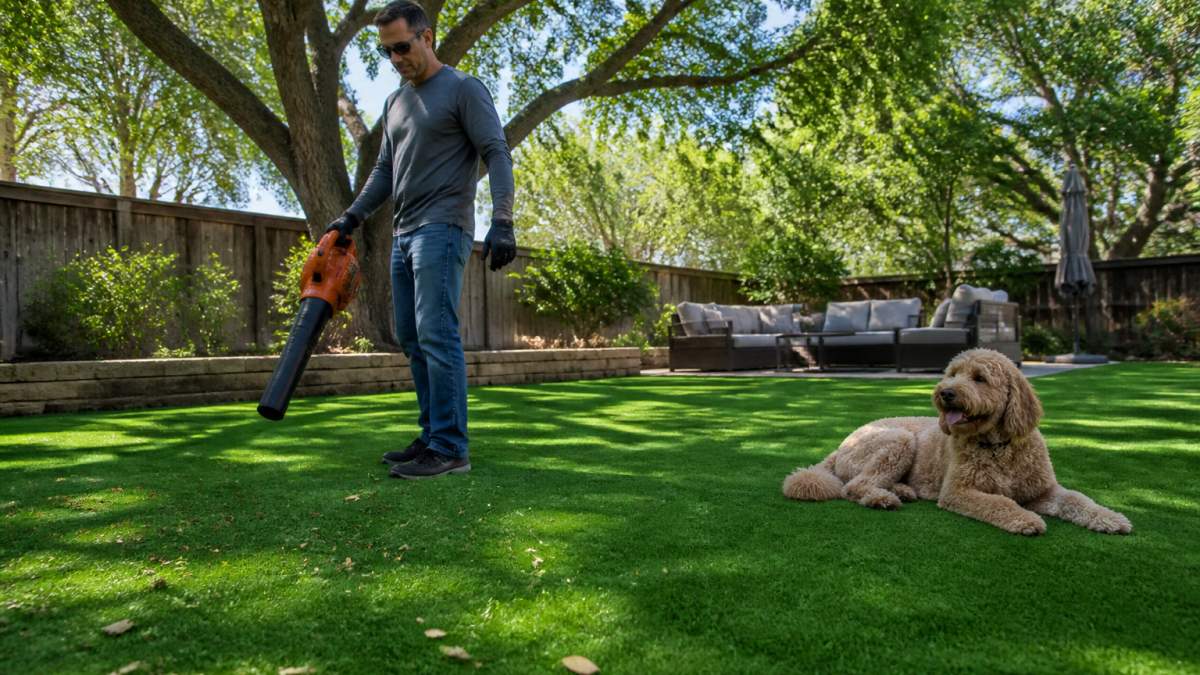
Start with dry debris. Leaves, twigs, and dirt hold moisture against the backing, and damp organic matter encourages mold spores.
What most guides leave out is the pollen-season schedule. During peak grass pollen weeks, pollen settles on every outdoor surface, turf included, and a single weekly pass is not enough for a severe sufferer. If you want to track your local window, the Asthma and Allergy Foundation of America publishes pollen counts by region.
If you have trees overhead, clean more often in fall. Leaf litter is the single most common cause of surface staining and trapped moisture we see on otherwise well-installed turf.
Managing Pet Dander and Particulate Matter
Pet dander and particulate matter settle into any surface, turf included, but turf lets you remove them completely. Rinse the area where pets relieve themselves, use a pet-safe enzymatic cleaner on odor hotspots, and brush the fibers upright so air can move through the pile.
For households with dander or dust sensitivities, brushing is the step people skip and the one that matters most. Fine particulate matter works down into the pile, and matted fibers block airflow so moisture lingers.
Deep-Cleaning Protocol for Severe Allergy Households
For homes where asthma or severe seasonal allergies are a daily concern, a quarterly deep clean adds a layer the weekly routine does not cover:
- Rinse the full surface with a garden hose, working in sections so water moves through the backing rather than pooling.
- Apply a pet-safe enzymatic cleaner to any pet areas and let it dwell per the label before rinsing.
- Brush the entire pile upright to lift compacted particulate matter and restore airflow.
- Check the drainage path, if water stands anywhere for more than a few minutes, the base is not performing and trapped moisture will follow.
Avoid bleach, harsh solvents, and abrasive cleaners, they degrade fibers, strip UV coatings, and leave residues that irritate sensitive skin and airways. A chemical-free surface only stays chemical-free if you clean it without chemicals.
Allergy control on synthetic turf comes down to three habits: remove dry debris before it traps moisture, rinse on a pollen-aware schedule rather than a fixed one, and brush the pile upright so the surface dries and stays free of settled particulate matter.
Hypoallergenic Landscaping Ideas with Synthetic Turf
Hypoallergenic landscaping replaces pollen-producing plants with low-allergen alternatives, and synthetic turf is the foundation. Pair it with the right surrounding plants to cut outdoor allergen exposure across the whole yard.
Here are some ideas for an allergy-friendly design:
- Turf as the base. Use synthetic turf for the main lawn area to remove grass pollen entirely.
- Low-pollen borders. Choose plants that rely on wind pollination less, such as most flowering shrubs and perennials.
- Hardscape transitions. Gravel, pavers, and mulch beds reduce the planted area that produces pollen and hold fewer allergens than dense ground cover.
- Drainage-first grading. Slope away from the house so water never sits near foundations or play areas.
Sustainable gardening and allergy-friendly design overlap more than most homeowners expect: reducing mowing, chemical use, and irrigation lowers both exposure and maintenance load, the same trade-off that makes xeriscaping popular in drier regions.
Natural Grass vs. Synthetic Turf: Health and Cost Comparison
Synthetic turf wins on allergy control and long-term maintenance; natural grass costs less upfront. The right choice depends on how much you value a chemical-free lawn and how much time you spend on lawn care.
| Factor | Natural Grass | Synthetic Turf |
|---|---|---|
| Pollen production | High during growing season | None |
| Mold and mildew risk | High in humid climates | Low with proper drainage |
| Pesticide and fertilizer use | Regular applications needed | None required |
| Watering and mowing | Weekly during peak season | Not required |
| Pet and kid durability | Wears into mud and dead patches | Holds up to heavy use |
| Upfront cost | Lower | Higher |
| Long-term maintenance cost | Ongoing | Minimal |
For families dealing with asthma triggers and seasonal allergies, the health side of that table usually decides it. The cost side is real: synthetic turf is a larger upfront investment, but most homeowners miss how much of the natural lawn budget disappears into water, fertilizer, weed control, mowing, and reseeding over a decade.
Infill Material Safety and Non-Toxic Options
Infill safety matters most for allergy sufferers. Infill sits at the surface, so whatever it is made of is what your family and pets contact directly, and unlike turf fibers, infill is loose and granular, so it can become airborne, retain moisture, or off-gas. The material you choose changes the allergy profile of the entire installation.
Here is what the main categories actually are, and how each one behaves for a sensitive household.
Crumb Rubber
Crumb rubber is made from ground-up recycled tires, the most common infill in sports fields and the most scrutinized for residential use. Two concerns matter for allergy and respiratory sufferers: heat retention and off-gassing. Crumb rubber absorbs and re-radiates heat, so on a hot day a crumb-rubber field can run substantially hotter than ambient air, aggravating heat- and odor-sensitive individuals, and it can carry a rubber odor when new.
Coated Sand and Silica Sand
Coated sand uses a silica core with a polymer or acrylic coating that keeps grains from breaking down into fine dust. Uncoated silica sand is cheaper but generates more airborne particulate matter as grains fracture, a real consideration for anyone with dust sensitivities. The coating binds the fines, reduces dust, and helps the infill resist moisture absorption. For allergy-focused households, coated sand is usually the middle-ground option: lower cost than plant-based infills, lower dust than raw silica.
Plant-Based and Coated Acrylic Infills
Plant-based infills use cork, walnut shell, or other agricultural byproducts; coated acrylic infills use a synthetic core with a sealed coating. Both are marketed as non-toxic and are popular with households avoiding crumb rubber. The trade-off is real: plant-based infills are organic, and organic material plus moisture supports mold and microbial growth. A cork infill on a poorly draining base can become a mold reservoir, the opposite of what an allergy sufferer needs. Coated acrylic infills resist moisture better but cost more and vary widely in quality.
How to Evaluate Any Infill Before You Buy
Whatever you choose, ask for documentation showing the material meets or exceeds EPA standards for RCRA hazardous waste heavy metals, including lead, a reasonable thing to require from any installer. Beyond that, ask three questions:
- What is the dust profile? Uncoated silica and worn crumb rubber shed fines over time. Coated products bind them.
- How does it handle moisture? Organic infills absorb water; coated and acrylic infills resist it. Match the material to your climate and drainage.
- Does it off-gas or hold odor? Rubber-based infills are the most likely to. If odor sensitivity is part of your allergy picture, sample the material in person before committing.
Never assume an infill is safe because it is marketed as “natural.” Some plant-based infills still retain moisture and can support microbial growth if the base does not drain properly. Ask about both the infill and the drainage system together, a hypoallergenic infill on a bad base is not a hypoallergenic lawn.
For most allergy-focused households, a coated sand or coated acrylic infill over a base engineered for at least 30 inches per hour of drainage can be a good option. It minimizes dust, resists moisture, and avoids the odor and heat issues that make crumb rubber a poor fit for sensitive users.
Conclusion: Is Artificial Grass Right for Your Allergy Needs?
If pollen, mold, and lawn chemicals are driving you indoors, artificial grass removes the source rather than managing the symptoms. The trade-off is upfront cost; the payoff is a surface you can use year-round without mowing, watering, or spraying. Southern Artificial Turf installs turf engineered with quad-color technology and non-abrasive polyethylene fibers, backed by an 8-year warranty and drainage rated at 30 inches per hour. Get a quote from Southern Artificial Turf and find out what an allergy-friendly yard looks like for your property.
Frequently Asked Questions
Does artificial grass help with grass pollen allergies?
Yes. Artificial grass does not produce pollen, so it eliminates the primary allergen source that triggers seasonal allergic rhinitis. Natural grass releases pollen that can travel for miles, but synthetic turf has no flowers or seed heads. This means your yard stops contributing to the grass pollen count, and you can spend time outdoors without the sneezing and itchy eyes that come with natural lawns.
Can artificial grass cause allergies or trap allergens like dust and mold?
Artificial grass itself does not cause allergies. However, it can trap dust, mold spores, and pet dander if not maintained. Regular cleaning with a leaf blower, occasional rinsing, and ensuring proper drainage systems prevent buildup. Choosing turf with permeable backing further reduces the risk of mold or bacterial growth, keeping the surface hypoallergenic for everyone in your household.
Is artificial grass safe for kids with allergies?
Artificial grass is generally safe for children with allergies, especially when you select non-toxic materials and avoid crumb rubber infill. Look for turf made from polyethylene fibers and infill options like coated silica sand or plant-based materials. These reduce exposure to allergens and chemicals. Regular cleaning removes pollen and dust, creating a cleaner play surface than natural grass, which can harbor mold and pesticides.
How do I clean artificial grass to keep it allergen-free?
Start by removing debris with a leaf blower or a stiff brush. Rinse the turf with a garden hose to wash away pollen and particulate matter, then let it drain. For deeper cleaning, use a mild soap solution and a soft brush, avoiding harsh chemicals. Address pet waste promptly. Proper drainage systems prevent water from pooling and mold from forming.