
Table of Contents
- Polyethylene vs Nylon Artificial Grass: Quick Comparison
- What Is Polyethylene Turf?
- What Is Nylon Turf?
- Durability and Wear Resistance Comparison
- Softness, Texture, and Aesthetic Appeal
- Heat Retention and Climate Performance
- Best Artificial Turf for Backyard and Pet Areas
- Drainage, Maintenance, and Long-Term Value
- Frequently Asked Questions
Last Updated: September 30, 2026
Polyethylene vs Nylon Artificial Grass: Quick Comparison
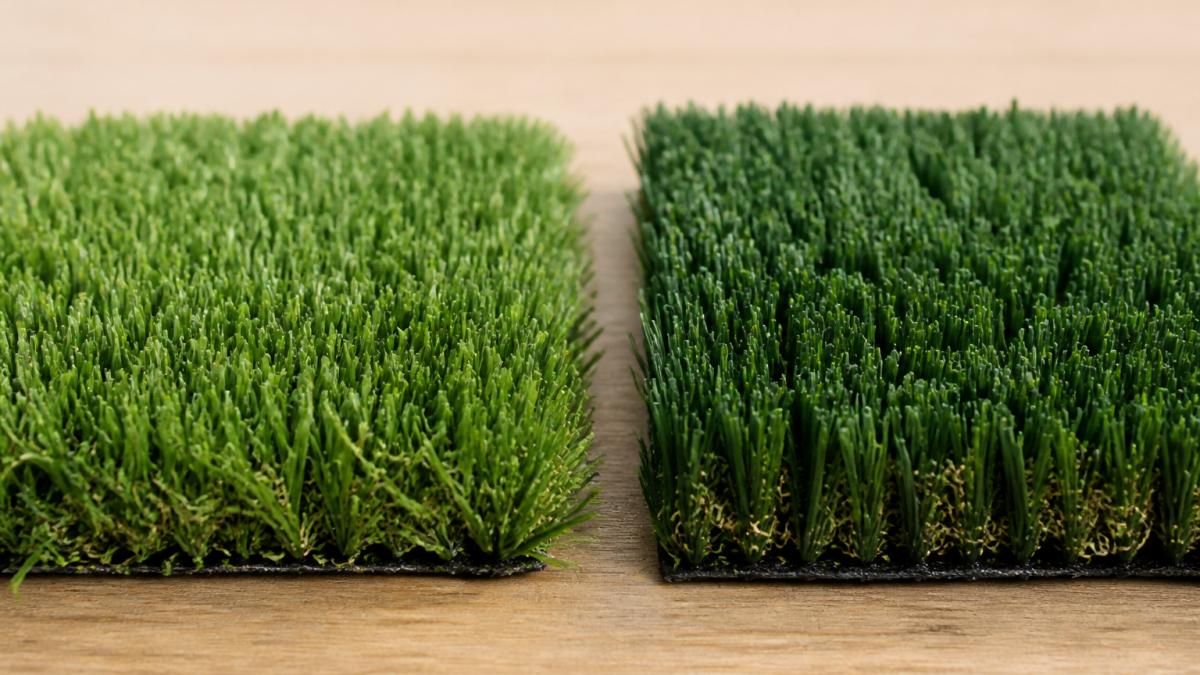
When choosing synthetic turf, the material matters more than most homeowners realize. The difference between polyethylene and nylon artificial grass shapes everything from how soft your lawn feels underfoot to how long it lasts under intense use. The choice between them isn’t about which is universally “better”, it’s about matching the right fiber to your specific needs.
Polyethylene dominates residential installations, balancing comfort, cost, and durability for typical use. Nylon is engineered for extreme performance: stiffer, more resilient under heavy traffic, and built for conditions that would wear out other synthetics.
What Is Polyethylene Turf?
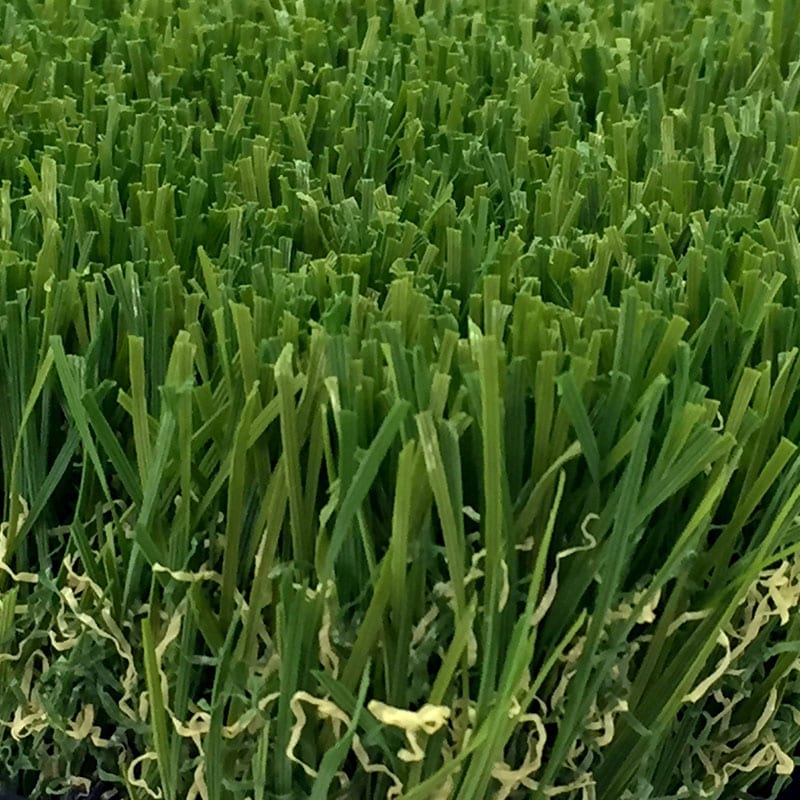
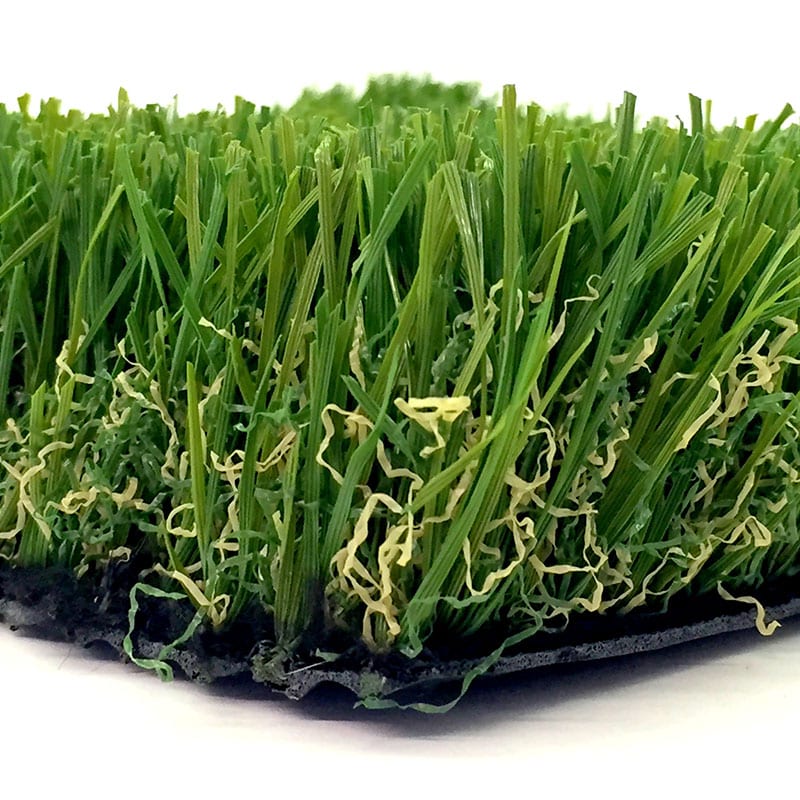
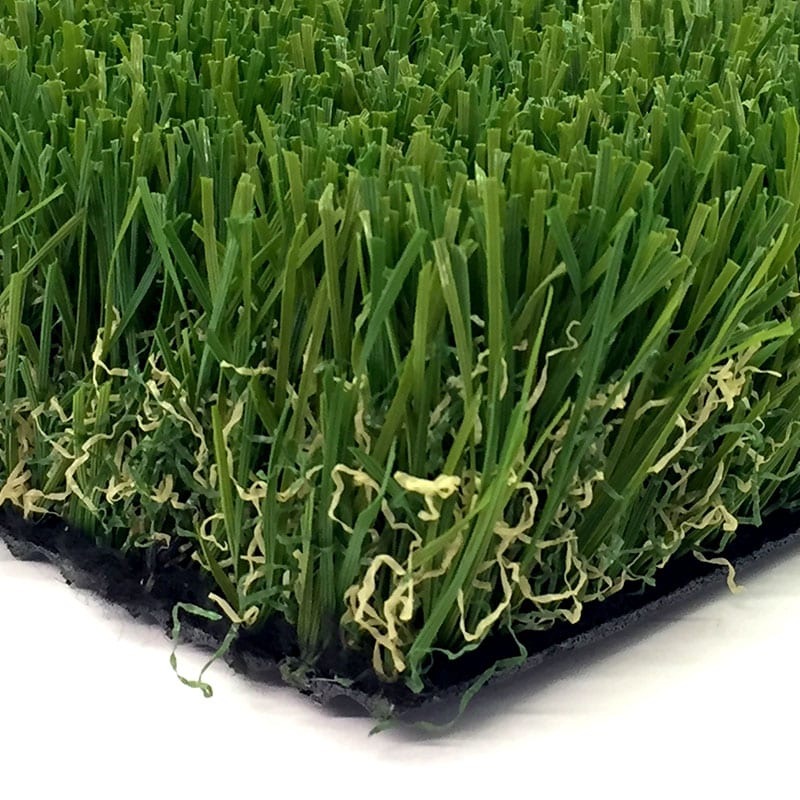
Polyethylene is a thermoplastic polymer engineered to mimic natural grass texture and appearance. It’s the most widely used synthetic grass fiber in residential applications because it delivers softness without sacrificing durability.
Polyethylene’s lower melting point makes it naturally softer and more flexible. Fiber memory (the ability to spring back after foot traffic) is excellent for moderate-use areas, maintaining a lush appearance.
Modern polyethylene turf includes UV inhibitors that prevent fading and degradation, keeping lawns vibrant green rather than fading to dull tan within a few years.
Polyethylene’s cost-effectiveness is a major advantage.
What Is Nylon Turf?
Nylon is a high-performance fiber with superior tensile strength and abrasion resistance, engineered for applications where durability under extreme conditions is critical.
Nylon’s higher melting point means fibers resist heat better and don’t soften in high-temperature environments, creating a uniform playing surface ideal for professional sports and commercial installations.
The material’s resilience is exceptional. Nylon fibers bounce back after compression better than polyethylene, meaning they resist matting and wear patterns even with heavy use. If your scenario involves intense foot traffic, multiple dogs, or frequent athletic activity, nylon’s structural integrity becomes valuable.
Nylon’s stiffness creates a firmer, plastic-like feel compared to polyethylene, making it rarely chosen for residential applications where comfort matters.
Durability and Wear Resistance Comparison
Polyethylene and nylon diverge sharply when it comes to how they handle abuse. Understanding these differences prevents costly mistakes.
Polyethylene performs well in typical residential settings. Face weight and pile height are primary durability factors. Well-constructed polyethylene with adequate face weight handles normal family use, kids, dogs, and regular foot traffic for years without significant degradation.
Polyethylene shows weakness under extreme, sustained pressure. Heavy equipment, intense athletic activity, or high-traffic commercial use causes matting and accelerated wear.
Nylon’s superior abrasion resistance makes it ideal for demanding scenarios. Professional sports fields, dog parks, and high-traffic commercial spaces rely on nylon because fibers resist matting and maintain structural integrity. Stronger tuft bind reduces fiber pull-out and extends lifespan.
The practical reality: polyethylene is durable enough for most residential needs. Nylon is built for scenarios where durability is the primary concern, not just a secondary benefit.
| Characteristic | Polyethylene | Nylon |
|---|---|---|
| Softness | High; natural feel | Lower; firmer texture |
| Abrasion Resistance | Moderate; good for typical use | Superior; handles extreme traffic |
| Heat Resistance | Good; adequate for most climates | Excellent; resists degradation in heat |
| Cost | Lower starting price | Higher starting price |
| Best For | Residential lawns, pet areas | Sports fields, commercial spaces |
| Fiber Resilience | Good; recovers from foot traffic | Excellent; resists matting |
Softness, Texture, and Aesthetic Appeal
Polyethylene wins decisively for residential installations, feeling more like natural grass when barefoot or playing.
Polyethylene’s soft-touch technology creates a comfortable, cushioned surface that reduces fatigue and appeals to parents with young children and pet owners.
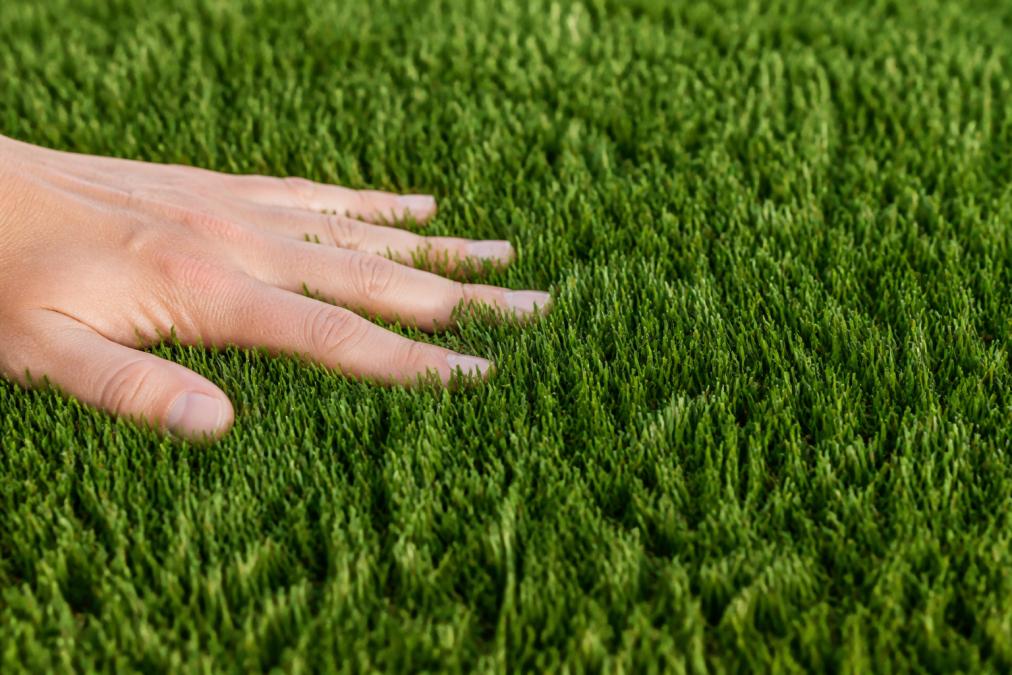
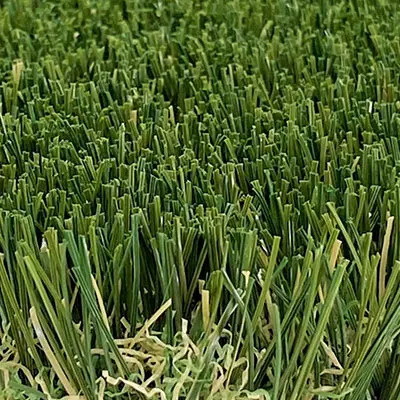
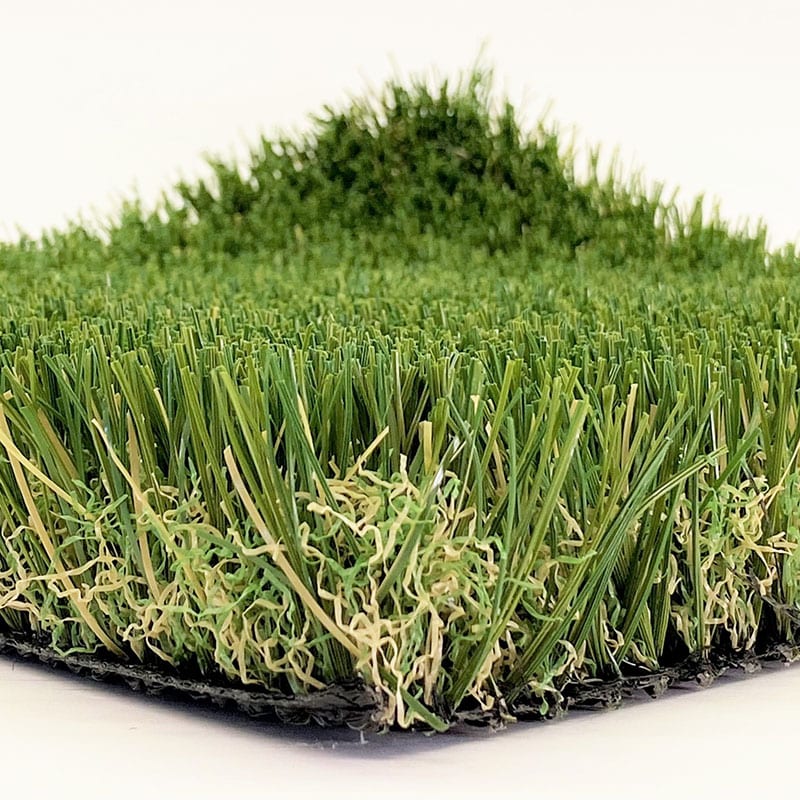
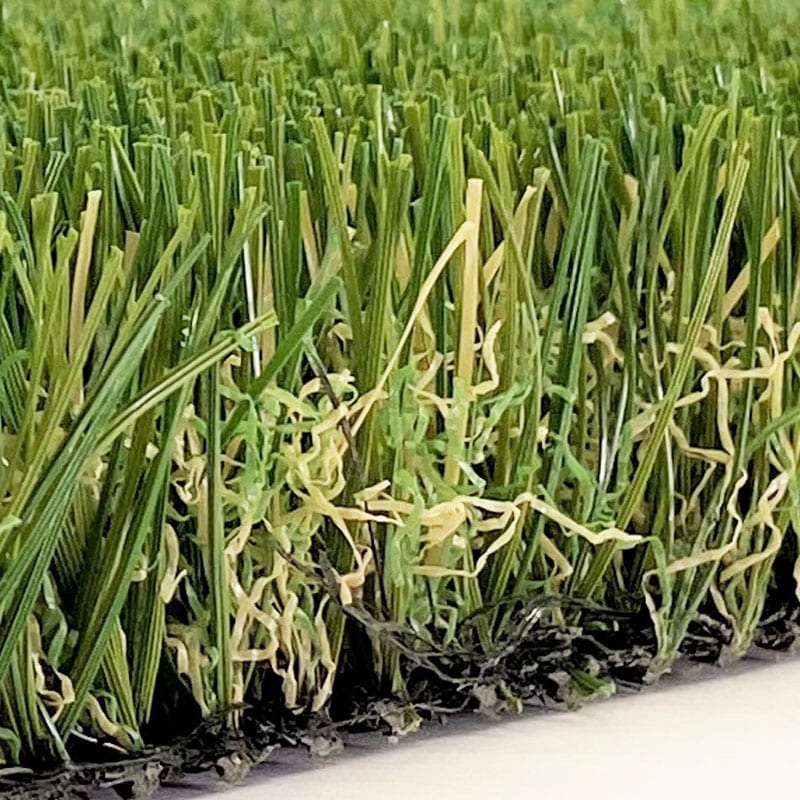
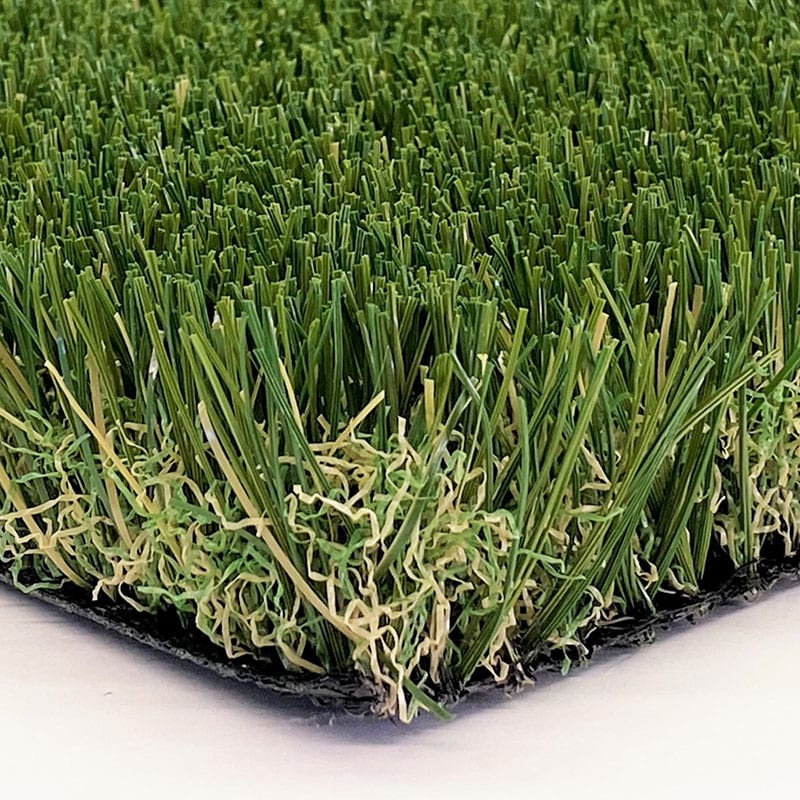
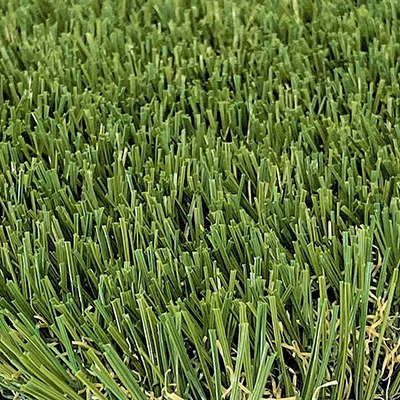
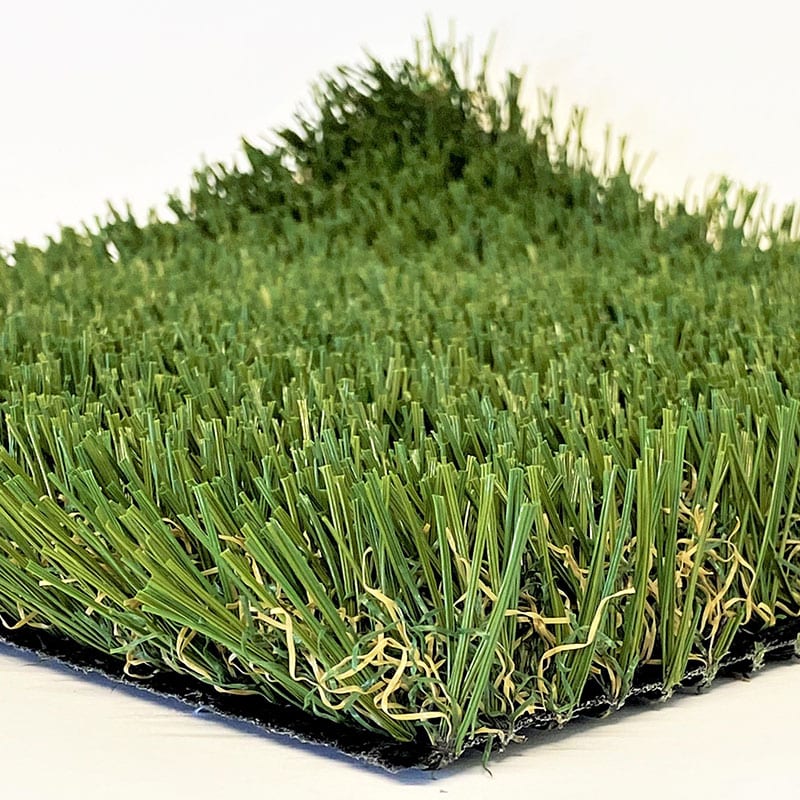
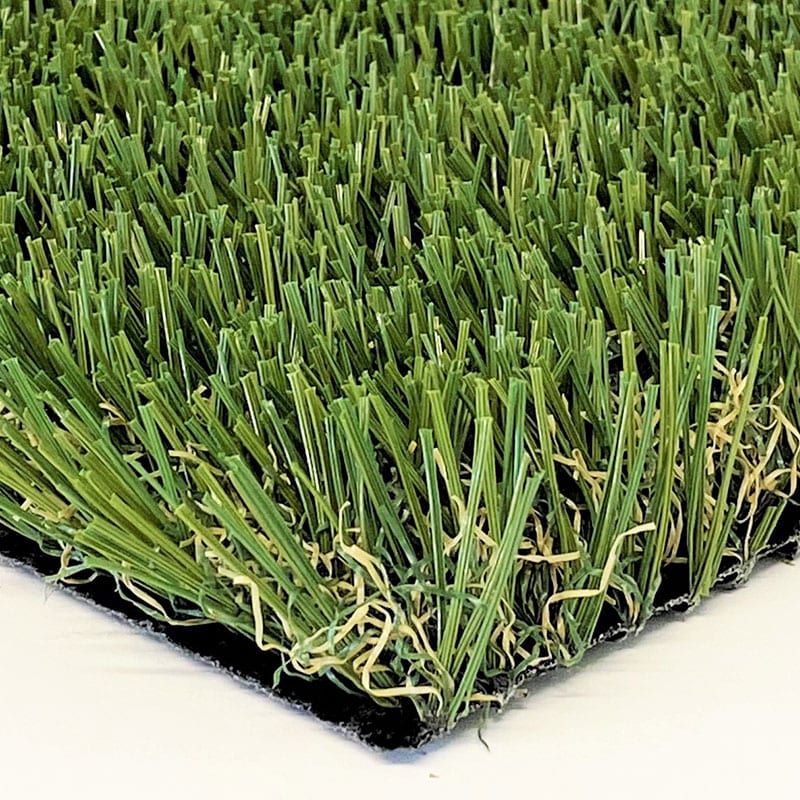
Polyethylene replicates natural grass appearance more convincingly than nylon, with natural blade shape and color variation (quad-color technology) that mimics real grass.
Nylon’s stiffer, more uniform fibers create a texture that reads as artificial, with a plastic-like appearance in direct sunlight, a concern for homeowners prioritizing curb appeal.
Nylon’s stiffness creates a uniform playing surface for sports applications, where ball roll and surface consistency matter more than natural appearance.
Heat Retention and Climate Performance
Heat performance directly impacts comfort, longevity, and usability during peak summer months, and polyethylene and nylon respond to temperature fundamentally differently.
Surface Temperature and Barefoot Comfort
Polyethylene’s lower melting point (around 260°F) means fibers soften when surface temperatures exceed 140°F. On a 95-degree day, polyethylene turf can reach 150-160°F, becoming uncomfortable or painful to walk on barefoot. Repeated heat cycling accelerates degradation over time.
Nylon’s higher melting point (around 480°F) means it remains structurally stable at 170-180°F, maintaining stiffness under typical heat conditions, why nylon is standard for sports fields in hot climates.
Practical Temperature Thresholds
For full-sun installations (6+ hours daily) where summer highs exceed 90°F, polyethylene becomes problematic, limiting barefoot use to early morning or evening.
Nylon performs acceptably in these same conditions because surface temperatures stay within the fiber’s stable range. The lawn remains usable throughout the day.
For partially shaded installations (3-5 hours daily), polyethylene works fine in hot climates, as shade reduces peak temperatures by 20-30°F.
Heat-Induced Fiber Degradation
Sustained heat exposure degrades polyethylene fibers chemically. Heat accelerates breakdown of UV stabilizers, causing faster fading and fiber brittleness.
Nylon resists this degradation because the base polymer is more thermally stable.
Humidity and Moisture Interaction
Heat and humidity together trap moisture in polyethylene backing, creating odor and bacterial growth conditions. Proper drainage mitigates this, but it’s a real consideration in hot, humid climates.
Nylon’s lower water absorption prevents moisture retention, which is why it’s preferred in high-humidity sports facilities.
Climate-Specific Recommendations
Choose polyethylene if your installation receives fewer than 5 hours of direct daily sun or summer highs stay below 85°F. Choose nylon if your yard is in full sun (6+ hours daily) and summer temperatures regularly exceed 90°F, or for Deep South installations where heat and humidity are constant.
Best Artificial Turf for Backyard and Pet Areas
Choosing the right polyethylene vs nylon artificial grass requires honest assessment of usage patterns.
Choose polyethylene if your priority is comfort and natural appearance. Family backyards with moderate use, small to medium pet areas, and aesthetic-focused installations are polyethylene’s sweet spot.
Pet owners with small to medium dogs often find polyethylene sufficient. The drainage capacity (most quality products drain 30 inches per hour or better) handles urine without pooling, and the soft surface is comfortable for dogs.
Choose nylon if your scenario involves extreme conditions: multiple large dogs, high-traffic commercial properties, or full-sun installations where heat is intense. Superior abrasion resistance and heat performance justify the higher cost.
Athletic facilities and putting greens also demand nylon. The consistent fiber structure and superior resilience create predictable playing surfaces.
Drainage, Maintenance, and Long-Term Value
Long-term economics depend on understanding material cost, failure modes, replacement timing, and total cost of ownership over a decade.
Drainage Design and Installation Quality
Maintenance Reality Check
Failure Modes and Replacement Triggers
Polyethylene failure patterns:
- Matting in high-traffic areas (visible wear patterns that don’t recover)
- Fading and color loss in intense sun (typically visible after 6-8 years)
- Fiber brittleness and breakage in extreme heat (fibers become fragile and pull out easily)
- Seam separation under stress or poor installation (backing material separates from fibers)
Nylon failure patterns:
- Fiber pull-out (less common than polyethylene, but can occur with poor tuft bind)
- Seam failure under extreme stress (nylon’s stiffness can stress seams more than polyethylene)
- Backing material degradation (the latex or polyurethane backing can break down over time, independent of fiber quality)
Lifecycle Cost Calculation
Here’s where the economics diverge:
Polyethylene scenario (moderate residential use, partial sun):
- Installation cost: Pricing depends on quantity, dates, and delivery.
- Expected lifespan: 8-10 years
- Maintenance cost: $100-200 annually (brushing supplies, occasional professional cleaning)
- Total cost per year: Installation amortized over 9 years + annual maintenance
- Replacement trigger: Visible matting in 30%+ of lawn area, or fading that looks obviously artificial
Nylon scenario (same installation size, same use pattern):
- Installation cost: Pricing depends on quantity, dates, and delivery.
- Expected lifespan: 10-12 years
- Maintenance cost: $100-200 annually (similar to polyethylene)
- Total cost per year: Installation amortized over 11 years + annual maintenance
For current pricing, please get a quote.
When Nylon’s Economics Make Sense
- Multiple large dogs (constant running, digging, urine exposure): Polyethylene shows matting after 5-6 years; nylon lasts 10+ years. Nylon saves replacement costs.
- Full-sun installation in hot climate (90°F+ summers): Polyethylene fades and degrades faster; nylon maintains appearance longer. Nylon’s extended lifespan justifies higher cost.
- High-traffic commercial or semi-commercial use: Polyethylene requires replacement every 5-7 years; nylon lasts 10-12 years. Nylon’s durability prevents frequent costly replacements.
Warranty and Manufacturer Backing
Quality matters more than material choice.
When evaluating products, look for:
- Warranty length
- Warranty coverage (does it cover fading, matting, seam separation?)
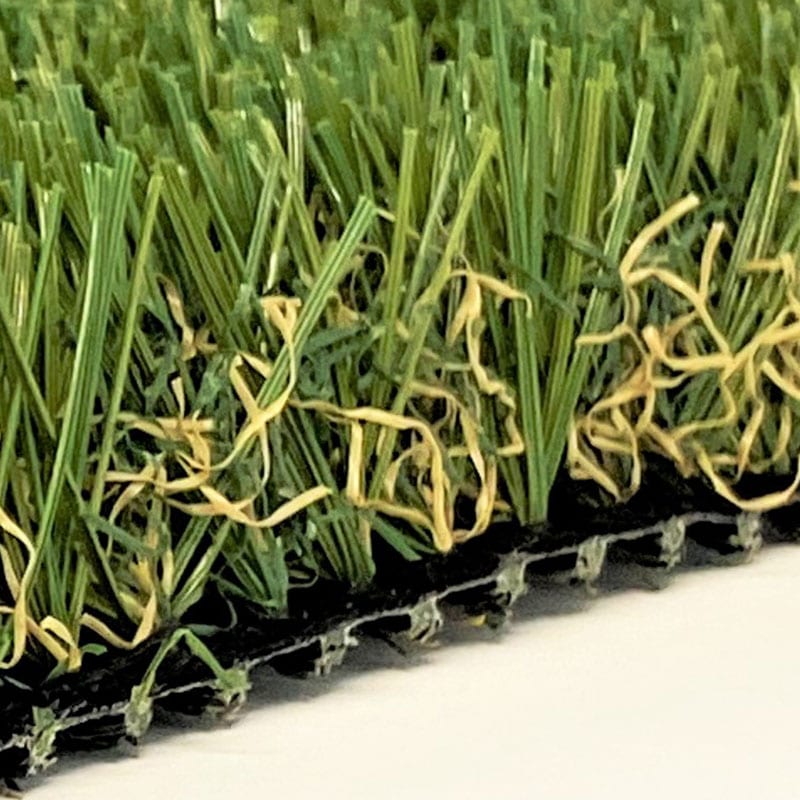
- Fiber face weight (higher density = longer lifespan; look for 50+ ounces per square yard)
- Backing material quality (polyurethane backing is more durable than latex)
- UV stabilizer package (modern stabilizers extend color retention significantly)
The Practical Decision Framework
Frequently Asked Questions
What are the primary performance differences between polyethylene and nylon turf?
Polyethylene offers a softer, more natural feel and lower cost, making it ideal for residential lawns and pet areas. Nylon provides superior fiber strength, tensile strength, and abrasion resistance, excelling in high-traffic zones and sports applications. Nylon maintains structural integrity under extreme wear.
Is polyethylene or nylon better for high-traffic backyard areas with pets?
For best artificial turf for backyard use with pets, polyethylene is typically the better choice. Its soft-touch fiber construction provides comfort for paws while offering adequate durability for moderate to heavy pet traffic. Nylon works well if you have multiple large dogs and extremely heavy foot traffic, but polyethylene’s balance of durability, comfort, and cost makes it the preferred option for most residential pet owners seeking a virtually maintenance-free surface.
How does heat retention compare between nylon and polyethylene grass?
Nylon grass retains more heat due to its denser fiber structure and higher melting point, which can make it hotter underfoot in direct sunlight, particularly in warm climates. For properties in hot, humid regions, polyethylene can provide a more comfortable surface for barefoot use, though both materials are UV stabilized to resist degradation from intense sun exposure.
Which artificial grass material offers the most realistic look and feel?
Polyethylene typically delivers the most lifelike appearance and feel. Its softer fibers mimic natural grass more closely, and the quad-color technology used in premium polyethylene products creates natural color variation that looks authentic. Nylon’s stiffer fiber structure gives it a more uniform, plastic appearance, though it excels in performance applications like putting greens where consistency matters more than aesthetics.