
Last Updated: November 21, 2026
Quick Summary
The best patio edging for artificial grass depends on your surface: a rigid edging strip anchored to a concrete slab holds the cleanest line, while pavers, rubber, timber, composite, aluminum and steel each suit different patios. Set the edge flush with the turf, stake it every 2 to 4 feet, and slope the base away from the slab so water drains.
- Cut turf to overhang a concrete slab by about an inch, then trim it flush once settled.
- Drive rebar stakes through pre-drilled timber holes every 3 to 4 feet on straight runs.
- Stake composite and bender board every 2 to 3 feet rather than the 3 to 4 feet used for timber.
- Use 1/4-inch bender board staked every 12 to 18 inches for curves tighter than about 3 feet.
- Keep the turf surface at least 1/2 inch below a door threshold and use a low-profile strip.
Table of Contents
- Why Patio Edging Decides How Your Artificial Grass Looks
- Artificial Grass Edging Strip for Concrete: The Cleanest Transition
- Paver Edging for Artificial Grass: Stone Borders That Anchor the Patio
- Rubber Edging for Artificial Grass: The Pet- and Kid-Friendly Option
- Timber, Composite, and Metal Edging Compared
- DIY Artificial Grass Patio Edging Ideas for Small or Awkward Spaces
- Drainage, Climate, and Safety Details at the Patio Edge
- Get a Quote for a Patio Edge That Holds Up
- Frequently Asked Questions
Why Patio Edging Decides How Your Artificial Grass Looks
An artificial grass patio edging idea is only as good as the transition it creates between turf and hardscape. Get that transition right and the whole yard looks finished.
Here’s what most guides get wrong: they treat edging as decoration. At Southern Artificial Turf, we treat it as structure.
That double duty is why patio edging deserves its own plan, separate from how you’d edge a plain lawn. Below, we’ll walk through seven ideas, from the cleanest concrete transition to low-cost DIY options for small or awkward spaces.
Artificial Grass Edging Strip for Concrete: The Cleanest Transition
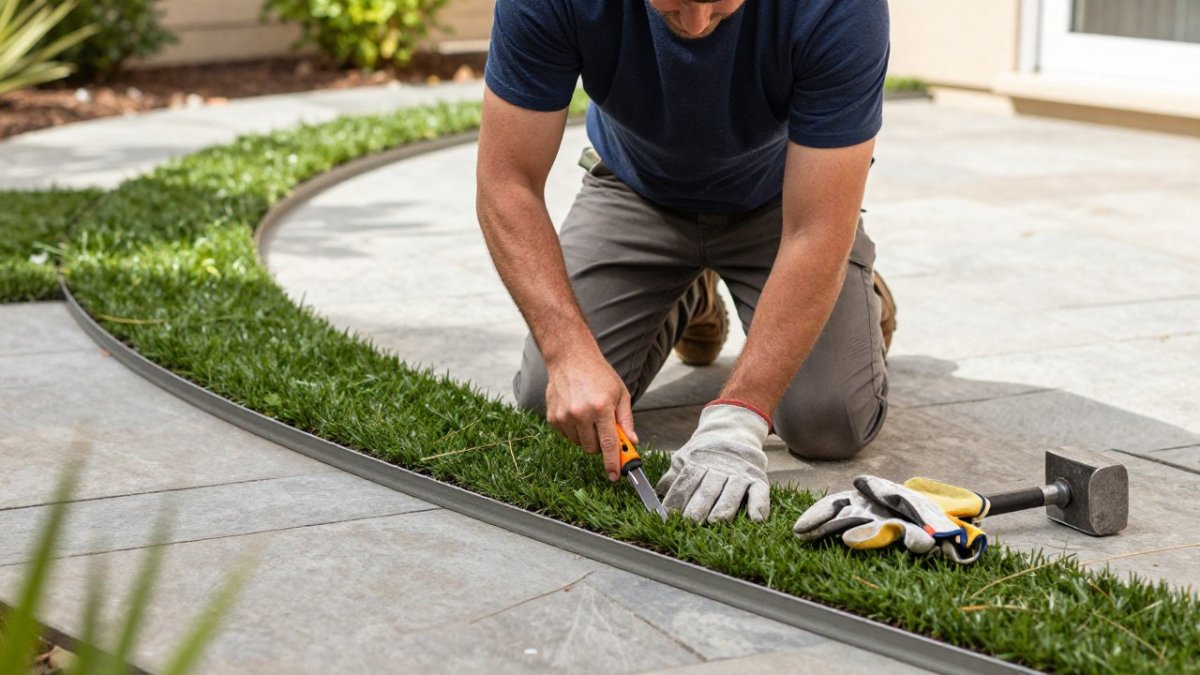
An artificial grass edging strip for concrete is the best choice when turf meets a slab, because a rigid strip holds a straight, tight line that loose materials can’t. The strip sits flush with the slab surface and holds the turf edge down, so the seam reads as a deliberate joint instead of a ragged cut.
How to Secure Turf Where It Meets a Concrete Slab
Securing turf against concrete comes down to three steps. First, cut the turf so it overhangs the slab edge by about an inch, then trim it back flush once it’s settled. Second, fasten the edging strip to the slab with the anchors the strip manufacturer specifies, keeping the top of the strip level with the concrete. Third, tuck the turf edge under the strip’s lip and drive landscape staples every few inches along the run.
Watch out: if you skip the strip and just staple turf straight to the slab, the edge will lift in heat and curl back within a season. For a glue-free fastening method that keeps the line clean at the concrete edge, see our guide on how to secure artificial turf without glue.
Paver Edging for Artificial Grass: Stone Borders That Anchor the Patio
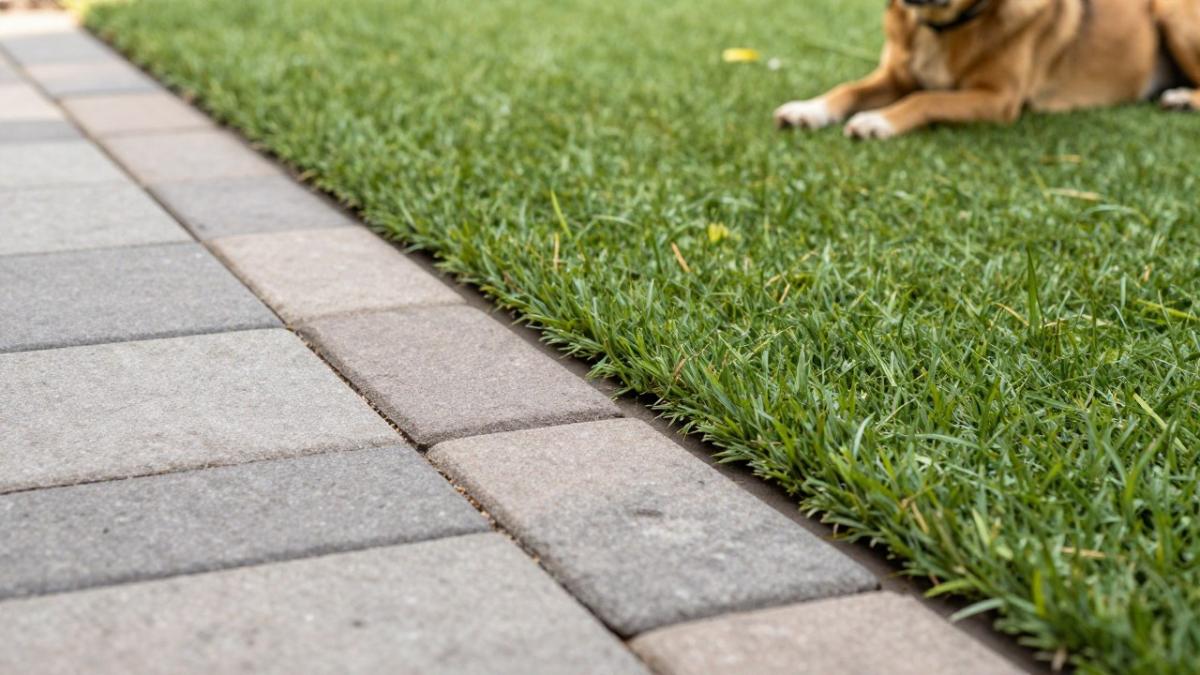
Paver edging for artificial grass offers a wide range of design options.
The trick is the base. Pavers need a compacted, level bed, and the turf needs to sit just slightly below the paver top so the blades don’t poke above the stone line.
Rubber Edging for Artificial Grass: The Pet- and Kid-Friendly Option
Rubber edging for artificial grass suits areas where bare feet and paws are a priority. Rubber borders flex, so they hold curves without kinking, and they give a softer landing than metal or concrete at the patio lip.
For pet owners, the real benefit is durability. For families, a rubber edge removes the sharp corner that steel edging creates. It’s not the stiffest option, so pair it with proper base prep and stakes rather than relying on the border alone to hold a long straight run.
Timber, Composite, and Metal Edging Compared
Timber, composite, and metal edging each solve a different problem, so the right choice depends on climate, budget, and how much upkeep you want. The table below gives the quick read; the subsections that follow explain the mechanisms, dimensions, and failure modes that decide which one actually holds at a patio edge.
| Material | Typical profile | Fastening | Best patio use | Main failure mode |
|---|---|---|---|---|
| Pressure-treated timber | 2×4 or 4×4 lumber, or landscape sleepers | Rebar stakes or galvanized spikes through pre-drilled holes | Budget borders, raised planting edges beside a patio | Rot, warp, and termite damage in humid climates |
| Composite or plastic | 1×4 or 1×6 boards; bender board in 1/4-inch to 1/2-inch thickness | Composite stakes or spikes; bender board held by stakes at close spacing | Curved perimeters, moisture-prone edges, low-maintenance borders | Flexing on long straight runs if stakes are spaced too far apart |
| Aluminum | 1/8-inch to 1/4-inch extruded L-channel or flat strip | Spiral anchors or stakes driven through the channel base | Long straight runs against a slab, clean modern lines | Denting under heavy loads if the channel is thin-gauge |
| Steel | 1/8-inch to 3/16-inch corten or galvanized strip | Heavy-duty stakes or anchors | Permanent straight borders, high-traffic patio lips | Rust at cut edges and in wet soil if uncoated |
Timber and Wood Edging
Timber edging is a traditional option. Pressure-treated 2x4s or 4×4 landscape sleepers create a warm, natural border that’s easy to cut and install yourself.
The catch is longevity. In hot, humid climates, wood absorbs moisture, warps, and invites termites, so plan on replacing it sooner than other materials. Even pressure-treated lumber has a service life measured in years, not decades, once it sits in soil that stays damp.
Composite and Plastic Edging
Composite and plastic edging, including polyboard and bender board, offer a flexible alternative to wood. Bender board is the go-to for curved borders because it bends to follow a patio’s shape without splitting; the thinner 1/4-inch profile bends to tighter radii than 1/2-inch board, which needs a gentler curve. Composite boards hold a straighter line and resist rot, and they don’t need painting or sealing.
Neither is as rigid as metal, so on long runs you’ll want stakes placed closer together, typically every 2 to 3 feet rather than the 3 to 4 feet that works for timber. Bender board also needs a firm base behind it; if the soil is loose, the board bows outward under the weight of the turf and backfill. A common pattern is to pair bender board on curves with a rigid strip on the straight slab edge, so each material does the job it’s best at.
Aluminum and Steel Edging
Aluminum and steel edging deliver the sharpest, longest-lasting line. Aluminum resists rust; steel is stronger but needs a coating to survive wet ground, and corten steel forms a stable rust layer that some homeowners want for its look but that can stain adjacent paving if water carries rust onto it.
Installation is the detail that decides performance. Set the top of the edging flush with the turf or no more than 1/8 inch above it, drive spiral anchors or stakes every 2 to 3 feet, and overlap joints in the direction of the run so the leading edge doesn’t catch a mower wheel.
DIY Artificial Grass Patio Edging Ideas for Small or Awkward Spaces
Small patios, balconies, and odd-shaped corners often call for flexible borders and simple layouts. A patio edge is different: it has to meet slabs, steps, walls, and door thresholds, often within a few feet of each other. The layouts below are built for those tight, irregular perimeters.
Curves, Corners, and Irregular Perimeters
Bender board is the easiest DIY win here because it curves around tight corners without special tools. For a radius tighter than about 3 feet, use 1/4-inch bender board and stake it every 12 to 18 inches so the curve holds.
Awkward L-shapes and narrow strips are where a combination of finishes earns its keep. Use a rigid strip along the straight concrete edge and a flexible border around the curves. Gravel or wood chips tucked behind a flexible border can hide uneven cuts and absorb runoff.
Transitions to Steps, Walls, and Door Thresholds
Where turf meets a step riser, run the edging strip up the side of the riser and cap the turf edge under the strip’s lip so the seam sits in the shadow line rather than on the tread. At a patio wall, leave a 1/4-inch gap between the edging and the wall and fill it with a flexible sealant, so the edge can move slightly without cracking.
Balconies and Deck Edges
For balconies, a low rubber or plastic border keeps turf contained without drilling into the deck. Use a border that sits on top of the deck surface and is held by its own weight or by adhesive pads rated for outdoor use, rather than fasteners that penetrate the waterproof membrane. On a wood deck, the same rule applies: keep fasteners out of the deck boards unless you can seal every penetration, because a single unsealed hole is where rot starts.
Small-Patio Layouts That Work
On a patio under about 100 square feet, a single-material border usually looks cleaner than a mix. A narrow aluminum strip along the slab and a matching strip on the opposite side frames the turf without chopping up the small space. On a patio with one curved side and one straight side, let the curve carry the flexible border and keep the straight side rigid, so the eye reads one deliberate shape rather than two competing ones.
Drainage, Climate, and Safety Details at the Patio Edge
Drainage is an important detail at the patio edge. Water pooling at the patio lip softens the base, shifts the border, and, on pet turf, traps odor.
Climate matters too. If you want the full picture on drainage performance and odor control at turf edges, our artificial grass drainage and pet odor guide covers it, and our guide to base materials for synthetic grass installation explains which bases support proper drainage.
Get a Quote for a Patio Edge That Holds Up
The right edge comes down to your patio, your climate, and how the space gets used.
Browse our project gallery to see finished installations before you decide. Get started with Southern Artificial Turf and get a patio edge that stays tight, drains clean, and looks finished for years.
The edge is the part of a turf project most homeowners underestimate, and it’s the part that shows every day.
Frequently Asked Questions
What is the best edging for artificial grass next to a patio?
The right patio edging depends on the look and the load. Aluminum or steel edging gives the cleanest, lowest-profile line against concrete and holds up to mowing and foot traffic. Pavers suit patios that already use stone, and timber or composite works well for curved borders and garden beds. Whatever you pick, set it so the finished turf sits about 1 inch below the patio surface, which keeps the edge from catching shoes and lets water drain away from the slab.
Can artificial grass be edged against concrete?
Yes. An artificial grass edging strip for concrete is one of the most common setups. Nail a rigid edge strip along the slab, cut the turf so it overlaps the strip by about 1 inch, then tuck the excess down between the strip and the concrete with a bolster or edge trowel. That tucked fold hides the cut line and stops the turf from lifting. Leave a small gap for drainage so water does not pool against the slab.
Can pavers be used as edging for artificial grass?
Pavers work well and give a patio a finished, built-in look. Dig a trench slightly wider than the pavers, add a compacted base of crushed stone, and set the pavers level with or just above the turf surface. Back the row with a hidden timber or composite perimeter board so the stones do not shift. Paver edging for artificial grass can cost more in materials and labor than a simple edge strip.
Is rubber edging suitable for artificial grass?
Rubber edging for artificial grass is a strong choice around play areas and pet zones. It flexes around curves, will not splinter or leave sharp corners, and gives a slightly softer surface at the boundary. It is not as rigid as aluminum, so use stakes or a hidden board to keep long runs straight. Pair it with a turf product that drains well, since rubber borders can slow surface water if they sit too high.