
Table of Contents
- Artificial Grass vs Outdoor Carpet: Head-to-Head Comparison
- Artificial Grass for Concrete Patios: Appearance, Durability, and Installation
- Outdoor Carpet for Concrete Patios: Comfort, Aesthetics, and Maintenance
- Patio Turf Drainage: Moisture Management and Mold Prevention
- Artificial Turf Cost Per Square Foot: Installation, Lifespan, and Long-Term Value
- Which Option Is Right for Your Concrete Patio: A Decision Guide
- Conclusion
- Frequently Asked Questions
Last Updated: October 15, 2026
Artificial Grass vs Outdoor Carpet: Head-to-Head Comparison
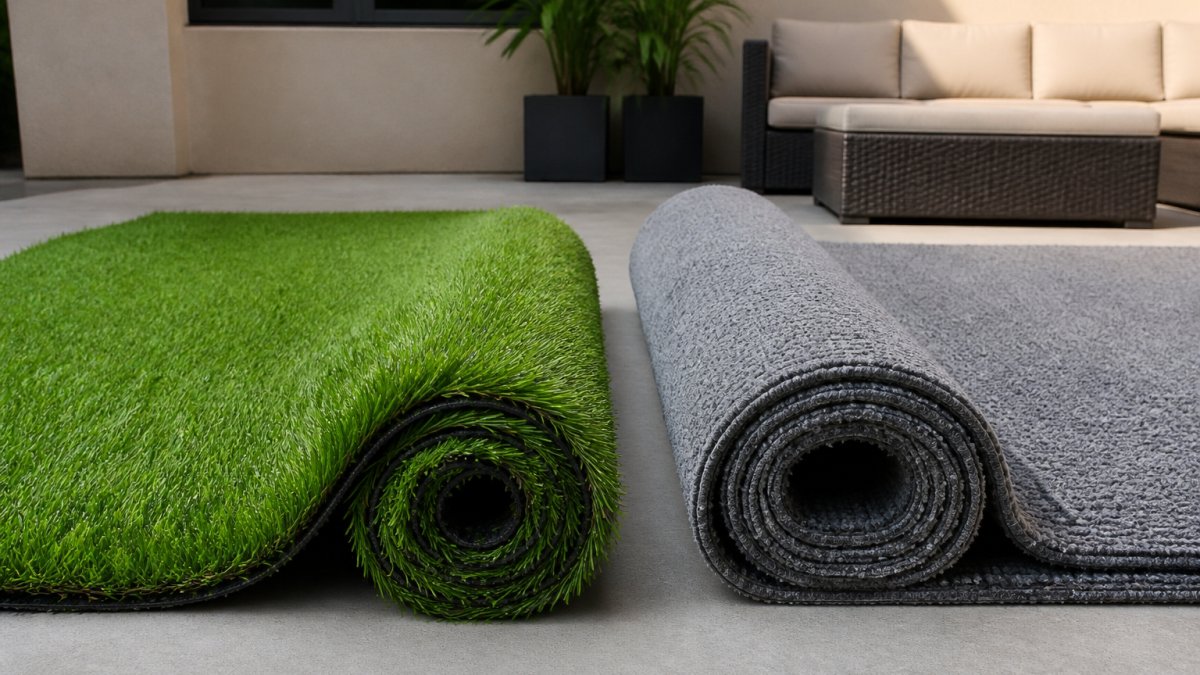
When comparing artificial grass vs outdoor carpet for concrete patios, the choice comes down to appearance, comfort, durability, and maintenance. Artificial grass mimics natural lawn; outdoor carpet prioritizes comfort with a padded backing. Neither is universally “better”, it depends on climate, foot traffic, pets, and budget.
Quick Comparison Table
| Feature | Artificial Grass | Outdoor Carpet |
|---|---|---|
| Appearance | Looks like natural grass | Textured fabric surface |
| Comfort | Firm, grass-like feel | Padded, cushioned surface |
| Durability | 8-10+ years with proper care | 5-7 years typical lifespan |
| Water Drainage | Excellent (30+ inches/hour) | Good with proper backing |
| Maintenance | Minimal; brush and rinse | Regular vacuuming and cleaning |
| Pet-Friendly | Yes, odor control available | Yes, but requires more cleaning |
| Heat Retention | Can get warm in direct sun | Cooler underfoot |
| Installation | Requires site preparation | Easier, can roll out quickly |
| Cost Range | Higher upfront, lower long-term | Lower upfront, higher ongoing |
| Best For | Long-term durability, low maintenance | Comfort, quick installation, renters |
Artificial Grass for Concrete Patios: Appearance, Durability, and Installation
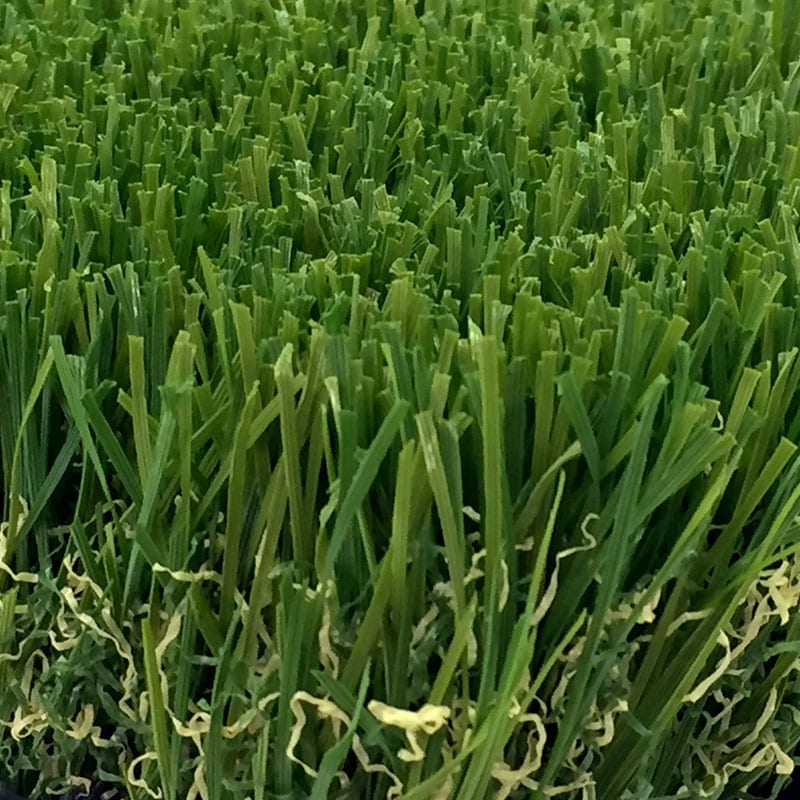
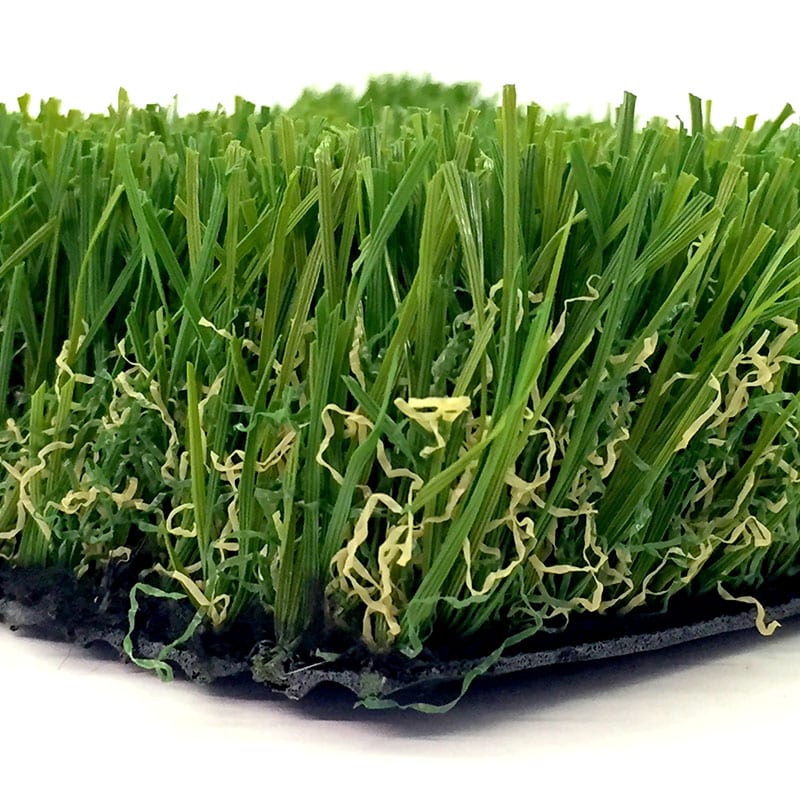
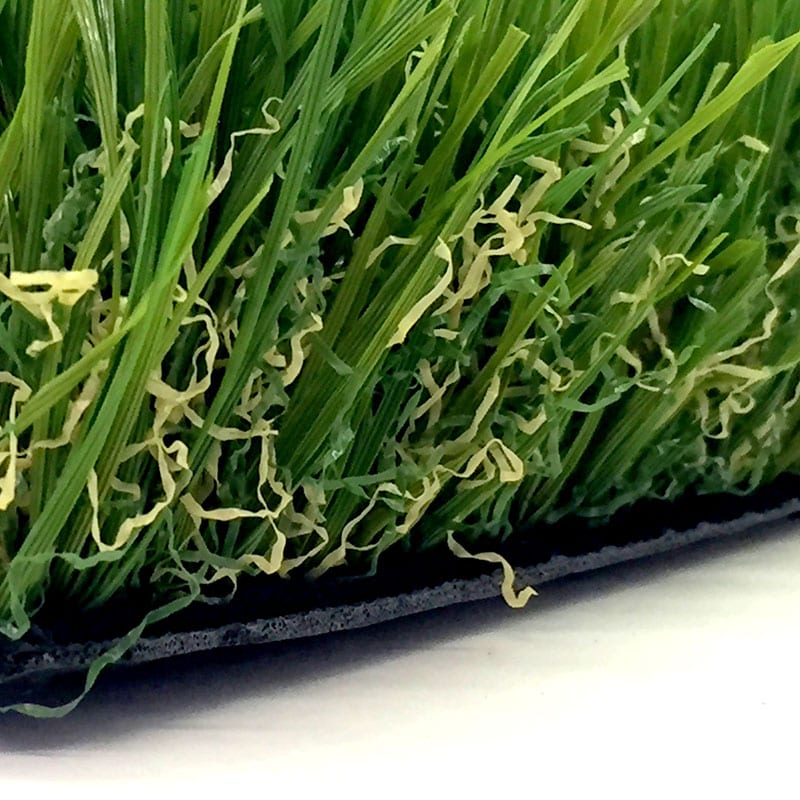
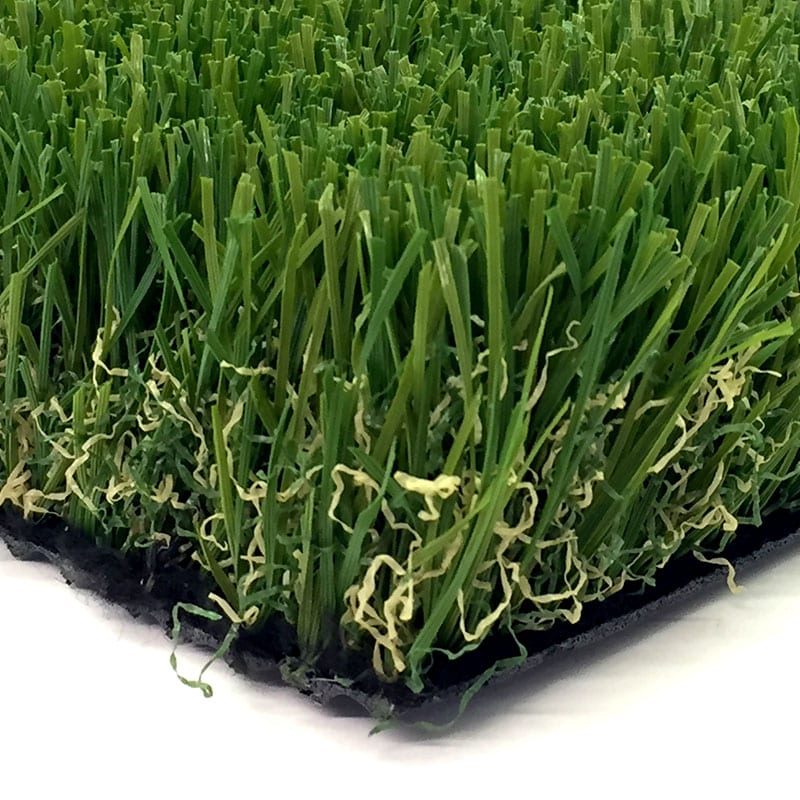
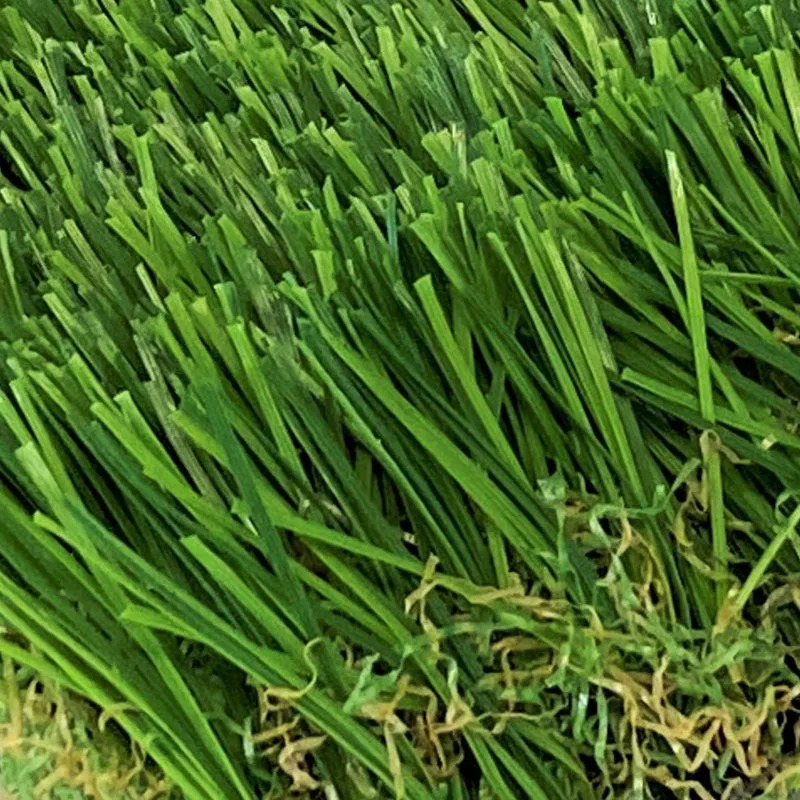
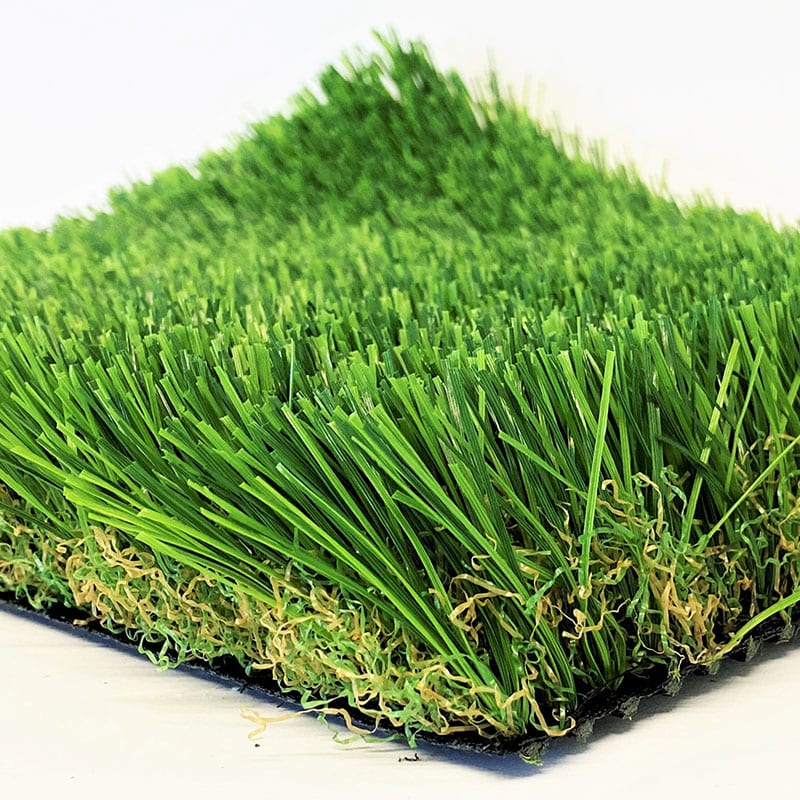
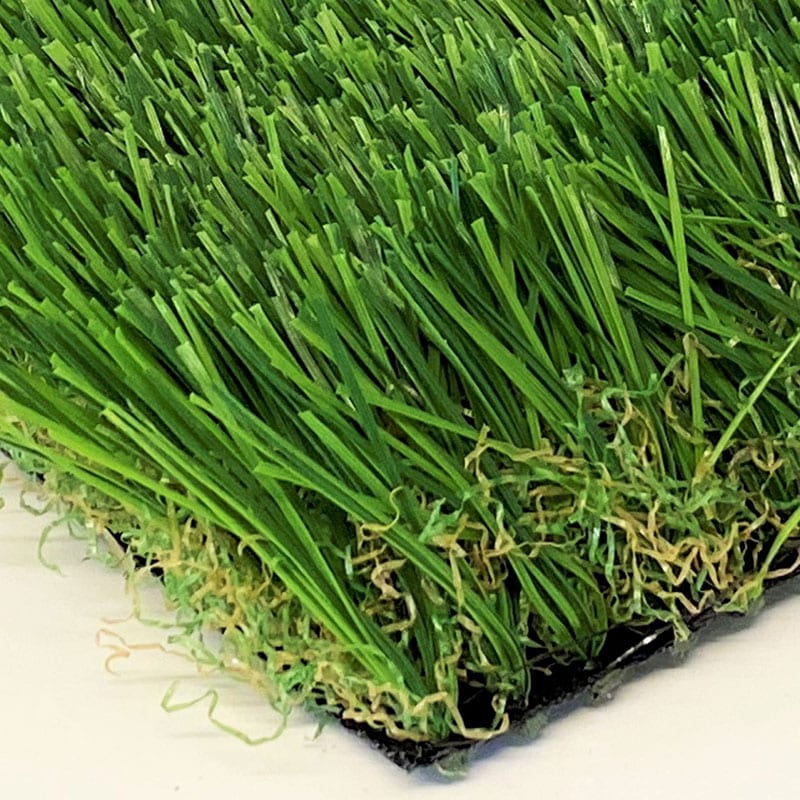
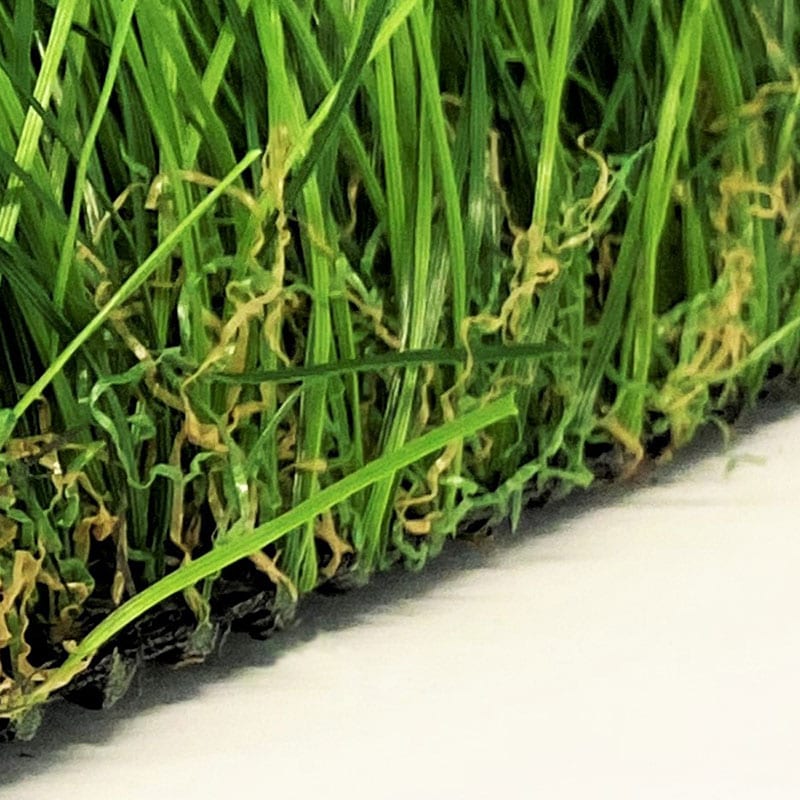
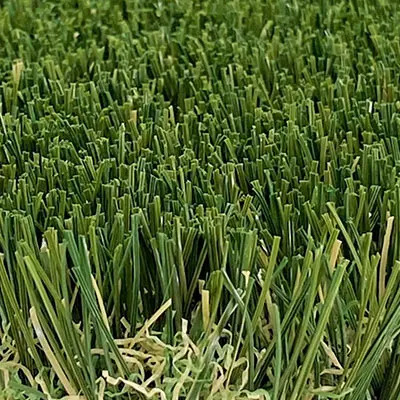
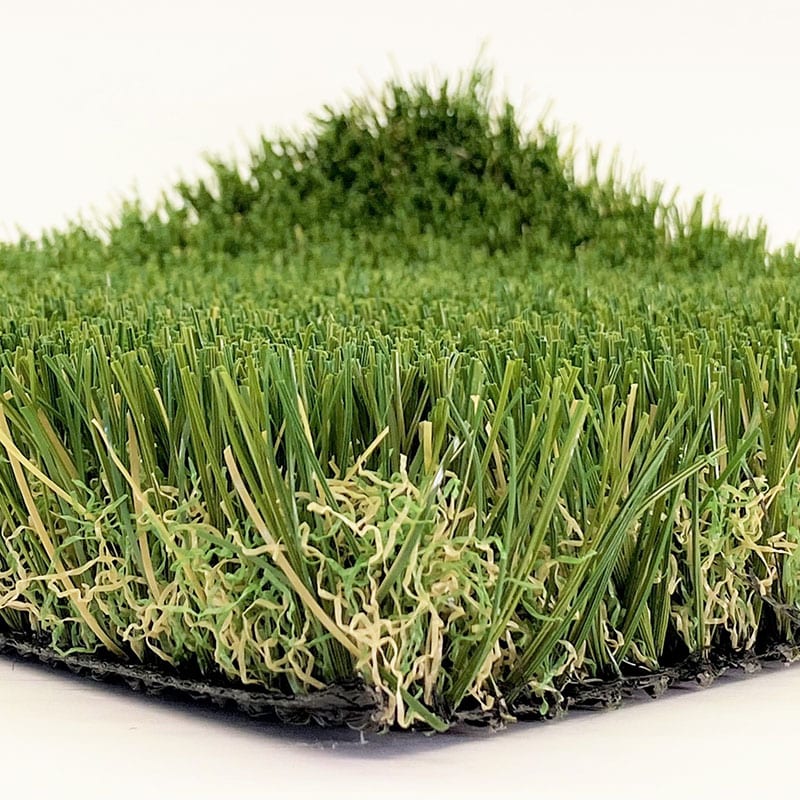
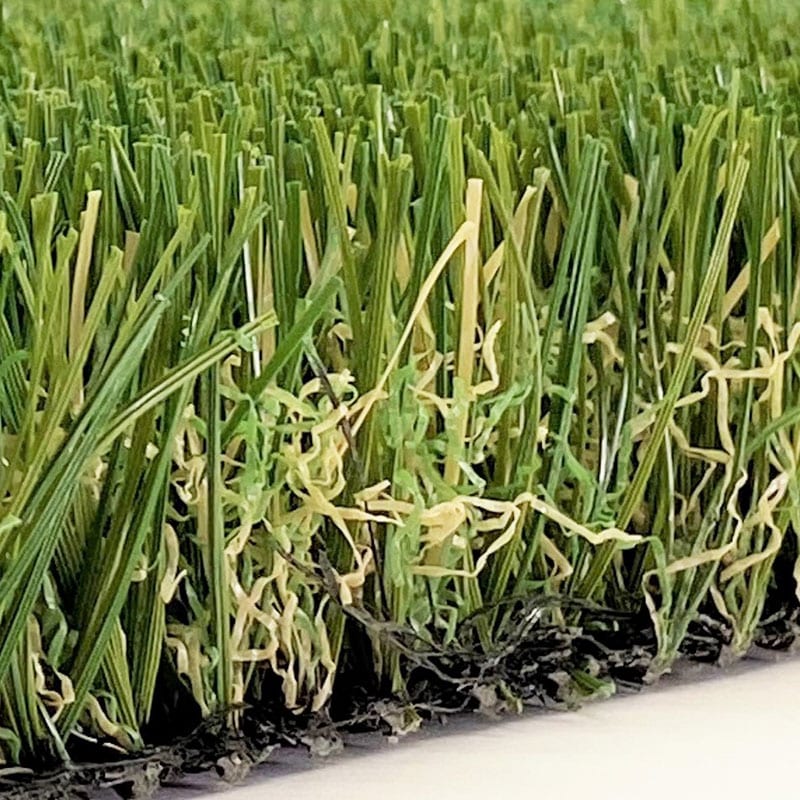
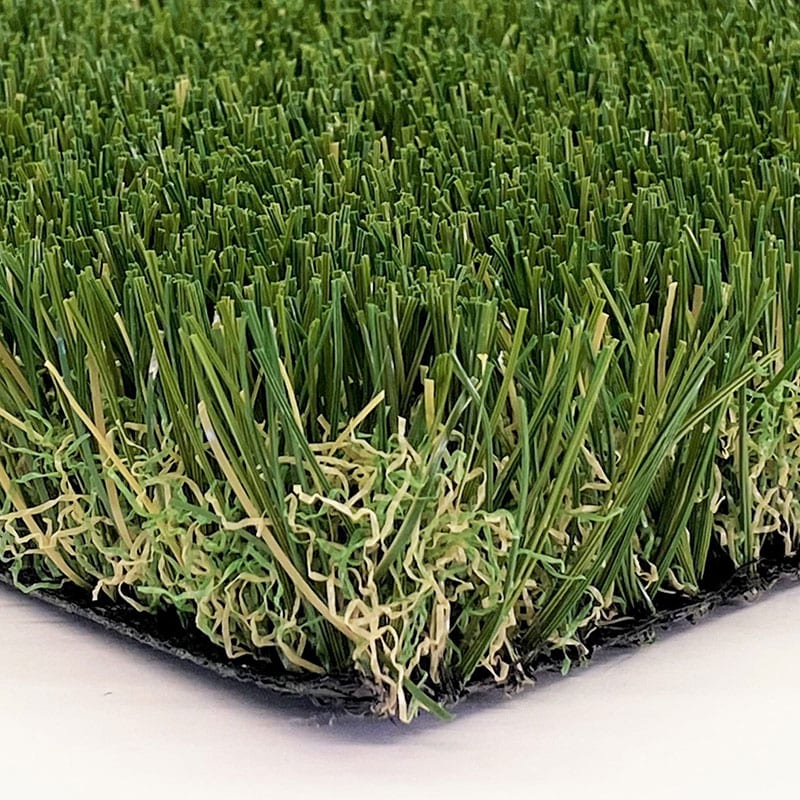
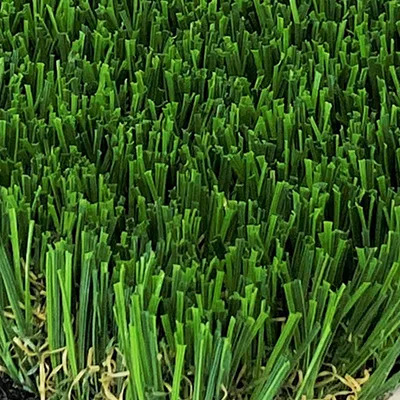
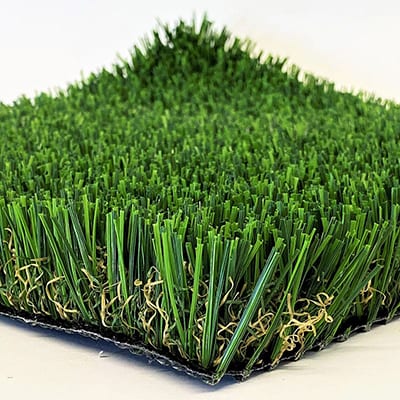
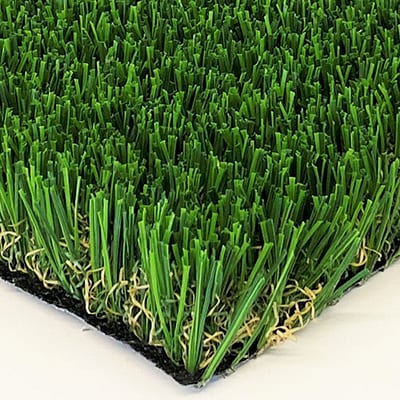
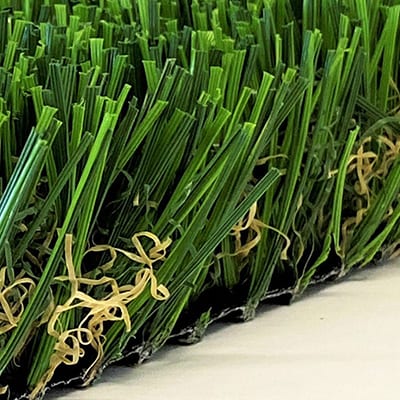
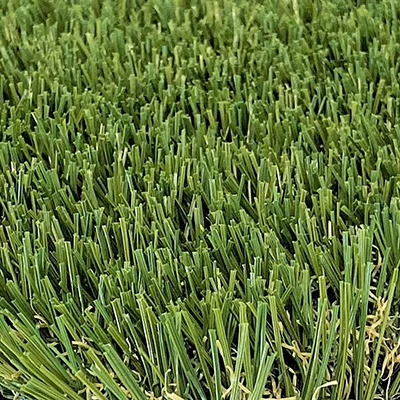
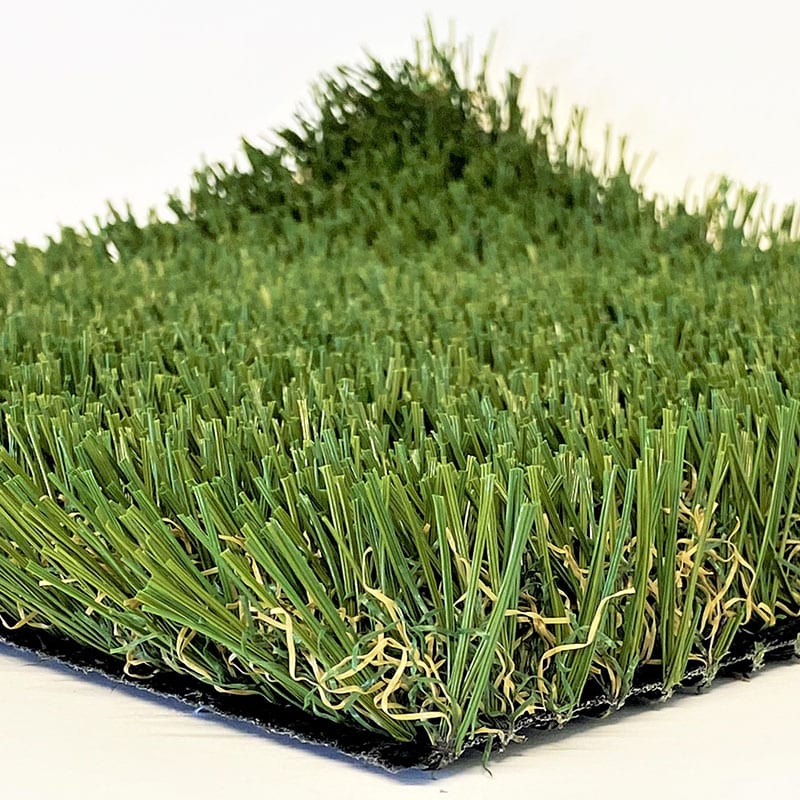
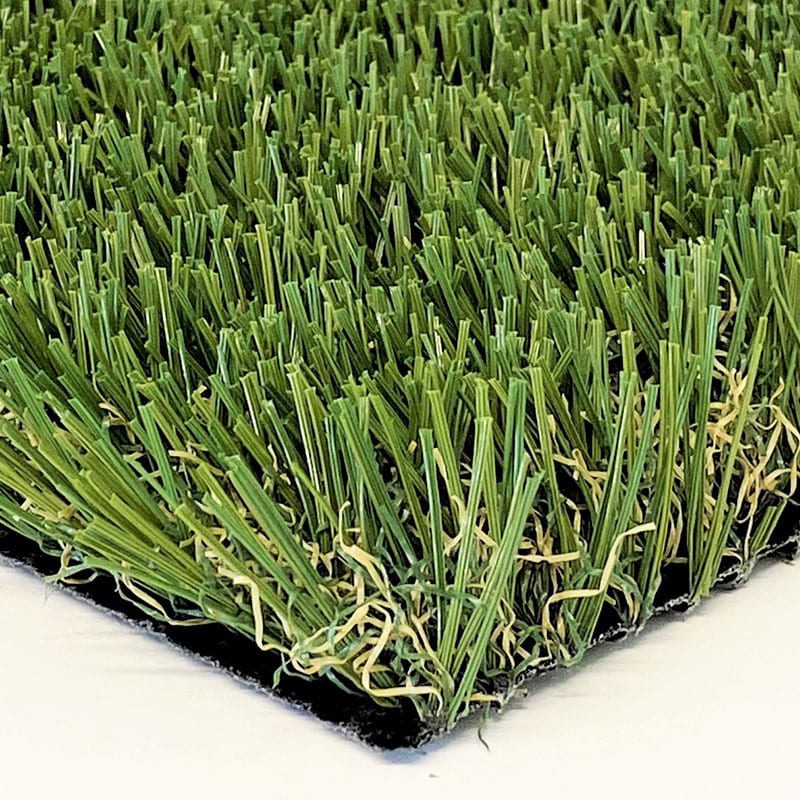
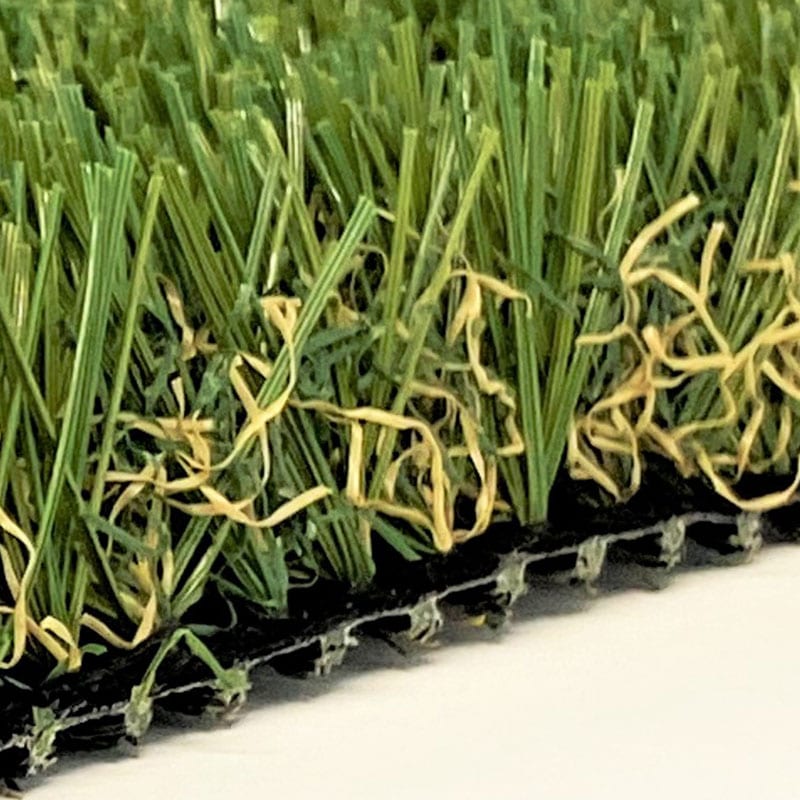
Artificial grass wins on realism. Modern synthetic turf blends green, brown, and tan polyethylene fibers that no longer read as plastic. But on concrete, appearance is only half the story, the other half is how the surface attaches, drains, and comes back up.
How artificial grass attaches to concrete
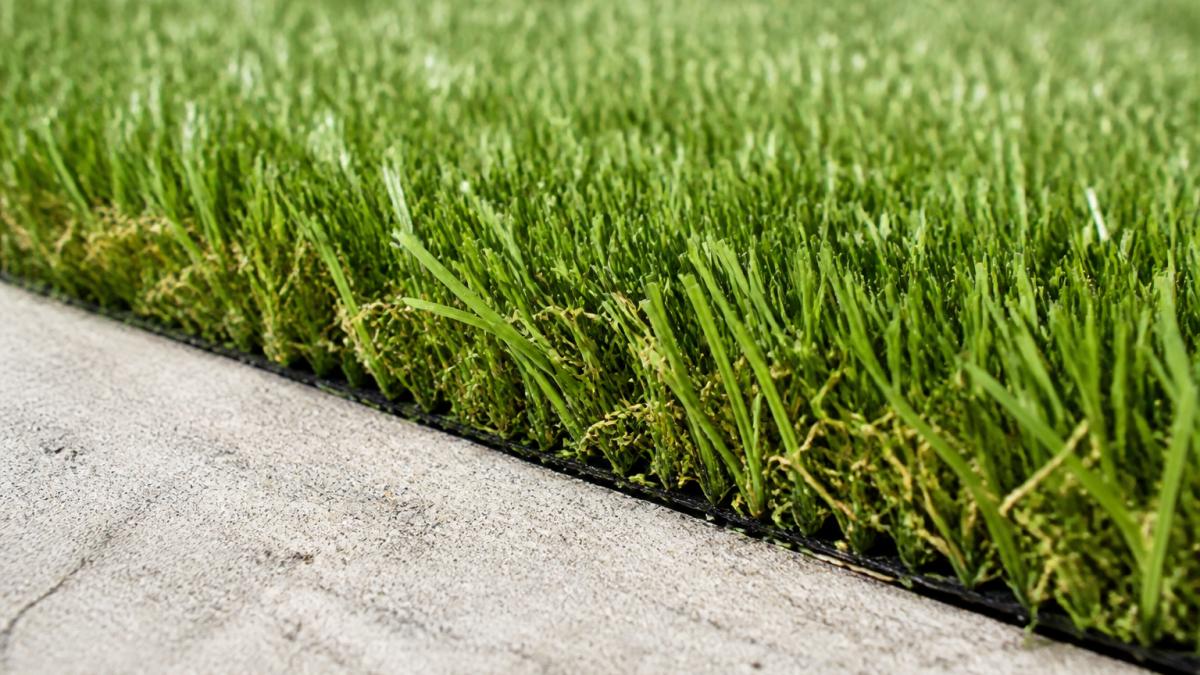
Concrete gives you nothing to stake into, so turf on a slab is held down by:
- Perimeter adhesive. A bead of construction adhesive along the patio edge, pressed into the turf backing. This is the primary anchor on most residential patios.
- Seam tape and adhesive. Where two turf rolls meet, seaming tape is glued under the joint and edges bonded together. Seams are the most common failure point, so this step matters most.
- Infill as ballast. Silica sand or rubber infill brushed into the fibers adds weight and holds blades upright. Not glue, but on a large patio it resists lifting at the edges.
On a small patio, perimeter adhesive plus infill is often enough; on a large or windy site, expect more adhesive and a deliberate edge system.
Is underlay required on concrete?
Concrete is hard, and turf fibers pressed against it can mat down faster. A shock pad cushions the surface and reduces abrasion, but must be permeable or it traps water. The trade-off is height: a pad raises the finished surface, which can interfere with door swings and thresholds, so measure clearances first.
Drainage on a slab
Concrete does not absorb water, so everything runs off or pools. Turf backing and underlay let water pass through quickly, but it still has to go somewhere. Two things make that work: a slight slope (even one to two percent) toward the patio edge, and edge detailing that leaves a drainage path rather than sealing tight against a wall or curb.
Durability on concrete
Concrete is a favorable substrate for turf in one way: it does not shift, settle, or erode like soil, so the surface stays flat and seams stay put. Most quality turf on a properly prepared slab holds up for years, with the biggest variables being foot traffic, sun exposure, and seam bonding. UV exposure is the durability factor homeowners underestimate, fibers fade over time, and lower-grade products fade faster.
Removing turf from concrete without damage
This matters if you rent, are testing the look, or plan to replace the surface later.
- Adhesive removal. Perimeter adhesive usually works up with a scraper and pry bar; residue comes off with adhesive remover or a wire brush. A smooth, sealed slab cleans up easier than a porous, unsealed one.
- Seam tape. Seams pull apart more easily than perimeter adhesive, but tape residue can remain.
- Infill. Brush and vacuum it up before lifting the turf, or it will scatter.
Adhesive applied directly to an unsealed concrete slab can leave a residue that is difficult to remove completely. If reversibility matters to you, discuss removable edge systems with your installer before committing to full-perimeter glue-down.
Appearance over time
New turf looks uniform and bright. Over a few seasons, expect the pile to flatten in high-traffic paths, color to soften under UV, and debris to collect in the fibers. Brushing the pile back up and rinsing restores most of the look. The fibers do not decompose or rot, which is why turf holds its appearance longer than most soft coverings on a hard slab.
Outdoor Carpet for Concrete Patios: Comfort, Aesthetics, and Maintenance
Outdoor carpet prioritizes comfort. Aesthetically, it looks like what it is: a rug, with a flatter, more uniform texture than artificial turf.
Maintenance is outdoor carpet’s weakness. It needs regular vacuuming because leaves, dirt, and pollen accumulate in the fibers more easily than on artificial grass.
Lifespan on concrete is typically 5 to 7 years before the backing deteriorates or fibers mat down.
Outdoor carpet on concrete can trap moisture if the backing doesn’t have adequate drainage holes. Standing water underneath leads to mold growth and a musty smell within months. Check the drainage specifications before buying.
Patio Turf Drainage: Moisture Management and Mold Prevention
Drainage is the critical difference between success and failure on concrete patios.
Artificial grass with proper underlay drains at 30 inches per hour or more, fast enough for heavy rain without pooling.
Outdoor carpet drainage depends entirely on the backing.
To prevent mold on either surface, ensure the concrete has a slight slope (even 1-2% helps) and seal the edges so water doesn’t run underneath.
The single biggest reason artificial grass outperforms outdoor carpet on concrete patios is drainage. Water moves through artificial grass quickly; it can trap underneath outdoor carpet. In humid climates or shaded areas, this difference is the deciding factor.
Artificial Turf Cost Per Square Foot: Installation, Lifespan, and Long-Term Value
Most comparisons stop at “turf costs more upfront.” True, but not useful when you’re budgeting a 12-by-20-foot patio. Here is the patio-specific cost picture, broken into the line items that drive the number.
What drives the installed price of artificial grass on concrete
Four cost buckets make up a turf installation over a concrete slab:
- Turf material. Sold by the square foot, priced by face weight (ounces of fiber per square yard), pile height, and backing quality. Denser, taller blades cost more.
- Shock pad or underlay. Sold by the square foot, often a separate line. Thicker pads cost more and add height, which matters at door thresholds.
- Adhesive, seam tape, and edge trim. Priced per linear foot or per tube. Seams are where most DIY installs fail, so don’t cut here.
Material grades and regional labor rates vary widely, so a firm per-square-foot number requires a site measurement. What you can control is scope: ask installers to quote material, pad, adhesive, infill (if used), and labor as separate lines so bids compare apples to apples.
What drives the installed price of outdoor carpet
Outdoor carpet is simpler, and the cost structure reflects that:
- Carpet material. Priced per square foot or by the roll. Wider rolls mean fewer seams and less waste on a rectangular patio.
- Adhesive or edge fasteners. Often the only installation consumable.
- Labor. Low, no base prep, no infill, no seaming in most cases. Many homeowners install it themselves in an afternoon.
The trade-off is lifespan: a lower installed cost over a shorter service life can produce a higher cost per year than a pricier surface that lasts twice as long.
The lifespan math that actually decides it
The useful comparison is not upfront price but cost per year of service: installed cost divided by expected years before replacement.
Run the arithmetic with your own quotes:
- Get an installed quote for turf on your patio.
- Get an installed quote for outdoor carpet on the same square footage.
- Divide each by its expected service life (turf generally outlasts carpet on concrete; 8-to-10 versus 5-to-7 years is a reasonable planning range).
- Add estimated annual maintenance cost to each, cleaning supplies, pressure washing, or replacement of matted sections.
The surface with the lower cost per year is the better financial choice, regardless of sticker price.
When the cheaper upfront option is the right call
Cost per year is not the only lens. Outdoor carpet wins on pure economics when:
- Your horizon is short, if you expect to move or re-cover the patio within a few years, lower installed cost and easier removal dominate.
- You rent. A removable surface protects your deposit and travels with you.
- You want to test the look before committing.
Where the long-term math favors turf
Turf tends to win the cost-per-year comparison when:
- You plan to stay in the home well past the turf’s service life.
- Maintenance time has a dollar value to you, turf’s upkeep is brushing and rinsing; carpet’s is vacuuming, deep cleaning, and pressure washing.
- Your patio is large, spreading turf’s labor and material premium across more years of use.
A note on quotes and hidden costs
Two costs surprise homeowners most often:
- Disposal. Removing old carpet or turf and hauling it away is a separate charge. Ask whether it is included.
- Substrate repair. Cracked, spalling, or uneven concrete may need patching before either surface goes down, a cost that applies to both options.
Get at least two itemized quotes for each surface on your actual patio dimensions. The per-square-foot number that matters is the one on your slab, not a national average.
When comparing bids, ask each installer to quote the same square footage, the same pad thickness, and the same edge treatment. Bids that differ in scope are not comparable, even if the bottom-line numbers look similar.
Which Option Is Right for Your Concrete Patio: A Decision Guide
Your choice depends on what matters most. Use this framework.
Choose artificial grass if:
- You want a long-term solution (8+ years)
- Appearance matters, you want it to look like real grass
- You want minimal upkeep
Choose outdoor carpet if:
- You want maximum comfort underfoot
- You’re renting and need a removable solution
- You don’t mind regular vacuuming and cleaning
A practical middle ground: Some homeowners use both, artificial grass on the main patio for durability and appearance, outdoor carpet in a seating area where cushioning matters more.
When evaluating artificial grass vs outdoor carpet for concrete patios, drainage is where artificial grass wins decisively. If comfort is your priority, outdoor carpet is softer.
Conclusion
Artificial grass and outdoor carpet both work on concrete patios, but they solve different problems. Artificial grass delivers durability, low maintenance, and a natural appearance that lasts 8 to 10 years.
For most homeowners in the South, artificial grass is the smarter long-term choice. Southern Artificial Turf’s premium installations use quad-color technology and non-abrasive polyethylene fiber engineered specifically for southern climates and concrete patios. EPA standards for synthetic turf safety ensure you’re installing a product that meets rigorous environmental and safety requirements.
Get a quote from Southern Artificial Turf and see how artificial grass can transform your concrete patio into a maintenance-free outdoor space that looks and feels like natural grass year-round.
Frequently Asked Questions
Can you put artificial grass straight on concrete?
Yes, artificial grass can be installed directly on concrete, but proper preparation is essential. The concrete surface must be clean, level, and free of debris. Many installers recommend applying a thin underlay or adhesive base to prevent shifting and improve drainage. Southern Artificial Turf’s installation process accounts for concrete surfaces specifically, ensuring the turf stays secure even under foot traffic and weather exposure.
Does artificial grass or outdoor carpet drain better on concrete?
Artificial grass typically drains better on concrete than outdoor carpet. Artificial grass systems are designed with 30 inches per hour drainage capacity, allowing water to flow through the fibers and backing. Outdoor carpet, while marketed as waterproof, can trap moisture between the rug and concrete surface, creating conditions for mold growth. For concrete patios in humid climates, artificial grass is the safer choice for long-term moisture management.
How much does artificial turf cost per square foot?
Artificial turf pricing depends on quality, fiber type, and installation complexity. Premium options like Southern Artificial Turf, which feature quad-color technology and non-abrasive polyethylene fibers, typically cost more upfront than basic alternatives. For accurate pricing on your specific project, contact Southern Artificial Turf for a custom quote based on your patio size and concrete preparation needs.
Will artificial grass hold up to dogs and heavy foot traffic?
Yes, quality artificial grass is engineered for durability under heavy use. Southern Artificial Turf uses 100% non-abrasive polyethylene fibers designed to withstand pet claws, running, and constant foot traffic without developing bare patches like natural grass. The turf resists matting and maintains its appearance even with multiple dogs. This makes it ideal for pet owners who struggle with mud and dead spots from traditional lawns.
Does outdoor carpet get moldy on concrete patios?
Outdoor carpet can develop mold on concrete if water becomes trapped between the rug backing and the concrete surface. Even waterproof outdoor carpets don’t prevent moisture accumulation underneath, especially in humid environments. Artificial grass avoids this risk because its drainage system allows water to pass through to the concrete beneath, reducing moisture buildup and mold risk significantly.