
Table of Contents
- How Reflected Sunlight Concentrates Heat
- Finding the Source: A Step-by-Step Diagnostic Process
- How to Prevent Artificial Turf from Melting in Summer
- Window Film to Protect Artificial Turf: Options Compared
- Installation and Safety Guidance for Window Treatments
- Artificial Turf Burn from Window Reflections: Repairing Damage
- Booking a Pre-Installation Turf Inspection with Southern Artificial Turf
- Frequently Asked Questions
Last Updated: November 6, 2026
Artificial turf can melt or scorch when sunlight bounces off a nearby window and lands on one small patch of lawn, so knowing how to prevent artificial turf from melting starts with locating that reflection. The spot can get far hotter than the rest of the yard, and the blades may curl, brown or fuse together. This guide explains how to find the cause of turf damage and stop it before the damage spreads.
Most turf damage of this kind comes from reflected light, not from the sun shining straight down. A large pane of glass can act like a mirror and focus a bright beam onto the same spot every afternoon. Once you know where that beam lands, you can usually fix the problem with a few simple changes.
Synthetic grass is made from polyethylene fibers, and those fibers soften at high temperatures. Heat from a concentrated reflection can push the surface past that point. Whether infill choice adds to the heat is covered in does sand infill make artificial grass hotter. Dark turf absorbs more energy than light turf, so darker colors can show damage sooner.
How Reflected Sunlight Concentrates Heat
Reflected sunlight is the main cause of turf melting near windows. A window reflects light at an angle that mirrors the sun’s position in the sky. When that angle points at your lawn, the reflected beam can strike the turf with real intensity.
Several factors make the effect worse:
- A window that faces west or south in the afternoon
- Large glass areas, such as sliding doors or picture windows
- Curved or angled glass that narrows the beam
- Summer months, when the sun sits higher and hotter
A common mistake is assuming the heat comes from the sun overhead. The problem often sits low on the wall, at a spot you would never think to check.
The Role of Energy-Efficient and Low-E Windows
Many newer homes have energy-efficient windows, and some of these use low-E coatings. These thin metallic layers reflect infrared heat to keep rooms cooler and reduce energy bills. The same coating can also reflect more direct light outward, which can make the reflection stronger in certain spots.
This does not mean you need to replace your windows. It means you should check the turf near any window with a low-E coating, especially if you have noticed a hot spot since the windows were installed.
Finding the Source: A Step-by-Step Diagnostic Process
Before you buy any product, find out exactly where the reflection lands. This short process takes about 30 minutes and saves money on the wrong fix.
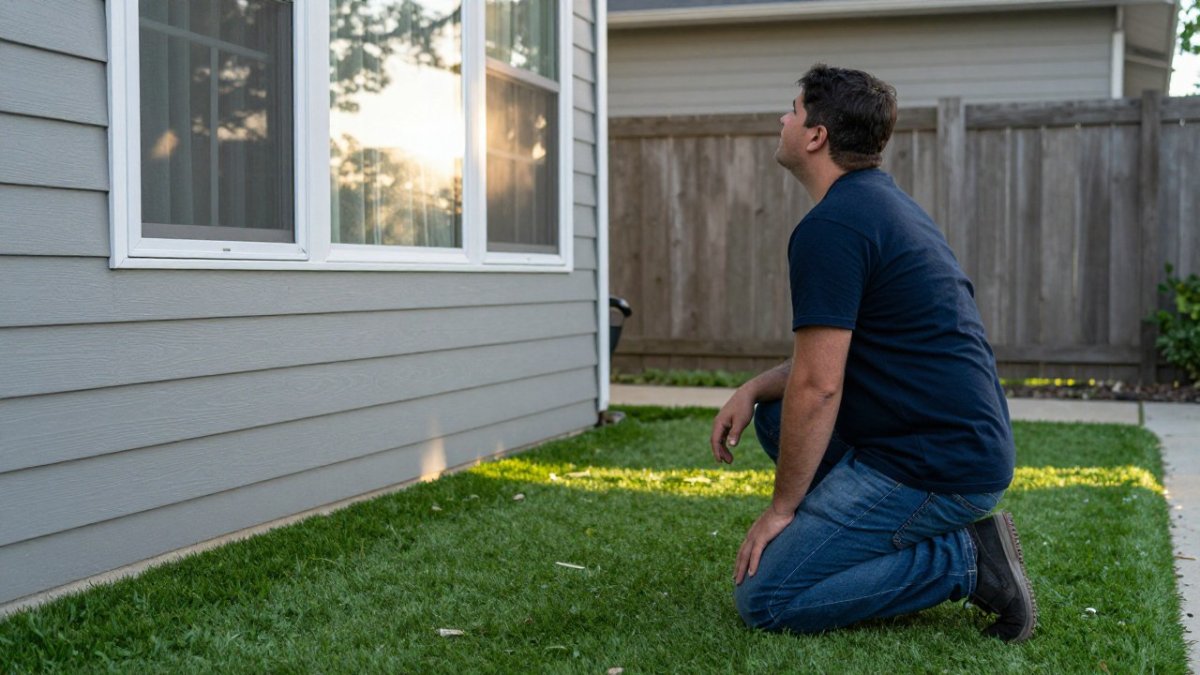
- Note the damaged area. Mark the spot with a stake or a piece of tape.
- Check the time. Look at the area in the early afternoon, when the reflection is strongest.
- Trace the beam. Stand where the sun is behind you and look at the nearest windows. Find the one that shines toward the damaged spot.
- Test with a mirror. Hold a small mirror at the window and aim the reflection at the turf to confirm the path.
- Record your findings. Write down the window, the time and the distance from the window to the spot.
Repeat the check on a few different days. Sun angles change through the year, so a reflection in July may not show up in January.
Inspecting Turf During the Hottest Part of the Day
Check the lawn between noon and 4 p.m. on a sunny day. This is when reflected heat is most intense. Use the back of your hand to feel the surface. If the turf feels much hotter than the rest of the yard, you have found a hot spot.
Look for these warning signs:
- Blades that look flattened, shiny or glazed
- Yellow or brown discoloration
- Stiff or curled fibers
- A plastic smell during the hottest hours
Do not walk on a suspected hot spot in bare feet. The surface can burn your skin.
How to Prevent Artificial Turf from Melting in Summer
Prevention works best when you match the fix to the reflection, not when you buy the first product you see. The table below compares the main options on the factors that actually decide whether they work: upfront cost, how long they last, and which situations they suit. Pricing depends on window size, glass type, and site conditions, so get written quotes for your site.
| Method | Typical upfront cost | Expected lifespan | Best suited for | Main trade-off |
|---|---|---|---|---|
| Anti-reflective or turf-protection window film | $8-$15 per sq ft installed; $200-$600 for a typical window | 5-15 years, depending on film and exposure | Windows that produce a concentrated beam and where you want to keep the view | Film performance depends on glass type; some films are not compatible with certain glazing |
| Exterior solar screens | $50-$150 per window for DIY kits; $150-$400 installed | 3-10 years | Large windows and sliding doors where you want to cut glare before it leaves the glass | Reduces view and daylight; needs secure mounting |
| Exterior shades or awnings | $150-$800 per opening installed | 5-15 years | West- and south-facing glass that produces an afternoon beam | May require permits; can be damaged by wind |
| Landscaping (trees or tall shrubs) | $50-$300 per plant, plus installation | 10+ years once mature | Long-term shade where space allows | Takes years to mature; may not block the beam at every sun angle |
| Relocating or covering the affected turf | $0-$500 depending on scope | Permanent if the source is removed | Small hot spots where other fixes are impractical | Changes the yard layout; covering may look unfinished |
Start with the option that addresses the source at a cost that fits your budget. For a broader routine to keep the turf in good shape through the hot months, see the artificial turf maintenance care guide. Consider how quickly each option will take effect.
A common mistake is treating the symptom instead of the source. Wetting the turf may cool it briefly, but the reflection returns the next day. Fix the cause and the problem stays solved.
Watch out: a product that works on one window may fail on another. A film rated for clear glass can behave differently on low-E or tinted glazing, so confirm compatibility before you buy.
Window Film to Protect Artificial Turf: Options Compared
Window film is one of the most direct ways to stop reflected heat. It is applied to the glass and reduces the amount of light that bounces outward.
Anti-Reflective and Turf-Protection Film
Anti-reflective film reduces the brightness of the reflected beam. Turf-protection film is designed specifically to limit the heat that reaches the lawn. Both types are sold by window film suppliers and some home improvement stores. For the heat-related construction features of the turf itself, see quad color technology in synthetic turf.
Consider these points when comparing film:
- Durability: Look for film with a warranty and UV resistance.
- Visibility: Some films darken the glass, which may affect your view or the look of your home.
- Coverage: You may need film on the whole window or only on the reflective section.
- Installation: Professional installation often gives a cleaner result. Pricing depends on window size and film type, so get a written quote before you decide.
Check the product details to confirm it targets the reflection problem you have.
Window Screens, Exterior Shades, and Landscaping
Window screens, exterior shades and landscaping can block a reflection before it reaches the lawn. Each option has trade-offs.
- Window screens cut glare and heat at the glass. They can reduce your view, so check how they look from inside.
- Exterior shades or awnings block the beam over a wider area. They need solid mounting and may need permits in some areas.
- Landscaping with trees or tall shrubs gives long-term shade. It takes time to grow and may not stop the beam at all times of day.
Choose the option that fits the position of the window and the damage you see. A combination often works best, such as film on the glass and a shrub planted to block the angle.
Installation and Safety Guidance for Window Treatments
Window treatments only work if they are installed correctly and are compatible with your glass.
Check glass compatibility first. Not every film suits every window. Low-E coatings, tinted glass, double-pane sealed units, and laminated glass each behave differently.
Know when to hire a professional. Film installation on upper floors, large picture windows, or exterior glass is best left to a licensed installer.
Follow the manufacturer’s instructions. Film application depends on temperature, cleaning steps, and cure time. Dust or moisture trapped under the film causes bubbles that do not go away.
Check local rules before exterior work. Some jurisdictions require permits for awnings, shades, or structures attached to the exterior of a home. Confirm before you build.
Keep safety first. Use a stable ladder and have someone spot you when working above ground level. Do not work on a ladder in wind or on a hot surface.
Watch out: installing film on glass that is already cracked or on a sealed unit with a failed seal can make the problem worse. Repair or replace the glass before adding film.
Artificial Turf Burn from Window Reflections: Repairing Damage
Once turf has melted or scorched, the damage may or may not be permanent. A step-by-step guide to repairing small tears in artificial grass covers smaller spots in more detail. Small spots can often be repaired. Large areas may need replacement.
Artificial Turf Melting Repair Steps
- Let the area cool. Wait until the turf is at normal temperature before you touch it.
- Trim damaged fibers. Use sharp scissors to cut away blades that are fused, curled or brittle.
- Brush the surface. Use a stiff brush to lift the remaining fibers and restore some texture.
- Check the backing. If the backing is cracked or exposed, a patch may be needed.
- Replace the section. For a larger spot, cut out the damaged piece and glue in a matching patch using seam tape and adhesive made for synthetic turf.
- Block the reflection. Install the prevention method you chose before the next hot season.
Patches work best when you match the color, pile height and infill. To judge whether a damaged lawn is worth repairing or should be replaced, check how long artificial grass lasts.
Booking a Pre-Installation Turf Inspection with Southern Artificial Turf
If you are planning a new installation near windows, a pre-installation inspection can catch reflection problems before the turf goes down. Contact Southern Artificial Turf for a quote, and talk through what your site needs. Our turf uses quad-color technology and non-abrasive polyethylene fiber, and it carries an 8-year warranty.
Frequently Asked Questions
Can window reflections melt artificial grass?
Yes. Window glass, especially large or low-E glazed panes, can reflect concentrated sunlight onto a small area of turf. That focused heat can soften or scorch synthetic fibers and the backing, sometimes leaving a shiny, flattened, or melted patch. The problem is usually localized, so a quick check of where the reflection lands at midday and mid-afternoon will show whether your windows are the cause. Once identified, the spot can often be protected with film, a screen, or a shade structure before further damage occurs.
Does artificial turf melt in summer?
Artificial turf can get very hot in summer, especially in the American South where long, intense sun is common. Surface temperatures rise well above air temperature on dark, sunny days. Ordinary sun exposure rarely melts good-quality turf, but concentrated heat from reflections, such as a window or a reflective surface, can cause melting or scorching. Light-colored sand infill, adequate shade, and regular inspection during the hottest hours help reduce the risk.
Can melted artificial turf be repaired?
In many cases, yes. Small melted or scorched areas can often be repaired by trimming away the damaged fibers, cleaning the area, and patching it with a matching turf piece secured with seaming tape and adhesive. Larger or deeper damage may need a full section replacement. Before repairing, correct the heat source, such as a reflective window or surface, so the same spot does not melt again.
Does putting sand on artificial grass help prevent melting?
Sand infill helps keep fibers upright and provides some cooling, since lighter-colored sand reflects more heat than dark material. However, sand alone does not stop concentrated reflected sunlight from scorching turf. If a window or shiny surface is focusing heat on one spot, the most effective fix is to block or diffuse that reflection with window film, a screen, or a shade structure. Sand works best as one part of a broader heat-management plan.