
Last Updated: October 27, 2026
Quick Summary
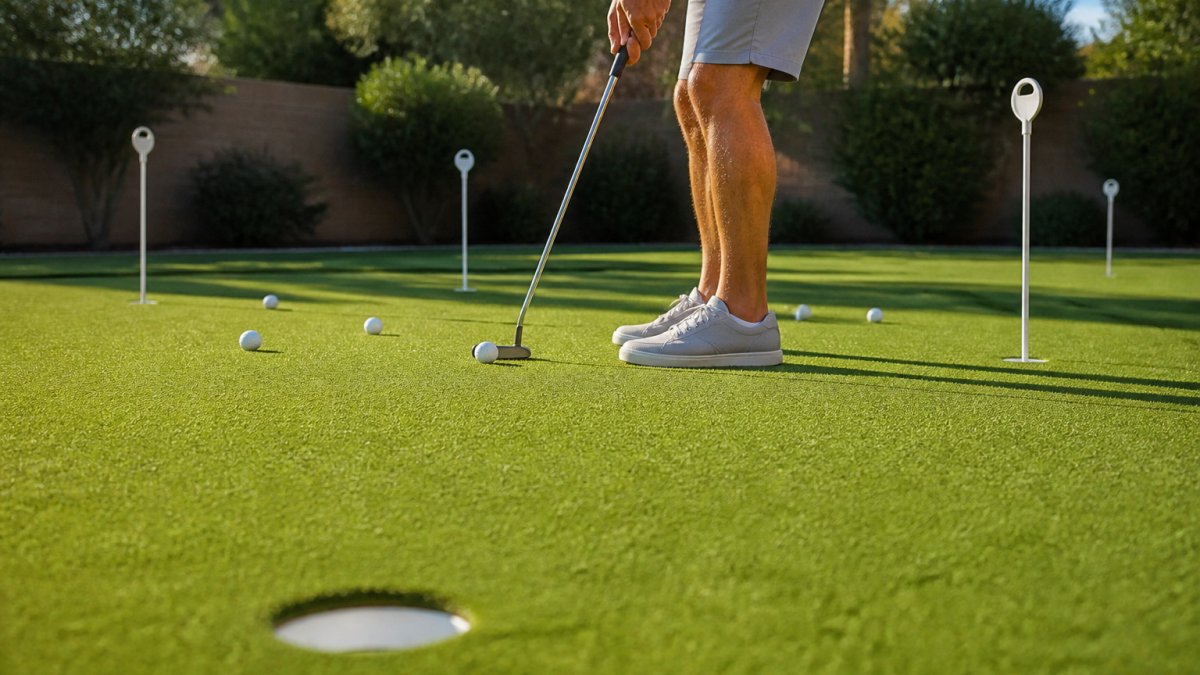
The most useful backyard putting drills are the gate drill for face control, the chalk line drill for stroke path, and a distance ladder for pace. Set up on level ground, use a consistent surface, and keep a safe backstop behind the hole. Scoring each drill and logging results weekly shows whether your putting is improving.
- Use a gate drill with two tees to train face control from 3 feet.
- Chalk line drills help you keep the putter head on a straight path.
- A distance ladder at 5, 10, 15 and 20 feet builds pace control.
- Set the backstop at least 3 feet behind the target to protect windows and walkways.
- Log scores each session and compare results weekly to track progress.
Table of Contents
- Setting Up a Safe, Effective Backyard Putting Space
- Putting Accuracy Drills That Train Your Aim and Stroke Path
- Putting Distance Control Drills for Pace and Lag Practice
- Putting Drills for Beginners: Building Fundamentals First
- Adapting Drills to Uneven Backyard Surfaces and Turf
- A Putting Practice Routine With Scoring and Progress Tracking
- Putting Practice Plan for Your Next Month of Backyard Sessions
- Frequently Asked Questions
Setting Up a Safe, Effective Backyard Putting Space
A backyard area for putting drills depends on level ground, a consistent surface, and a safe perimeter. Walk your yard before you buy a single ball and assess each candidate spot against these criteria.
Level ground. A flat area gives you room for short putts and longer lines. Check the surface with a level or roll a ball across it and watch where it drifts. If your only flat spot is smaller, use a portable putting mat and accept the shorter length.
Surface choice. Natural grass, artificial turf, and a portable mat each behave differently:
- Natural grass is free but inconsistent. Mowing height, moisture, and wear change the roll from day to day, so pace drills are unreliable unless you mow to a consistent height before each session.
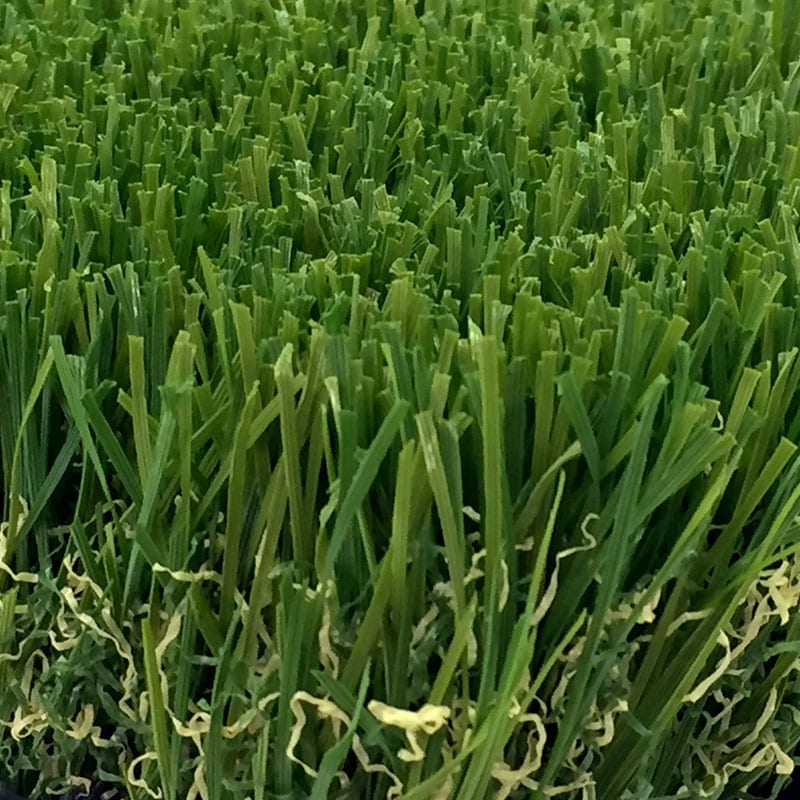
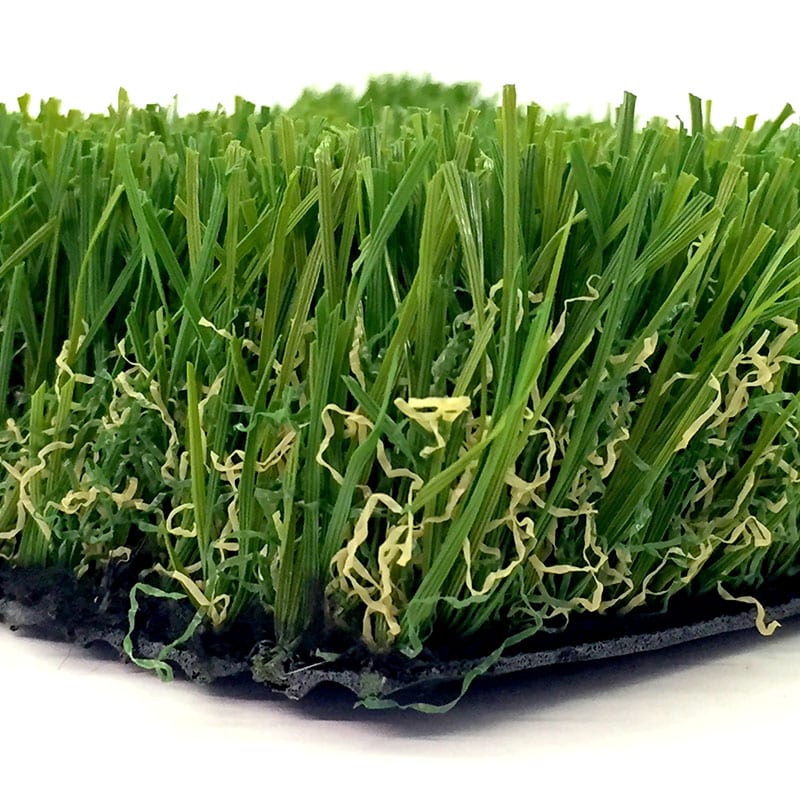
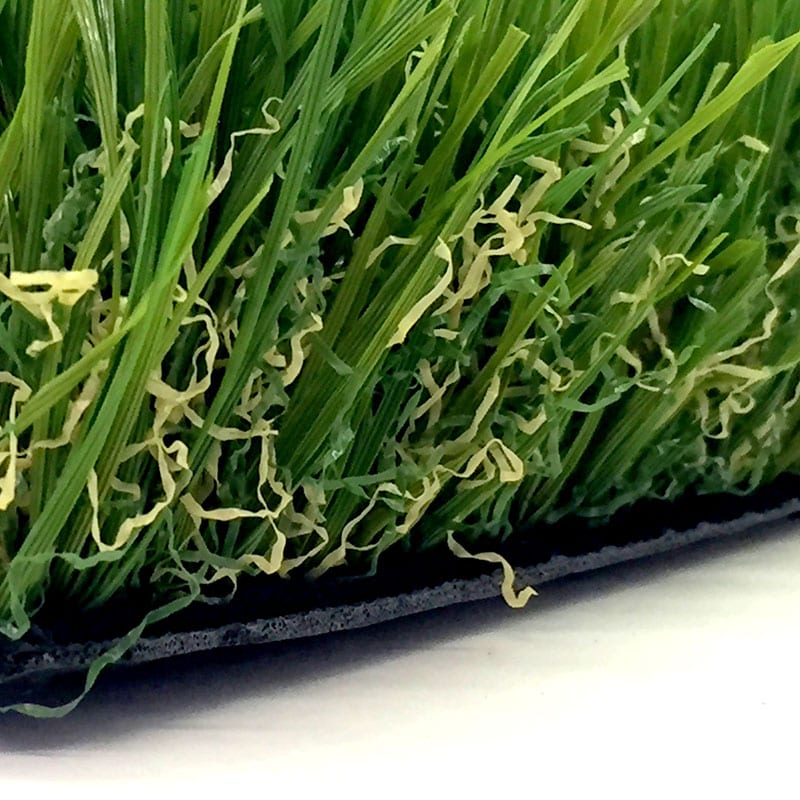
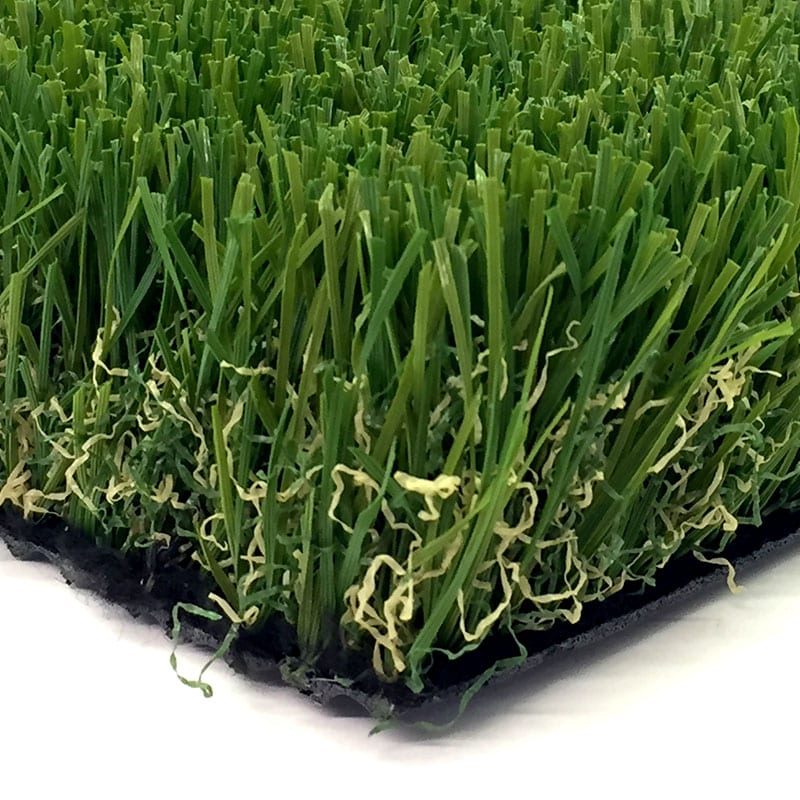
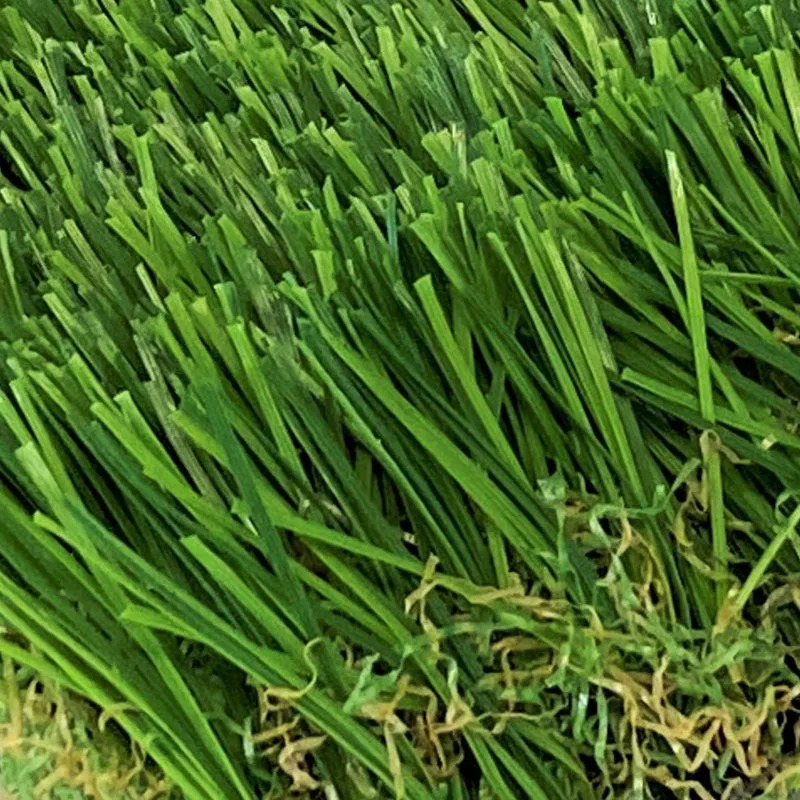
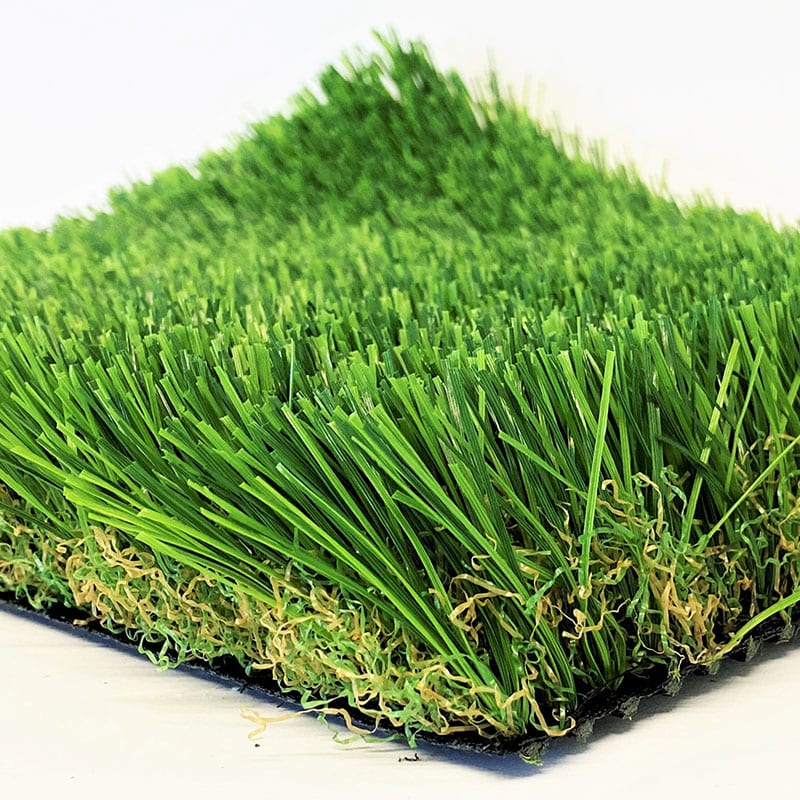
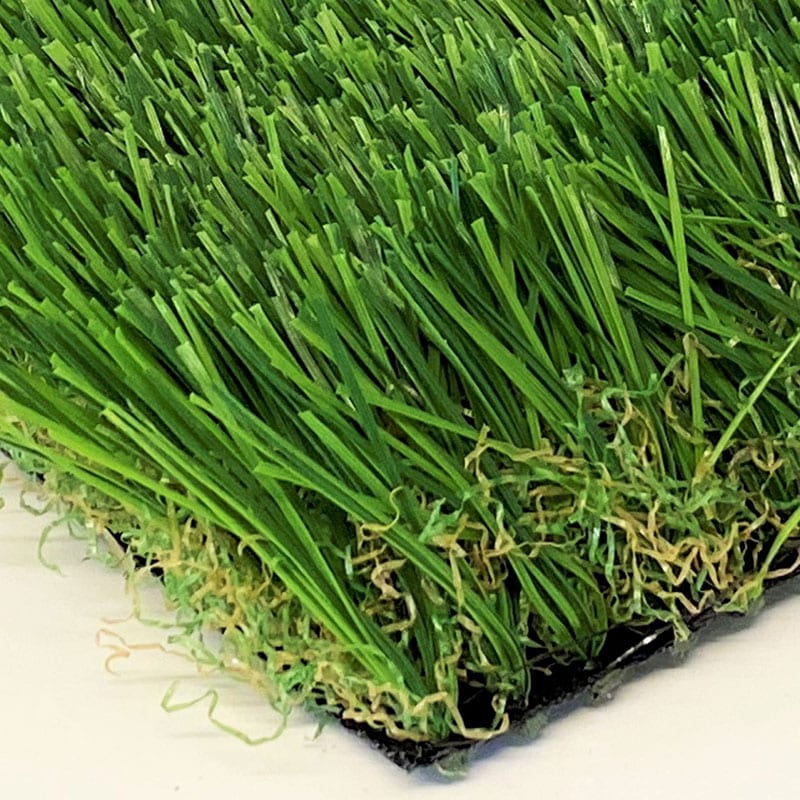
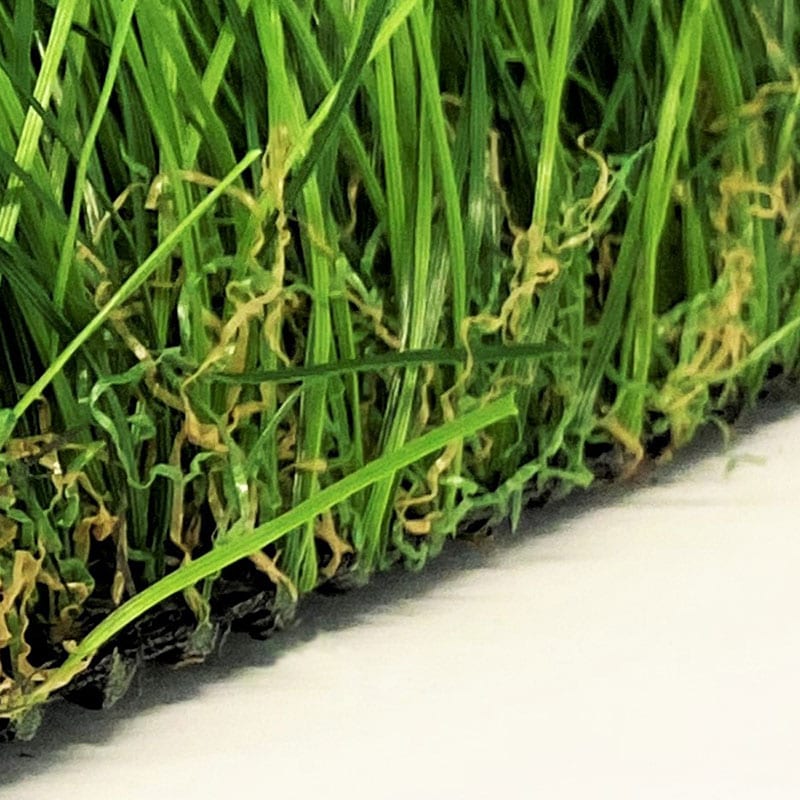
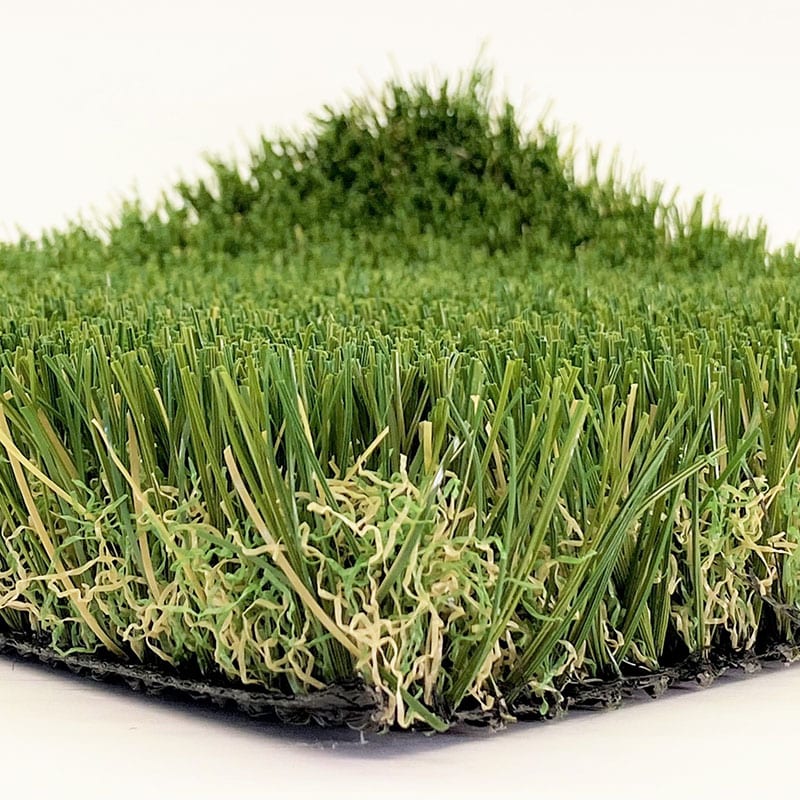
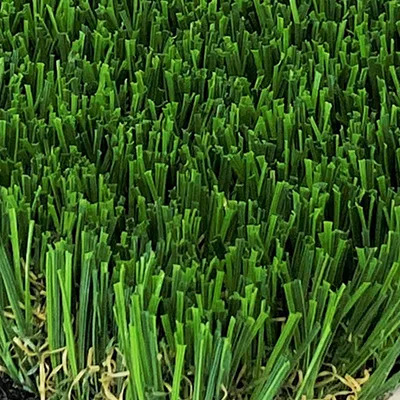
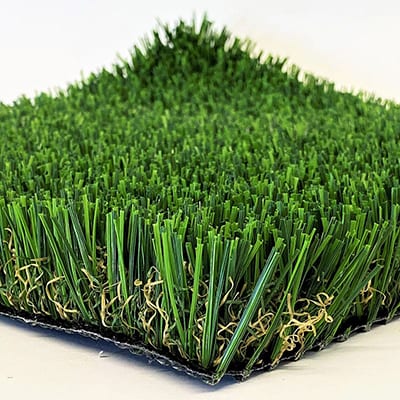
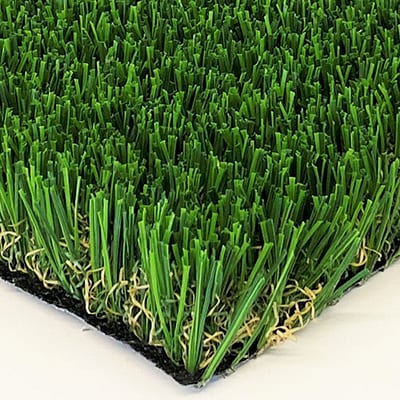
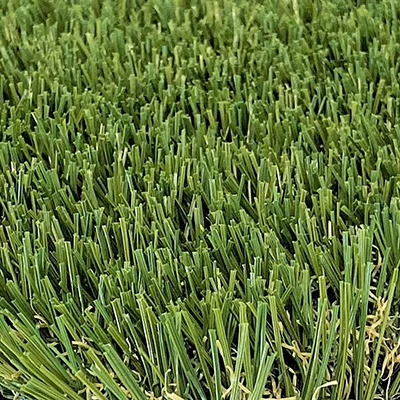
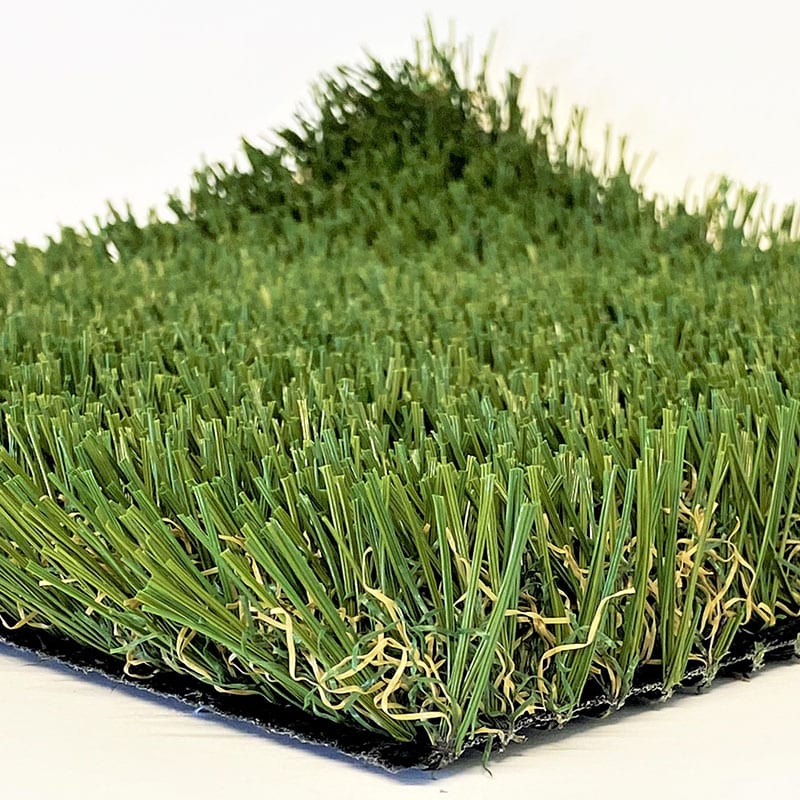
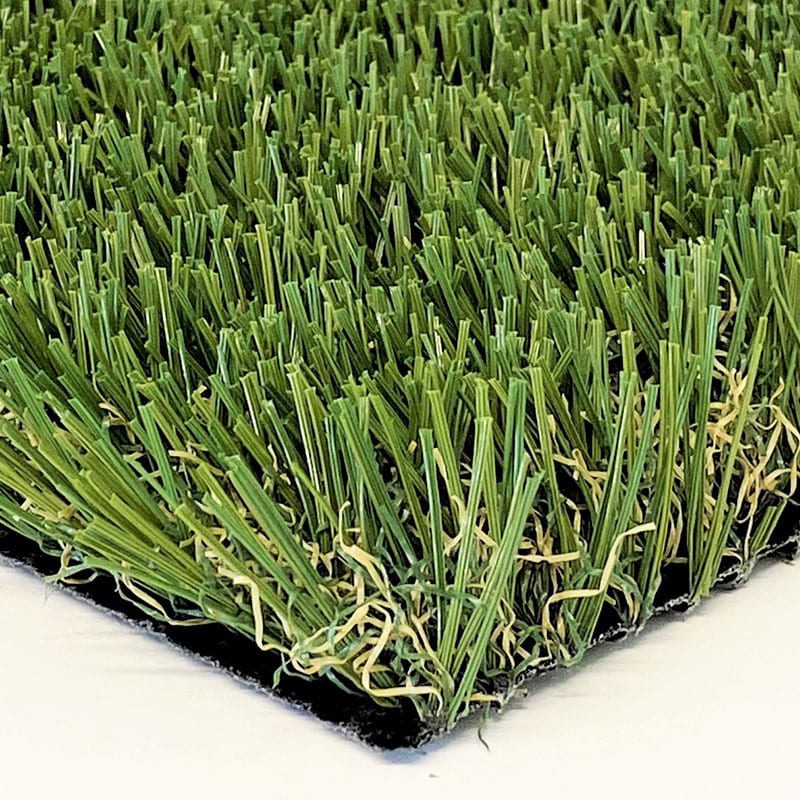
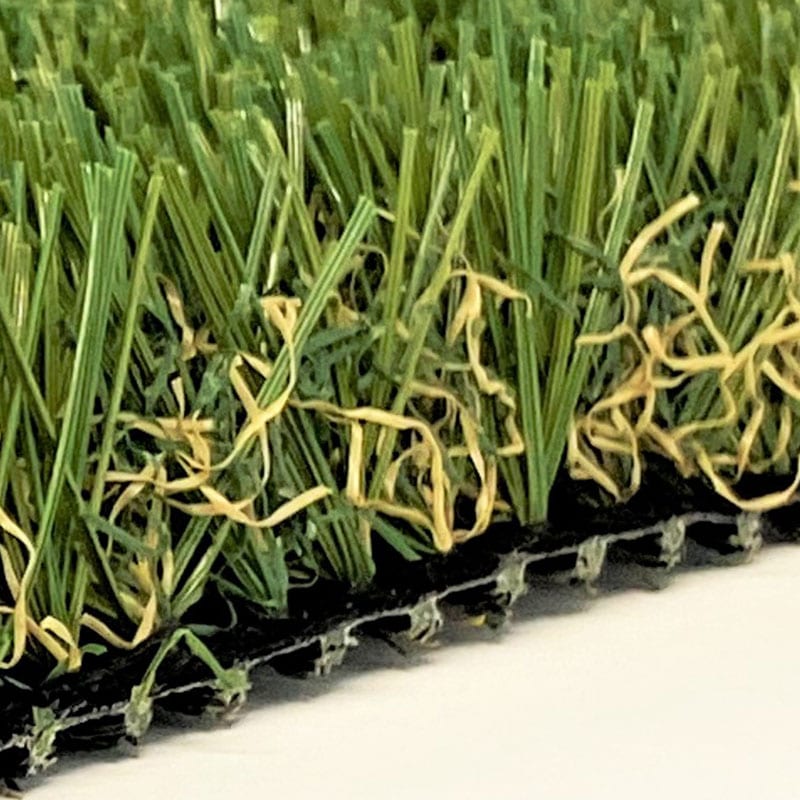
- Artificial turf gives a repeatable roll and holds up to daily use. Expect a faster surface than most lawns; adjust your distance ladder accordingly.
- Portable mats are the most consistent option and work on patios, decks, and small yards. They are ideal for gate and chalk-line drills where face control matters more than pace.
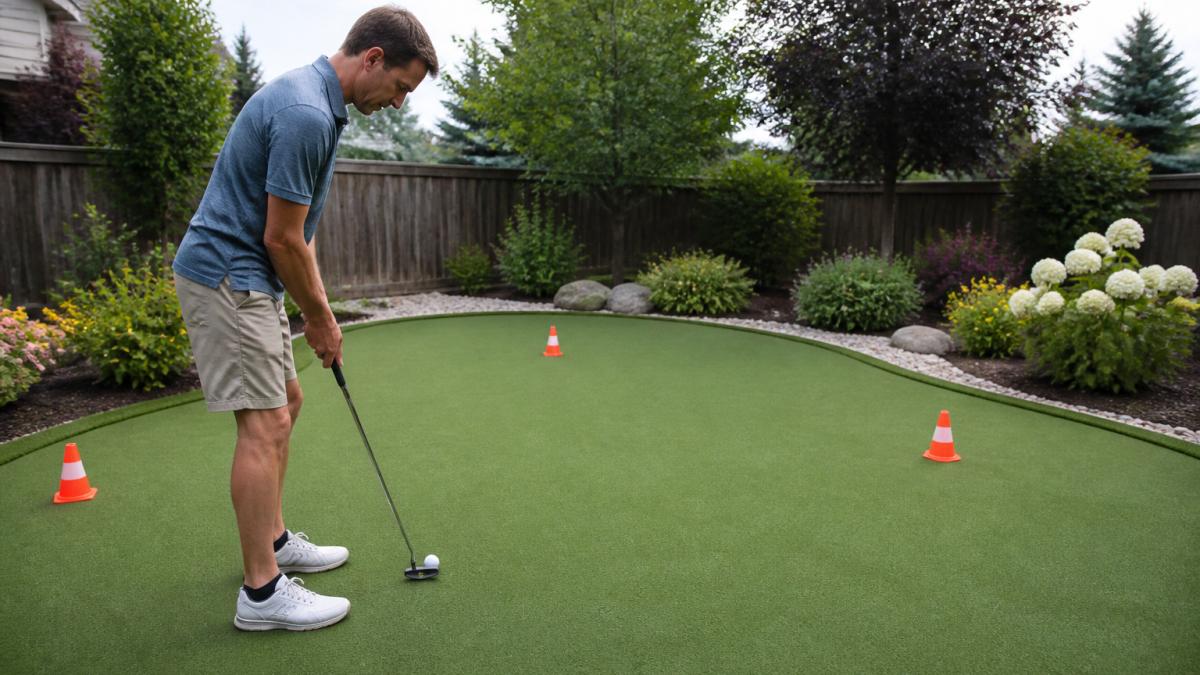
Safety perimeter. Keep the putting area away from windows, walkways, and where children or pets play. A simple backstop or net behind the hole catches balls that run long. If your stroke tends to send balls past the hole, set the backstop at least 3 feet behind the target so a miss still stops before it reaches a fence or window.
Do not practice toward a house, garage door, or parked car. A mis-hit putt can travel farther than expected, and a backstop is cheaper than a repair.
Surface maintenance. If you use artificial turf, brush it before each session to keep the infill even, and keep pet waste off the playing area. A clean, consistent surface is the difference between practice that transfers to the course and practice that builds bad habits.
Putting Accuracy Drills That Train Your Aim and Stroke Path
Two drills are a gate drill for face control and a chalk line drill for stroke path. Both are simple and easy to repeat.
Gate Drill for Face Control
Place two tees just wider than your putter head, a few inches in front of the ball. Your goal is to roll the ball through the gate without touching either tee.
- Start with 10 putts from 3 feet
- Move back to 5 feet once you make 8 out of 10
- Track how many balls pass cleanly through the gate
Chalk Line Drill for Stroke Path
Draw a straight line on the turf with chalk or string. Set the ball on the line and stroke it so the putter head travels along the same line.
The two accuracy drills are compared below so you can see which one to use for face control and which for stroke path.
| Drill | Targets | Starting setup |
|---|---|---|
| Gate drill | Face control | Two tees, 10 putts from 3 feet |
| Chalk line drill | Stroke path | Chalk or string line, ball set on line |
| Gate drill progression | Pass rate | Move to 5 feet at 8 of 10 |
Putting Distance Control Drills for Pace and Lag Practice
Distance control and lag practice are common putting topics.
Try a distance ladder. Place markers at 5, 10, 15, and 20 feet. Putt to each marker in order, and try to stop each ball within a 3-foot circle around the target. Repeat the ladder until you can finish it three times in a row without a miss.
For short putts, use a clock drill. Place balls in a circle about 3 feet from the hole and make each putt before moving to the next position.
Putting Drills for Beginners: Building Fundamentals First
Start with the basics before adding pressure.
- Set up with your eyes over the ball and your feet about shoulder-width apart
- Keep your grip light, with your hands moving together
- Use a short, smooth backstroke and follow-through of similar length
- Practice straight putts from 3 to 5 feet before trying breaking lines
Adapting Drills to Uneven Backyard Surfaces and Turf
Bumps, thin grass, and slight slopes can affect a putt’s roll.
If the surface has a noticeable slope, place your drill lines across the slope rather than uphill or downhill. This lets you practice reading breaks without the slope changing your pace. Pet odor or stains on turf can also distract you, so consider Remove Dog Urine Smell from Turf Infill if that is a concern on your playing area.
If you are practicing on synthetic turf, note that its roll differs from natural grass. See how synthetic greens compare with natural surfaces for a direct side-by-side. Expect a faster, more even surface. Adjust your pace drills to match the speed you actually see on your yard.
A Putting Practice Routine With Scoring and Progress Tracking
Pick one session length, one set of drills, and one scoring method, then repeat it each week.
Here is a simple 20-minute routine:
- Gate drill: 10 putts from 3 feet (score makes out of 10)
- Distance ladder: 5, 10, 15 feet (score balls within 3 feet of target)
- Clock drill: 9 short putts (score makes out of 9)
- Repeat the full routine twice
Log your scores in a notebook or spreadsheet. Compare results each week.
Putting Practice Plan for Your Next Month of Backyard Sessions
The structure below uses a warm-up, a skill focus, a challenge, and a measurable finish.
Session template (20-30 minutes):
- Warm-up (5 min): 10 putts from 3 feet with no target, focusing on a smooth stroke.
- Skill focus (10 min): one drill from the accuracy or distance-control sections.
- Challenge (5-10 min): a scored version of the drill with a pass/fail threshold.
- Finish (2 min): record your score and note one adjustment for next time.
Four-week progression:
- Week 1, Foundation. Gate drill from 3 feet. Beginner target: 6 of 10 through the gate. Advanced target: 9 of 10, then move to 5 feet. Log makes out of 10 each session.
- Week 2, Path and pace. Add the chalk-line drill and a distance ladder at 5, 10, and 15 feet. Beginner target: 5 of 9 balls within a 3-foot circle. Advanced target: 7 of 9, then add a 20-foot rung.
- Week 3, Short-putt consistency. Clock drill with 9 balls at 3 feet. Beginner target: 6 of 9 made. Advanced target: 8 of 9, then repeat from 4 feet. Track total makes across three rounds.
- Week 4, Pressure and scoring. Run the full routine twice per session and compare scores to week 1. Beginner goal: improve gate-drill makes by 2. Advanced goal: improve distance-ladder dispersion by one ball within the circle.
You can record makes and leave distance.
Beginner-to-advanced adjustments.
Tracking. Keep a simple log with date, drill, distance, and score. Review it weekly.
Frequently Asked Questions
What are the best putting drills to practice at home?
Home putting drills include the gate drill for face control, the chalk line drill for stroke path, and a distance ladder for pace. You can track your make rate and focus on one skill at a time.
How can I practice putting in my backyard?
Choose a flat section of lawn or artificial turf and clear the area of obstacles. Keep the space clear during practice.
How long should I practice putting each day?
Fifteen to thirty minutes of focused practice is enough for most golfers, and consistency matters more than length. Split your time between short putts from 3 to 6 feet for accuracy and longer putts from 15 to 30 feet for distance control. Stop when your stroke starts to feel inconsistent, since tired repetition reinforces bad habits.
Can you practice putting on artificial turf?
Yes. Artificial turf can be used as a backyard putting surface.