
Table of Contents
- What Is Quad Color Technology in Synthetic Turf?
- How Fiber Color Impacts Realism and Curb Appeal
- Understanding Artificial Turf Fiber Types: Monofilament, Polymer Engineering, and Blade Texture
- UV Stability, Color Retention, and Long-Term Color Degradation
- How to Choose the Best Artificial Turf for Your Yard
- Artificial Turf Maintenance Guide: Keeping Quad Color Looking New
- Conclusion
- Frequently Asked Questions
Last Updated: October 6, 2026
What Is Quad Color Technology in Synthetic Turf?
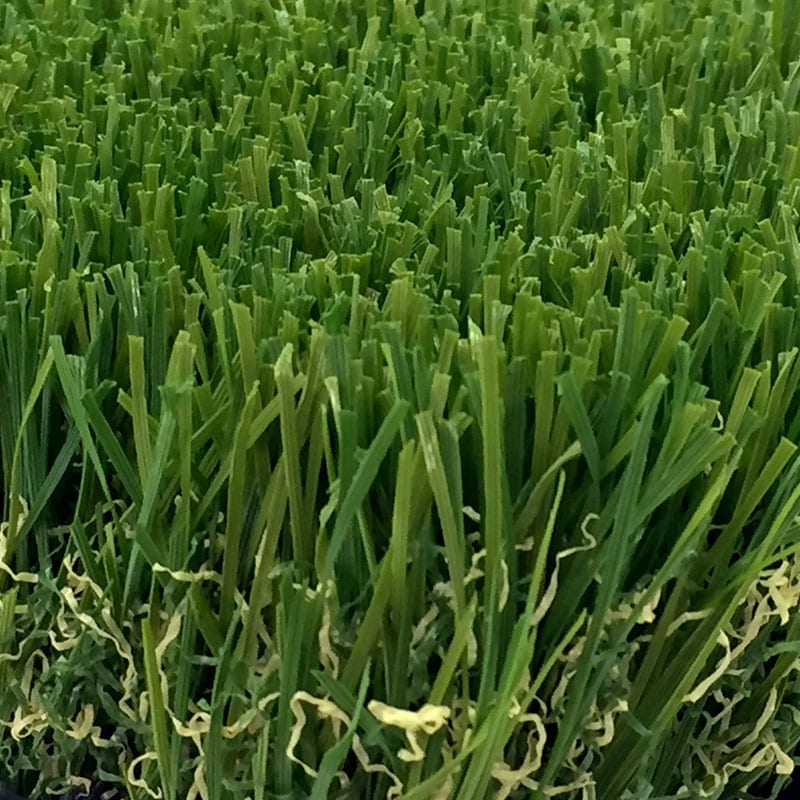
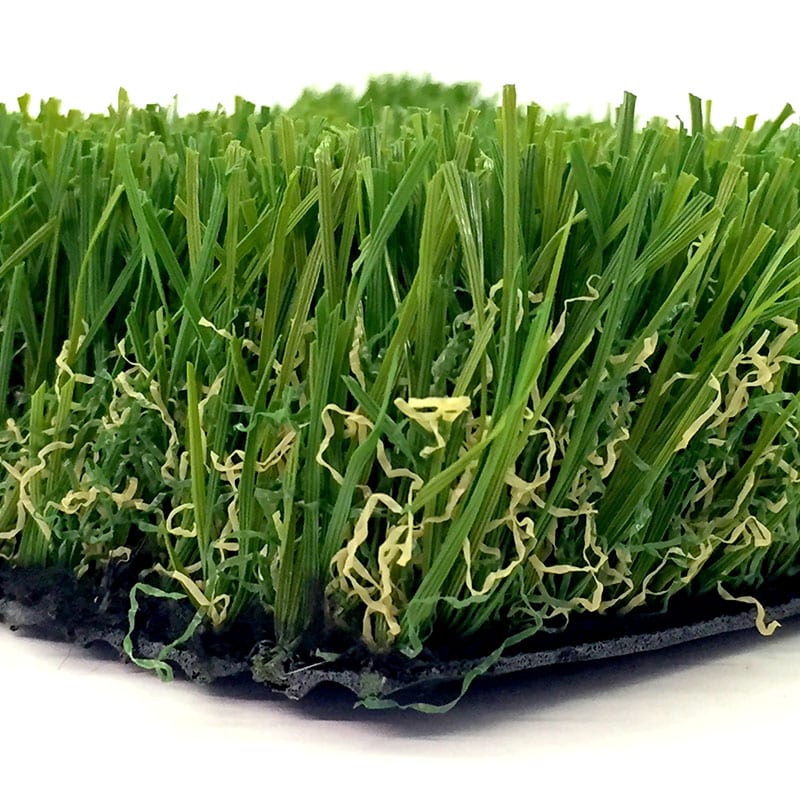
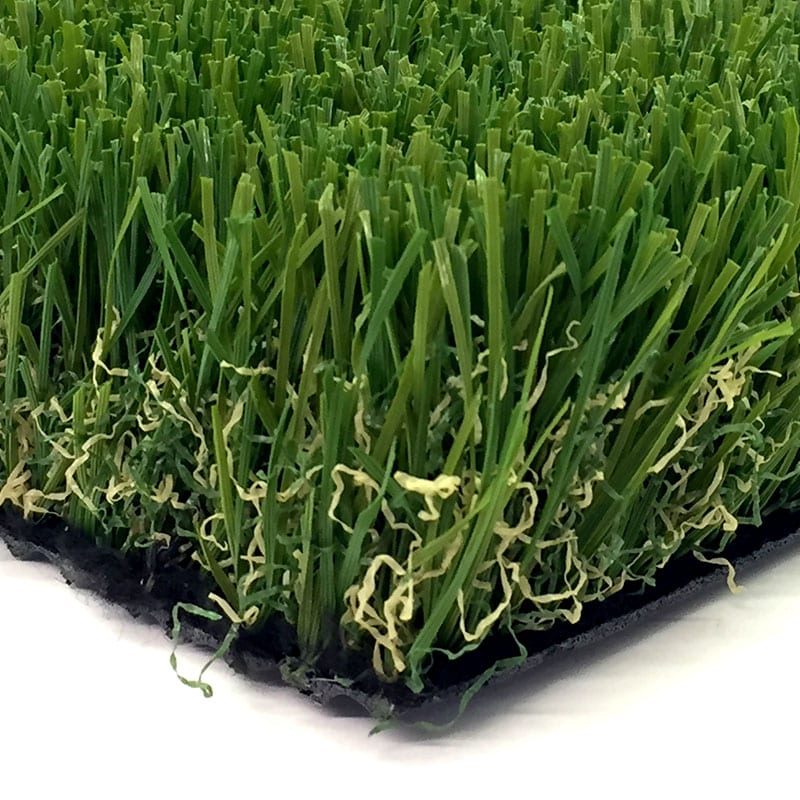
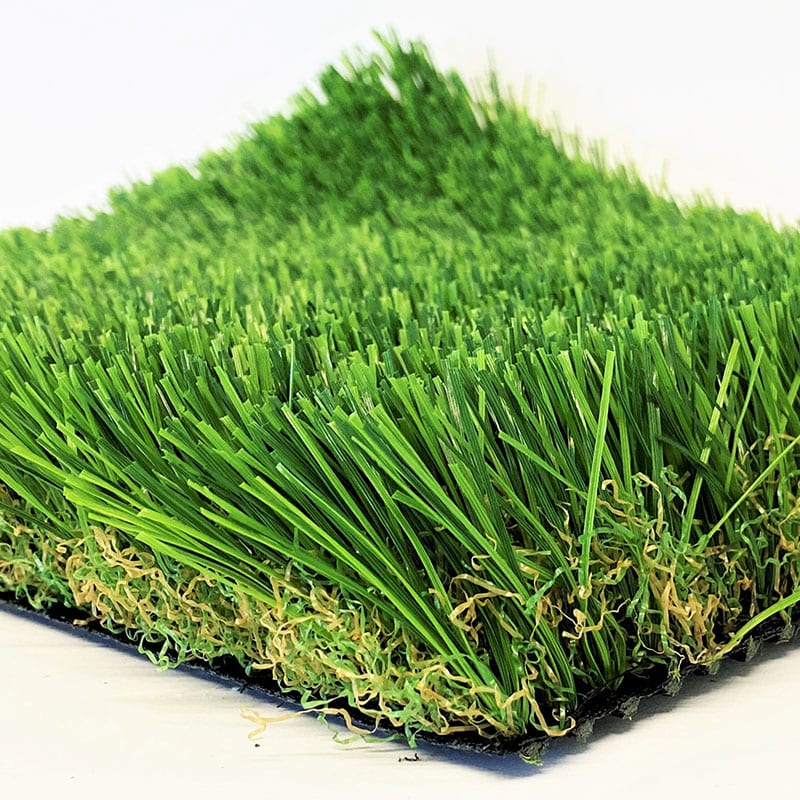
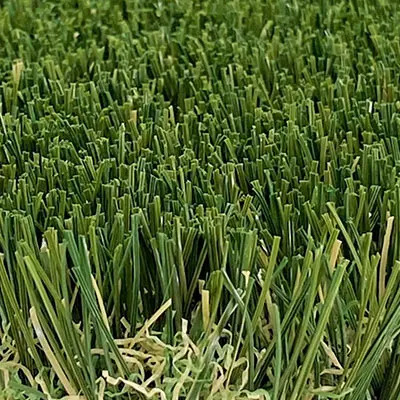
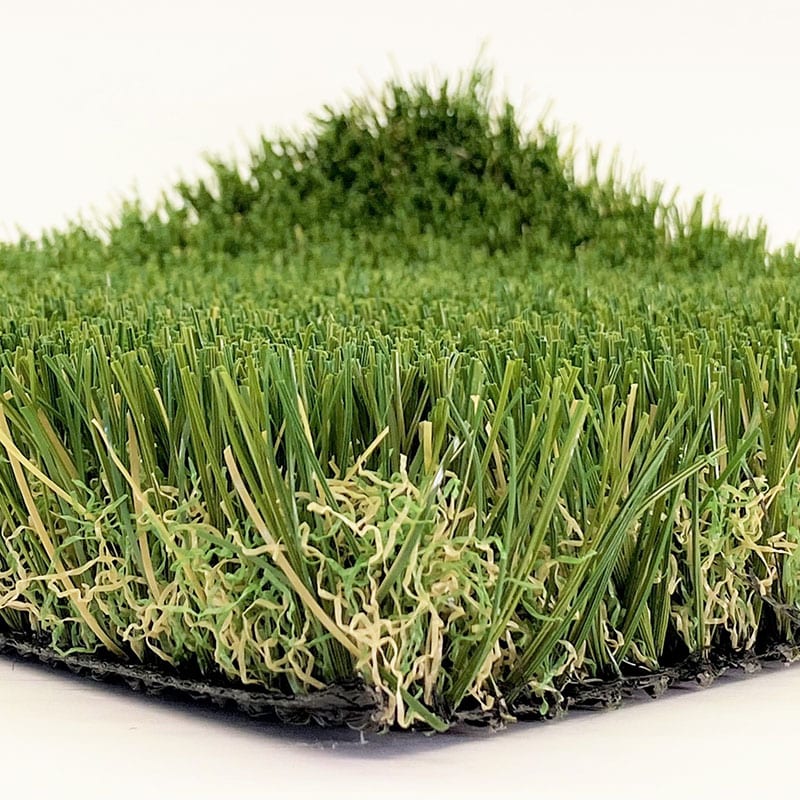
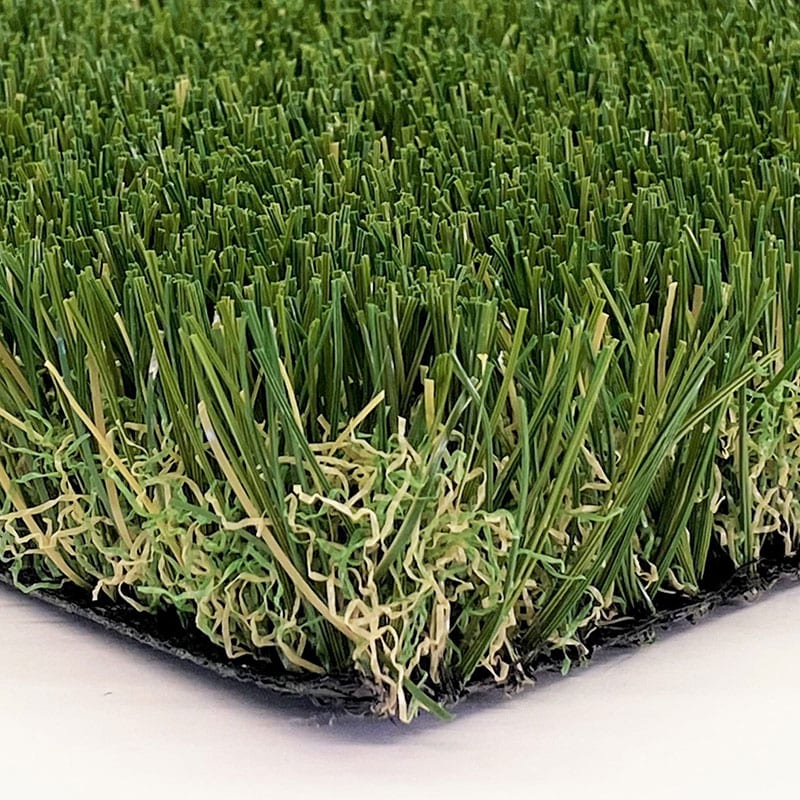
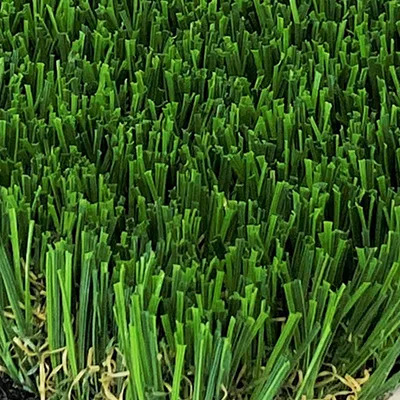
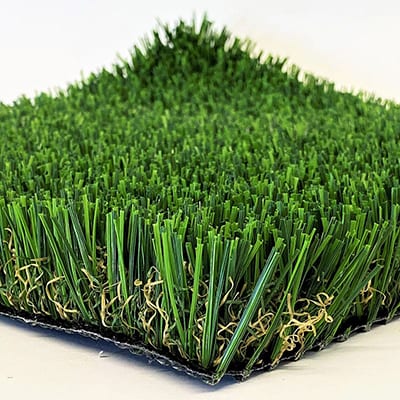
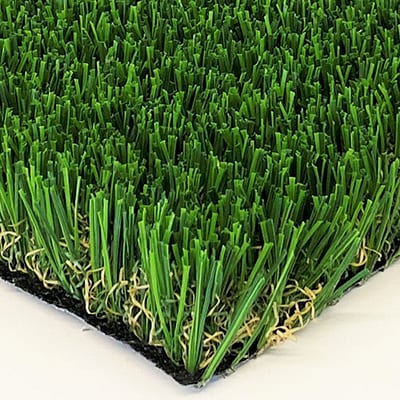
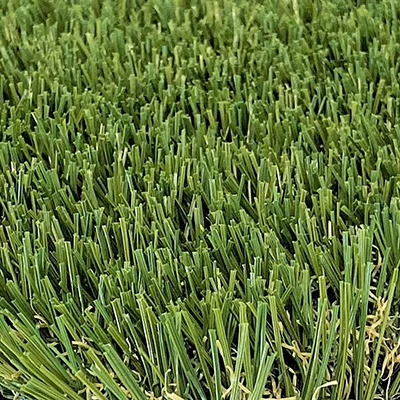
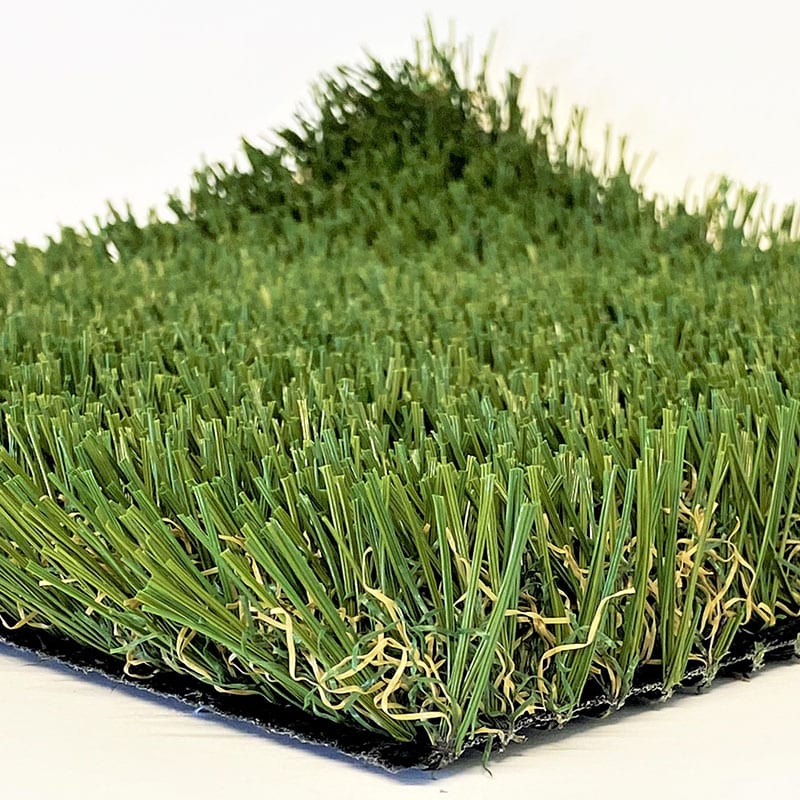
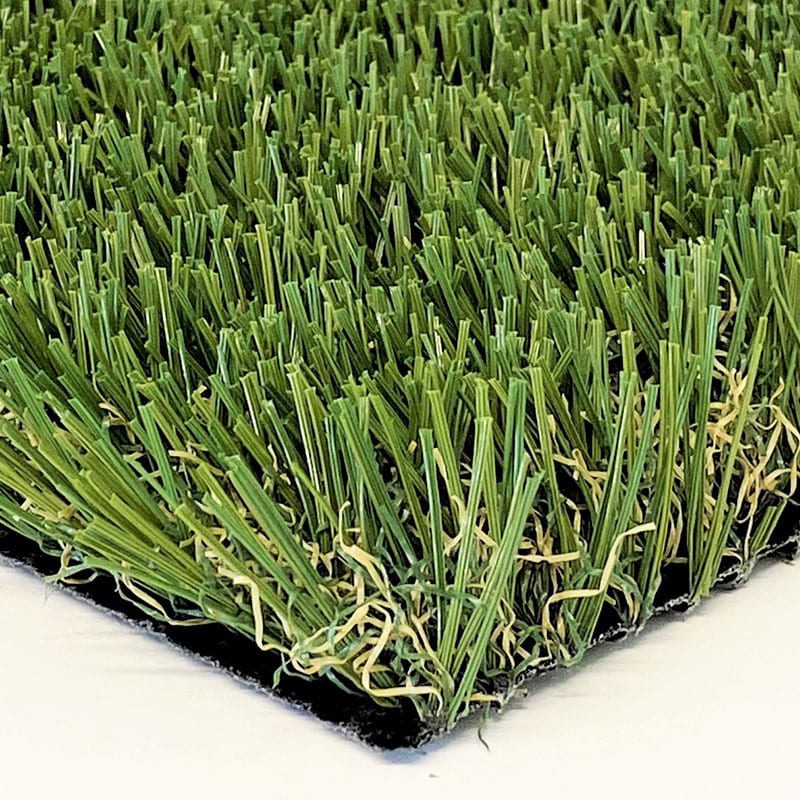
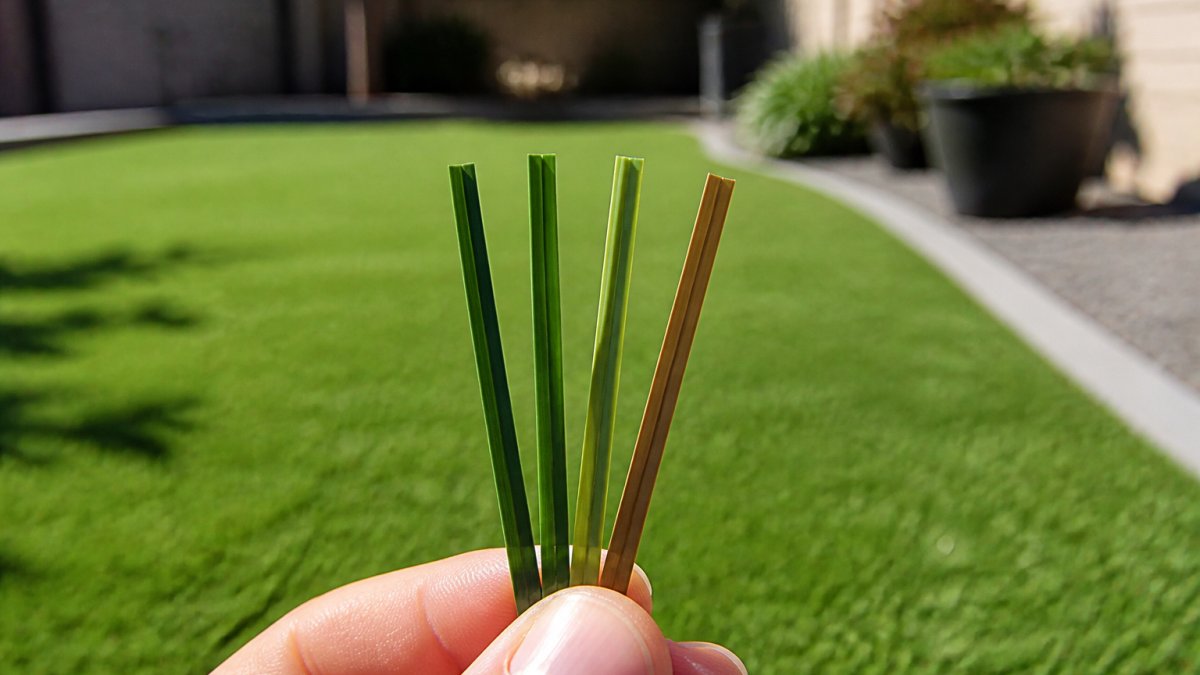
Quad color technology in synthetic turf is a manufacturing method that blends four distinct fiber colors into a single yarn system to replicate the natural variation of real grass. Instead of one flat green, the turf carries multiple shades that shift with the light, which is why it reads as a lawn rather than a carpet. At Southern Artificial Turf, we install turf built on exactly this principle, and it is the single biggest reason homeowners stop worrying about whether their yard looks fake.
Here is the part most guides get wrong: quad color is a description of color, not of structure. A lot of product pages blur that line, and it costs buyers real money when they compare the wrong specs.
Quad Color vs Tri Color vs Mono Color: The Technical Breakdown
The difference comes down to how many pigments run through the fiber blend:
| Fiber System | Color Count | Visual Result | Best For |
|---|---|---|---|
| Mono color | 1 | Flat, uniform green | Budget utility areas |
| Tri color | 3 | Moderate shade variation | Small yards, side strips |
| Quad color | 4 | Deep, layered realism | Front yards, play areas |
Mono color turf uses a single pigment across every blade. It photographs well and looks thin in person, especially under direct sun. Tri color adds two extra shades, which helps, but the pattern still repeats visibly across a large lawn. Quad color spreads four tones through the blend so the repeat is far harder to spot.
That distinction matters more than most buyers expect. A yard is viewed from standing height at an angle, not from directly above, and that angle exposes repetition fast.
How Fiber Color Impacts Realism and Curb Appeal
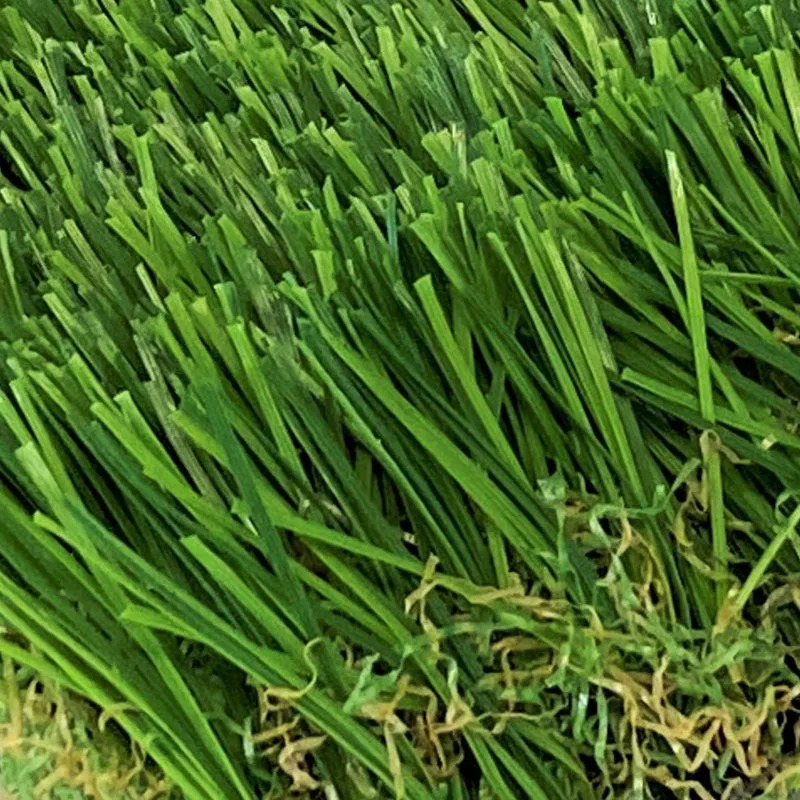
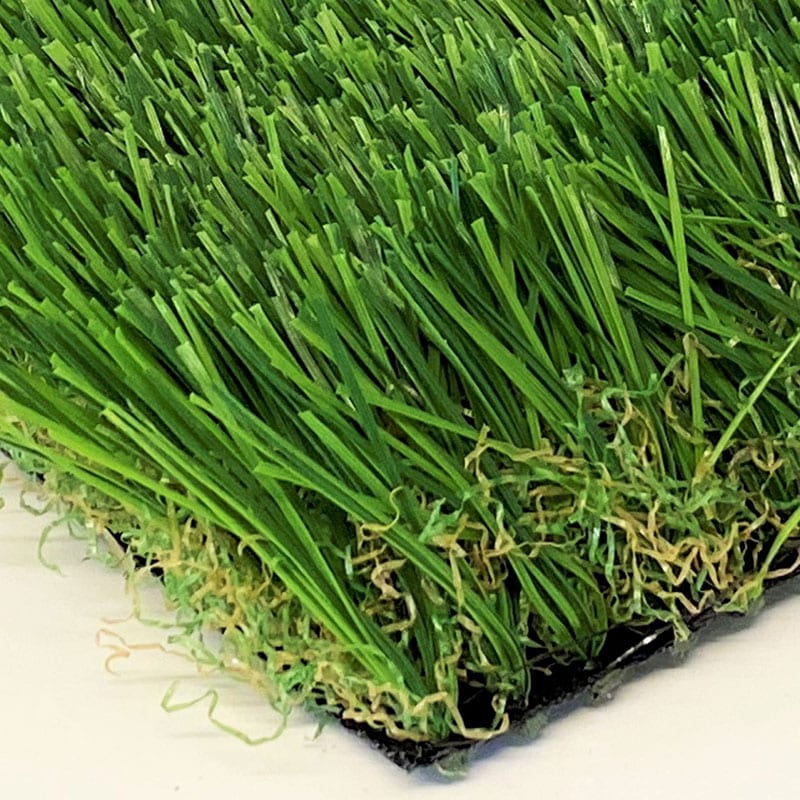
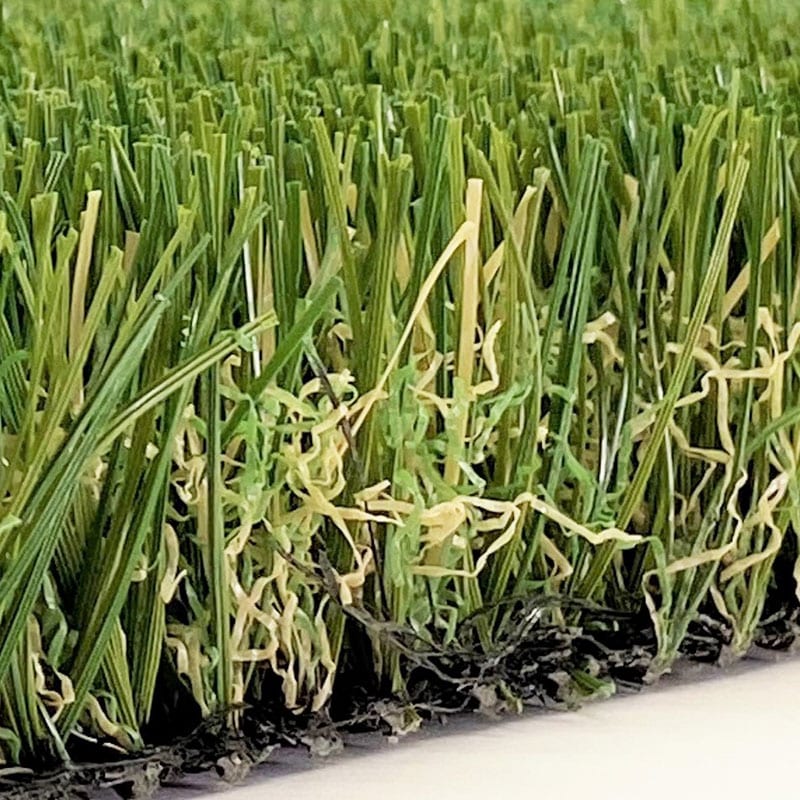
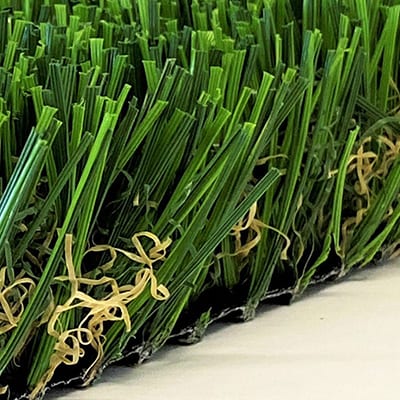
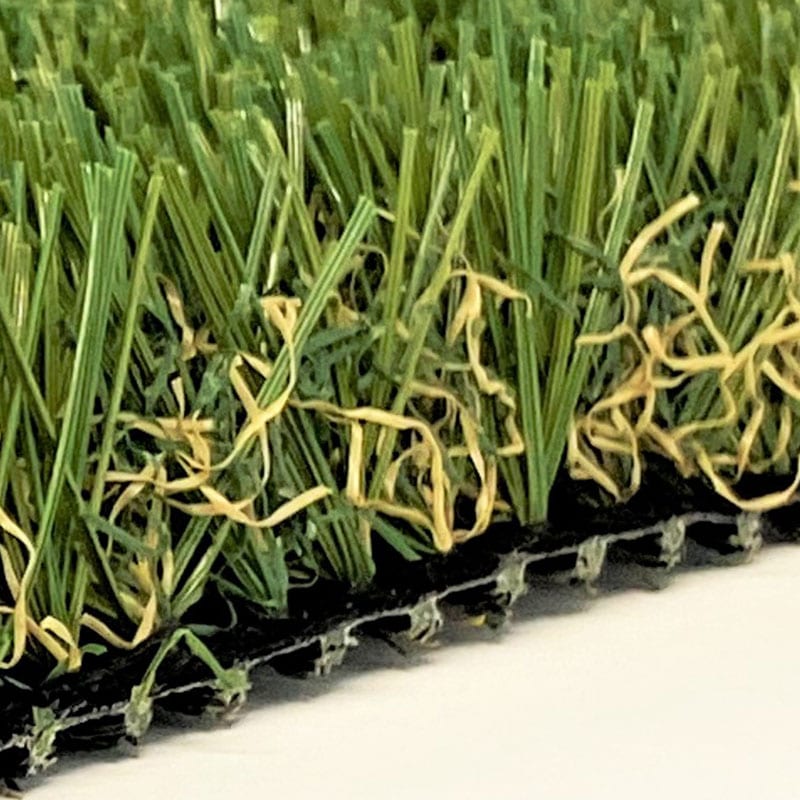
Realism in synthetic turf comes from two things working together: shade variation and light diffusion. A natural lawn is never one color. It has brighter tips, darker undergrowth, and a thatch layer of older material near the soil line. Quad color fiber mimics that range.
Curb appeal is where the payoff shows up. A front lawn is the first thing anyone sees, and a flat green surface signals “artificial” from the street. Four-tone fiber breaks up that flatness, so the yard holds up under morning light, harsh midday sun, and evening shade.
What most guides miss is that color alone will not carry the look. Shade variation without a proper thatch layer still reads as plastic. The two have to be specified together.
Understanding Artificial Turf Fiber Types: Monofilament, Polymer Engineering, and Blade Texture
Artificial turf fiber types fall into three broad categories, and each one changes how a quad-color blend actually performs. The fiber shape determines how light hits the pigment, so the color system and the fiber geometry have to be specified together.
Monofilament fibers are extruded as individual strands, each with its own shape profile, often a spine or a W-cross-section that helps the blade stay upright. Because every strand is separate, a quad-color monofilament yarn can carry four distinct pigments across adjacent blades rather than mixing them into one extruded tape. That separation is what produces the layered, non-repeating look.
Fibrillated fibers are made from a flat tape that splits into thinner strands after extrusion. They are durable and cost less, but the pigment is distributed through the tape before it splits, so a four-color fibrillated product tends to read as a single mottled tone rather than four distinguishable shades. Fibrillated works well in utility zones and low-visibility areas where color realism is not the priority.
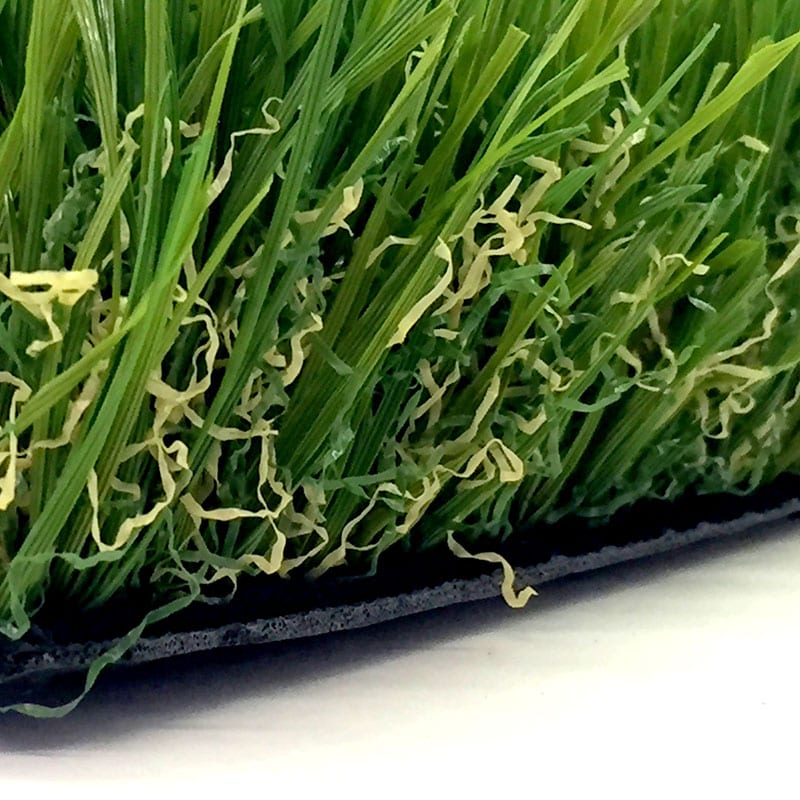
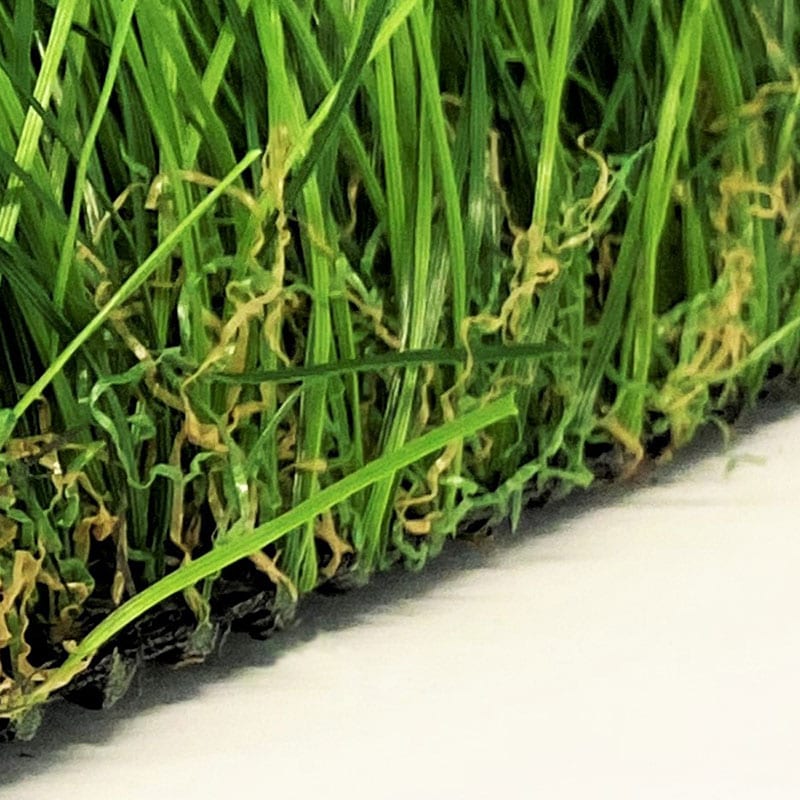
Texturized fibers are crimped to add bulk and softness. They are usually deployed in the thatch layer rather than the face fiber, and a quad-color thatch, typically mixing tan, brown, and two muted greens, is what keeps the base of the lawn from looking like a solid green wall.
Polymer engineering sits underneath all three. The base resin and the masterbatch, the concentrated pigment pellet mixed into the polymer before extrusion, determine UV stability, color retention, and how the fiber behaves under heat. A quad-color system only holds its four shades if each pigment in the masterbatch has a similar lightfastness rating.
When you compare samples, ask whether the four colors are co-extruded in a single strand or blended across separate strands. Co-extruded quad color gives you four shades in every blade; strand-blended quad color gives you four shades across the lawn. Both are marketed as “quad color,” and they look different up close.
UV Stability, Color Retention, and Long-Term Color Degradation
UV stability is the measure of how well a fiber resists sunlight damage over time. Sun exposure drives a photochemical reaction that breaks polymer chains, and when that happens the pigment fades and the fiber becomes brittle. Good UV stabilization slows that reaction, but the mechanism matters if you want to predict how a quad-color lawn will look in year seven rather than year one.
There are two layers of protection in a quality fiber. The first is the pigment itself. Inorganic pigments, iron oxide greens and tans, for example, are inherently more lightfast than many organic pigments, which is why premium turf tends to lean on them for the shades that have to survive the longest.
That second failure mode is unique to multi-color turf. In a mono-color lawn, fading is uniform, the whole surface shifts toward a washed-out yellow-green together, which is ugly but consistent. In a quad-color lawn, each of the four pigments has its own lightfastness curve.
A realistic aging pattern looks like this. In years one through three, a well-engineered quad-color lawn shows minimal visible change; the stabilizers are doing their job and the pigments are holding their relative positions. In years four through six, the lighter shades may shift slightly warmer, which most homeowners read as natural seasonal variation rather than fading.
Heat accelerates all of this. In hot, humid climates, lower-grade fibers soften and lose resilience faster, and the combination of heat and UV drives pigment degradation harder than either factor alone. Turf engineered for heat resistance keeps its blade texture and color consistency through repeated summers, but only if the stabilizer package was specified for that climate in the first place.
The most expensive mistake in synthetic turf is buying on color alone. A turf sample that looks perfect in a showroom can fade unevenly within a few seasons if the UV package is weak or if the four pigments have mismatched lightfastness. Always ask what stabilizers are in the fiber and whether the pigments were selected as a matched set, not just how many colors it has.
ASTM standard test methods for accelerated weathering of plastic materials
Quad color turf ages differently than mono color turf. Mono color fades uniformly; quad color can lose its variation if the four pigments degrade at different rates. The stabilizer package and pigment matching matter more than the color count.
How to Choose the Best Artificial Turf for Your Yard
Choosing the best artificial turf for your yard comes down to matching fiber specs to how the space is actually used, not to the sample that looks best under showroom lighting.
Work through these in order:
- Define the use case. A front lawn needs realism and curb appeal. A dog run needs drainage and wear resistance. A play area needs soft, non-abrasive fiber.
- Check the fiber type. Monofilament for visible areas, fibrillated for utility zones.
- Confirm the color system. Quad color for anywhere the lawn is seen up close or from the street.
- Ask about UV stabilization. This determines how the turf looks in year five, not year one.
- Verify drainage. Standing water kills turf and creates odor, especially with pets.
- Inspect the backing. A turf backing that does not drain well will undermine everything above it.
- Get the installation spec in writing. Installation precision affects how the seams and edges hold up.
Ask to see a weathered sample, not a new one. Any installer can show you fresh turf that looks great. A sample that has sat outside for a season tells you far more about color retention than any spec sheet.
Southern Artificial Turf builds its turf around 100% non-abrasive polyethylene fiber and an 8-year warranty, with drainage rated at 30 inches per hour. For households with dogs or kids, that combination of soft fiber and fast drainage is the difference between a lawn that works and one that becomes a mud pit.
Artificial Turf Maintenance Guide: Keeping Quad Color Looking New
An artificial turf maintenance guide is shorter than most people expect, but skipping the few steps that matter is what dulls a lawn over time.
- Rinse the surface monthly. A quick hose-down clears dust and pollen that settle into the fiber and mute the color.
- Brush high-traffic areas. A stiff broom lifts matted blades and restores the upright texture.
- Remove debris promptly. Leaves and organic matter left on the surface can stain and trap moisture.
- Manage pet waste. Rinse the area after cleanup to keep the drainage layer clear.
- Check edges and seams yearly. Small lifts become large problems if ignored.
That is the whole list. No watering, no mowing, no fertilizing, and no weed control. The maintenance that remains is about protecting appearance, not keeping the lawn alive.
Quad color turf holds its look because the color runs through the fiber, not on top of it. Maintenance is about keeping the surface clean and the blades upright, not about restoring color.
Conclusion
The challenge with any synthetic lawn is that it has to survive a decade of sun, traffic, and weather while still looking like grass. Quad color technology solves the visual half of that problem by building variation into the fiber itself, but only when it is paired with real UV stabilization and a backing that drains.
Southern Artificial Turf installs turf engineered with quad-color technology, 100% non-abrasive polyethylene fiber, and 30 inches per hour drainage capacity, backed by an 8-year warranty. If you want a yard that stays green and clean without the mowing, watering, or mud, get a quote from Southern Artificial Turf and see what your space could look like.
Frequently Asked Questions
What is the difference between mono-color and multi-color synthetic turf?
Mono-color turf uses a single dye lot for every blade, which creates a flat, uniform look that can read as plastic from a distance. Multi-color and quad color systems blend three or four distinct shades across the same field. The variation mimics how natural grass grows in patches, with lighter tips, darker base blades, and brown thatch tones mixed in. That shade variation is what makes quad color turf look realistic rather than painted.
Why does synthetic grass use multiple colors?
Multiple colors replicate the natural shading found in real lawns, where sunlight, soil, and growth cycles create subtle differences blade to blade. A quad color blend also hides footprints, pet traffic, and wear patterns better than a single shade because the eye reads the variation as texture rather than damage. UV stability and pigment technology keep those shades from fading at different rates, so the blend stays consistent over years of sun exposure.
How does fiber technology affect the durability of artificial grass?
Fiber resilience depends on the polymer blend, blade shape, and backing system working together. Monofilament fibers with engineered cross-sections resist matting better than older slit-film designs, and a well-built turf backing holds those blades upright through foot traffic and pet use. Quad color pigments are added during the masterbatch stage, so the color runs through the full blade rather than sitting on the surface. That construction supports color retention and field-ready performance.
What color is best for artificial turf to look natural?
A blend of two to four greens with a brown or tan thatch tone reads most like real grass. Pure bright green tends to look artificial under direct sun, while olive and field-green shades with lighter blade tips match the way natural lawns catch light. Quad color systems combine these tones in one fiber, and the thatch layer underneath adds visual depth at the base. The right mix depends on your region’s grass type and sun exposure.