
Last Updated: October 24, 2026
Quick Summary
An artificial grass warranty is a manufacturer’s promise to repair or replace turf if specific defects occur within a set timeframe, typically covering manufacturing defects, workmanship issues, and UV resistance failures. However, artificial grass warranty coverage excludes pet damage, improper maintenance, heat damage, installation errors by homeowners, vandalism, and extreme weather.
- Most artificial turf warranties last between 8 and 15 years, with Southern Artificial Turf offering an 8-year warranty on premium installations.
- Pet damage, heat damage from grills or cigarettes, and improper maintenance are the most expensive and common warranty exclusions.
- Filing a warranty claim requires documentation including photos, proof of purchase, and installation records, with the process typically taking 60 to 90 days from start to finish.
- Installation warranty and product warranty are separate; installation coverage protects against improper base preparation and seam failures, while product coverage protects against defects in the turf itself.
Table of Contents
- What an Artificial Grass Warranty Actually Covers
- How Long Artificial Turf Warranty Length Typically Lasts
- Manufacturing Defects and Workmanship Protection
- UV Degradation, Fading, and Fiber Brittleness Coverage
- Artificial Grass Warranty Exclusions You Need to Know
- How to File an Artificial Turf Warranty Claim Process
- Artificial Glass Installation Warranty and Labor Coverage
- Getting Your Warranty Claim Approved
- Frequently Asked Questions
What an Artificial Grass Warranty Actually Covers
An artificial grass warranty is a manufacturer’s promise to repair or replace your turf if specific defects occur within a set timeframe. But here’s what most homeowners miss: the warranty covers only certain problems under certain conditions.
At Southern Artificial Turf, we work with homeowners daily who think their warranty covers everything. It doesn’t. Understanding what IS covered protects your investment and prevents costly surprises down the road.
Most warranties cover three main categories: Learn more about how to choose artificial grass for your backyard to evaluate warranty coverage as part of your selection criteria.
- Manufacturing defects in the turf fibers, backing, or seams
- Workmanship issues from installation (if the installer is covered)
- UV resistance failures within the warranty period
What’s NOT covered is equally important. Pet damage, improper maintenance, extreme heat damage, and installation errors by the homeowner typically fall outside coverage.
Think of it this way: a warranty protects you from factory mistakes and normal use problems. It doesn’t protect you from misuse, neglect, or acts beyond the manufacturer’s control.
How Long Artificial Turf Warranty Length Typically Lasts
Most artificial turf warranties run between 8 and 15 years, depending on the product and manufacturer. Southern Artificial Turf offers an 8-year warranty on our premium installations.
The warranty length you get depends on several factors:
- Product quality tier, premium turf typically carries longer warranties
- Installation quality, professional installation may extend coverage
- Maintenance, proper care can help you stay within warranty terms
- Climate and site conditions, extreme heat or heavy use may shorten effective coverage
Here’s the practical reality: warranty length doesn’t always equal product lifespan. Many artificial grass installations last 15-20 years or longer, well beyond the warranty period. The warranty simply defines how long the manufacturer will stand behind the product if problems emerge.
EPA guidance on synthetic turf materials provides standards for durability, but the warranty period is a separate business decision each manufacturer makes. Longer warranties cost more upfront because the manufacturer assumes more risk.
When comparing products, don’t just look at warranty length. Ask what’s actually covered during that time. A 15-year warranty that excludes common problems is less valuable than an 8-year warranty that covers what typically goes wrong.
Manufacturing Defects and Workmanship Protection
Manufacturing defects are the core of most artificial grass warranties.
Workmanship coverage is different. It protects against installation errors. If the installer failed to prepare the base properly, didn’t secure seams correctly, or left gaps, workmanship coverage should address it.
Here’s where it gets tricky: many warranties require you to prove the defect existed at installation, not that it developed later. This means you need documentation. Take photos of your installation.
Some warranties also specify that the installer must be authorized or certified. If you hire an unlicensed installer to save money, you may void workmanship coverage.
Consumer Product Safety Commission standards for outdoor materials establish baseline durability expectations, but individual manufacturers set their own workmanship standards above that baseline. Southern Artificial Turf’s installations include workmanship warranty coverage.
UV Degradation, Fading, and Fiber Brittleness Coverage
UV resistance is one of the most commonly misunderstood warranty elements. Review turf information for residential, commercial, athletic, and playground applications to understand what specific turf types your warranty covers.
Notice the phrase “under normal conditions.” This is key. Extreme sun exposure, reflected heat from nearby surfaces, or unusual climate stress can accelerate fading beyond what the warranty covers.
Fiber brittleness is related but distinct. As UV exposure increases, polyethylene fibers can become brittle and break more easily. A good warranty covers premature brittleness, fibers failing much sooner than expected.
Here’s what matters in practice: Southern Artificial Turf uses quad-color technology and UV-resilient fibers designed to resist fading and brittleness. Our 8-year warranty reflects confidence in that durability.
The warranty typically does NOT cover:
- Fading from reflected sunlight off windows, metal, or light-colored surfaces
- Color change from environmental factors like pollen or algae (cosmetic, not structural)
- Brittleness from intentional or accidental exposure to extreme heat sources
If your turf is installed in a spot with intense afternoon sun and nearby heat-reflective surfaces, expect faster fading. That’s not a defect, it’s a site condition. The warranty won’t cover it.
Artificial Grass Warranty Exclusions You Need to Know
This is where the rubber meets the road. Warranty exclusions are the specific situations where the manufacturer won’t cover repairs or replacement, no matter what the warranty says.
Common exclusions include:
- Pet damage, urine staining, digging, or excessive wear from claws
- Abuse or misuse, intentional damage, dragging heavy objects, or using the turf for purposes it wasn’t designed for
- Improper maintenance, failing to clean debris, allowing mold or algae to develop, or using harsh chemicals
- Installation errors by the homeowner, if you installed it yourself and something goes wrong, the warranty may not apply
- Heat damage from external sources, cigarettes, grills, reflected sunlight causing melting, or chemicals that damage fibers
- Vandalism, intentional damage by third parties
- Extreme weather, some warranties exclude damage from severe storms, flooding, or unusual weather events
- Settling or erosion of the base, if the ground underneath shifts, the warranty often doesn’t cover it
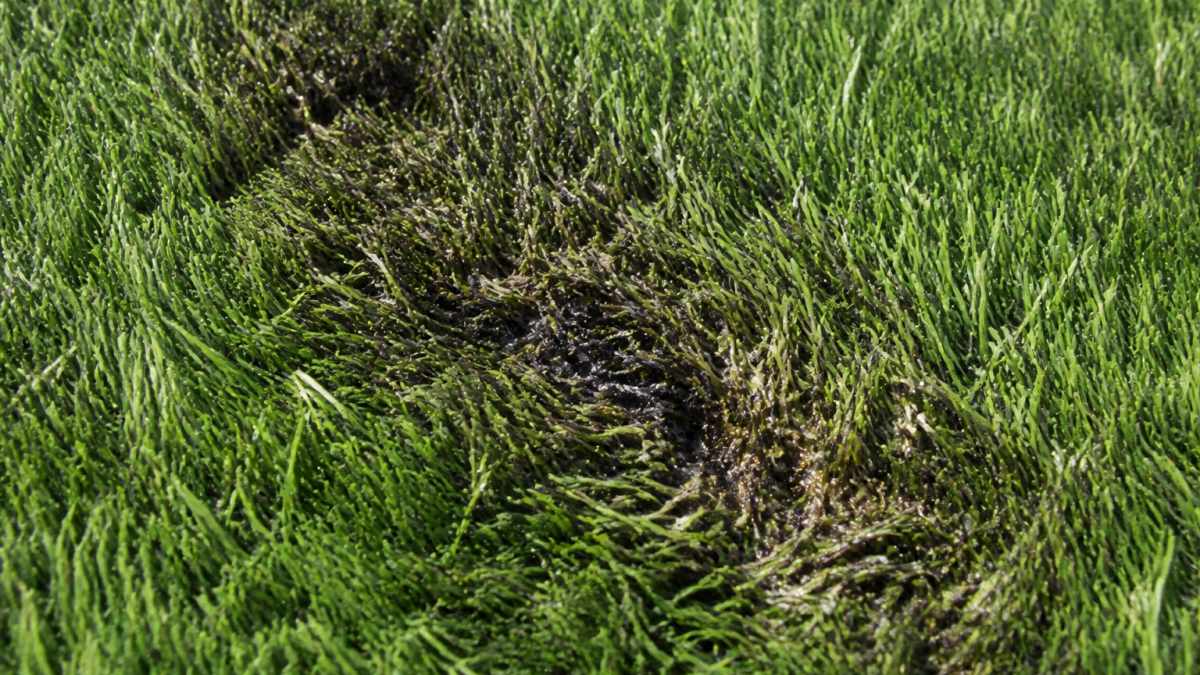
The most expensive exclusions are pet damage and heat damage. Proper maintenance prevents many warranty exclusions, so follow cleaning guidelines to protect your coverage. If your dog urinates repeatedly in one spot, the warranty won’t cover the stain or degradation.
Before you buy, read the exclusions carefully. Ask the installer to walk you through them. If you have dogs, pets, or plan to use the turf in ways that might cause damage, understand exactly what’s excluded.
Most artificial grass warranties exclude specific situations where the manufacturer won’t cover repairs or replacement.
| Exclusion Type | What’s Not Covered | Why It Matters |
|---|---|---|
| Pet damage | Urine staining, digging, claw wear | Most expensive exclusion category |
| Heat damage | Grills, cigarettes, reflected sunlight melting | External heat sources void coverage |
| Improper maintenance | Debris buildup, mold, algae, harsh chemicals | Homeowner neglect isn’t covered |
| Homeowner installation errors | DIY installation mistakes | Warranty may not apply if self-installed |
| Abuse or misuse | Intentional damage, dragging heavy objects | Damage from improper use excluded |
| Vandalism | Intentional damage by third parties | Manufacturer won’t cover criminal damage |
| Extreme weather | Severe storms, flooding, unusual weather | Acts beyond manufacturer control |
| Base settling or erosion | Ground shifting underneath turf | Structural ground problems excluded |
How to File an Artificial Turf Warranty Claim Process
Filing a warranty claim requires documentation and follows specific steps. Start by gathering evidence: photos of the problem, your proof of purchase, installation records, and documentation of your maintenance routine.
Contact the manufacturer or installer with your claim. Most require written notice within a specific timeframe, often 30 days from when you discover the problem. Provide clear photos showing the defect and its location.
The manufacturer or their representative will typically inspect the turf. They may ask questions about installation, maintenance, and how you’ve used the space. Be honest.
The claim process usually follows this timeline:
- Days 1-3: Submit written claim with documentation
- Days 4-14: Manufacturer reviews and may request additional photos or information
- Days 15-30: Inspection is scheduled (if needed)
- Days 31-45: Manufacturer makes a decision
- Days 46+: Repair or replacement occurs (if approved)
In practice, claims can take 60-90 days from start to finish. If your claim is approved, the manufacturer typically offers two options: repair the affected area or replace the entire installation.
Keep all documentation throughout the process. Email confirmations, photos with dates, and written correspondence protect you if there’s a dispute about whether your claim qualifies.
Artificial Glass Installation Warranty and Labor Coverage
Installation warranty and product warranty are separate. The product warranty covers the turf itself. The installation warranty covers the work done to put it in place.
Here’s the distinction that matters: if your turf fails because it was installed incorrectly, you need installation warranty coverage. If it fails because the turf itself is defective, you need product coverage.
Installation warranties typically cover:
- Improper base preparation
- Seam failures from poor installation technique
- Incorrect drainage setup
- Uneven installation or visible wrinkles
Installation warranties do NOT typically cover:
- Labor costs for repairs after the warranty period ends
- Reinstallation if you remove the turf and want it replaced elsewhere
- Damage from site conditions that existed before installation (like poor drainage or unstable ground)
Before you hire an installer, ask whether labor is included in the warranty. Southern Artificial Turf’s installations include workmanship warranty coverage, which means we stand behind the installation quality.
If you hire a contractor or installer who’s no longer in business when a problem appears, you’re stuck. You own the turf but have no one to perform warranty work.
Getting Your Warranty Claim Approved
Approval odds improve dramatically when you understand what the manufacturer is looking for. They want proof that the problem is a genuine defect, not user error or neglect.
Before you file, ask yourself these questions:
- Is the damage consistent with a manufacturing defect or installation error?
- Have I maintained the turf according to the manufacturer’s guidelines?
- Do I have proof of purchase and installation records?
- Can I show that the problem appeared during normal use, not from misuse?
If you answer yes to all four, your claim has a strong chance of approval.
Documentation is your best tool. Take photos immediately when you notice a problem. Date them. If the defect is visible, photograph it from multiple angles.
Maintenance records help too.
Be specific in your claim description.
The more specific and documented your claim, the faster it gets approved. Vague claims trigger investigations. Clear, well-documented claims move through quickly.
Understanding your artificial grass warranty means knowing what’s covered, what’s not, and how to protect yourself. Read the warranty document carefully before installation. Ask questions about exclusions.
The warranty protects your investment in quality turf. If you’re ready to install artificial grass and want to understand warranty coverage for your specific situation, get a quote from Southern Artificial Turf.
Frequently Asked Questions
What does an artificial grass warranty typically cover?
Most artificial grass warranties cover manufacturing defects in materials and workmanship, including seam separation, backing deterioration, and fiber loss under normal use. Many also cover UV resistance and fading within specified limits. However, coverage varies by manufacturer and product. Always review your specific warranty document to understand what protection applies to your turf, as some warranties distinguish between product defects and installation quality.
How long does an artificial turf warranty length typically last?
Artificial turf warranties commonly range from 5 to 15 years, depending on the manufacturer and product quality. Premium products often carry 8 to 10-year warranties covering materials and workmanship. Some warranties offer tiered coverage, full protection for the first few years, then declining coverage (prorated) in later years. Always check the warranty documentation for the exact duration and any conditions that may shorten it.
What is usually excluded from an artificial turf warranty?
Most warranties exclude damage from pet waste, improper installation, inadequate drainage, reflected sunlight or heat damage, melting, neglect, misuse, vandalism, and failure to follow maintenance guidelines. Warranties typically do not cover labor costs for repairs or replacement, damage from extreme weather events, or wear from commercial use beyond residential scope. Damage caused by chemicals, salt, or non-approved cleaning methods is also usually excluded.
How do I file an artificial grass warranty claim?
To file a warranty claim, gather proof of purchase, installation records, and photos documenting the defect. Contact the manufacturer or your installer with this evidence and a detailed description of the problem. Most manufacturers require claims within a specific timeframe (often 30 to 90 days of discovery). They will assess whether the damage qualifies for repair or replacement. Keep all documentation organized and follow up promptly to ensure timely processing.